

Understanding Your Options for Breast Plastic Surgery
Plastic surgery of the breast includes procedures to change breast size, shape, or position. Understanding your options is the first step, whether you’re seeking cosmetic improvement or restoration after medical treatment.
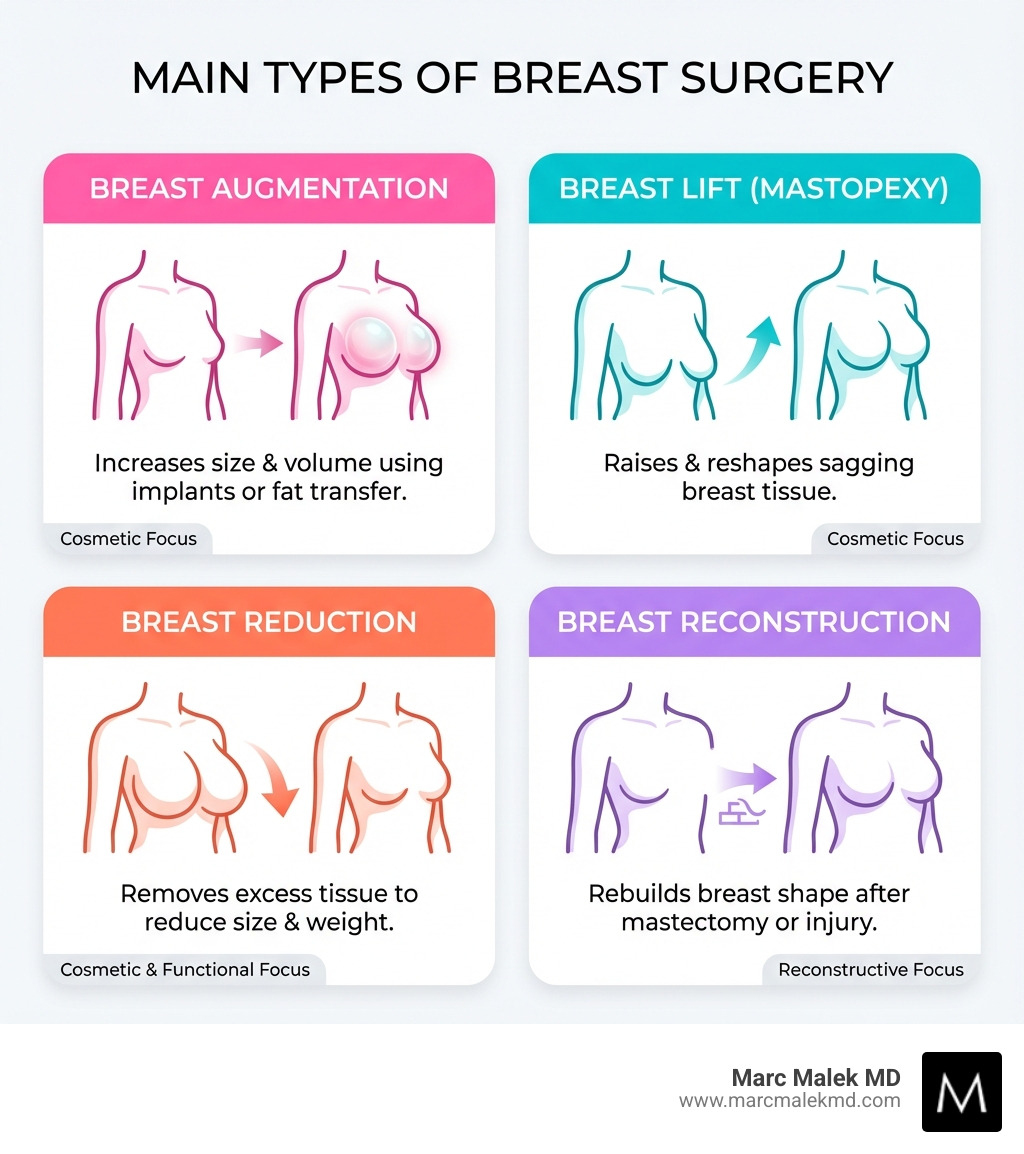
Main Types of Breast Surgery:
- Breast Augmentation: Increases size with implants or fat transfer.
- Breast Lift (Mastopexy): Raises and reshapes sagging breasts.
- Breast Reduction: Removes excess tissue to reduce size.
- Breast Reconstruction: Rebuilds breast shape after mastectomy or injury.
These procedures can be cosmetic, to improve appearance and confidence, or reconstructive, to restore the body after cancer, injury, or congenital conditions. Breast augmentation is the most popular cosmetic procedure, with high patient satisfaction rates reflecting its positive impact on self-image.
It’s crucial to know that breast implants are not lifetime devices and may require future replacement or removal. Also, some procedures have limitations; for instance, augmentation alone cannot fix severely drooping breasts and may need to be combined with a lift.
The decision to have breast surgery is deeply personal. As one surgeon noted, “Helping women regain their physical appearance and confidence after cancer has taken something away is truly humbling.”
Enhancing Size and Volume: A Guide to Breast Augmentation
Breast augmentation, or augmentation mammoplasty, is a popular form of plastic surgery of the breast that increases breast size and improves their shape. This procedure can create a fuller, more projected bustline and improve the balance of your figure. Patients in Scottsdale, Phoenix, and across Arizona often seek augmentation to restore volume lost after pregnancy or weight loss, or to correct asymmetry. The ultimate goal is to improve self-image and confidence.
For more details, visit our page on More info about Breast Augmentation.
Implant Options: Saline vs. Silicone
Choosing between saline and silicone implants is a key decision. Both are FDA-approved and have unique qualities.
Saline Implants are filled with sterile saltwater after placement, allowing for size adjustments during surgery. They feel firmer, and a rupture is immediately obvious as the implant deflates and the saline is safely absorbed by the body.
Silicone Implants are pre-filled with a cohesive silicone gel that closely mimics the feel of natural breast tissue. A rupture is often “silent,” as the thick gel stays contained, requiring regular MRI scans for monitoring as recommended by the FDA. Silicone implants are approved up to 800cc, but saline shells can sometimes be overfilled for larger volumes, depending on the patient.
Implants also vary in shape and texture:
- Shape: Round implants provide overall fullness, while teardrop (anatomical) implants offer a more tapered, natural slope.
- Texture: Smooth implants are most common today. Textured implants were historically used to reduce capsular contracture risk but have been linked to the rare condition BIA-ALCL.
Here’s a quick comparison:
| Feature | Saline Implants | Silicone Implants |
|---|---|---|
| Fill Material | Sterile saltwater solution | Cohesive silicone gel |
| Feel | Firmer, less natural feel | Softer, more natural feel |
| Rupture Detection | Immediately noticeable (deflation) | Often “silent,” requires imaging (e.g., MRI) |
| FDA Approval Age | Typically 18+ | Typically 22+ |
| Cost | Generally less expensive | Generally more expensive |
Explore our galleries to see results:
Fat Transfer Breast Augmentation
For those preferring a natural alternative to implants, fat transfer breast augmentation is an excellent option. This form of plastic surgery of the breast uses your own body fat to increase breast size. The process, known as autologous fat grafting, involves using liposuction to harvest fat from an area like the abdomen or thighs. The fat is then purified and injected into the breasts to add volume.
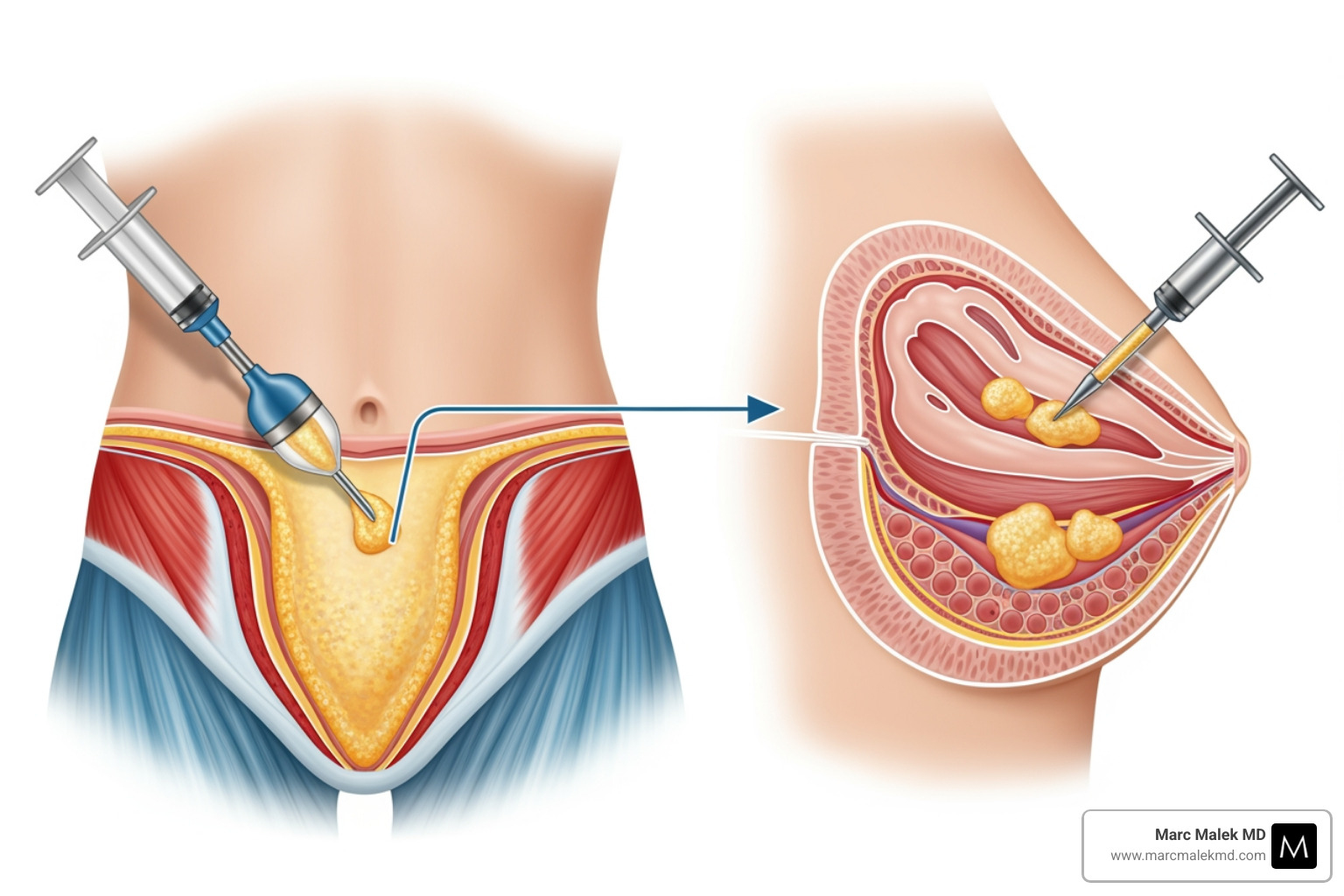
The main benefit is a natural result using your own tissue, plus body contouring in the donor area. However, fat transfer typically yields a modest size increase (around one cup size per session), and multiple sessions may be needed for more volume. It’s ideal for subtle improvement or correcting minor asymmetries.
Learn more here: What are your breast augmentation options?.
Who is a Good Candidate for Augmentation?
Good candidates for this plastic surgery of the breast are physically healthy, have fully developed breasts, and hold realistic expectations. The procedure is a personal choice, done for yourself.
You may be a good candidate if:
- You are in good overall health.
- You are at least 18 for saline implants or 22 for silicone implants.
- You understand the procedure’s potential outcomes and limitations.
- You feel your breasts are too small or have lost volume due to aging, pregnancy, or weight loss.
- You wish to correct breast asymmetry for a more balanced figure. Read more: Read about correcting uneven breasts.
Our goal is to help you achieve a look that makes you feel confident and comfortable.
Reshaping and Repositioning: Lifts and Reductions
Beyond increasing size, other forms of plastic surgery of the breast reshape, reposition, or reduce breast volume. These procedures can correct sagging (ptosis) or alleviate discomfort from overly large breasts. Augmentation alone cannot fix severely drooping breasts; a lift is often required for a fuller, more liftd appearance.
To learn more about your options, explore our blog: What type of breast surgery do I need?.
The Breast Lift (Mastopexy)
A breast lift, or mastopexy, is a plastic surgery of the breast procedure that raises and reshapes sagging breasts. Factors like aging, gravity, pregnancy, and weight changes can cause breasts to lose elasticity and droop.
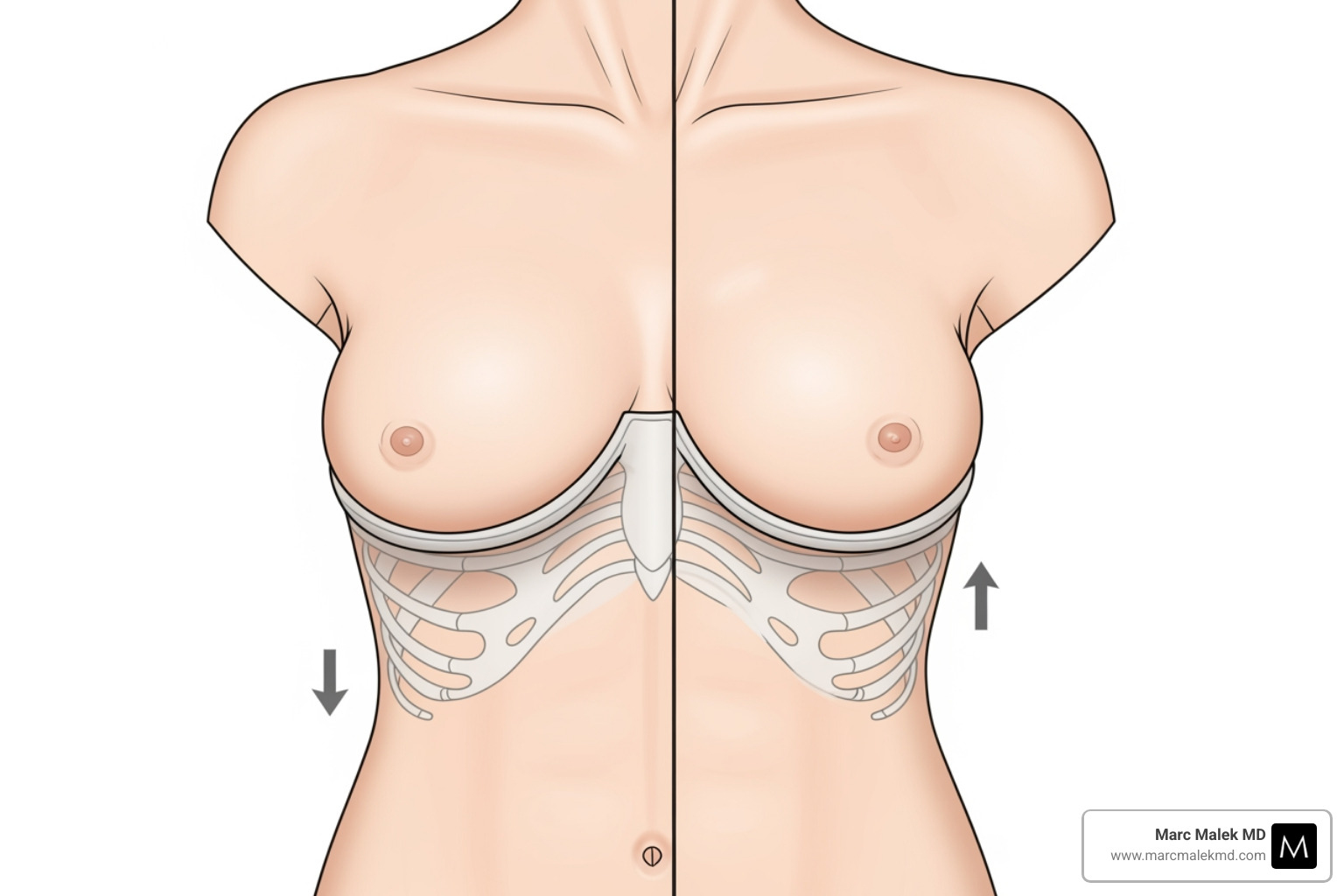
During a lift, a surgeon removes excess skin and tightens the surrounding tissue to create a firmer, more youthful breast profile. The nipple and areola are also moved to a higher position, and an enlarged areola can be reduced. A breast lift addresses sagging but does not significantly change breast size. For both a lift and increased volume, a combined procedure may be best.
For more details, visit our page: More info about Breast Lift procedures.
Breast Lift vs. Augmentation (and When to Combine Them)
Many people confuse a breast lift with breast augmentation. To clarify this common point in plastic surgery of the breast: augmentation increases size with implants or fat, while a lift reshapes and repositions by removing excess skin to correct drooping.
If a pencil can be held in the fold beneath your breast, you likely have some sagging that a lift can address. If your breasts lack upper fullness, augmentation can restore volume. For patients with both sagging and volume loss, especially after pregnancy, a combined augmentation-mastopexy (a lift with implants) is often recommended. This combination is a key part of a “Mommy Makeover.”
See examples in our gallery: View our Breast Augmentation with Lift gallery. Learn more about the broader procedure: Part of a Mommy Makeover.
The Breast Reduction
For individuals in Scottsdale, Phoenix, and across Arizona suffering from physical discomfort due to large breasts, breast reduction (reduction mammoplasty) offers relief. This plastic surgery of the breast removes excess fat, glandular tissue, and skin to create a breast size that is more proportionate to your body.
The benefits are significant and can improve quality of life by relieving:
- Chronic back, neck, and shoulder pain.
- Painful bra strap grooves.
- Skin irritation under the breasts.
- Limitations on physical activity.
- Difficulty finding clothes that fit well.
Because it can alleviate medical symptoms, breast reduction may be covered by health insurance. We encourage you to check with your provider about coverage.
Learn more about this procedure: More info about Breast Reduction surgery.
An Overview of Plastic Surgery of the Breast: Safety, Risks, and Recovery
Any plastic surgery of the breast requires careful consideration of safety, risks, and recovery. Our commitment to patient safety is paramount, and we ensure every patient is fully informed. Informed consent is a cornerstone of our practice, meaning we discuss all aspects of your procedure so you understand the benefits, limitations, and potential complications.
For comprehensive details, we recommend the FDA’s resources: FDA information on Risks and Complications of Breast Implants.
Potential Risks and Complications
While rare, it’s important to be aware of potential risks associated with plastic surgery of the breast, including:
- Capsular Contracture: The scar tissue around an implant tightens, causing the breast to feel hard or look distorted.
- Infection: A risk with any surgery, occurring at the incision site or around the implant.
- Scarring: Scars are permanent but are placed in inconspicuous locations and fade over time.
- Sensation Changes: Nipple or breast sensation may temporarily or permanently change.
- Implant Leakage or Rupture: Saline ruptures are obvious, while silicone ruptures may be “silent” and require imaging to detect.
- Anesthesia-Related Risks: Rare but include allergic reactions or other complications.
- Other Risks: Breast pain, implant malposition, and visible rippling of the implant.
We will discuss all risks thoroughly during your consultation.
Important Safety Information: BIA-ALCL and BII
Two topics regarding breast implants require special attention: BIA-ALCL and Breast Implant Illness (BII).
-
Breast Implant-Associated Anaplastic Large Cell Lymphoma (BIA-ALCL): This is a rare type of lymphoma (not breast cancer) linked to breast implants, particularly textured ones. The FDA has recognized a possible association. It typically presents as fluid collection or a lump around the implant and is usually treated by removing the implant and surrounding capsule. The FDA does not recommend removal for asymptomatic patients. For details, see the FDA Questions and Answers about BIA-ALCL.
-
Breast Implant Illness (BII): This term describes systemic symptoms some women with implants report, such as chronic fatigue, “brain fog,” joint pain, and anxiety. BII is not yet a formal medical diagnosis, and research is ongoing. If you experience these symptoms, consult your surgeon for evaluation, which may include discussing implant removal.
We prioritize your well-being and will provide the most current safety information.
The Recovery Process and Implant Longevity
Understanding recovery and long-term implant life is vital for anyone considering plastic surgery of the breast.
Recovery Process:
After surgery, expect some soreness, swelling, and bruising, which subside over a few weeks. You will receive detailed post-operative instructions on caring for incisions and managing discomfort. A compression garment is typically worn to reduce swelling and provide support. Most patients return to light activities within one to two weeks, but strenuous activity should be avoided for at least four to six weeks. Full recovery varies, but we will guide you through each step.
Implant Longevity:
Breast implants are not lifetime devices and will likely require future surgery for replacement or removal. While durable, they can wear down over time. Implants last about 10 years on average, but this can vary. Revision surgery may be needed due to rupture, capsular contracture, or a desire for a size change.
The FDA recommends regular MRI screening for silicone implants to detect silent ruptures, starting 5-6 years post-op and every 2-3 years after. We will discuss these long-term plans during your consultation.
For more on managing implants over time, visit: More info about Breast Revision.
Your Journey: Consultation, Costs, and Choosing a Surgeon
Starting on your plastic surgery of the breast journey is a major decision that starts with research and a thorough consultation. Understanding the process, costs, and how to select the right surgeon is key to ensuring a positive experience and beautiful results.
What to Expect During Your Consultation
Your consultation is the most important step in your plastic surgery of the breast journey. It’s a chance to discuss your goals and build a rapport with your surgeon. At our Scottsdale office, you can expect:
- Medical History Review: We’ll discuss your health history to assess your suitability for surgery.
- Physical Examination: We will examine your breasts to analyze their current size, shape, and skin quality.
- Goal Discussion: We will listen to your aesthetic goals to develop a personalized approach.
- Implant Sizing and Options: For augmentation, we’ll review implant types and may use 3D imaging to help you visualize outcomes.
- Personalized Surgical Plan: We will outline a custom plan, explaining the recommended techniques and recovery.
Our goal is for you to leave feeling informed and confident. Learn more here: Learn about Breast Augmentation for Scottsdale patients.
Choosing a Qualified Surgeon for Plastic Surgery of the Breast
Selecting the right surgeon is the most critical decision for your plastic surgery of the breast. Their expertise directly impacts your safety and results.
Look for these qualifications:
- Board Certification: Choose a surgeon certified by the American Board of Plastic Surgery. This ensures they have met the highest standards of training, safety, and ethics. You can Verify a surgeon with the American Board of Plastic Surgery.
- Surgical Experience: Seek a surgeon with a strong track record in your desired breast procedure.
- Before-and-After Photos: Review their gallery to see if their aesthetic style aligns with your goals.
- Patient Testimonials: Read patient reviews to gauge satisfaction with the surgeon and practice.
Dr. Marc Malek embodies these qualities, serving patients in Scottsdale, Phoenix, and across Arizona with an artistic approach to deliver balanced, long-lasting results. Learn more: Why Choose Dr. Malek for Breast Augmentation.
Understanding the Costs of Plastic Surgery of the Breast
The cost of plastic surgery of the breast is an important factor. Elective cosmetic procedures are typically not covered by insurance. The total cost includes:
- Surgeon’s Fee: Varies based on experience and procedure complexity.
- Anesthesia Fee: Covers the anesthesiologist’s services.
- Facility Costs: For the use of the operating and recovery rooms.
- Implant Costs: A significant factor in augmentation, varying by type.
- Related Expenses: May include pre-op tests, post-op garments, and medications.
Insurance Coverage:
Cosmetic surgery like augmentation is not covered. However, medically necessary procedures like breast reduction for pain relief or reconstruction after mastectomy may be covered. The Women’s Health and Cancer Rights Act of 1998 (WHCRA) mandates coverage for post-mastectomy reconstruction. Always check with your insurance provider.
Financing Options:
We can provide information on financing plans through third-party lenders to make plastic surgery of the breast more accessible.
Frequently Asked Questions about Breast Surgery
Here we address some of the most common inquiries our patients have about plastic surgery of the breast.
How long do breast surgery results last?
The longevity of results from plastic surgery of the breast varies by procedure and individual factors.
- Breast Augmentation: Implants are not lifetime devices and typically last about 10 years, though many last longer. Aging, weight changes, and pregnancy will still affect your breasts’ appearance over time, and future surgery for replacement may be needed.
- Breast Lift (Mastopexy): Results can be long-lasting, but gravity, aging, and weight fluctuations will continue to have an effect. Maintaining a stable weight helps preserve the outcome.
- Breast Reduction: Results are generally permanent since tissue is removed. However, significant weight changes or pregnancy can still alter breast size and shape.
Will I be able to breastfeed after surgery?
This is a common concern for those considering plastic surgery of the breast, and the answer depends on the procedure.
- Breast Augmentation: Most women can still breastfeed. Incisions under the breast or in the armpit are less likely to affect milk ducts than incisions around the nipple.
- Breast Lift and Breast Reduction: These procedures have a higher potential to impact milk ducts and nerve supply, which could diminish breastfeeding capacity.
If you plan to have children, it is crucial to discuss this with your surgeon. We can tailor the surgical plan to help preserve your ability to breastfeed. Read more on our blog: Expect Pregnancy & Breast Implants.
How visible will the scars be?
Scarring is an inevitable part of plastic surgery of the breast, but surgeons use techniques to minimize their visibility.
- Incision Placement: Incisions are strategically placed in natural creases, such as under the breast (inframammary fold), around the areola, or in the armpit, to keep them discreet.
- Scar Maturation: Scars are initially red but fade and flatten over 12-18 months, often blending with the surrounding skin.
- Individual Healing: Final scar appearance depends on genetics, skin type, and following post-operative care instructions.
We will discuss all incision options and scar care with you during your consultation.
Conclusion: Achieving Your Aesthetic Goals with Confidence
Starting on a plastic surgery of the breast journey is a personal decision that can significantly boost your self-image. Whether you seek improvement, a lift, a reduction, or reconstruction, making an informed choice is the most important step.
At Marc Malek MD, we combine surgical expertise with an artistic eye to meet each patient’s unique needs. Dr. Marc Malek provides patients in Scottsdale, Phoenix, and throughout Arizona with fantastic, proportionally balanced, and long-lasting results. Our commitment is to your comfort, well-being, and confidence.
If you are considering plastic surgery of the breast, we invite you to schedule a consultation with our team. We are here to guide you toward achieving your aesthetic goals.
To learn about revising a previous breast surgery, explore your options here: Learn more about your Breast Revision options in Scottsdale.