

How the co2 fractional ablative laser transforms your skin
What the CO2 Fractional Ablative Laser Actually Does to Your Skin
CO2 fractional ablative laser treatment is one of the most powerful skin resurfacing options available today. It uses targeted laser energy to vaporize damaged skin cells while triggering deep collagen rebuilding — delivering results that most creams, peels, and non-ablative treatments simply cannot match.
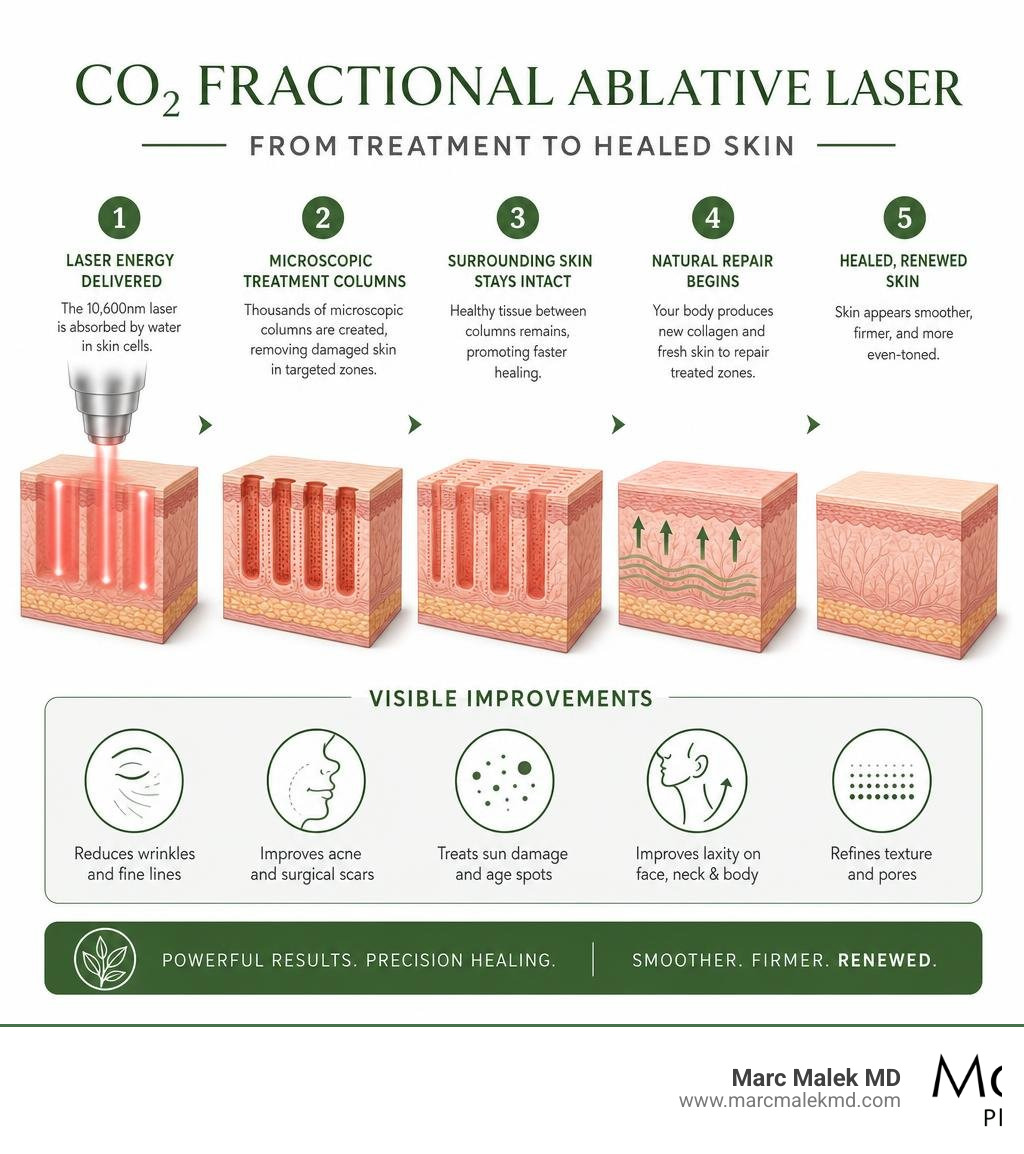
Here’s the quick version of how it works:
- The laser emits light at a 10,600nm wavelength, absorbed by water in skin cells
- It creates thousands of microscopic treatment columns in the skin
- Surrounding healthy tissue stays intact, driving faster healing
- The body repairs the treated zones by producing new collagen and fresh skin
- The result: smoother texture, fewer wrinkles, reduced scars, and tighter skin
What it treats:
- Deep wrinkles and fine lines
- Acne scars and surgical scars
- Sun damage and age spots
- Skin laxity on the face, neck, and body
- Uneven texture and enlarged pores
The treatment has been used for skin rejuvenation for over 30 years. And with modern fractional delivery — where only a fraction of the skin surface is treated per session — recovery is significantly shorter than older full-field ablative methods.
This guide walks you through exactly how the procedure works, what to expect during recovery, who is a good candidate, and how to get the best possible results.
Co2 fractional ablative laser terms simplified:
Understanding the Science of the co2 fractional ablative laser
To understand why the co2 fractional ablative laser is so effective, we have to look at the physics of how light interacts with human tissue. This process is governed by a principle called selective photothermolysis. Essentially, this means we use a specific wavelength of light to target a specific component in the skin (known as a chromophore) without damaging the surrounding structures.
For CO2 lasers, that target is water. Because our skin cells are mostly made of water, they rapidly absorb the laser’s energy at its signature 10,600nm wavelength. When the laser hits the skin, the water inside the cells instantly heats up to its boiling point, causing the targeted cells to vaporize (ablate) in a controlled micro-explosion.
As detailed in clinical literature on Ablative Laser Resurfacing – StatPearls – NCBI Bookshelf, traditional CO2 lasers would vaporize 100% of the skin’s surface in the treatment area. While highly effective, this “full-field” approach meant weeks of raw, weeping skin and a higher risk of complications.
The fractional approach changed everything. Instead of sweeping across the entire skin surface, a fractional laser uses a specialized scanner to split the beam into thousands of microscopic, spot-sized laser beams. These beams create microscopic thermal zones (MTZs) that penetrate deep into the epidermis and dermis. Because these columns are surrounded by bridges of untouched, healthy skin, the body can mobilize its natural healing response much faster. You can read more about this mechanism in our guide on CO2 Fractional Lasers Explained for Better Skin.
How the co2 fractional ablative laser Rebuilds Collagen
The magic of the co2 fractional ablative laser doesn’t stop at vaporizing damaged surface skin. The real transformation happens beneath the surface through dermal remodeling.
When the laser energy penetrates the deeper layers of the skin, it delivers a controlled thermal injury. This heat does two things:
- Immediate contraction: It causes existing collagen fibers to shrink and tighten instantly, giving you an immediate lifting effect.
- Neocollagenesis: It triggers a cascade of healing signals that wake up your fibroblasts (the cells responsible for building skin structure).
Over the next six months, these fibroblasts produce a surge of new Type 3 collagen, which gradually matures into strong, supportive Type 1 collagen. This deep structural rebuilding is why CO2 lasers are considered the absolute gold standard for smoothing out deep, etched-in wrinkles. For a deeper look at this collagen-building miracle, check out Why CO2 Lasers Are the Gold Standard for Deep Wrinkles.
Comparing co2 fractional ablative laser to Traditional Ablation
If you are trying to choose between a fractional laser and a fully ablative (full-field) laser, it helps to weigh the pros and cons of each. While fully ablative lasers can sometimes achieve dramatic results in a single pass, the recovery is intense. Fractional lasers offer a highly customizable alternative that minimizes downtime while still delivering exceptional skin rejuvenation.
To help you understand the differences, we have put together a quick comparison:
| Feature | Fractional CO2 Laser | Fully Ablative CO2 Laser |
|---|---|---|
| Skin Coverage | Vaporizes 10% to 80% of the skin (leaves healthy bridges) | Vaporizes 100% of the skin in the target area |
| Average Recovery Time | 5 to 10 days of social downtime | 14 to 21 days of intense healing |
| Risk of Pigment Changes | Low to Moderate (highly manageable) | Higher (especially for darker skin types) |
| Typical Treatment Sessions | 1 to 3 sessions depending on severity | Usually 1 single, aggressive session |
| Collagen Stimulation | Excellent deep dermal remodeling | Maximum surface and deep remodeling |
For a broader look at how different laser wavelengths compare, you can read our comparison article, The Great Laser Debate: CO2 vs Erbium.
Key Indications and Patient Selection for Treatment
The co2 fractional ablative laser is incredibly versatile, but it is not a one-size-fits-all solution. Selecting the right patients and matching them with the correct settings is essential for achieving safe, beautiful outcomes.
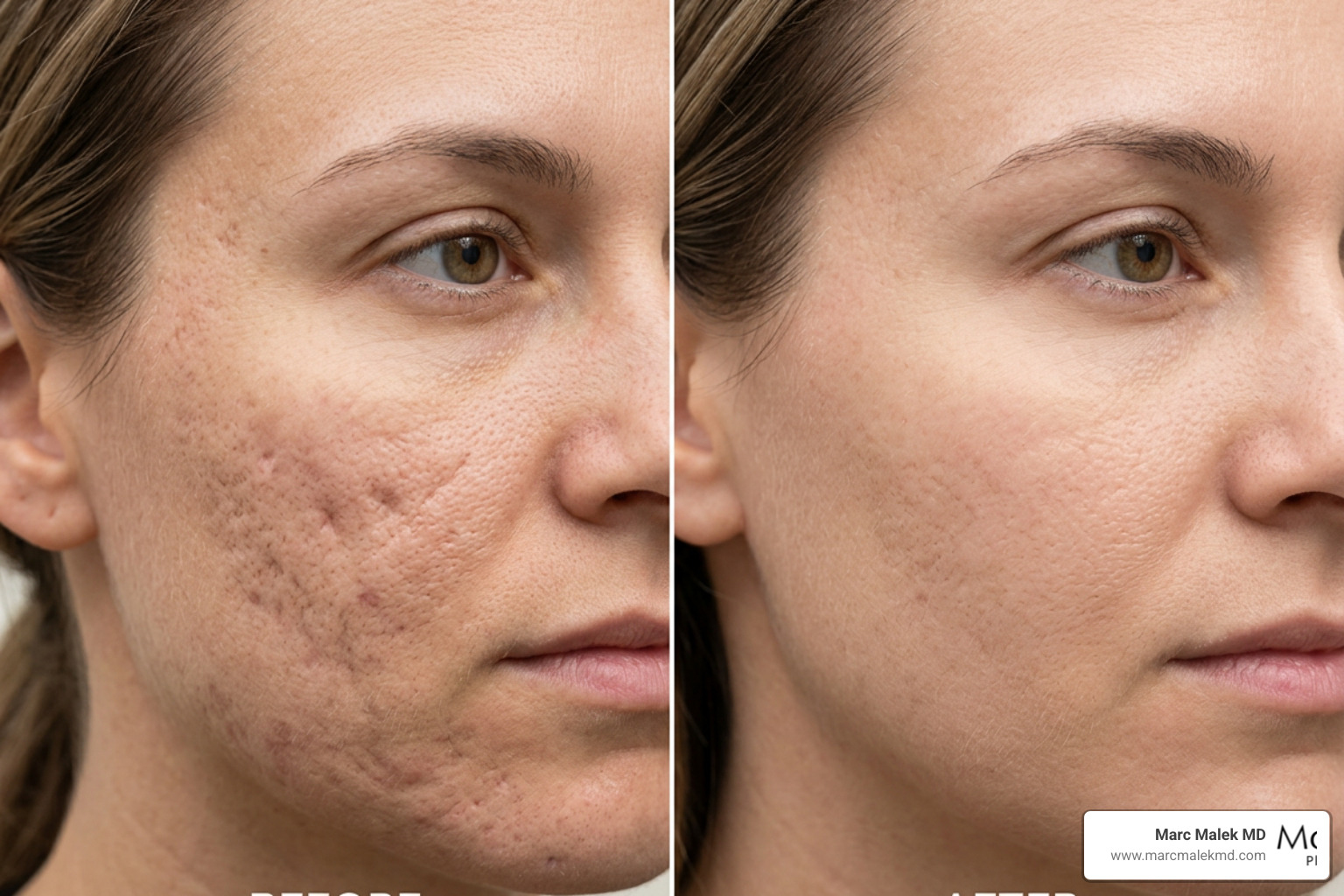
This treatment is highly effective for individuals dealing with moderate to severe signs of photoaging, deep facial wrinkles (rhytides), and textural irregularities. It is also one of the most reliable options for revising stubborn acne scars, surgical scars, and even non-facial skin laxity. In fact, clinical consensus data shows that 60% of laser specialists actively perform fractional ablative CO2 treatments to tighten loose skin in non-facial areas, such as the neck, chest, and hands.
Treating Facial Wrinkles, Scars, and Laxity
For facial rejuvenation, the CO2 laser targets the structural damage caused by years of UV exposure and natural aging. It softens stubborn perioral lines (smoker’s lines around the mouth) and periorbital wrinkles (crow’s feet), while tightening lax skin along the jawline.
When it comes to scarring, the laser breaks down the fibrous bands of scar tissue that pull the skin downward, while stimulating new collagen to plump up depressed, atrophic acne scars. You can learn more about how we target these concerns in our articles on Erase Scars with the Help of Laser Technology and Smooth Moves: The Ultimate Guide to CO2 Laser Resurfacing for Stretch Marks.
Beyond the face, we frequently use this technology to treat the delicate skin of the décolletage, helping patients reverse sun damage and crepey skin. If you are curious about expanding your treatment area, read From Wrinkles to Wow: The Complete Guide to Chest Laser Resurfacing.
Absolute and Relative Contraindications
To ensure your safety, we perform a thorough medical screening before clearing you for a CO2 laser session. Some medical conditions and skin states mean the laser is temporarily or permanently unsafe to use.
Here is a list of absolute contraindications for co2 fractional ablative laser treatments:
- Active facial infections: 95% of clinical panels agree that any active bacterial, viral, or fungal infection in the treatment area is an absolute contraindication.
- Recent oral isotretinoin use: You must stop taking medications like Accutane at least 6 to 12 months before treatment to prevent severe scarring and delayed healing.
- Pregnancy or breastfeeding: Laser energy and topical anesthetics should not be used during these periods.
- Open wounds, burns, or recent sun exposure: Sunburned or actively tanned skin cannot be treated safely, as it significantly increases the risk of severe burns and permanent pigment changes.
- History of keloidal scarring or scleroderma: Conditions that impair normal wound healing make ablative treatments unsafe.
The Treatment Experience: Anesthesia, Settings, and Safety Protocols
We understand that the idea of an ablative laser can sound a bit intimidating. However, modern clinical protocols are designed to keep you comfortable, safe, and relaxed throughout the entire session.

Pre-Treatment Prophylaxis and Pain Management
Because an ablative laser temporarily compromises your skin’s protective barrier, preventing infection before it can start is a top clinical priority. In line with 2026 clinical standards, over 90% of medical practitioners prescribe preventative bacterial and viral medications starting the day before your procedure.
- Antiviral Prophylaxis: If you have a history of cold sores, the laser heat can trigger a severe flare-up of the herpes simplex virus. We typically prescribe an oral antiviral like Valacyclovir to prevent this.
- Bacterial Prophylaxis: Oral or topical antibiotics are often recommended to protect the raw skin during the initial healing phase.
- Antifungal Guidelines: Interestingly, studies show that 67% of specialists do not routinely prescribe antifungal prophylaxis, reserving it only for patients with a high risk or history of fungal infections.
For pain management, we utilize a multi-layered approach. A strong topical numbing cream is applied to the skin for 45 to 60 minutes prior to the procedure. For deeper, more comprehensive treatments, we can perform local nerve blocks or offer mild oral sedatives to ensure you feel minimal discomfort—often describing the sensation as a warm, prickly sunburn. Advanced laser platforms, such as those discussed on Discover the Power of eCO2™ Plus, also feature advanced scanning patterns to reduce heat buildup and maximize patient comfort.
Customizing Settings for Fitzpatrick Skin Types III-IV
One of the most critical aspects of laser safety is adjusting the treatment settings to match your specific Fitzpatrick skin type. Patients with olive, brown, or darker skin tones (Fitzpatrick Types III-IV and above) have more active melanin-producing cells. If the laser settings are too aggressive, it can trigger post-inflammatory hyperpigmentation (PIH) or, conversely, hypopigmentation (permanent skin lightening).
To treat darker skin tones safely, we use highly customized, conservative settings. This includes:
- Reducing spot density: Spacing the microscopic treatment columns further apart so more healthy skin remains to assist in safe healing.
- Adjusting pulse duration: Using specialized pulse modes that deliver energy quickly to vaporize target tissue while limiting the spread of excess heat to surrounding pigment cells.
- Pre-treating the skin: Recommending a medical-grade skincare routine featuring pigment-suppressing ingredients (such as hydroquinone or kojic acid) for 2 to 4 weeks before the procedure.
Advanced platforms like the Pixel CO2 – CO2 Fractional Laser Machine | Alma use computerized scanners to distribute the laser energy evenly and safely, giving practitioners precise control over every micro-beam.
Recovery, Downtime, and Post-Treatment Care
What happens after your treatment is just as important as the laser session itself. Your skin’s recovery is a carefully orchestrated process, and following our post-care instructions is the key to revealing a radiant, smooth complexion.
The 8-to-42 Day Healing Timeline
Directly after your co2 fractional ablative laser treatment, your skin will feel hot, swollen, and look red—very much like a severe sunburn. Over the next few days, this redness will transition into a bronzed, sand-paper-like texture as the microscopic damaged skin cells begin to rise to the surface and flake off.
While the initial social downtime (when you might want to stay home due to peeling and swelling) typically lasts about 5 to 10 days, the biological healing process continues beneath the surface. Clinical data confirms that complete re-epithelialization—the process where a fresh, new layer of skin completely covers the treated area—takes anywhere from 8 to 42 days post-treatment. During this window, your skin will gradually transition from a pinkish hue back to its normal tone. For an inspiring look at what this recovery journey looks like, read our guide on Beaming with Confidence After CO2 Laser Resurfacing.
Essential Post-Procedure Skincare Routine
During the first week of healing, your primary goal is to keep your skin clean, hydrated, and protected.
- Gentle Cleansing: Wash your face twice daily with cool water and a very gentle, non-foaming cleanser. Avoid rubbing, scrubbing, or picking at any peeling skin.
- Ointment Application: Keep a thick layer of protective barrier ointment, such as Aquaphor or plain petrolatum jelly, on your skin at all times. This prevents the raw skin from drying out and cracking, which is vital for preventing scars.
- Strict Sun Avoidance: Your new skin is incredibly sensitive to UV light. Avoid direct sun exposure entirely for the first few weeks, and wear a broad-spectrum physical sunscreen (SPF 30 or higher containing zinc oxide) daily once your skin has fully closed.
- Resuming Actives: Do not use any anti-aging products, retinoids, vitamin C, or exfoliating acids until your skin has completely healed and we have cleared you to do so (usually around the 3 to 4-week mark).
For a complete breakdown of what to buy and how to prepare your bathroom counter for recovery, check out our Laser Skin Resurfacing Complete Guide.
Frequently Asked Questions about CO2 Fractional Ablative Lasers
How much does a CO2 fractional ablative laser treatment cost?
The cost of a co2 fractional ablative laser treatment depends on several variables, including the size of the treatment area, the depth of the laser settings, and your geographic location. Here in the Phoenix and Scottsdale, Arizona metro areas, a single session can range anywhere from $1,500 to $3,500 or more.
Because we customize every treatment to the individual—ranging from a light “cool peel” to deep scar revision—the best way to get an accurate estimate is through a personal consultation. For a detailed breakdown of what goes into these fees, you can read Eyeing the Bill: A Complete Guide to CO2 Laser Resurfacing Costs.
What is the difference between CO2 and Erbium lasers?
Both CO2 and Erbium (Er:YAG) lasers are ablative treatments that target water in the skin, but they do so differently:
- CO2 Lasers (10,600nm): These penetrate deeper and deliver more residual heat to the surrounding tissue. This extra heat is highly beneficial because it triggers maximum collagen contraction and long-term remodeling, making it the superior choice for deep wrinkles and severe acne scars.
- Erbium Lasers (2,940nm): These are absorbed by water even more rapidly than CO2, causing almost instant vaporization with very little residual heat. While this means a slightly faster recovery and a lower risk of pigment changes, it does not provide the same level of deep skin tightening as a CO2 laser.
To learn more about which technology aligns with your goals, explore our article, Don’t Be Thin-Skinned About Ablative Erbium Lasers.
Can I get a non-ablative laser instead for zero downtime?
Yes, non-ablative lasers are an option, but they work on a completely different principle. Instead of vaporizing the outer layer of skin, non-ablative lasers pass harmlessly through the surface to heat the deeper tissues, leaving the surface skin completely intact.
While non-ablative treatments offer virtually zero downtime, the results are much more subtle and gradual. You will typically need 3 to 6 sessions to see moderate improvements in skin texture and tone. If you have deep wrinkles, severe sun damage, or pronounced scarring, an ablative CO2 laser is far more effective at delivering dramatic, long-lasting results in fewer sessions. You can compare your options further in Best Non-Ablative Laser for Wrinkles with Zero Downtime.
Conclusion
The co2 fractional ablative laser remains the undisputed gold standard for individuals seeking to truly transform their skin’s texture, erase years of sun damage, and smooth away deep wrinkles. By combining cutting-edge laser physics with the body’s natural healing power, this treatment delivers structural, long-lasting rejuvenation.
At Marc Malek MD in Scottsdale, Arizona, we believe in a highly personalized, artistic approach to aesthetic medicine. Dr. Malek and our experienced team focus on patient comfort, safety, and natural-looking results that harmonize beautifully with your unique features.
If you are ready to say goodbye to dull, damaged skin and hello to a refreshed, youthful glow, we invite you to take the next step. Explore our CO2 Laser Resurfacing Gallery to see real patient transformations, and schedule your personal consultation today on our Laser Skin Resurfacing page. Let us help you beam with confidence!