

Beaming with Confidence After c02 Laser Resurfacing
What CO2 Laser for Face Actually Does — And Why It Works
CO2 laser for face treatments are one of the most effective non-surgical options for turning back the clock on skin aging. If you want the short version:
Key benefits of CO2 laser resurfacing:
- Reduces wrinkles and fine lines — including deep perioral lines and crow’s feet
- Improves acne scars and skin texture — by removing damaged surface layers
- Corrects sun damage and age spots — targeting uneven pigmentation
- Tightens skin — by stimulating new collagen and elastin production
- Results last for years — with proper skincare and sun protection
Many people try creams, peels, and injectables — and still feel like something is missing. The skin looks tired. Texture is uneven. Scars from years of breakouts don’t budge.
That’s where CO2 laser resurfacing changes the equation.
Unlike surface-level treatments, a CO2 laser works beneath the skin. It removes damaged outer layers and triggers the body’s own healing response — producing fresh collagen for months after a single session. The science is well-established, and the results can be dramatic.
Whether you’re dealing with deep wrinkles, acne scarring, or years of sun exposure, this guide walks you through everything you need to know — from how the technology works to what your recovery will actually look like.
Simple c02 laser for face glossary:
Understanding the c02 Laser for Face: Mechanism and Technology
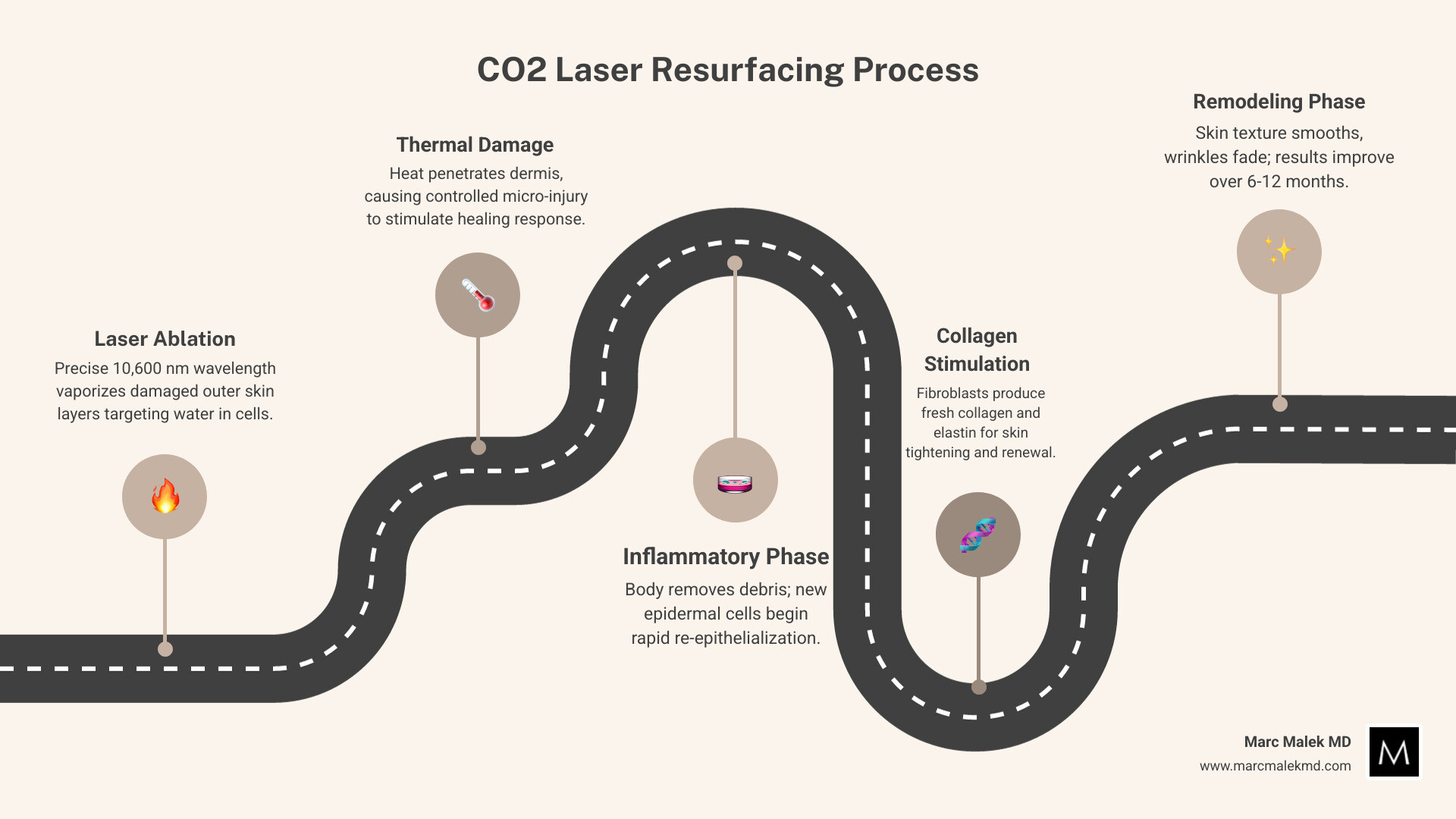
To understand why the c02 laser for face is often called the “gold standard” of skin rejuvenation, we have to look at the physics of light. The Carbon Dioxide (CO2) laser operates at a wavelength of 10,600 nm. In dermatology, this is a very specific “sweet spot” because this wavelength is highly absorbed by water.
Since our skin cells are made up of about 70% water, the laser energy is instantly absorbed. This leads to what we call tissue-selective ablation. Essentially, the laser vaporizes the water in the damaged skin cells, removing the outer layers (the epidermis) with extreme precision while simultaneously heating the deeper layer (the dermis).
This heating is intentional. When the dermis reaches a certain temperature, it triggers a biological “emergency response.” The heat causes existing collagen fibers to contract (providing some immediate tightening) and signals the body to begin synthesizing brand-new type 3 collagen. This process is rooted in the scientific research on selective photothermolysis, which explains how we can target specific tissues without damaging the surrounding areas if the “thermal relaxation time” — the time it takes for tissue to cool down — is respected.
By carefully managing these pulses of light, we can achieve significant laser skin resurfacing that addresses years of accumulated damage in a single session.
Fractional vs. Fully Ablative Modalities
In the early days of laser technology, “fully ablative” was the only option. This meant the laser treated 100% of the skin’s surface in the target area. While the results were (and still are) incredible, the downtime was significant because the entire skin barrier had to be rebuilt from scratch.
Today, we often utilize “fractional” technology. Imagine a showerhead versus a single stream of water. A fractional c02 laser for face creates thousands of microscopic “holes” or microablative columns (MACs) in the skin, leaving bridges of untouched, healthy tissue between them.
| Feature | Fractional CO2 Laser | Fully Ablative CO2 Laser |
|---|---|---|
| Surface Coverage | Partial (Micro-columns) | 100% of treated area |
| Downtime | 2–5 days (typically) | 10–21 days |
| Sessions Needed | 1–3 sessions | Usually 1 session |
| Healing Speed | Rapid re-epithelialization | Slower, intensive care |
| Best For | Moderate wrinkles, texture | Deep scars, severe aging |
Because the healthy skin is left intact between the MACs, the “re-epithelialization” (the growth of new skin) happens much faster — often within 2 to 3 days for fractional treatments. This makes it a fantastic option for our Scottsdale and Phoenix patients who want great results without a month of hiding away.
Precision and Safety Standards
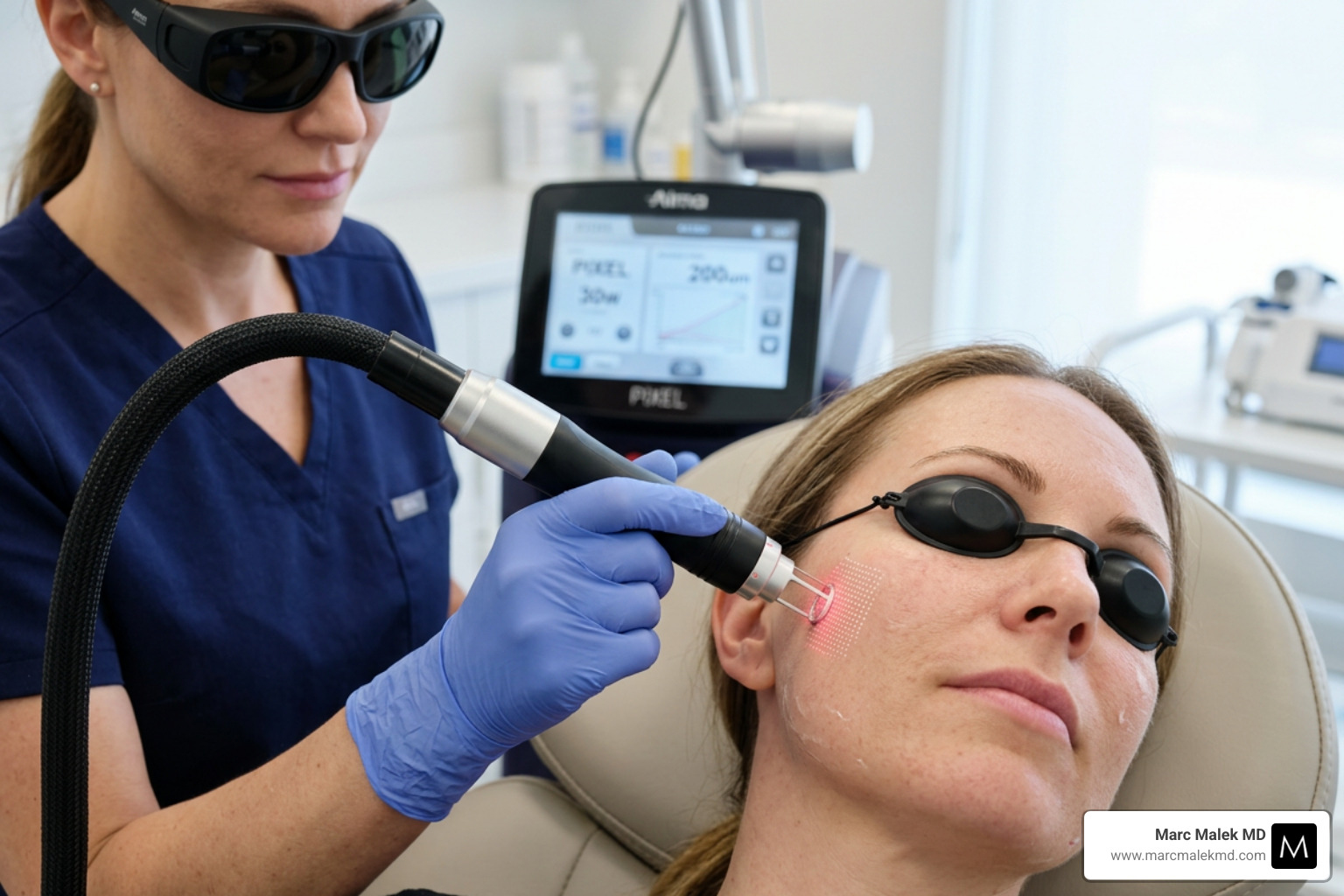
Safety is our absolute priority. The CO2 laser is a powerful tool, and using it correctly requires a deep understanding of ablative skin resurfacing. During the procedure, we use specialized safety protocols to protect both the patient and the medical team.
First, eye protection is mandatory for everyone in the room. Because the laser is attracted to water, it could potentially damage the eyes if they aren’t shielded with professional-grade metal shields or goggles. Second, we use a high-powered smoke evacuator. When the laser vaporizes skin tissue, it creates a “plume.” This evacuator suctions away the plume to ensure the air remains clean and safe.
We also focus on precision. By adjusting the irradiance and energy density, we can control exactly how deep the laser penetrates — from a superficial “buff and shine” to deep scar revision reaching depths of over 2 mm. For those interested in maintaining overall health during their aesthetic journey, we often recommend resources like the Mayo Clinic health products to support a wellness-focused lifestyle.
Primary Benefits and Targeted Skin Concerns
The beauty of the c02 laser for face is its versatility. It isn’t just for wrinkles; it’s a multi-tasking powerhouse that addresses a wide array of structural and pigment issues.
One of the most common reasons patients visit our Scottsdale office is to erase scars with the help of laser technology. Whether these are “pitted” acne scars from teenage years or surgical scars that didn’t heal quite as smoothly as hoped, the CO2 laser can level the skin’s surface and stimulate new tissue growth to fill in those depressions.
We also spend a lot of time preventing and repairing sun damage. Living in Arizona means we get plenty of Vitamin D, but it also means our skin takes a beating from UV rays. The laser effectively targets age spots, sun spots, and even actinic keratosis (pre-cancerous scaly patches), revealing a clearer, healthier complexion.
Smoothing Deep Rhytides with a c02 Laser for Face
“Rhytides” is just the medical term for wrinkles, but the CO2 laser treats them in a way that topical creams simply cannot. It is particularly effective for “static” wrinkles — the ones that stay on your face even when you aren’t smiling or frowning.
This includes:
- Perioral lines: Often called “smoker’s lines” or “barcode lines” around the mouth.
- Periocular lines: Deep crow’s feet around the eyes.
- Forehead furrows: Deeply etched lines that have become permanent over time.
By triggering massive collagen remodeling and elastin production, the laser essentially “re-inflates” the skin from the inside out. If you browse our CO2 laser resurfacing gallery, you’ll see how the skin looks significantly firmer and smoother several months after the procedure. Because the new collagen continues to form for up to six months, the results are long-lasting, often enduring for several years.
Correcting Texture and Pigmentation
Texture is often the “invisible” sign of aging. You might not have deep wrinkles, but your skin feels rough, your pores look large, or you have small, yellowish bumps known as sebaceous hyperplasia. The c02 laser for face acts like a high-tech “reset button.”
Through non-surgical facial rejuvenation, the laser vaporizes the rough, dull epidermal cells and replaces them with a fresh, vibrant layer. This epidermal cell replacement leads to a brighter complexion and a significant reduction in pore visibility. It’s like having the best “filter” for your skin, but in real life.
Preparing for Your Treatment: Safety and Candidacy
Preparation is the secret sauce to a smooth recovery and great results. We don’t just jump into a laser treatment; we carefully plan your journey to ensure your skin is ready for the “controlled injury” the laser provides.
Our process begins with a comprehensive medical history review. We need to know about any history of cold sores (herpes simplex) or shingles. Because the laser creates heat and temporary vulnerability in the skin, it can “wake up” a dormant virus. To prevent this, we typically prescribe an antiviral prophylaxis (like Valtrex) to be started two days before your appointment.
Sun avoidance is also non-negotiable. You should avoid tanning or heavy sun exposure for at least four weeks before your treatment. If you have a tan, your risk of laser complications like hyperpigmentation increases significantly. We also ask our patients to stop smoking at least two weeks before and after the procedure, as nicotine constricts blood vessels and slows down the healing process.
Who is a Good Candidate for a c02 Laser for Face?
Not everyone is an ideal candidate for a deep CO2 treatment. We use the Fitzpatrick Skin Type scale to help determine safety.
- Ideal Candidates: Usually Fitzpatrick types I through III (fair to light brown skin). These skin types have a lower risk of pigment changes after the laser.
- Challenging Candidates: Fitzpatrick types IV through VI (medium brown to dark brown skin). These patients have a higher risk of Post-Inflammatory Hyperpigmentation (PIH). For these skin tones, we may recommend a gentler fractional setting, a series of lighter treatments, or alternative options like RF microneedling.
If you are interested in more info about facial procedures, we can discuss how the laser fits into your overall goals. A good candidate has realistic expectations — the laser will make you look like a refreshed version of yourself, not a different person.
Contraindications and Risk Factors
There are a few “red flags” that might mean you should wait or choose a different treatment:
- Recent Isotretinoin (Accutane) use: You must be off this medication for at least 6 to 12 months, as it can interfere with the skin’s ability to heal and increase scarring risks.
- Active Acne or Infections: We need the skin to be “quiet” before we treat it.
- Keloid Tendency: If your body overreacts to injuries by creating thick, raised scars, an ablative laser might not be for you.
- Connective Tissue Diseases: Conditions like Lupus can affect how your skin responds to light and heat.
During your physical exam, we’ll assess your skin laxity. While the CO2 laser provides excellent tightening, it is not a replacement for a surgical lift if there is significant sagging.
The Procedure and Recovery Timeline
On the day of your procedure, we want you to be as comfortable as possible. Depending on the depth of the treatment, we use local anesthesia (numbing injections) and often a topical numbing cream. For full-face, deep resurfacing, we may offer light sedation.
The procedure itself takes anywhere from 30 minutes to two hours. You’ll feel a sensation often described as “pins and needles” or a “snapping rubber band” followed by a feeling of heat, similar to a bad sunburn. We use cooling devices to blow cold air on the skin during the process to keep that heat manageable.
According to a scientific study on fractional photothermolysis, the immediate aftercare is crucial. We apply a thick layer of protective ointment (like Aquaphor or Vaseline) before you leave our office to create an occlusive barrier.
Day-by-Day Healing Expectations
Recovery from a c02 laser for face treatment is a journey. Here is what a typical timeline looks like for an aggressive treatment:
- Days 1–3: The skin will be red, swollen, and may have some pinpoint oozing. It feels very hot. This is the “raw” phase.
- Days 4–7: The skin begins to “bronze” and then starts to peel or flake. It is vital that you do not pick at this skin. Let it fall off naturally.
- Days 7–10: The “10-day window.” By now, most of the peeling is done, and a fresh, pink layer of skin is revealed. You can usually resume wearing makeup at this point.
- Weeks 2–6: The pinkness gradually fades. This is when you’ll start to see the initial glow.
For more info about the face and how to care for it, we recommend “vinegar soaks.” We suggest mixing one tablespoon of white vinegar into one cup of cool, distilled water. Soaking clean gauze in this solution and applying it to the face for 10–15 minutes several times a day helps cleanse the skin, reduce swelling, and prevent infection without the harshness of soap.
Long-Term Maintenance and Results
Once that new skin is revealed, it is “baby skin” — it is incredibly sensitive to the sun. You must wear a broad-spectrum sunscreen with an SPF of at least 30+ every single day. We often recommend sunscreens with iron oxide (found in many tinted sunscreens), as they provide extra protection against the visible light that can trigger pigmentation.
The real magic happens behind the scenes. Collagen synthesis continues for up to six months post-procedure. You’ll notice your skin looking better at month three than it did at month one. While the results can last five years or more, some patients opt for lighter maintenance sessions every 12 to 18 months to keep the glow going. For those with significant skin laxity, we can also discuss facelift alternatives or combination therapies.
Frequently Asked Questions about CO2 Resurfacing
How many sessions are typically needed for optimal results?
For deep, fully ablative treatments, one session is often enough to achieve dramatic results. For fractional CO2 treatments, many patients see the best results after a series of 2 to 3 sessions, spaced about 4 to 8 weeks apart.
How long do the results of CO2 laser treatment last?
The results are long-lasting! Because we are physically removing damaged tissue and creating new collagen, the improvements in scars and deep wrinkles can last for several years. Of course, your skin will continue to age naturally, so a good skincare routine and sun protection are essential to “protect your investment.”
What is the difference between CO2 and Erbium lasers?
Both are ablative lasers, but the CO2 laser penetrates deeper and provides more heat to the dermis, which generally leads to more significant skin tightening and collagen production. The Erbium laser is “cooler” and better suited for superficial lines and patients with slightly darker skin tones who want a faster recovery with less risk of redness.
Conclusion
At Marc Malek MD, we believe that everyone deserves to feel “beaming with confidence.” Our Scottsdale plastic surgery practice takes an artistic approach to the c02 laser for face, ensuring that we don’t just treat the skin, but we rejuvenate the entire facial aesthetic.
Dr. Malek focuses on patient comfort and convenience, providing a personal touch that helps you feel supported through every day of your recovery. Whether you are looking for a dramatic “reset” or a subtle refinement, we are dedicated to helping you achieve proportionally balanced, long-lasting results.
Ready to see what your skin is truly capable of? Schedule your consultation for laser skin resurfacing today and let’s start your journey to glowing skin.