

The complete guide to carbon dioxide laser resurfacing
The Most Powerful Tool in Skin Rejuvenation — And What You Need to Know First
Carbon dioxide laser resurfacing is one of the most effective and scientifically proven treatments available for reversing visible signs of skin aging, sun damage, and scarring.
Here’s a quick summary of what it is and what it does:
- What it is: A medical procedure that uses a CO2 laser to precisely remove damaged outer layers of skin
- How it works: The laser energy is absorbed by water in your skin cells, vaporizing thin layers of tissue and triggering new collagen and elastin production
- Best for: Deep wrinkles, acne scars, sun damage, uneven texture, and skin discoloration
- Recovery time: 10 to 21 days, depending on treatment intensity
- Who it suits best: People with fair to medium skin tones (Fitzpatrick types I–III)
- How long results last: Years, with proper sun protection and skincare
Decades of sun exposure, stress, and natural aging can leave skin looking rough, uneven, and tired. Creams and light treatments often fall short when damage runs deep.
That’s where CO2 laser resurfacing stands apart. By removing damaged tissue layer by layer and stimulating the skin’s own healing response, it produces results that most other treatments simply can’t match.
This guide walks you through everything — how the technology works, who it’s right for, what to expect during recovery, and how to choose a qualified provider.
Learn more about carbon dioxide laser resurfacing:
What is Carbon Dioxide Laser Resurfacing and How Does It Work?
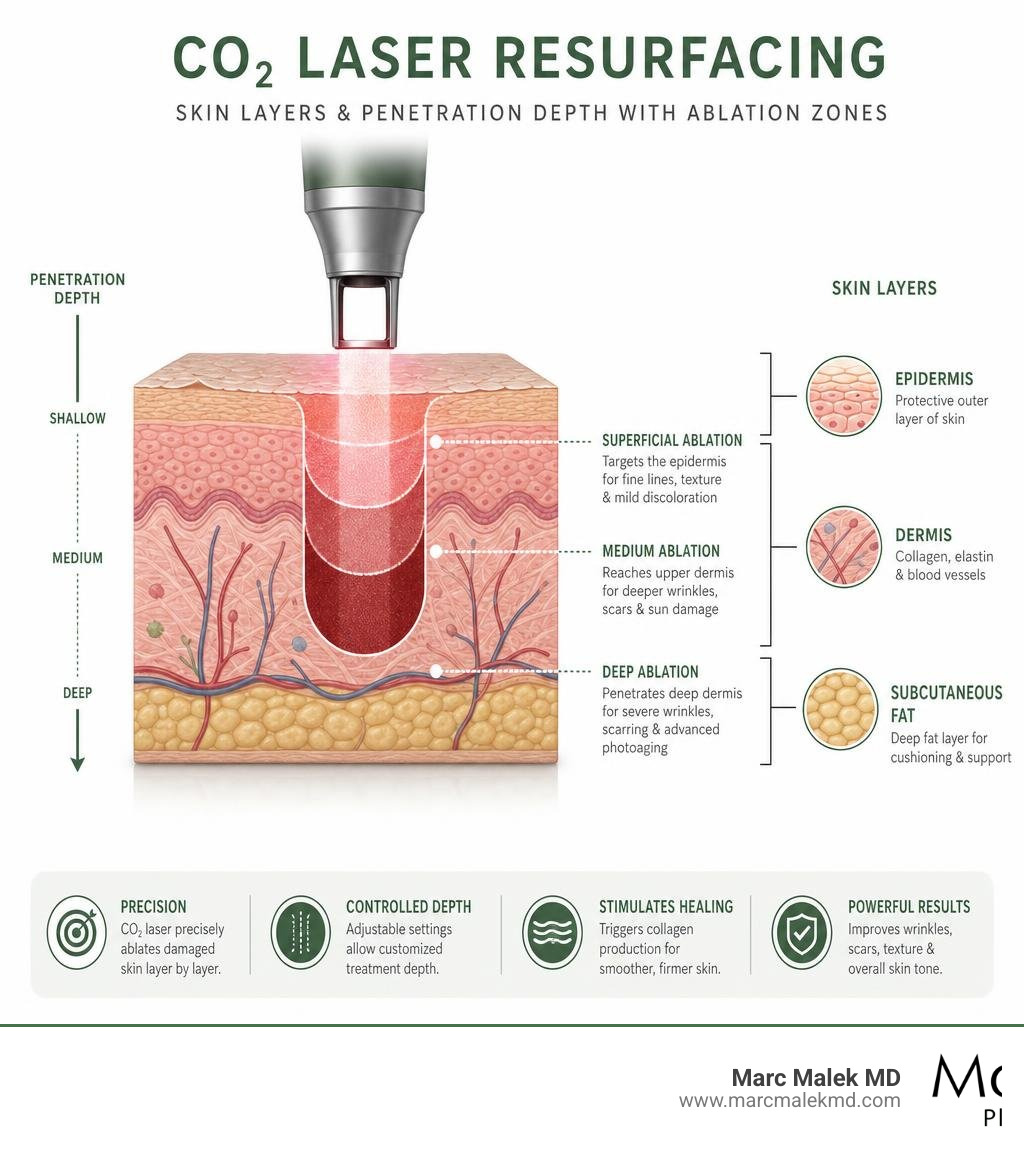
At its core, carbon dioxide laser resurfacing is an advanced skin rejuvenation technique that relies on the physics of light and water. The CO2 laser operates at a peak wavelength of 10,600 nanometers (nm). This specific wavelength is highly attracted to water, which makes up roughly 80% of our soft tissue.
When the laser beam hits the skin, the water inside the targeted skin cells absorbs the light energy instantly. This process is known as selective photothermolysis. The energy turns into heat, vaporizing the water and precisely removing thin layers of damaged skin.
As the laser ablates (vaporizes) the superficial layers, it also heats the underlying dermis. This controlled thermal injury is where the magic happens. The heat causes immediate collagen contraction, which tightens the skin. Over the next several months, your body’s natural wound-healing response kicks into overdrive, stimulating intense collagen remodeling and elastin production.
To dive deeper into the clinical science behind this technology, you can Learn more about the science of CO2 lasers or check out our comprehensive overview to Read our complete guide to laser skin resurfacing.
Fractional vs. Non-Fractional Carbon Dioxide Laser Resurfacing
When exploring your laser options, you will encounter two primary delivery methods: fractional and non-fractional (often called full-field) resurfacing.
- Non-Fractional (Full-Field) CO2 Lasers: This traditional method ablates 100% of the skin’s surface in the treated area. Older continuous-wave systems ablated tissue to a depth of 400 to 500 microns (μm), which often led to prolonged healing times and a higher risk of complications. Modern high-energy pulsed or scanned continuous-beam systems are much safer, vaporizing tissue at a controlled depth of 20 to 100 μm per pass. However, full-field treatment still requires a significant recovery period because the entire epidermal barrier is removed.
- Fractional CO2 Lasers: Introduced in 2004, fractional technology revolutionized laser treatments. Instead of vaporizing the entire surface, the laser beam is split into thousands of microscopic treatment zones. This creates tiny, deep columns of ablation (microscopic thermal zones less than 400 μm in diameter and up to 1,300 μm in depth) surrounded by columns of completely undamaged, healthy skin. Because the surrounding tissue remains intact, the skin heals much faster, drastically reducing downtime and the risk of side effects.
Here is a quick comparison to help you understand the key differences:
| Feature | Fractional CO2 Laser | Non-Fractional (Full-Field) CO2 Laser |
|---|---|---|
| Ablation Pattern | Pixelated (microscopic columns) | 100% surface coverage |
| Re-epithelialization | 5 to 10 days | 10 to 21 days |
| Typical Downtime | 1 week | 2 to 3 weeks |
| Primary Benefit | Faster healing, lower risk profile | Maximum single-session dramatic results |
| Number of Sessions | Often 1 to 3 sessions | Usually just 1 session |
CO2 Lasers vs. Erbium Lasers
Another common comparison in aesthetic medicine is the CO2 laser versus the Erbium (Er:YAG) laser.
The primary difference lies in their wavelengths and how strongly they are absorbed by water. The Er:YAG laser operates at 2,940 nm. Water absorbs Erbium energy 12 to 18 times more efficiently than CO2 energy. Because of this extreme absorption, the Erbium laser vaporizes tissue very superficially (only 3 to 5 μm per pass) with very little residual thermal damage (only 10 to 40 μm).
While Erbium lasers are excellent for superficial resurfacing with minimal downtime, they do not heat the deeper dermis as effectively as CO2 lasers. The CO2 laser’s deeper thermal damage zone (100 to 150 μm) is highly beneficial because it coagulates small blood vessels, resulting in virtually no bleeding during the procedure. More importantly, this deeper heat induces far greater collagen contraction and long-term remodeling, making the CO2 laser the undisputed champion for severe wrinkles and skin laxity. To explore this comparison further, you can Read our comparison of CO2 vs Erbium lasers.
Key Benefits and Skin Conditions Treated
Because of its ability to precisely remove damaged cells and rebuild the skin’s structural matrix, carbon dioxide laser resurfacing treats a wide variety of cosmetic and medical concerns.
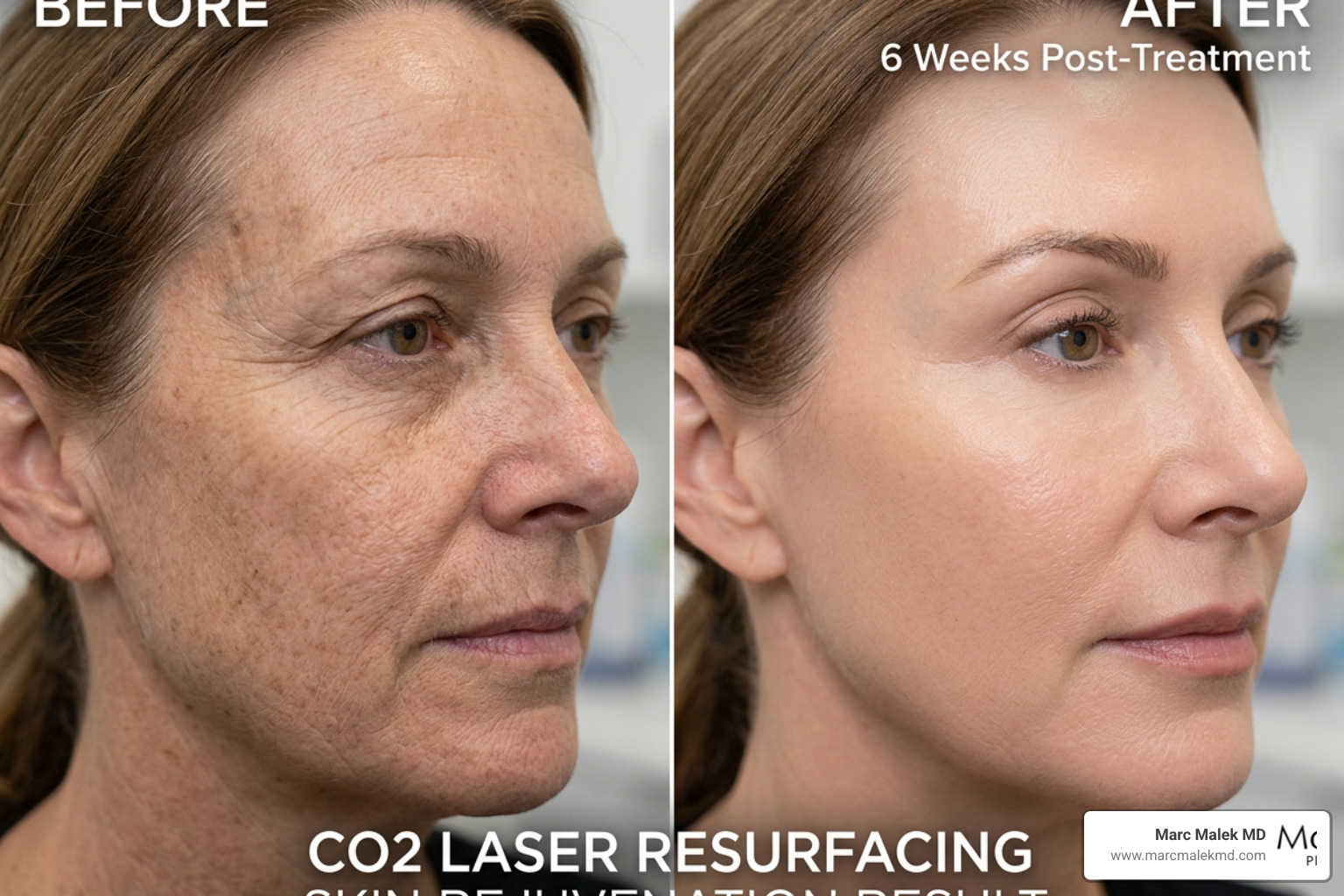
We frequently utilize this technology to address:
- Static Wrinkles and Fine Lines: Especially those deep, etched-in lines that remain visible even when your face is at rest.
- Acne and Surgical Scars: By breaking down rigid scar tissue and encouraging organized collagen growth.
- Sun Damage and Hyperpigmentation: Vaporizing sun-damaged cells to reveal a brighter, more even skin tone.
- Rhinophyma: A condition associated with severe rosacea that causes thickened, bulbous skin on the nose. The CO2 laser can sculpt and reshape the nasal contours with excellent precision.
- Benign Skin Lesions: Including warts, birthmarks, and actinic keratoses (precancerous sun spots).
To learn more about why this treatment remains a favorite among plastic surgeons, you can Discover why CO2 lasers are the gold standard for deep wrinkles.
Addressing Deep Wrinkles and Fine Lines
As we age, our skin loses its natural reserves of collagen and elastin, leading to structural collapse. Dynamic wrinkles (which appear when we smile or squint) eventually turn into permanent static wrinkles.
CO2 lasers are incredibly effective at targeting these stubborn lines, particularly around the eyes (periorbital rhytids) and surrounding the mouth (perioral rhytids, often called smoker’s lines). The localized heat causes immediate tightening of the skin’s dermal matrix. Over the following six months, your skin continues to produce fresh, organized collagen and elastin, smoothing out even deeply set creases. For a closer look at what this looks like, you can Explore eye-opening results of CO2 resurfacing.
Treating Scars and Textural Irregularities
Scars form when the body rushes to heal a wound, laying down disorganized, fibrous collagen bands. Whether you are dealing with deep pitted acne scars, trauma scars, or surgical markings, the CO2 laser offers a path to smoother skin.
By delivering high-energy pulses into the scarred tissue, we can vaporize the uneven surface layers while breaking up the rigid, fibrous bands underneath. This process triggers a highly controlled healing response that replaces the rigid scar tissue with smooth, flexible, and beautifully organized skin. If you are struggling with scarring, you can Erase scars with the help of laser technology.
Candidacy: Who is an Ideal Candidate?
While carbon dioxide laser resurfacing is incredibly powerful, it is not a one-size-fits-all solution.
An ideal candidate is someone in good overall health who is looking to correct moderate-to-severe wrinkles, sun damage, or textural scarring, and who has realistic expectations regarding the recovery process.
However, there are certain situations where the treatment should be avoided or delayed:
- Active Infections: Such as active acne breakouts or open wounds in the treatment area.
- Recent Isotretinoin Use: If you have taken isotretinoin (Accutane) within the last 6 to 12 months, you must delay treatment, as this medication severely impairs your skin’s ability to heal and increases the risk of scarring.
- History of Keloids: Patients prone to abnormal, raised scarring should avoid aggressive ablative lasers.
- Autoimmune or Connective-Tissue Disorders: Conditions that compromise the immune system or wound healing can make the procedure unsafe.
To help you evaluate your suitability, you can Check if laser resurfacing is right for you.
Skin Tone Considerations and Fitzpatrick Types
Your skin tone is one of the most critical factors we evaluate when determining candidacy. Skin tones are classified using the Fitzpatrick scale, which ranges from Type I (very fair, always burns) to Type VI (deeply pigmented Black skin).
Because the CO2 laser generates significant heat, patients with darker skin tones (Fitzpatrick Types IV–VI) have a much higher risk of developing post-inflammatory hyperpigmentation (PIH) or hypopigmentation (loss of skin color). When the melanocytes (pigment-producing cells) are exposed to heat, they can react by overproducing pigment, leading to dark patches.
For this reason, traditional non-fractional CO2 laser resurfacing is safest and most effective for Fitzpatrick skin types I and II. While fractional CO2 lasers can sometimes be used cautiously on Type III and occasionally Type IV skin, settings must be highly customized, and pre-treatment skin prepping is mandatory. To learn more about how we keep your skin safe, Learn about ablative laser safety and skin types.
The Treatment Experience: Preparation and Procedure
Your safety and comfort are our top priorities. A successful CO2 laser treatment requires careful preparation and a highly controlled clinical protocol on the day of your procedure.
To get a complete, step-by-step overview of how we structure this treatment from start to finish, you can Read our full face laser resurfacing guide.
Preparing Your Skin for Carbon Dioxide Laser Resurfacing
Preparation actually begins several weeks before you step into our clinic:
- Sun Avoidance: You must strictly avoid unprotected sun exposure for at least four weeks prior to treatment. A tan represents active melanin, which dramatically increases your risk of post-laser hyperpigmentation.
- Skincare Prep: For patients with Fitzpatrick Type III skin or those prone to hyperpigmentation, we often prescribe a pre-treatment regimen consisting of 0.1% tretinoin and 5% hydroquinone (a skin-lightening agent) for about five weeks beforehand to quiet down the pigment-producing cells.
- Medication Prophylaxis: Because the laser’s heat can reactivate the herpes simplex virus (HSV), we put all patients undergoing perioral or full-face resurfacing on an antiviral medication (such as valacyclovir 500 mg twice daily). This protocol begins the day before or the morning of the procedure and continues for 10 to 14 days. We may also prescribe prophylactic antibiotics or antifungals to prevent infections while your skin’s protective barrier is temporarily down.
What Happens During the Procedure
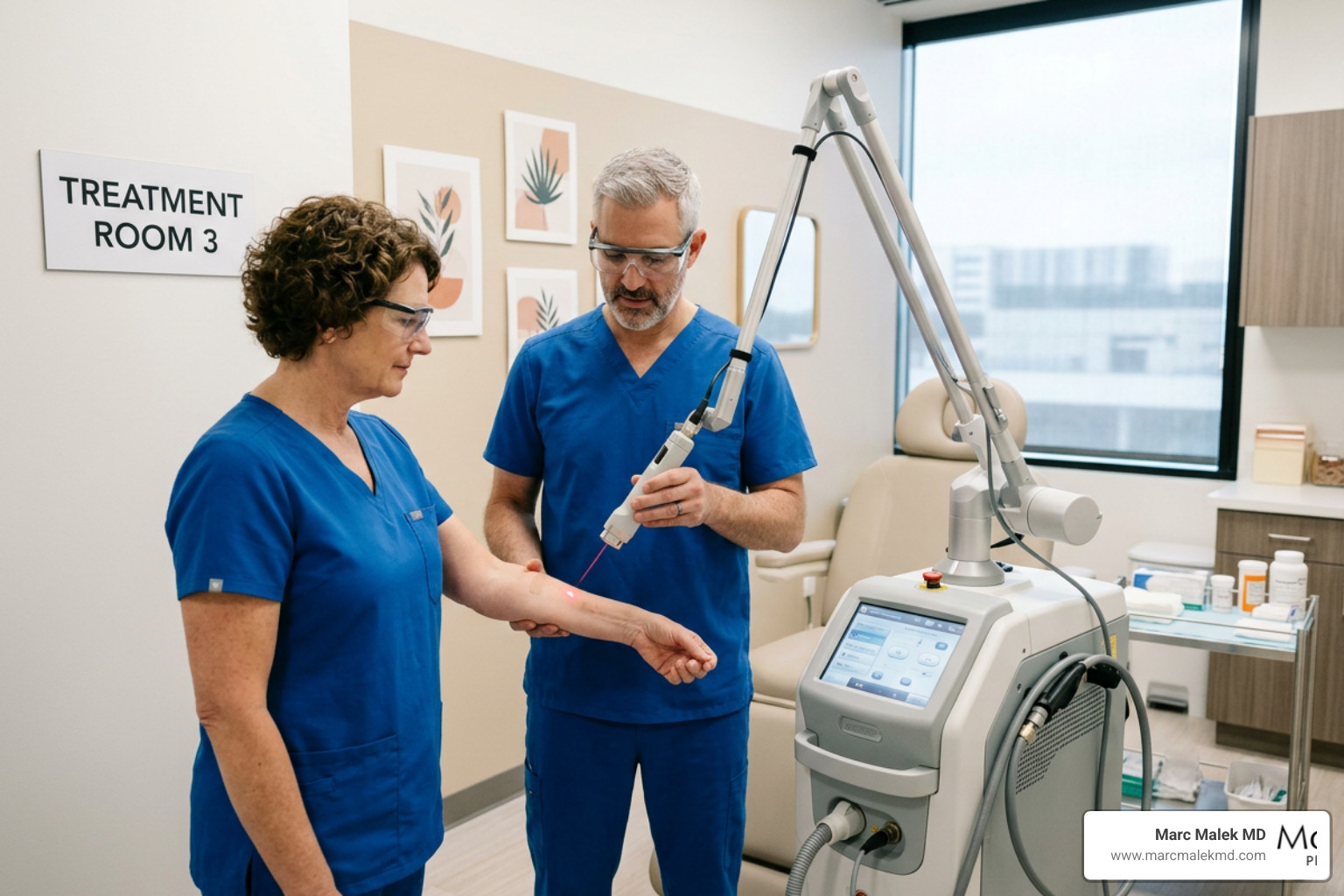
On the day of your treatment, we want you to feel completely at ease. Here is what you can expect during the procedure:
- Anesthesia and Numbing: We apply a strong topical numbing cream to the treatment area. For deeper, full-face treatments, we often combine this with local nerve blocks, oral sedatives, or even intravenous sedation to ensure you do not feel pain.
- Skin Cleansing: We thoroughly cleanse your skin with a non-alcohol-based antiseptic (such as a 5% povidone-iodine solution). Alcohol-containing solutions are strictly avoided due to the fire risk associated with surgical lasers.
- Eye Protection: We place wavelength-specific protective eyewear or metal corneal shields over your eyes to protect your vision from the laser light.
- The Laser Application: We pass the laser handpiece systematically over the targeted areas. If we are performing a combined treatment, we may use a deeper setting (like Deep FX) for structural remodeling first, followed by a shallower pass (like Active FX) to smooth out the surface.
- The Clinical Endpoint: For deeper, full-field resurfacing, we look for a very specific clinical endpoint: the removal of the epidermis and the exposure of the papillary dermis, which is marked by a subtle yellowing of the wound bed (often called a “chamois” color) and tiny pinpoints of bleeding.
- Immediate Aftercare: Once completed, we apply a cool compress and immediately coat the skin in a thick, protective layer of occlusive ointment (such as Aquaphor or medical-grade petrolatum) to seal in moisture and protect the raw skin.
Recovery Timeline and Post-Treatment Care
The recovery phase is where your new skin is built. While the laser does the work of removing the old tissue, your commitment to post-treatment care determines the final quality of your results.
To visualize the transformation, you can See real patient results in our CO2 laser gallery.
The First 7 to 10 Days of Healing
The initial week following your treatment requires diligent wound care. Re-epithelialization — the process where new skin cells grow back to cover the raw surface — typically takes about 6 to 8 days.
During this time, you can expect significant swelling, redness, oozing, and crusting. To manage this phase comfortably:
- Keep it Moist: Never allow your skin to dry out or form hard scabs. Apply a thick layer of petrolatum-based ointment (like Aquaphor or Vaseline) constantly. This acts as a temporary barrier while your skin heals.
- Gentle Cleansing: Cleanse your face 2 to 5 times daily using a dilute vinegar solution (one tablespoon of white vinegar in a cup of cool water) or sterile saline. Gently press a clean, soaked compress to your skin to help break up crusting without rubbing or pulling.
- Manage Swelling: Sleep with your head elevated on an extra pillow and apply ice packs wrapped in clean towels for the first 24 to 48 hours.
Long-Term Recovery and Redness Management
Once the new layer of skin has completely covered the treated area (usually by day 7 to 10), the raw oozing stops, and your skin will look bright pink or red.
This post-treatment redness (erythema) is a normal sign of increased blood flow delivering healing nutrients to your skin. It typically fades over 2 to 3 months, though it can occasionally linger for up to 6 months, particularly in individuals with blond or red hair.
Once your skin is fully closed, you can transition from heavy ointments to a liberal, non-irritating moisturizer. You can also begin using a mineral-based physical sunscreen (SPF 30 or higher containing zinc oxide and titanium dioxide) daily. Applying makeup to camouflage the pinkness is safe once the skin has completely healed over. For more tips on navigating this phase, you can Read about what to expect after CO2 laser resurfacing.
Potential Risks, Side Effects, and Complications
Like any medical procedure, carbon dioxide laser resurfacing carries potential risks. Understanding these risks and following your provider’s instructions is the best way to minimize them:
- Hyperpigmentation or Hypopigmentation: Temporary dark patches (PIH) are relatively common but can be treated with topical bleaching agents. Permanent loss of pigment (hypopigmentation) is rare but can occur with overly aggressive settings.
- Infection: Because the skin’s protective barrier is compromised, bacterial, fungal, or viral infections can occur. Following your antiviral and hygiene protocols is critical.
- Milia: Tiny white cysts may form during the healing process as the skin rapidly regenerates. These are harmless and can be easily extracted in our office.
- Acne Flares: Heavy occlusive ointments can sometimes clog pores and trigger temporary breakouts.
- Scarring: Although very rare when performed by an experienced specialist, excessive thermal damage can lead to permanent scarring.
To read a detailed breakdown of these risks, you can Read about CO2 laser resurfacing details and risks.
Frequently Asked Questions About CO2 Laser Resurfacing
We understand that you likely have several questions as you consider this transformative treatment. Here are some of the most common questions our patients ask:
How much does carbon dioxide laser resurfacing cost?
The cost of your treatment depends on several factors, including the size of the area being treated (e.g., partial face, full face, neck, or chest), whether you choose fractional or full-field resurfacing, and the type of anesthesia required. On average, a comprehensive CO2 laser treatment ranges around $3,500. During your private consultation, we will provide a detailed, personalized quote based on your specific goals. To explore this topic further, you can Read our complete guide to CO2 laser resurfacing costs.
How long do the results of a CO2 laser treatment last?
While the laser cannot stop the natural aging process, the results of a CO2 laser treatment are exceptionally long-lasting. The new collagen and elastin fibers created during the remodeling process remain in your skin for years. Many patients enjoy their rejuvenated appearance for five to ten years. To maximize the longevity of your results, we recommend a medical-grade skincare routine, daily broad-spectrum sun protection, and avoiding smoking.
Is the CO2 laser resurfacing procedure painful?
Without anesthesia, deep CO2 laser resurfacing would be quite uncomfortable. However, we take extensive measures to ensure your comfort. We use a combination of prescription-strength topical numbing creams, local nerve blocks (similar to what you receive at the dentist), and oral or IV sedation. Most patients describe the sensation during the procedure as a warm, prickly feeling. After the treatment, your skin will feel like a moderate-to-severe sunburn for the first day or two, which can be easily managed with cool compresses and over-the-counter pain relievers.
Conclusion
When it comes to dramatic, long-lasting skin rejuvenation, carbon dioxide laser resurfacing remains the gold standard. By combining state-of-the-art laser technology with a deep understanding of facial anatomy, we can help you turn back the clock on deep wrinkles, sun damage, and scarring.
At the practice of Dr. Marc Malek in Scottsdale, Arizona, we believe in a highly personalized, artistic approach to cosmetic medicine. We focus on your comfort, your safety, and delivering beautiful, natural-looking results that balance your unique features.
If you are ready to explore what CO2 laser resurfacing can do for your skin, we invite you to Schedule a consultation for laser skin resurfacing with our team in Scottsdale today.