

How to Transfer Body Fat to Breasts for a Natural Look
What It Really Means to Transfer Body Fat to Breasts
Transferring body fat to breasts — also called fat transfer breast augmentation, autologous fat grafting, or lipomodelling — is a surgical procedure that moves your own fat from one area of your body directly into your breasts to add natural volume and shape.
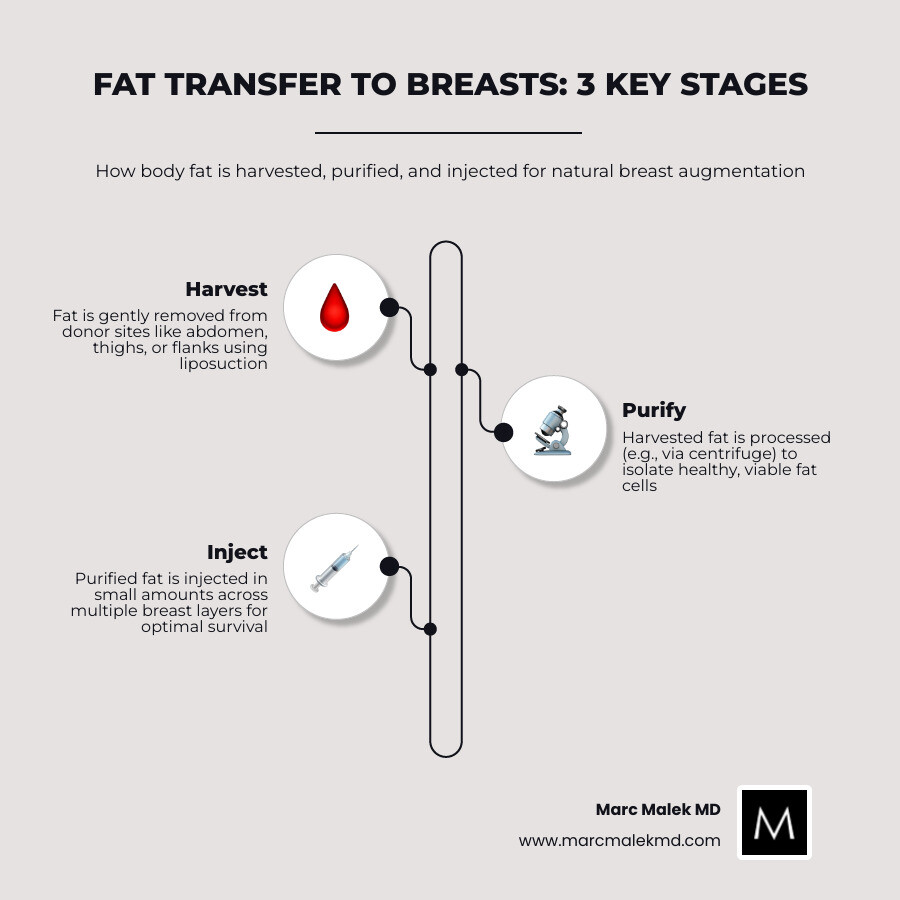
Here’s a quick overview of how it works:
- Harvest — Fat is removed from a donor area (like your abdomen, thighs, or flanks) using gentle liposuction.
- Purify — The harvested fat is processed to isolate healthy, viable fat cells.
- Inject — The purified fat is carefully injected into the breasts in small amounts across multiple layers.
Who it’s best for: People who want a modest, natural-looking breast enhancement — typically around one cup size — without implants or synthetic materials.
Key things to know upfront:
- Results are natural-looking and feeling, since your own tissue is used
- Around 50–70% of transferred fat integrates permanently; some is naturally reabsorbed
- It offers a dual benefit: slimming the donor site while enhancing the breasts
- It’s not the right choice for anyone wanting a dramatic size increase
If you’re frustrated by body areas that diet and exercise can’t change, and you want a more balanced figure without synthetic implants, fat transfer may be worth exploring.
Fat transfer breast augmentation has grown steadily in popularity — the American Society for Aesthetic Plastic Surgery recorded over 18,000 fat grafting procedures to the breasts in 2015 alone. And the number has continued to climb as more patients seek natural alternatives to traditional implants.
But like any surgical procedure, the results depend heavily on technique, candidacy, and realistic expectations. This guide walks you through everything you need to know.
What is the Process to Transfer Body Fat to Breasts?
When we talk about the procedure to transfer body fat to breasts, we are looking at a sophisticated form of recycling. Instead of using a synthetic medical device, we utilize your own living tissue to sculpt a more proportional silhouette. This process is far more nuanced than simply “moving” fat; it requires a three-stage surgical approach designed to ensure the fat survives in its new home.
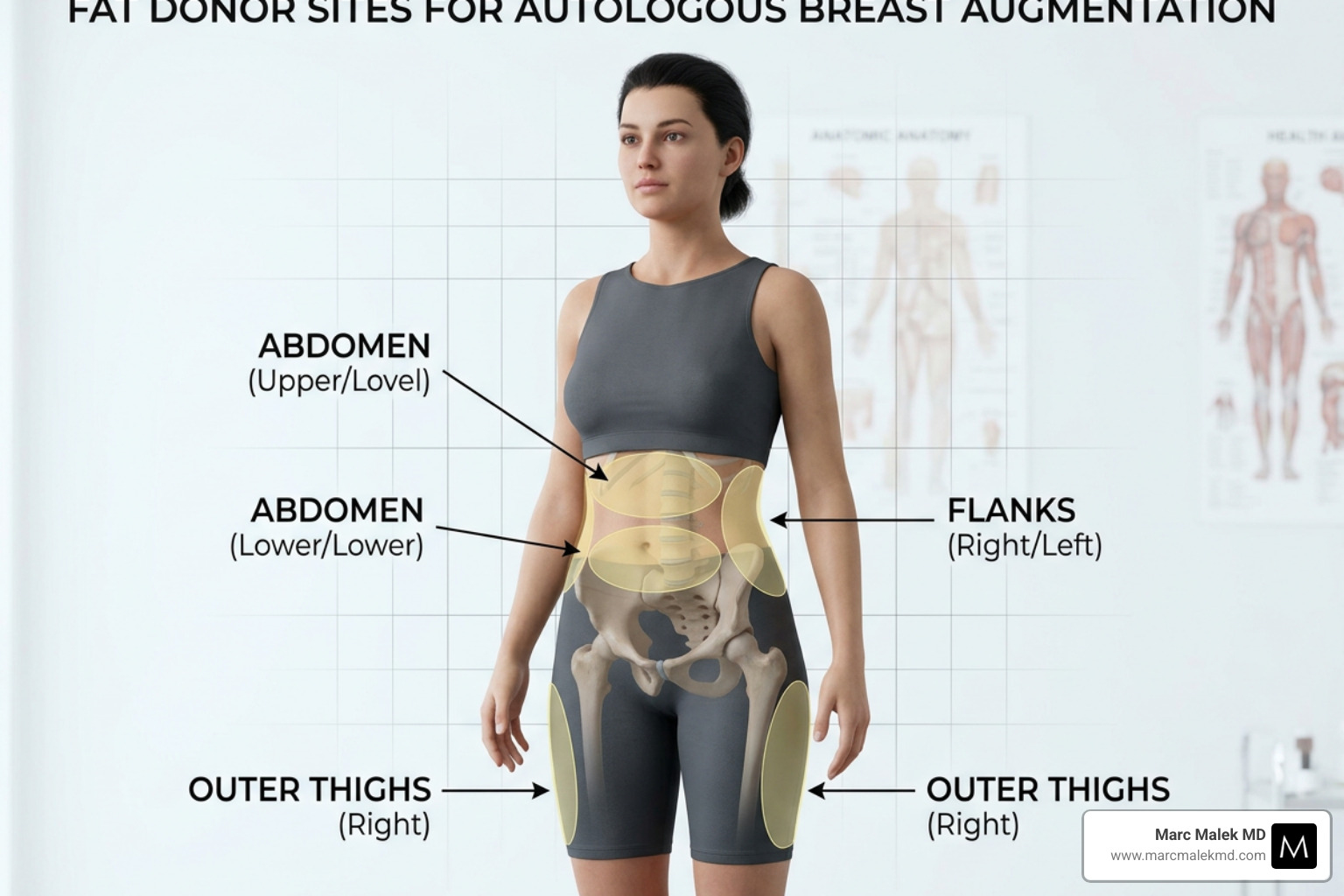
The journey begins with identifying donor sites where you have a surplus of high-quality fat. Common areas include the abdomen, outer thighs, or the “love handles” (flanks). Because we are using your own cells, there is zero risk of an allergic reaction or “rejection” by your immune system.
Harvesting the Donor Fat
The first stage involves specialized liposuction. Unlike traditional liposuction, which might focus purely on fat removal, harvesting for fat transfer must be incredibly gentle. We use low-pressure suction to ensure the delicate fat cell membranes remain intact.
Common donor sites include:
- The Abdomen: Often the primary choice for many patients.
- The Thighs: Both inner and outer thighs provide excellent “gold” fat.
- The Flanks: Ideal for those looking to narrow their waistline simultaneously.
The goal here is a dual benefit: we slim down a “problem area” while collecting the building blocks for your breast enhancement. You can view our liposuction gallery to see how these donor areas are transformed through the harvesting process.
Purification and Injection
Once the fat is removed, it cannot be immediately re-injected. It contains excess fluids, oil, and damaged cells that would not survive the transfer. We place the harvested material into a centrifuge—a machine that spins at high speeds—to separate the pure, healthy adipocytes (fat cells) from the waste.
The final stage is the most artistic. Using a micro-droplet technique, we strategically inject the purified fat into the breast tissue. We don’t just “fill” the breast; we place the fat in multiple planes and layers. This ensures that every tiny droplet of fat is in close contact with a healthy blood supply. According to scientific research on fat grafting safety and techniques, this meticulous placement is what allows the fat to “take” and become a permanent part of your anatomy.
Ideal Candidates for Natural Breast Augmentation
While the idea of “losing it where you don’t want it and gaining it where you do” sounds like a dream, it isn’t the right fit for everyone. During a consultation in our Scottsdale or Phoenix offices, we look for several key factors to ensure you’ll be happy with your results.
The “Must-Haves” for Candidacy:
- Sufficient Donor Fat: You need enough “pinchable” fat in areas like the stomach or thighs. Very thin or athletic individuals with low body fat percentages may not have enough volume to harvest.
- Stable BMI: Your weight should be stable. Significant weight loss after the procedure can shrink the transferred fat cells, undoing your results.
- Non-Smoker: Smoking severely restricts blood flow, which is the “life support” for newly transferred fat.
- Modest Goals: If you are looking to go from an A-cup to a D-cup, fat transfer alone won’t get you there.
If you are unsure if this is the right path for you, exploring what type of breast surgery do I need? can help clarify your options.
Realistic Expectations for Volume
One of the most important things to understand when you transfer body fat to breasts is the limit of volume. On average, we can safely transfer between 120 mL and 250 mL of fat per breast in a single session.
What does that look like in real life? It usually equates to about a one cup size increase. While we can sometimes achieve a bit more, over-filling the breast can actually cause the fat to die (fat necrosis) because there isn’t enough blood supply to support it all at once. As we often tell our patients, breast augmentation: you don’t have to go big to see a beautiful, confidence-boosting change.
Comparing Fat Transfer and Implants
To help you decide, let’s look at how natural fat stacks up against traditional implants.
| Feature | Fat Transfer | Silicone/Saline Implants |
|---|---|---|
| Material | Your own living tissue | Medical-grade silicone or saline |
| Feel | Completely natural | Can feel slightly firmer |
| Scars | Tiny pin-pricks (liposuction sites) | 1–2 inch incisions |
| Size Increase | Modest (approx. 1 cup) | Significant (customizable) |
| Rejection Risk | Zero | Small risk of capsular contracture |
| Longevity | Permanent (once integrated) | May need replacement in 10–15 years |
For many, the choice comes down to whether they prioritize a dramatic change or a subtle, scar-free enhancement. You can explore breast augmentation options further to see which fits your lifestyle.
Benefits and Limitations When You Transfer Body Fat to Breasts
The primary draw of this procedure is the dual benefit. You aren’t just getting a breast enhancement; you’re getting a body contouring treatment. By removing fat from the abdomen or flanks, we create a slimmer waistline that makes the new breast volume stand out even more.
Furthermore, because there are no synthetic materials involved, there is no risk of implant-related complications like ruptures or capsular contracture. According to research on fat transfer results and risks, the rate of serious complications is remarkably low.
Why Patients Choose Autologous Fat
“Autologous” simply means “from the same person.” Patients often choose this route because they want to avoid the “surgical look.” The results are soft to the touch and behave exactly like natural breast tissue because, well, they are natural breast tissue.
Whether you are looking to correct minor asymmetry, fill out the “upper pole” of the breast after breastfeeding, or simply want a bit more cleavage, this method offers an integrated, permanent solution.
Understanding Fat Survival and Reabsorption
It is vital to be honest about the “take rate.” Not every fat cell we transfer will survive. In a typical procedure, about 30% to 50% of the injected fat may be naturally reabsorbed by your body within the first few months.
This means:
- Retention: Usually, 50% to 70% of the fat stays permanently.
- Multiple Sessions: If you want more volume, you might need a second session 6 months later.
- Weight Sensitivity: The transferred fat will grow or shrink just like the rest of your body fat. If you lose 20 pounds, your breasts will likely get smaller.
In some cases, fat that doesn’t survive can form small, hardened lumps known as fat necrosis or oil cysts. While usually harmless, scientific research on fat necrosis and calcification suggests these should be monitored to ensure they don’t interfere with future health screenings.
Recovery and Postoperative Care to Transfer Body Fat to Breasts
Recovery from fat transfer is often described as “easier” than implant surgery because we aren’t cutting through muscle. However, you are recovering from two different sites: the donor area (liposuction) and the recipient area (breasts).
The Recovery Timeline
- Downtime: Most patients take about one week off work. You’ll feel a bit sore, similar to the feeling of a very intense workout.
- Compression: You will need to wear a compression garment on your donor sites (like a tight bodysuit) for several weeks to minimize swelling and help the skin “snap back.”
- Activity: Avoid strenuous exercise and heavy lifting for at least four weeks. Most importantly, avoid putting direct pressure on your breasts (no sleeping on your stomach!) as this can “suffocate” the new fat cells.
- Final Results: While you’ll see a change immediately, the “final” look takes 3 to 6 months to settle as the swelling goes down and the fat stabilizes.
To see the difference in healing and aesthetics, you can view our breast augmentation with silicone gallery to compare the recovery outcomes of different methods.
Long-Term Maintenance and Breast Health
Once the fat has survived the first six months, it’s there for good. It will age with you naturally. However, it is important to stay at a stable weight to maintain the proportions we’ve created.
One common question involves mammograms. While fat transfer can sometimes cause “microcalcifications” (tiny calcium deposits), modern digital mammography is very good at distinguishing these from cancer. We always recommend informing your radiologist that you’ve had a fat transfer so they can read your scans accurately. To ensure you are in the best hands, always find a qualified surgeon via ASPS who understands these long-term health implications.
Frequently Asked Questions about Fat Transfer
How much does it cost to transfer body fat to breasts?
In the United States, the cost can vary widely based on the extent of the liposuction required and the number of sessions. Generally, it can range from $6,000 to $10,000. While this may be higher than a standard implant procedure, you are essentially getting two surgeries in one: liposuction and breast augmentation.
Will the transferred fat disappear if I lose weight?
The fat cells that survive the transfer are permanent residents of your breasts. However, they are living cells. If you lose a significant amount of weight, those individual cells will shrink, just like the fat on your waist or arms. To keep your results looking their best, we recommend maintaining a stable weight.
Does fat transfer impact breast cancer screenings?
As mentioned, it can occasionally cause small cysts or calcifications. However, studies have shown that fat transfer does not increase the risk of breast cancer. The key is choosing an experienced surgeon who uses proper injection techniques to minimize these side effects and having your screenings done at a facility familiar with post-cosmetic surgery imaging.
Conclusion
Deciding to transfer body fat to breasts is a journey toward a more natural, balanced version of yourself. It’s about using what you already have to enhance what you want. By combining the science of fat grafting with an artistic eye for proportions, we can achieve results that look and feel like they were always meant to be there.
At Marc Malek MD, we take a personalized and artistic approach to every procedure. We focus on your comfort and long-term satisfaction, ensuring that your results are not just beautiful, but proportionally balanced for your unique body. If you’re ready to see if this natural approach is right for you, we invite you to schedule a consultation for breast augmentation at our Scottsdale office. Let’s work together to help you feel confident in your own skin.