

Introduction: Understanding Breast Reduction Surgery
Breast reduction is a surgical procedure that removes excess breast tissue, fat, and skin to achieve a smaller, more proportionate bust size that better fits your body. Also known as reduction mammaplasty, this surgery can relieve chronic pain, improve your ability to exercise, and restore confidence in your appearance.
Quick Answer: What You Need to Know About Breast Reduction
- What it is: Surgical removal of excess breast tissue, fat, and skin
- Surgery time: 3-5 hours under general anesthesia
- Recovery: 1-2 weeks off work; 4-6 weeks before strenuous activity
- Best candidates: Healthy non-smokers experiencing physical discomfort from large breasts
- Key benefits: Relief from back/neck/shoulder pain, improved posture, easier exercise, better-fitting clothes
- Important considerations: Permanent scars, potential impact on breastfeeding, insurance may cover if medically necessary
- Cost factors: Surgical time, technique used, anesthesia fees
If you’ve been struggling with the physical burden of overly large breasts—chronic pain in your back, neck, and shoulders, deep grooves from bra straps, difficulty finding clothes that fit, or limited ability to exercise—breast reduction could be life-changing. This procedure addresses both the physical discomfort and emotional toll that many people experience.
An estimated 40-60% of women with large breasts report significant back pain, and nearly all experience relief after breast reduction surgery. Beyond pain relief, many patients describe feeling more confident, comfortable in their bodies, and free to pursue activities they couldn’t before.
The surgery typically takes place in an outpatient setting and involves removing excess tissue through carefully placed incisions. While recovery requires patience—with most people returning to work within 1-2 weeks and full activity by 4-6 weeks—the long-term results are generally permanent and highly satisfying.
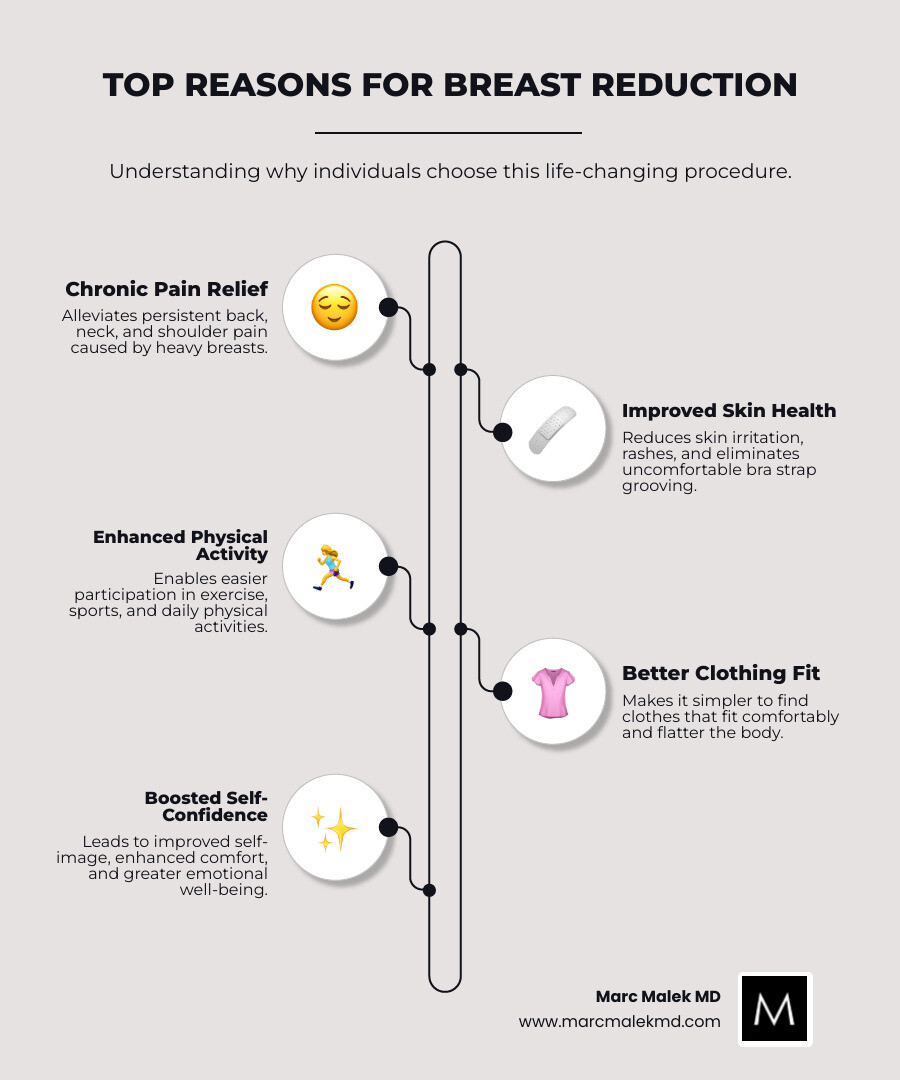
The Transformative Benefits of a Breast Reduction
For many, large breasts are more than just a cosmetic concern; they are a source of constant physical and emotional strain. At Marc Malek MD, we understand these challenges, and we’ve seen how breast reduction surgery can be a truly transformative experience. Our patients often tell us it’s one of the best decisions they’ve ever made for themselves, and we couldn’t agree more.
Physical Relief
One of the most compelling reasons people choose breast reduction is the profound physical relief it offers. Large, heavy breasts can put significant strain on the body, leading to a host of uncomfortable symptoms:
- Chronic Pain Relief (Back, Neck, Shoulders): This is perhaps the most frequently cited benefit. The sheer weight of excess breast tissue can pull on the upper back, neck, and shoulders, causing persistent aches and stiffness. Breast reduction surgery can relieve this pain, often dramatically. Imagine waking up without that familiar dull ache!
- Improved Posture: To compensate for heavy breasts, many individuals unconsciously slouch, leading to poor posture. By reducing breast size, we can help restore a more natural, upright posture, which further alleviates back pain.
- Reduced Skin Irritation: The skin folds beneath large breasts can become a breeding ground for rashes and chronic irritation, especially in Arizona’s warm climate. Removing this excess tissue significantly reduces or eliminates this uncomfortable problem.
- Elimination of Bra Strap Grooving: Those deep, painful indentations left by bra straps on your shoulders are a clear sign of excessive weight. After breast reduction, nearly all our patients report a significant reduction, if not complete elimination, of bra strap pain and grooving.
- Improved Ability to Exercise: For many, large breasts make physical activity uncomfortable, painful, or even impossible. Imagine being able to run, jump, or simply walk briskly without discomfort! Our patients often find newfound energy and freedom to pursue activities they couldn’t enjoy before.
- Easier Breathing: In some cases, very large breasts can even restrict lung capacity, making breathing feel labored. With smaller, more proportionate breasts, many individuals report an easier, more comfortable breathing experience.
For more on how this procedure can alleviate physical discomfort, you can read our blog post on the Benefits of Breast Reduction, Lift Surgery.
Emotional Well-being
Beyond the physical, breast reduction offers significant emotional and psychological benefits that greatly improve our patients’ quality of life:
- Renewed Self-Confidence: Feeling self-conscious about breast size can impact everything from clothing choices to social interactions. A breast reduction can lead to a powerful boost in self-confidence, allowing you to feel more comfortable and confident in your own skin.
- Improved Self-Image: Many individuals with overly large breasts experience a poor self-image. Achieving a breast size that feels more balanced and proportionate to your body can profoundly improve how you see yourself.
- Easier to Find Fitting Clothes: Shopping for clothes can be a frustrating experience when your breasts dictate your entire wardrobe. After breast reduction, patients often find it much easier and more enjoyable to find clothes that fit well and flatter their new silhouette.
- Feeling More Comfortable in Your Body: Breast reduction helps you achieve a sense of harmony and comfort within your own body. This newfound comfort can reduce anxiety and psychological depression, allowing you to lead a more fulfilling life.
Candidacy, Risks, and Important Considerations
Considering breast reduction is a deeply personal decision, and we believe it should be made for yourself, not to satisfy others’ desires. Our goal at Marc Malek MD is to ensure you have realistic expectations and a thorough understanding of the process. This begins with a comprehensive medical evaluation to determine if surgery is the right path for you.
Who is a Good Candidate for Breast Reduction?
We carefully assess each patient to ensure breast reduction is a safe and effective option. Generally, good candidates for breast reduction surgery are:
- Bothered by Large Breasts: You should genuinely desire a reduction in breast size due to discomfort or dissatisfaction.
- Experiencing Physical Discomfort: Ideal candidates suffer from chronic back, neck, or shoulder pain, bra strap grooving, or skin irritation beneath the breast crease.
- In Good Overall Health: We look for healthy individuals without life-threatening illnesses or other medical conditions that could impair healing.
- Non-Smoker: Smoking significantly increases the risk of complications and can hinder the healing process. We require patients to quit smoking for at least six weeks before and after surgery.
- Stable Weight: While weight loss can sometimes reduce breast size, we recommend that patients have a stable weight before surgery. Significant weight fluctuations after surgery can alter results. If you are planning to lose a substantial amount of weight, we may suggest postponing your procedure.
- Breasts Are Fully Developed: For women, it is recommended to wait until after age 20, when the breasts are typically fully developed, to ensure long-lasting and stable results.
- Not Planning Future Breastfeeding: As we’ll discuss, breast reduction can impact the ability to breastfeed.
Understanding the Potential Risks
Like any surgical procedure, breast reduction carries potential risks and complications. While we take every precaution to minimize these, it’s crucial for you to be aware of them:
- Scarring: Breast reduction involves incisions, which will result in permanent scars. While we carefully place incisions to be as inconspicuous as possible, and scars will fade over time, they will never disappear completely.
- Changes in Nipple Sensation: It’s possible to experience a decrease or even a complete loss of sensation in the nipples and areolas, sometimes permanently. Some studies indicate that decreased nipple-areola complex (NAC) sensitivity occurs in about 10% of patients, with total insensitivity in about 1%.
- Asymmetry: While we strive for symmetry, slight differences in breast size or shape can occur.
- Bleeding and Infection: These are general surgical risks, and we take preventative measures, including antibiotics, to minimize them.
- Anesthesia Risks: Adverse reactions to general anesthesia are rare but possible.
- Other Complications: Rarely, issues like inadequate healing requiring a skin graft, fat necrosis (death of fatty tissue), or fluid accumulation (seroma) can occur.
Certain factors can increase the risk of postoperative complications, including a body mass index (BMI) over 30, smoking, and greater volumes of tissue resected. We encourage you to review comprehensive information, such as the insights from A systematic review of postoperative complications, to be fully informed.
Special Topics: Breastfeeding, Insurance, and Male Breast Reduction
We understand that for many, these are critical considerations when contemplating breast reduction.
Impact on Breastfeeding
For women planning to breastfeed in the future, breast reduction surgery requires careful consideration. The procedure involves removing breast tissue and reshaping the breast, which can sometimes sever milk ducts leading to the nipples. This means that after a breast reduction, you may not be able to breastfeed, or your ability to do so might be significantly reduced. Techniques like free nipple-areola grafting, often used for very large reductions, typically result in the loss of breastfeeding ability and sensation. We will discuss this thoroughly during your consultation, especially if you intend to breastfeed in the future.
Insurance Coverage
A common question we receive is, “Can breast reduction surgery be covered by insurance?” The good news is, yes, in many cases it can be! Because breast reduction often addresses medically necessary issues like chronic pain, skin irritation, and nerve pain, many insurance providers in Arizona consider it a reconstructive rather than purely cosmetic procedure.
To secure coverage, you’ll typically need to provide documentation of your physical symptoms, including:
- A detailed letter from your primary care physician outlining the medical necessity.
- Photographs of your breasts.
- Measurements of the amount of tissue to be removed.
- Evidence of conservative treatments (e.g., chiropractic care, physical therapy) you’ve tried without success.
We recommend communicating with your insurance carrier early in the process to understand their specific requirements and what expenses they cover.
Male Breast Reduction (Gynecomastia Surgery)
Breast reduction is not just for women! We also perform male breast reduction, medically known as gynecomastia surgery. Gynecomastia is a condition characterized by enlarged breast tissue in men, which can cause significant self-consciousness and impact self-confidence. In fact, gynecomastia affects an estimated 40 to 60 percent of men.
Causes vary; it’s common for young men to experience temporary enlarged breasts during puberty due to hormonal surges. Men in their 20s might see it due to medication side effects or being overweight, while those over 30 could have underlying medical conditions affecting the thyroid or pituitary gland.
Our male breast reduction surgery in Scottsdale aims to remove this excess breast tissue, crafting a flatter, firmer, and more masculine chest contour. This can be a life-changing procedure for men struggling with the physical and emotional burden of enlarged breasts. You can see examples of successful changes in our Male Breast Reduction Surgery gallery. For more detailed information on breast reduction for both women and men, please visit our main page on Breast Reduction Surgery.
Your Surgical Journey: From Preparation to Recovery
Your journey with us towards a more comfortable you involves careful planning, precision during the procedure, and dedicated post-operative care. We believe in guiding you every step of the way, ensuring you feel informed and supported.
Exploring Surgical Techniques for Breast Reduction
There isn’t a one-size-fits-all approach to breast reduction. We tailor the surgical technique to your unique anatomy, the amount of tissue to be removed, and your desired outcome. Our goal is always to achieve the best possible aesthetic result with minimal scarring.
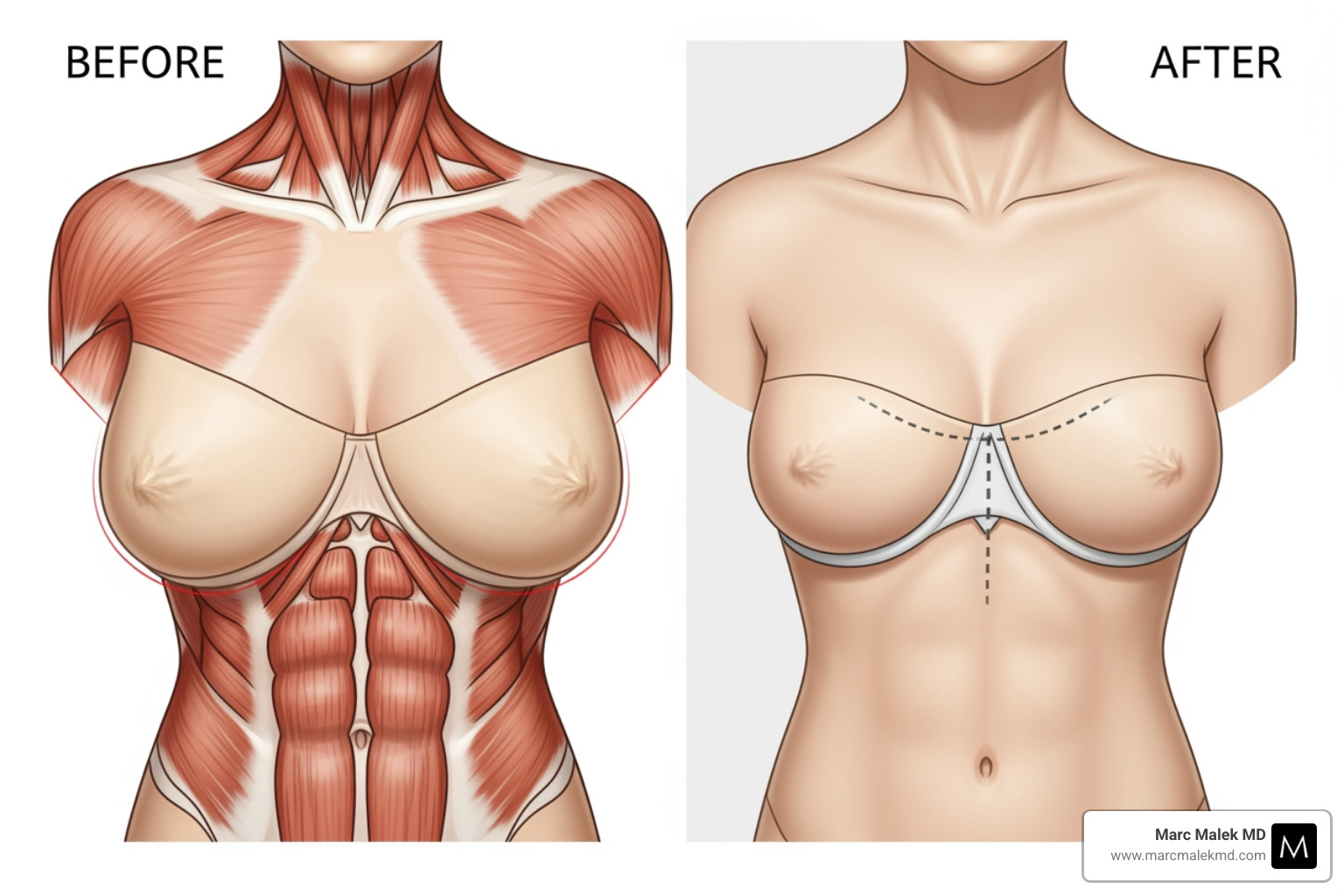
Here are the primary techniques we use:
- Inferior Pedicle Technique: This is currently the most widely used approach in breast reduction mammoplasty due to its versatility and high patient satisfaction. It involves an incision often shaped like an anchor, allowing for significant tissue removal and reshaping while maintaining blood supply to the nipple.
- Vertical “Lollipop” Mammoplasty: Best suited for small to moderate reductions, this technique uses incisions around the areola and a vertical incision extending down to the breast crease, resembling a lollipop. It offers an alternative to the traditional anchor pattern, often resulting in less scarring by eliminating the horizontal inframammary scar.
- Inverted-T “Anchor” Technique: For patients requiring more substantial reduction and significant lifting, the inverted-T or anchor pattern is often employed. This involves incisions around the areola, vertically down the breast, and horizontally along the inframammary fold.
- Free Nipple Graft: In cases of massive breast reduction, or when nipple-areola viability is a concern (e.g., due to extreme size, or in patients who smoke), the nipple and areola may be removed entirely and then reattached as a skin graft. While effective for very large reductions, this technique typically results in a loss of sensation and the ability to breastfeed.
- Liposuction-Only Reduction: For minor to moderate volume reductions, especially when the breast tissue is primarily fatty and there is minimal sagging, liposuction alone can be an effective option. This technique involves small incisions for the insertion of a cannula to suction out excess fat, resulting in smaller scars and a quicker recovery.
Understanding which technique is right for you is part of our in-depth consultation process. For a broader perspective on breast surgery options, you might find our blog post on What Type of Breast Surgery Do I Need? helpful.
How to Prepare for Your Procedure
Proper preparation is key to a smooth surgery and recovery. We’ll provide you with detailed instructions, but here’s a general overview:
- Initial Consultation and Medical History Review: We will conduct a thorough review of your medical history, including any medications you take, allergies, prior surgeries, and any history of breast problems. We’ll also discuss your emotional and physical impacts of breast size, your goals, and potential tissue removal.
- Pre-operative Mammogram: For patients aged 40 and older, or those with a family history of breast cancer, we typically recommend a pre-operative mammogram to ensure breast health.
- Stopping Smoking: As mentioned earlier, smoking significantly impairs healing. We require you to stop smoking at least six weeks before surgery and continue to abstain throughout your recovery.
- Avoiding Certain Medications: You’ll need to avoid medications like aspirin, anti-inflammatory drugs (NSAIDs), and certain herbal supplements for a period before surgery, as they can increase bleeding risk. We’ll provide a specific list during your consultation.
- Arranging for Help at Home: Breast reduction is often an outpatient procedure. You’ll need someone to drive you home after surgery and ideally stay with you for the first 24-48 hours to assist with your initial recovery. Setting up a comfortable recovery area at home with necessary supplies (pain medication, loose clothing, entertainment) is also highly recommended.
The Procedure and Recovery Process
Knowing what to expect can ease any anxieties you might have. Here’s a general outline of the procedure and recovery:
- General Anesthesia: Breast reduction surgery is usually performed under general anesthesia, meaning you’ll be completely asleep and comfortable throughout the procedure.
- Surgery Duration: The surgery typically takes about three to five hours, though more extensive procedures might take longer.
- Incisions and Tissue Removal: Once anesthesia is administered, we will make the planned incisions. Through these incisions, we carefully remove excess breast tissue, fat, and skin to achieve your desired breast size and shape.
- Nipple Repositioning: The nipple and areola are then repositioned to a higher, more youthful position on the newly shaped breast. In most cases, the nipple remains attached to its blood and nerve supply.
- Drains and Dressings: After the reshaping is complete, we close the incisions with sutures. Small, temporary drainage tubes may be placed to collect any excess fluid or blood, and your breasts will be covered with bandages and a surgical bra.
- Surgical Bra: You will be fitted with a special surgical bra, which you’ll wear continuously for several weeks to provide support, reduce swelling, and aid in proper healing. Many patients wear this support bra day and night for up to two months.
- Recovery Timeline:
- Immediately Post-Op: You’ll likely feel tired, and your breasts will be tender, swollen, and bruised. Pain medication will be prescribed to manage discomfort.
- First Week: Expect some soreness and limited arm mobility. Most people need to take at least one week off from work or school, with some requiring two weeks.
- Weeks 2-4: Swelling and bruising will gradually subside. You’ll continue to wear your surgical bra. Light walking is encouraged, but strenuous activity remains restricted.
- Activity Restrictions: You should avoid heavy lifting and strenuous physical activity for at least four to six weeks following surgery to prevent complications and ensure proper healing. We’ll advise you on when it’s safe to gradually resume your normal activities.
- Pain Management: We will provide you with pain medication to keep you comfortable during the initial recovery period. Applying ice packs as directed can also help manage swelling and discomfort.
Long-Term Results and Choosing Your Surgeon
The journey doesn’t end when the surgery is over. We are dedicated to supporting you through your recovery and helping you enjoy the lasting benefits of your breast reduction.
What to Expect from Your Results
- Immediate Visibility: You will notice a difference in your breast size and shape immediately after surgery.
- Swelling Reduction: While the initial results are visible, significant swelling will gradually reduce over several months. The final results typically take 6-12 months to fully settle as the tissues heal and reshape.
- Scar Maturation: Your surgical scars will be noticeable at first, but they will fade and soften over time, often becoming less conspicuous. It’s crucial to protect them from sun exposure for at least six months to prevent permanent darkening.
- Longevity of Results: The results of breast reduction surgery are generally considered long-lasting. Many patients enjoy their new breast size and shape for decades.
- Factors Affecting Results: While permanent, the appearance of your breasts can still change over time due to natural aging, significant weight fluctuations, future pregnancies, and the effects of gravity. Maintaining a stable weight can help preserve your results. If you experience changes over time that concern you, we can discuss options for revision. For more information on maintaining breast aesthetics, you can explore our page on Breast Revision Surgery.
How to Choose the Right Plastic Surgeon
Choosing your plastic surgeon is one of the most critical decisions you’ll make for your breast reduction journey. We believe that safety, experience, and a strong patient-doctor relationship are paramount. Here’s what we recommend considering:
- Board Certification: Always choose a board-certified plastic surgeon. This ensures they have met rigorous standards of training, expertise, and ethical practice. You can verify a surgeon’s credentials through resources like Find a board-certified plastic surgeon.
- Experience in Breast Surgery: Look for a surgeon with extensive experience specifically in breast reduction and other breast procedures. Ask about their training and how many procedures they perform annually.
- Reviewing Before-and-After Photos: A surgeon’s gallery of before-and-after photos is invaluable. Look for results that resonate with your aesthetic goals and demonstrate consistent quality across various body types. This helps you understand their aesthetic style.
- Asking the Right Questions: During your consultation, don’t hesitate to ask about their recommended techniques, potential risks, recovery process, and what results you can realistically expect.
- Surgeon’s Aesthetic Style: Our philosophy at Marc Malek MD in Scottsdale emphasizes a personal and artistic approach. We believe in creating results that are not only proportionate and balanced but also improve your natural beauty and overall well-being. Look for a surgeon whose approach aligns with your personal vision.
- Patient Reviews and Testimonials: Hearing from other patients can provide valuable insight into a surgeon’s bedside manner, the support provided by their team, and overall patient satisfaction.
Conclusion: Your Next Step Towards a More Comfortable You
Breast reduction surgery is more than just a cosmetic procedure; it’s a life-changing journey toward improved physical comfort, renewed confidence, and a better quality of life. From alleviating chronic pain and improving posture to opening up new possibilities for exercise and clothing choices, the benefits are truly transformative.
At Marc Malek MD in Scottsdale, we are committed to providing personalized, patient-focused care. Dr. Malek’s artistic approach and dedication ensure that each patient receives results that are not only aesthetically pleasing but also perfectly balanced for their unique body, promoting a healthy lifestyle.
If you’re experiencing the physical or emotional burdens of overly large breasts, we invite you to take the next step. Let us help you explore how breast reduction can bring you comfort, confidence, and the freedom to live life to the fullest.
Schedule your consultation for Breast Reduction Surgery with us today. We look forward to welcoming you to our practice in Scottsdale, serving patients across Phoenix and Arizona.