

Why More Women Are Choosing Fat Transfer for Breast Improvement
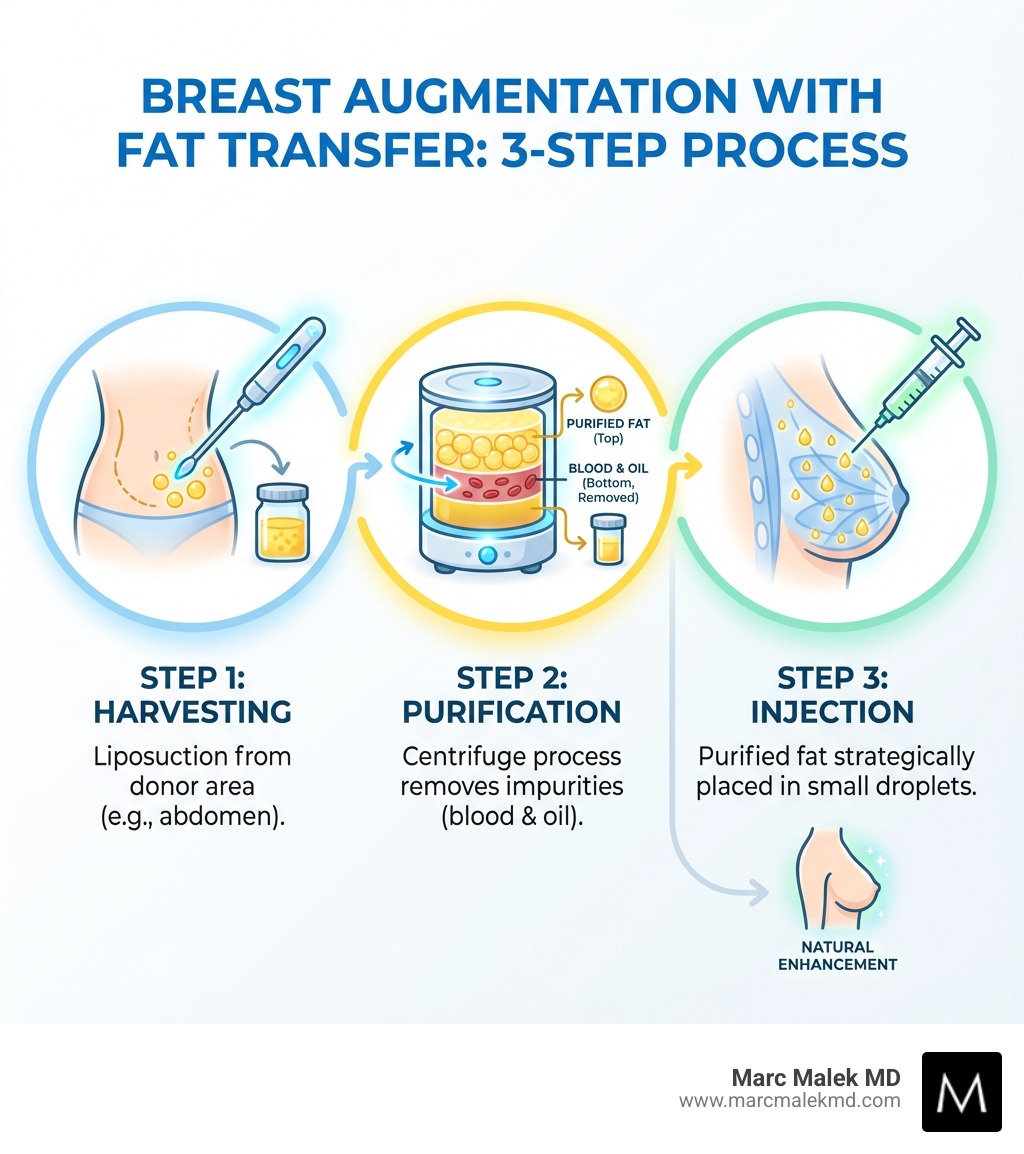
Breast augmentation with fat transfer is a natural alternative to traditional breast implants that uses your own body fat to improve breast size and shape. Instead of inserting synthetic implants, a plastic surgeon removes fat from areas like your abdomen or thighs through liposuction, purifies it, and carefully injects it into your breasts.
Key Facts About Fat Transfer Breast Augmentation:
- Size Increase: Typically 1-2 cup sizes per procedure
- Fat Survival Rate: 50-80% of transferred fat remains permanently
- Recovery Time: 1-3 days initial recovery; full results visible at 3-6 months
- Procedure Time: 1-2 hours outpatient
- Dual Benefit: Slims donor areas while enhancing breasts
- Natural Feel: Results look and feel like natural breast tissue
- No Implants: Avoids risks like rupture, capsular contracture, or implant displacement
Previously, women seeking breast improvement mainly had the option of silicone or saline implants. Now, autologous fat transfer (using your own tissue) is a proven technique for those wanting a more natural approach. The procedure delivers a two-in-one benefit—removing unwanted fat from problem areas while adding subtle, natural-looking volume to the breasts.
While the results don’t offer the dramatic size increase of implants, they provide something implants can’t: breasts that feel completely natural, no foreign materials in your body, and the bonus of body contouring.
As one patient noted, women increasingly prefer “adding fat to the breast than implants,” especially younger patients seeking natural results. The technique gained widespread acceptance after the American Society of Plastic Surgeons affirmed its safety and effectiveness in 2009.
Understanding Fat Transfer vs. Traditional Implants
This section compares the two primary methods of breast augmentation, helping you understand the fundamental differences in approach, results, and long-term considerations.
When considering breast augmentation, the two main paths are traditional implants and breast augmentation with fat transfer. Both improve breast size and shape, but their approaches, outcomes, and long-term implications are distinct.
Traditional implants involve placing silicone or saline shells in the breast. This method offers predictable, dramatic volume increases but introduces a foreign body that may require replacement every 10-15 years and carries risks like capsular contracture (hardened scar tissue), rupture, or displacement. You can explore these options further in our articles on Breast Augmentation Options, Breast Augmentation with Silicone, and Breast Augmentation with Saline.
Breast augmentation with fat transfer, on the other hand, uses your own fat, eliminating risks from foreign materials. The result is an incredibly natural look and feel. This method is ideal for a subtle improvement of one to two cup sizes. Successfully transferred fat cells are permanent and don’t require replacement like implants.
Here’s a quick comparison to highlight the key differences:
| Feature | Fat Transfer Breast Augmentation | Traditional Breast Implants |
|---|---|---|
| Material | Your body’s own fat (autologous) | Silicone or saline-filled shells |
| Feel | Incredibly natural, soft, and indistinguishable from natural breast tissue | Can feel natural, but sometimes a firmer or less natural feel depending on implant type and placement |
| Size Increase | Modest (typically 1-2 cup sizes per session) | Significant (can achieve multiple cup sizes) |
| Scarring | Minimal (tiny incisions from liposuction and injection) | Small incisions, typically under the breast, in the armpit, or around the areola |
| Longevity | Lifelong results (surviving fat cells are permanent) | Requires replacement surgery every 10-15 years, or sooner if complications arise |
| Maintenance | No maintenance required for the transferred fat | Regular check-ups for implant integrity (e.g., MRI for silicone implants) |
| Implant Risks | None | Capsular contracture, rupture, rippling, displacement, BIA-ALCL |
| Dual Benefit | Yes, slims donor areas (e.g., abdomen, thighs) | No |
Who is an Ideal Candidate?
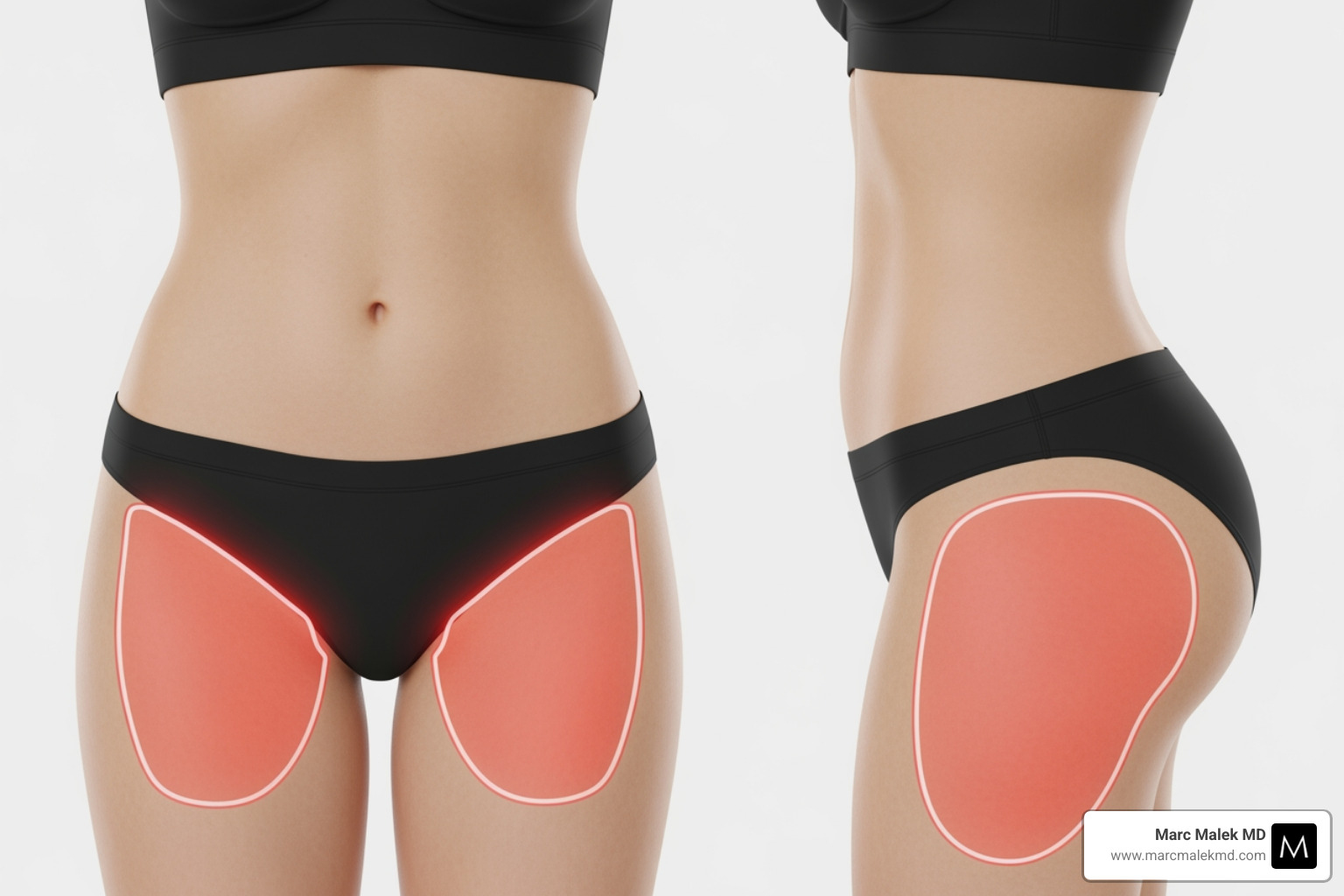
Ideal candidates for breast augmentation with fat transfer are in good general health, are non-smokers (as smoking impairs healing), and have realistic goals. A critical requirement is having sufficient donor fat for liposuction from areas like the abdomen, flanks, or thighs. Very slender individuals may not have enough fat for a noticeable improvement.
Candidates should desire a modest increase in breast size (one to two cup sizes) and a natural look. For a more dramatic increase, traditional implants or multiple fat transfer sessions might be more suitable. Good skin elasticity is also beneficial. Lastly, candidates should not be pregnant or breastfeeding.
Key Benefits of Natural Augmentation
The unique advantages of breast augmentation with fat transfer make it a compelling choice for our patients in Scottsdale and Phoenix. It offers 100% natural results using your own tissue, eliminating allergic reaction risks. Your breasts will look and feel incredibly soft and natural.
A celebrated benefit is the dual body contouring effect. We perform liposuction on areas with unwanted fat (e.g., abdomen, flanks, or thighs) while enhancing your breasts. This two-for-one procedure gives you a slimmer silhouette and fuller breasts. Learn more on our Liposuction page.
Other significant benefits include:
- Minimal Scarring on Breasts: Incisions for fat injection are tiny and strategically placed to be barely noticeable.
- No Implant Risks: You avoid potential complications like rupture, rippling, or future replacement surgeries.
- Improved Overall Body Proportions: We can create a more harmonious and balanced figure.
- Long-Lasting Results: Once integrated, the transferred fat cells are permanent.
Potential Risks and Limitations
While breast augmentation with fat transfer has many benefits, it’s important to understand its risks and limitations. A key aspect is fat reabsorption; typically, 50% to 80% of the transferred fat survives. This unpredictability in volume retention may necessitate multiple sessions for a larger increase and is a key difference from implants.
Other potential risks include:
- Fat Necrosis: Firm lumps of non-viable fat.
- Calcifications: Harmless white spots on mammograms that can sometimes require further testing to differentiate from cancerous lesions. Fat transfer does not increase breast cancer risk.
- Oil Cysts: Benign collections of oil from fat breakdown.
- Limited Size Increase: Best for modest improvements of one to two cup sizes.
- Donor Site Issues: Small risk of dents or scar tissue in the harvesting area.
- Longer Time to Final Results: It can take up to six months to see the final, stable results.
- General Surgical Risks: Infection, bleeding, bruising, or changes in sensation.
We follow guidelines from the American Society of Plastic Surgeons (ASPS) to minimize these risks. For more on safety, you can refer to the ASPS Fat Graft Task Force report.
The Breast Augmentation with Fat Transfer Procedure Explained
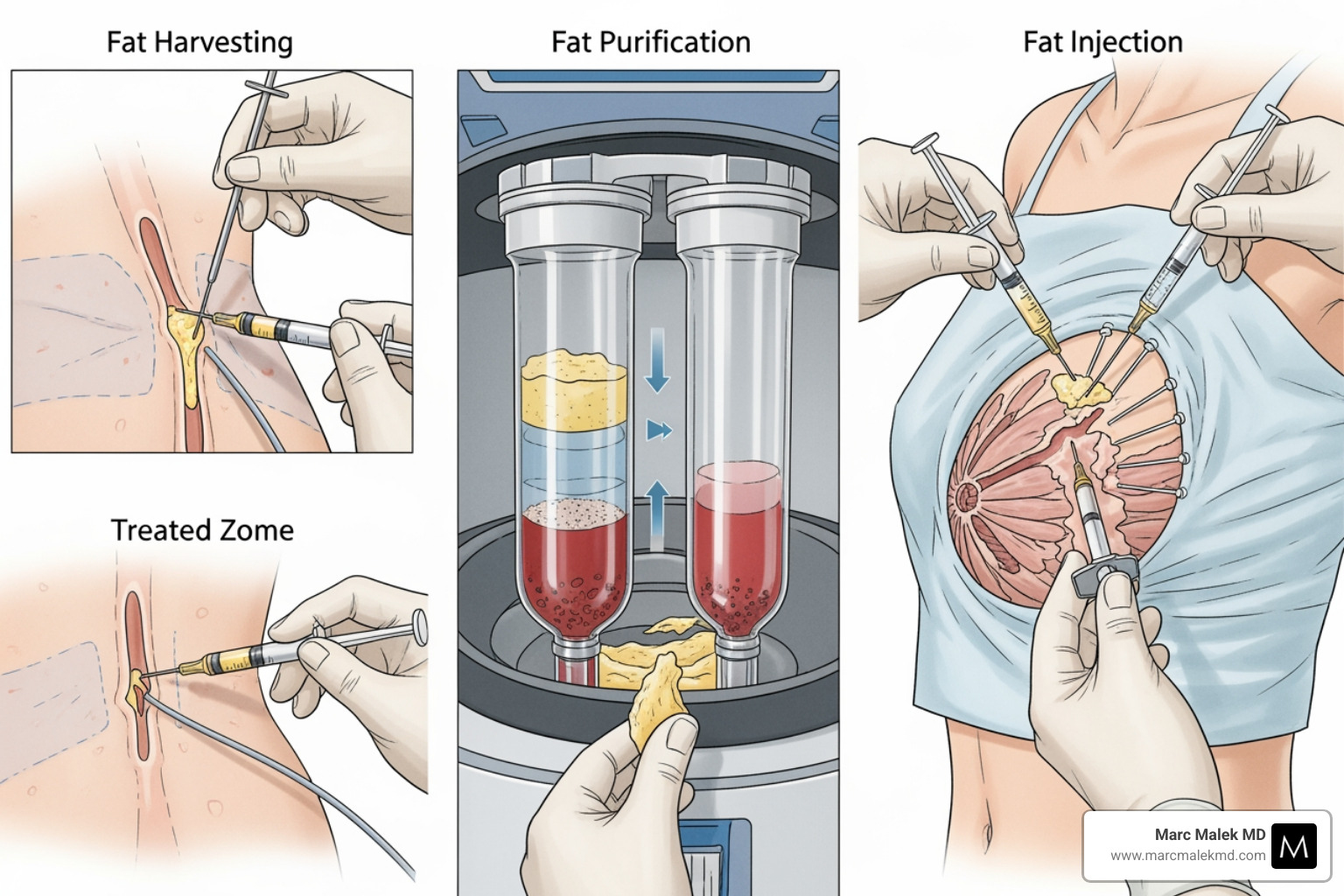
Fat transfer breast augmentation is a meticulous, three-step process designed to maximize fat survival and create smooth, natural-looking contours. The procedure is typically performed on an outpatient basis under general anesthesia to ensure your comfort and safety.
Step 1: Gentle Fat Harvesting
The first step is gently harvesting fat from a donor area on your body. This is a specialized liposuction procedure using a low-pressure aspiration technique to preserve the viability of the fat cells. Common donor sites in Arizona include the abdomen, flanks, buttocks, and thighs. This step provides the dual benefit of body contouring, and can complement procedures like a Tummy Tuck by removing stubborn fat.
Step 2: Fat Purification and Processing
Once harvested, the fat undergoes a critical purification process to separate healthy, viable fat cells from impurities like blood and excess fluid. The collected material is typically processed using centrifugation (spinning at high speed) or filtration systems. This isolates a concentrated sample of healthy fat cells (adipocytes) and ensures the final graft material is as pure as possible, all while using sterile techniques.
Step 3: Strategic Fat Injection
The final, artistic step is the strategic injection of the purified fat into your breasts. Dr. Malek’s precision is key to sculpting a natural, balanced, and aesthetically pleasing result. We use a micro-droplet technique, injecting very small amounts of fat in thin layers throughout the breast tissue. This ensures each fat droplet receives a blood supply, which is crucial for survival, and creates a smooth contour. This precise method allows us to sculpt the breast shape and correct asymmetries for a beautiful, natural improvement.
Recovery, Results, and Long-Term Outlook
Understanding the recovery timeline and what to expect long-term is crucial for a successful outcome with breast augmentation with fat transfer.
The Recovery Process: What to Expect
Recovery is generally manageable but requires time for your body to heal and for the fat to settle.
- Initial 1-2 Weeks: Expect bruising and swelling in the breast and donor areas, which will gradually subside. Many patients take 10-14 days off work.
- Compression Garments: You will wear compression garments on donor sites for 4-6 weeks to reduce swelling. A soft surgical bra will support the breasts without excess pressure.
- Activity Restrictions: Rest is key initially. Avoid strenuous activity and heavy lifting for at least 2-4 weeks. Avoid putting direct pressure on your chest.
- Pain Management: Discomfort is normal and can be managed with prescribed pain medication.
- Sleeping Position: Sleep on your back for several weeks to protect your breasts.
While initial swelling resolves in a few weeks, some can linger for up to six months. Donor sites may also take six months or more to show final contours.
Your Final Results and Longevity
Final results with breast augmentation with fat transfer appear gradually, but the outcome is often incredibly rewarding.
- Timeline for Results: Final, stable results are typically visible around three to six months post-procedure, once swelling resolves and the fat integrates.
- Fat Survival Rate: About 50% to 80% of the transferred fat survives permanently, a rate that stabilizes by three months.
- Patient Satisfaction: Research shows high patient satisfaction, with 83.3% reporting “excellent” and 16.7% reporting “good” results.
- Permanence: Successfully integrated fat cells are permanent and will behave like other fat in your body, fluctuating with weight changes.
You can see examples of our work in our Gallery.
Long-Term Considerations for breast augmentation with fat transfer
There are a few long-term considerations to keep in mind.
- Impact of Weight Fluctuations: Since the transferred fat is living tissue, it will grow or shrink with significant weight changes. Maintaining a stable weight is key to preserving your results.
- Aging Process: Your breasts will continue to age naturally.
- Mammograms and Breast Cancer Screening: Breast augmentation with fat transfer does not increase your risk of breast cancer. However, it can cause benign microcalcifications or oil cysts that may appear on mammograms. These can be hard to distinguish from early cancer signs, potentially requiring further imaging (ultrasound, MRI) or a biopsy. It is crucial to inform your mammography technician and radiologist about your procedure for accurate image interpretation. For further reading, consult studies like Radiographic findings after breast augmentation by autologous fat transfer.
Advanced Applications and Cost Factors
Fat transfer breast augmentation is a versatile technique that can be used alone or combined with other procedures for customized results.
Combining Fat Transfer with Other Breast Procedures
Fat transfer can be a standalone solution or a powerful adjunct to other breast surgeries:
- Hybrid Augmentation (Implants + Fat): For patients wanting more volume than fat transfer alone can offer, we can combine implants with fat grafting. Implants provide volume, while fat softens edges and refines the shape for a more natural look.
- Refining Implant Shape and Camouflaging Rippling: Fat transfer is excellent for correcting irregularities or rippling around existing implants. The fat acts as a natural cushion, smoothing contours.
- Breast Reconstruction: After a mastectomy, fat transfer is invaluable for adding volume, improving skin quality, and creating a softer, more natural feel to the reconstructed breast. Learn more about Breast Reconstruction.
- Correcting Asymmetry: Fat transfer can precisely add volume to one breast to achieve better balance and symmetry.
- Use with a Breast Lift: Combined with a Breast Lift, fat transfer adds natural fullness, particularly to the upper pole, for a more youthful look.
- Contour Smoothing After Implant Removal: Fat transfer can smooth irregularities or add modest volume after implant removal.
What Influences the Cost of breast augmentation with fat transfer?
The cost of breast augmentation with fat transfer is influenced by several factors. As an elective cosmetic surgery, it is not typically covered by insurance.
The total cost will vary based on:
- Surgeon’s Expertise and Fees: The experience and reputation of your board-certified plastic surgeon.
- Anesthesia and Facility Fees: Costs for the anesthesiologist and the surgical facility.
- Extent of Liposuction: The amount of fat harvested and the number of donor sites.
- Number of Sessions Required: Some patients may need multiple sessions to achieve their desired volume.
- Pre-Surgery Labs or Other Tests: Any necessary medical tests.
- Geographic Location: Costs in Scottsdale, AZ, can range from approximately $5,000 to $17,000.
During your consultation, we provide a detailed cost estimate for your treatment plan. We also offer Financing options to help make your goals achievable.
Frequently Asked Questions about Fat Transfer Breast Augmentation
Here are answers to common questions about breast augmentation with fat transfer:
How much bigger can my breasts get with fat transfer?
A single procedure can typically increase your breast size by one to two cup sizes. The final volume depends on available donor fat and the 50-80% survival rate of the transferred fat. For a larger increase, multiple sessions may be required.
Is the procedure painful?
The procedure is painless under anesthesia. Post-operative discomfort, bruising, and swelling in the breast and donor areas are expected but are well-managed with prescribed pain medication and resolve within a few weeks. Most patients find the recovery manageable.
Will I have scars?
Fat transfer breast augmentation uses tiny, millimeter-long incisions for liposuction and injection. These are placed in discreet locations like skin folds and typically heal into inconspicuous scars. Unlike with implants, there are no long incisions on the breast itself.
Your Path to Natural Improvement
Breast augmentation with fat transfer offers a unique opportunity to improve your breasts using your own natural tissue, providing a dual benefit of breast improvement and body contouring. The results are soft, natural, and long-lasting, making it an excellent choice for those seeking a subtle yet significant improvement. The key to a beautiful outcome is choosing a board-certified plastic surgeon with experience in fat grafting techniques. Dr. Malek’s artistic approach in Scottsdale focuses on creating proportionally balanced results that complement your unique physique. To explore if this procedure is right for you, learn more about your breast procedure options and schedule a consultation.