

Understanding Your Pixel Laser Treatment Journey
How many pixel laser treatments do i need depends on your specific skin concerns, but here’s what the research shows:
Quick Answer:
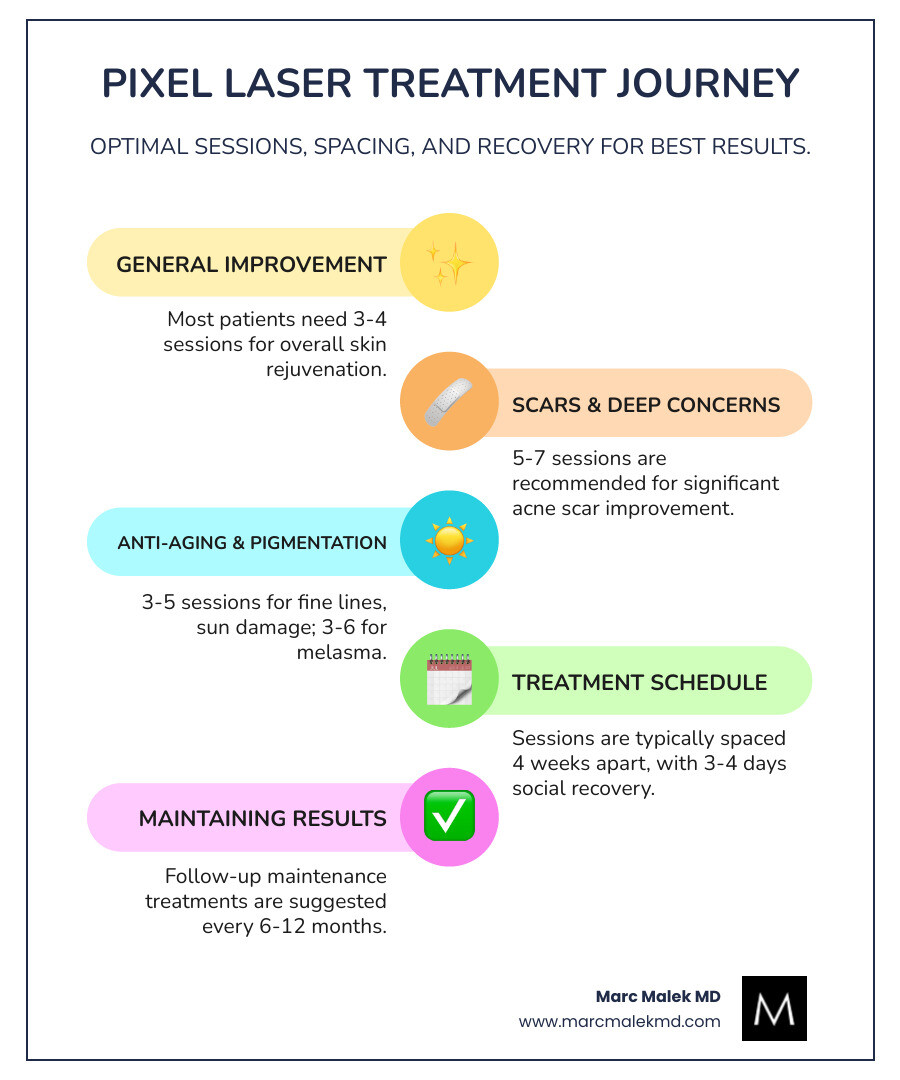
- General recommendation: 3-4 sessions at 4-week intervals
- Acne scars: 5-7 sessions for optimal improvement
- Fine lines and sun damage: 3-5 sessions
- Pigmentation and melasma: 3-6 sessions
- Minor texture issues: 2-3 sessions
- Maintenance: Every 6-12 months after initial series
If you’re considering Pixel laser resurfacing to improve your skin’s texture, reduce scarring, or minimize signs of aging, you’re probably wondering how many sessions you’ll need to see real results. It’s one of the most common questions patients ask—and for good reason.
The truth is, there’s no one-size-fits-all answer. Your treatment plan depends on several factors: the severity of your skin concerns, your skin type, how your body responds to treatment, and your aesthetic goals.
Most patients require between 3 to 6 treatments spaced about four weeks apart. Those dealing with deeper concerns like acne scarring may need more sessions, while others addressing mild texture issues might see improvement with fewer treatments.
The good news? Pixel laser technology uses fractional resurfacing, which means it treats only a portion of your skin at a time. This approach allows surrounding healthy tissue to speed up healing, giving you noticeable results with minimal downtime—typically just 3-4 days of social recovery.
Understanding what to expect helps you plan realistically and commit to the full treatment series for the best possible outcome.
Glossary for how many pixel laser treatments do i need:
What is Pixel Laser Resurfacing and How Does It Work?
To understand why multiple sessions are necessary, we first need to look at the science behind the technology. Pixel Laser Resurfacing is a fractional ablative treatment that represents the next generation of skin rejuvenation. Unlike traditional lasers that strip away the entire top layer of skin (which requires weeks of painful recovery), Pixel technology is much more precise.
The device uses a “pixilated” beam of energy—often utilizing micro-plasma technology—to create thousands of microscopic perforations in the skin’s surface. Imagine a digital photo made of pixels; the laser treats only certain “pixels” of your skin while leaving the surrounding tissue untouched. This creates a pattern of controlled thermal injury.
According to scientific research on fractional laser mechanisms, these micro-injuries trigger the body’s natural healing response. Because there is healthy, untreated tissue surrounding each microscopic wound, the epidermal turnover is significantly faster than with older methods.
As the skin heals, it undergoes a process called collagen remodeling. The laser’s heat penetrates the deeper dermal layers, stimulating the production of new collagen and elastin. This is the “secret sauce” that tightens the skin and smooths out imperfections. Over several weeks, the old, damaged skin is replaced by fresh, healthy tissue. Because only a fraction of the skin is treated during each session, we must repeat the process to ensure every “pixel” of the target area eventually receives the treatment. This is a core component of Laser Skin Resurfacing protocols used here in Scottsdale.
Determining Your Plan: How Many Pixel Laser Treatments Do I Need?
When you visit us for a consultation, we don’t just pick a number out of a hat. We evaluate the “depth” of the problem you want to solve. While some patients see a “glow” after just one session, the cumulative results of a full series are what truly transform the skin.
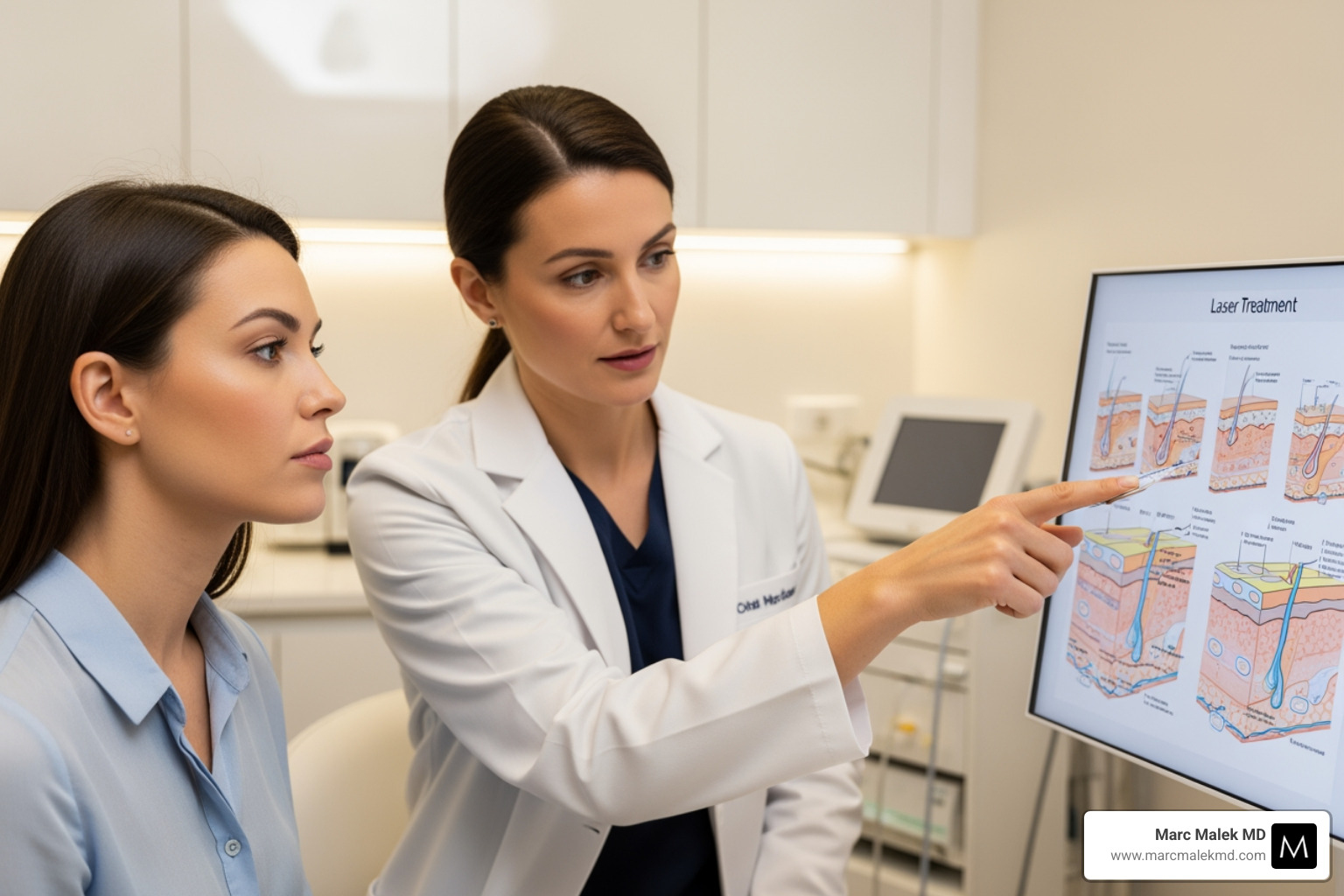
Generally, we recommend a baseline of 3 to 4 sessions for most patients. However, if you are asking how many pixel laser treatments do i need for more complex issues, the number can climb.
| Skin Concern | Typical Number of Sessions | Recommended Spacing |
|---|---|---|
| Mild Sun Damage | 2 – 3 Sessions | 4 Weeks |
| Fine Lines & Wrinkles | 3 – 5 Sessions | 4 Weeks |
| Shallow Acne Scars | 3 – 5 Sessions | 4 – 6 Weeks |
| Deep Acne or Surgical Scars | 5 – 7 Sessions | 6 Weeks |
| Melasma / Hyperpigmentation | 3 – 6 Sessions | 4 Weeks |
| Large Pores / Texture | 2 – 4 Sessions | 4 Weeks |
The severity of your skin condition and your individual biological response play huge roles. Some people are “fast healers” whose collagen kicks into high gear immediately, while others may require a few extra sessions to Erase Scars with the Help of Laser Technology effectively.
Factors Influencing How Many Pixel Laser Treatments Do I Need for Scars
Scars are notoriously stubborn because they represent deep structural changes in the skin’s architecture. Whether you are dealing with acne scarring, surgical scars, or stretch marks, the laser has to work harder to break down old fibrotic tissue and replace it with organized collagen.
For acne scarring, the depth of the tissue damage is the primary factor. Research on fractional CO2 for acne scars suggests that 5 to 7 sessions are often required to achieve a 50% to 75% improvement in texture. Because the laser creates micro-perforations, it “drills” into the scar tissue, prompting the body to fill those holes with new, smooth skin.
If your scars are deep (pitted or “ice pick” scars), we may need to use higher energy settings, which sometimes requires longer healing times between sessions. However, the wait is worth it; the texture improvement is permanent, provided you protect your skin from further damage.
How Many Pixel Laser Treatments Do I Need for Anti-Aging?
If your goal is to turn back the clock, the focus is on fine lines, sun damage, and pore size. For most anti-aging goals, 3 to 5 sessions is the “sweet spot.”
This series allows us to address different layers of aging. The first few sessions usually tackle surface-level pigmentation and sun spots. Later sessions focus on deeper dermal heating to tighten lax skin. A Study on clinical improvement rates noted that over 50% of patients saw “moderate to excellent” improvement after just their first session, but those results continue to compound as you complete the series.
Non-Surgical Facial Rejuvenation is a marathon, not a sprint. By spacing out 3-5 sessions, we can gradually lift melasma and pigmentation without overwhelming the skin, which is particularly important for patients with darker skin tones who are at a higher risk for post-inflammatory hyperpigmentation (PIH).
The Treatment Timeline: Spacing and Recovery
One of the most critical aspects of your treatment plan is the “rest” period. We typically schedule sessions at 4-week intervals. Why the four-week wait? It aligns with your skin’s natural regeneration cycle.
According to research on treatment spacing and safety, your skin goes through three distinct phases after a Pixel treatment:
- Inflammation Stage (Days 1-3): Immediately after the session, your skin will feel like it has a bad sunburn. You’ll experience redness and some swelling.
- Proliferation Stage (Days 3-7): Your skin begins to “bronze” and flake. This is the damaged tissue being pushed to the surface and shed. During this time, it is vital to use the right Skincare Products to keep the area hydrated.
- Remodeling Stage (Weeks 2-4+): This is where the magic happens. Underneath the surface, new collagen is forming.
If we were to treat the skin again too soon, we would interrupt the remodeling stage, increasing the risk of scarring or pigmentation issues. By waiting 4-6 weeks, we ensure the skin is resilient enough for the next round of energy. Most of our Scottsdale patients find that they only need about 3-4 days of “social downtime” (where they might look a bit red or flaky) before they feel comfortable returning to normal activities with makeup.
Comparing Pixel to Other Laser Resurfacing Options
When researching how many pixel laser treatments do i need, you might come across other names like CO2 or Erbium lasers. It’s helpful to understand where Pixel fits in the hierarchy of intensity.
Traditional CO2 Laser Resurfacing can be “fully ablative,” meaning it removes the entire surface of the skin. This often requires only one session, but the downtime is significant—often 2 to 4 weeks of intense peeling and redness.
Pixel, on the other hand, is a “fractional” laser. It offers a middle ground. It provides the dramatic results of an ablative laser but with the safety and recovery speed of a non-ablative treatment.
A scientific review of laser healing stages highlights that fractional lasers like Pixel significantly reduce the risk of infection and long-term redness compared to fully ablative CO2. If you have very busy schedules or simply don’t want to hide away for a month, a series of 3-5 Pixel treatments is often a much better lifestyle fit than one aggressive CO2 session.
For those with very minor pigment issues, we might even suggest a Photofacial (IPL), which has zero downtime but requires more sessions to reach the same level of texture improvement as the Pixel.
Frequently Asked Questions About Pixel Laser Sessions
How long do the results of Pixel Laser Resurfacing last?
The results of Pixel resurfacing are long-lasting because the treatment actually changes the structure of your skin by creating new collagen. However, the aging process doesn’t stop.
Research on long-term wrinkle improvement shows that patients still see a 45% improvement in wrinkle scores even years after a full facial resurfacing. To keep your skin looking its best, we generally recommend a single maintenance treatment every 6 to 12 months. Think of it like a “tune-up” for your collagen.
Is the treatment uncomfortable?
We prioritize your comfort. Before the treatment, we apply a strong topical anesthesia to numb the skin. During the procedure, you’ll feel a warm, prickling sensation. Most patients describe it as a series of tiny rubber band snaps followed by a sunburn-like heat. After the session, we use cooling techniques to soothe the skin immediately.
What is the recommended post-treatment care?
The way you treat your skin after a session determines how many total sessions you’ll eventually need. If you protect your skin, you’ll get better results from each pass.
- Hydration: Use a gentle, medical-grade moisturizer frequently.
- Sun Protection: This is non-negotiable. Use an SPF 30+ zinc or titanium-based sunblock. Your new skin is very sensitive to UV rays.
- Gentle Cleansing: Avoid scrubs, Retin-A, or glycolic acids for at least a week.
- Hands Off: Do not pick at the flaking skin; let it shed naturally to avoid scarring.
Our team at MD Beauty Spa provides a detailed aftercare kit and instructions to ensure your healing process is as smooth as your new skin will be.
Conclusion
At the practice of Marc Malek MD, we believe that skin rejuvenation is an art form. Whether we are performing a complex surgery or a series of laser treatments, our goal is always a proportionally balanced, natural-looking result.
When you ask, “how many pixel laser treatments do i need,” you are starting a journey toward more confident, radiant skin. While the average is 3 to 6 sessions, your path will be uniquely yours. Dr. Malek’s artistic approach ensures that we don’t just follow a manual; we listen to your skin and adjust your personalized treatment plan at every step.
If you’re ready to address acne scars, fine lines, or sun damage with the precision of fractional technology, we invite you to our Scottsdale clinic. Let us help you achieve the healthy, youthful glow you deserve with a plan custom specifically to your lifestyle and goals.
Schedule your Pixel consultation with us today and take the first step toward a smoother tomorrow.