

Why you should try co2 fractional laser on your legs
Why CO2 Fractional Laser on Your Legs Could Be the Skin Reset You’ve Been Looking For
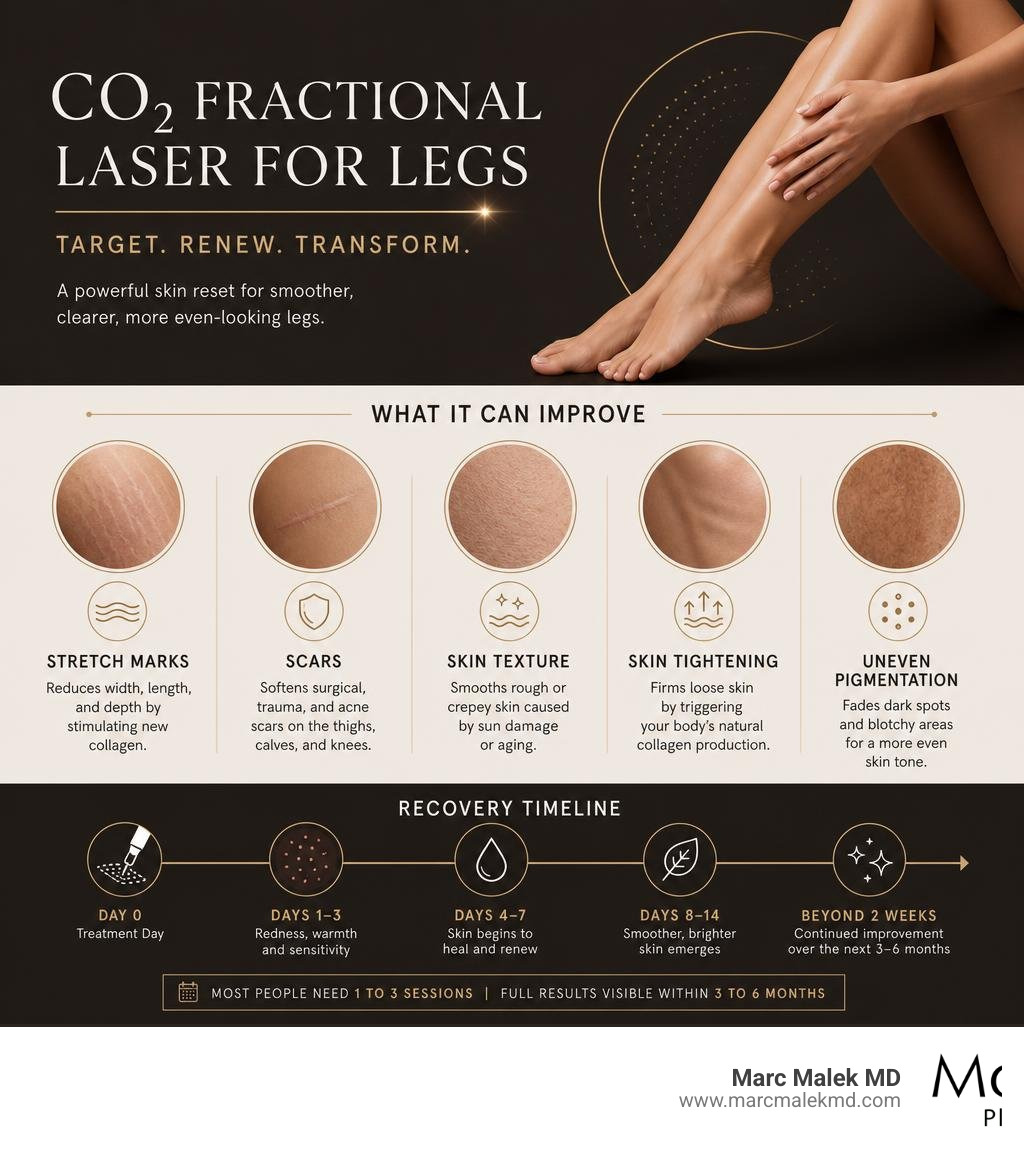
CO2 fractional laser on legs is one of the most effective treatments available for improving common skin concerns on the lower body — including stretch marks, scars, rough texture, and uneven tone.
Here’s a quick snapshot of what it can do:
- Stretch marks – reduces their width, length, and depth by stimulating new collagen
- Scars – softens surgical, trauma, and acne scars on the thighs, calves, and knees
- Skin texture – smooths rough or crepey skin caused by sun damage or aging
- Skin tightening – firms loose skin by triggering the body’s natural collagen production
- Uneven pigmentation – fades dark spots and blotchy areas on the legs
Most people need 1 to 3 sessions, with full results visible within 3 to 6 months of treatment. Recovery on the legs typically takes 1 to 2 weeks.
The legs are one of the most overlooked areas in skin resurfacing — most laser content focuses on the face. But the same skin concerns that frustrate you on your face (scars, stretch marks, texture) show up on your legs too, and they respond well to the same technology.
If diet, exercise, and topical creams haven’t moved the needle on your leg skin, CO2 fractional laser offers a clinically proven path to real, lasting improvement.
Simple co2 fractional laser legs glossary:
How CO2 Fractional Laser Legs Treatments Work to Renew Skin
To understand why a co2 fractional laser legs treatment is so incredibly effective, we have to look at the science of laser physics. Carbon dioxide (CO2) lasers operate at a wavelength of 10,600 nanometers. In the medical aesthetics world, this wavelength is considered the absolute gold standard for targeting water molecules within our skin tissue.
When the laser energy hits the skin, it is absorbed by the water in your cells, causing immediate, controlled vaporization of the targeted tissue.
But traditional CO2 lasers used to vaporize the entire surface of the skin, leading to long, uncomfortable recovery times. This is where fractional photothermolysis comes in. Instead of treating 100% of the skin’s surface, a fractional laser uses a specialized scanner or diffractive optical element to split the laser beam into thousands of microscopic, pixel-sized columns.
These columns create “micro-thermal zones” (MTZs) that penetrate deep into the dermal layers of the skin. The beauty of this approach is that columns of treated tissue are surrounded by “bridges” of completely untouched, healthy skin. This intact skin acts as a natural healing reservoir, allowing the treated areas to heal far more rapidly than they would with traditional ablative resurfacing.
Advanced platforms like the Pixel CO2 – CO2 Fractional Laser Machine | Alma or the Musa CO2 | Legolaser utilize these micro-injury patterns to prompt the body’s natural healing cascade. When these micro-thermal zones are created, they trigger a massive wound-healing response. This leads to immediate tissue shrinkage and initiates “neocollagenesis”—the production of fresh, healthy collagen and elastin fibers over the following months.
To dive deeper into the differences between these technologies, you can read our breakdown on C02 Fractional Lasers Explained for Better Skin and explore Understanding the CO2 Fractional Laser: A Comprehensive Guide – Ivylasers: Manufacturer of Laser Beauty & Aesthetic Machine .
Addressing Stretch Marks with CO2 Fractional Laser Legs Procedures
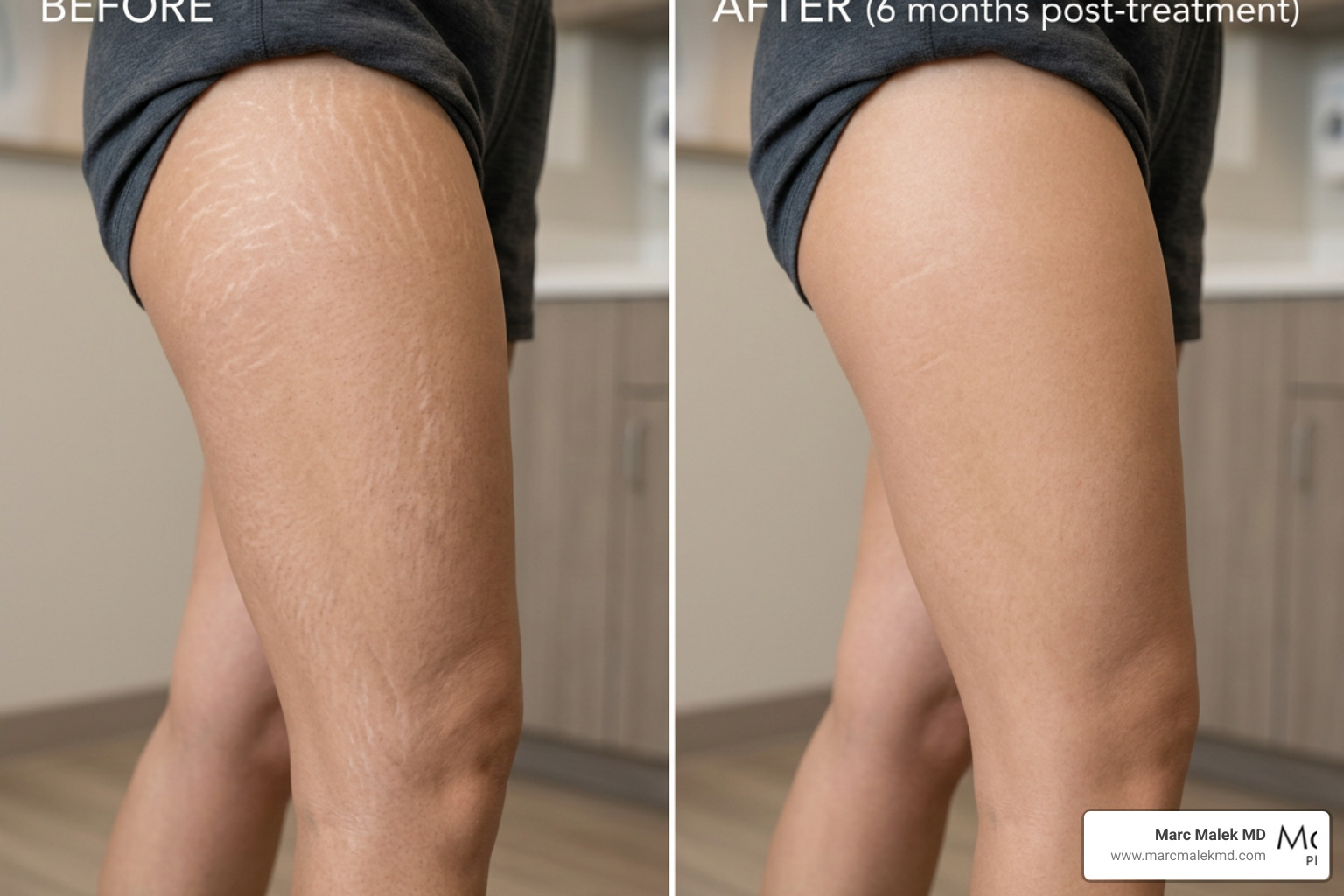
Stretch marks, or striae distensae, are essentially dermal scars that form when the skin stretches rapidly due to puberty, rapid muscle growth, weight fluctuations, or pregnancy. This rapid stretching ruptures the collagen and elastin support networks in the dermis. Because stretch marks represent a deep structural tear in the skin, superficial skincare products like creams and oils rarely produce noticeable improvements.
A co2 fractional laser legs treatment targets the deep structural layers where stretch marks live. By delivering micro-beams of laser energy directly into the torn dermal tissue, the laser vaporizes the damaged, thinned-out skin of the stretch mark and forces the body to rebuild the area with dense, organized collagen.
Over the course of several weeks, the skin texture within the stretch marks tightens, and the stark contrast in color and texture between the stretch mark and the surrounding healthy skin begins to fade.
This deep collagen remodeling is why we consider lasers to be the premier non-surgical option for body marking. For a comprehensive look at how we tackle these stubborn marks, check out our guide on Smooth Moves: The Ultimate Guide to CO2 Laser Resurfacing for Stretch Marks.
Fading Scars and Improving Texture on the Lower Body
Our legs go through a lot. Between childhood scrapes, sports injuries, accidental burns, and surgical procedures (like knee replacements or orthopedic surgeries), many of us carry visible leg scars that we would prefer to fade. Leg skin is notoriously slow to heal compared to facial skin because it has fewer sebaceous glands and a less robust blood supply. This slow healing can often lead to thick, raised, or hyperpigmented scars.
Whether you are dealing with raised surgical scars or flat, dark trauma scars, fractional CO2 laser technology can help. The laser energy breaks down the disorganized, fibrous collagen bundles that make up scar tissue. At the same time, it stimulates the production of a new, organized matrix of collagen fibers, which softens the scar and blends it seamlessly into the surrounding skin.
Additionally, the thermal energy from the laser helps break up excess melanin deposits, fading the post-inflammatory hyperpigmentation that often makes leg scars stand out. This same mechanism works wonders on crepey skin around the knees and thighs, providing a noticeable skin tightening effect. To learn more about how we use lasers to smooth out scars, read our article on how to Erase Scars with the Help of Laser Technology.
Candidate Selection and the Treatment Experience
While fractional CO2 lasers are incredibly powerful, they are not a one-size-fits-all solution. Achieving beautiful, safe results requires careful patient screening, proper skin preparation, and a clear understanding of what happens during the procedure. To get a broad overview of the entire process, you can refer to our Laser Skin Resurfacing Complete Guide.
Who is a Good Candidate for CO2 Fractional Laser Legs Treatments?
The ideal candidate for a co2 fractional laser legs treatment is someone in good general health who wants to address specific skin imperfections such as stretch marks, scars, sun damage, or crepey texture on their legs.
However, because the CO2 laser targets water and generates significant heat, we must carefully consider your skin type. Skin types are classified using the Fitzpatrick scale:
- Fitzpatrick Types I to III (fair to medium-light skin) are generally excellent candidates for CO2 laser treatments, as they have a lower risk of pigmentary complications.
- Fitzpatrick Types IV to VI (medium-brown to dark skin) have a much higher risk of developing post-inflammatory hyperpigmentation (PIH) or hypopigmentation (loss of skin color) when treated with aggressive ablative lasers. For patients with darker skin tones, we often recommend milder treatments or alternative energy-based devices to protect the skin’s natural pigment.
Contraindications to treatment include:
- Active skin infections, open wounds, or active eczema/psoriasis in the treatment area.
- A history of keloid scarring or poor wound healing.
- The use of oral isotretinoin (Accutane) within the past six months.
- Bleeding disorders or the use of blood-thinning medications.
- Pregnancy or breastfeeding.
- A recent deep tan or sunburn (patients must strictly avoid sun exposure for at least four weeks prior to treatment).
During your initial consultation at our Scottsdale or Phoenix locations, we will thoroughly evaluate your skin type, discuss your medical history, and help you establish realistic expectations.
What to Expect During the Procedure
Preparing for your session actually starts a few weeks before you step into our clinic. We may recommend that you use specific pre-treatment skincare products, such as a gentle retinoid or a pigment-suppressing cream, for two to four weeks prior to your appointment to prime your skin for optimal healing.
On the day of your treatment, here is what you can expect:
- Cleansing and Numbing: We will thoroughly cleanse the target areas on your legs. Because the legs have a large surface area, we will apply a strong topical anesthetic cream to ensure your comfort. This cream needs to sit on the skin for about 45 to 60 minutes to take full effect.
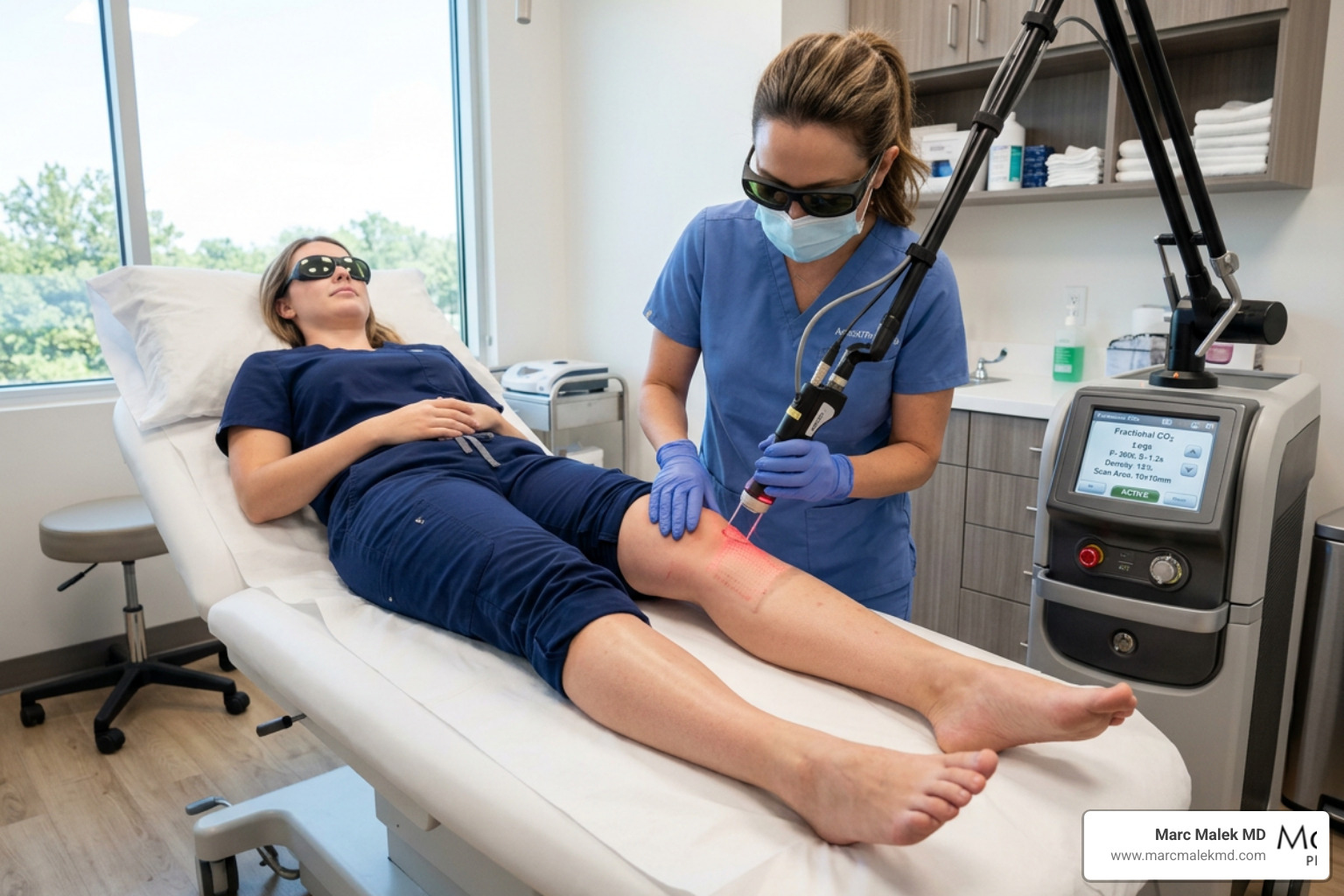
- The Treatment: Once your legs are completely numb, we will remove the cream and cleanse the skin again. We will then pass the fractional CO2 laser handpiece over the treatment areas. Many modern laser systems utilize integrated cooling devices that blow cold air onto the skin during the procedure to minimize discomfort.
- The Sensation: Most patients describe the sensation as a series of quick, hot pinpricks, or a feeling similar to a rubber band snapping against the skin.
- Duration: Depending on the size of the area being treated (e.g., just the front of the thighs versus the entire lower legs), the actual laser portion of the session can take anywhere from 30 to 90 minutes.
Recovery, Aftercare, and Comparing Alternative Treatments
Because the skin on the legs has fewer oil glands and is further from the heart than facial skin, the healing process takes a bit longer. Understanding what to expect during your recovery and committing to a strict aftercare routine are vital to achieving the best possible results and avoiding complications. For a broader look at what the recovery phase looks like, read about the Eye-Opening Results: Everything You Need to Know About CO2 Resurfacing.
Post-Treatment Healing and Leg-Specific Aftercare
Immediately following your co2 fractional laser legs treatment, your skin will feel hot, tight, and look red—very much like a severe sunburn. You may also experience mild swelling and pinpoint bleeding.
Here is a general timeline of what you can expect during your recovery:
- Days 1 to 3: The skin will remain red and swollen. You may notice tiny, dark dots on the skin where the laser beams penetrated. We recommend applying cold compresses or ice packs wrapped in a clean cloth for 15 minutes every few hours to soothe the heat. You must keep the area covered in a thick layer of protective ointment, such as petroleum jelly or Aquaphor, to keep the skin barrier hydrated.
- Days 4 to 7: The skin will begin to feel dry and sandpapery. A fine crust or peeling will start to form. It is absolutely crucial that you do not scratch, pick, or peel this skin off, as doing so can cause scarring or hyperpigmentation. Gently wash the legs twice daily using a mild cleanser or a diluted vinegar solution (one tablespoon of white vinegar mixed into eight ounces of cool water) to keep the area clean and soothe itching.
- Week 2: The peeling and crusting should slowly resolve, leaving behind fresh, pink skin. This pinkness is a sign of active healing and will gradually fade over the coming weeks. You can typically transition from heavy ointments to a gentle, fragrance-free moisturizer at this stage.
To help you visualize how leg recovery differs from facial recovery, we have put together this comparison table:
| Healing Phase | Facial CO2 Recovery | Leg CO2 Recovery |
|---|---|---|
| Initial Crusting/Peeling | 5 to 7 days | 7 to 14 days |
| Pinkness/Redness Duration | 2 to 4 weeks | 4 to 8 weeks (or longer for fair skin) |
| Ointment Application | 3 to 5 days | 7 to 10 days |
| Return to Normal Exercise | 7 days | 10 to 14 days (due to leg swelling risks) |
| Strict Sun Avoidance | Highly critical | Extremely critical (legs are easily exposed) |
Throughout your recovery, physical sun protection is your absolute best friend. You must protect your healing leg skin from the intense Arizona sun by wearing UPF-rated clothing or long pants, and applying a broad-spectrum, mineral-based sunscreen with an SPF of 30 or higher daily.
Fractional CO2 Laser vs. Topical Creams for Leg Stretch Marks
When searching for ways to get rid of leg stretch marks, you will find countless topical creams, lotions, and oils claiming to erase them overnight. However, from a clinical perspective, topical creams simply cannot match the efficacy of a fractional CO2 laser.
The primary limitation of topical creams is their inability to penetrate deep enough into the skin. Stretch marks are located in the dermis—the thick, deep layer of skin beneath the epidermis. Most over-the-counter creams only hydrate the superficial epidermis. While they might temporarily plump the skin and make the marks look slightly less noticeable, they do not address the torn collagen fibers underneath.
In contrast, a fractional CO2 laser physically penetrates the dermis to trigger actual collagen synthesis and tissue remodeling. A landmark clinical study comparing fractional CO2 laser to other modalities showed that fractional lasers produce statistically significant improvements in both the width and length of stretch marks, outperforming superficial topical treatments by a wide margin. While medical-grade retinoid creams can be useful when paired with laser treatments to prep the skin, the laser remains the true workhorse for structural skin changes.
Frequently Asked Questions About Leg Laser Resurfacing
To help you make an informed decision, we have compiled answers to some of the most common questions our patients in Phoenix and Scottsdale ask about leg resurfacing.
How many sessions of fractional CO2 laser are typically needed for legs?
While some patients see a beautiful improvement after just one aggressive treatment, most people require 1 to 3 sessions to achieve their desired results. The exact number of sessions depends on:
- The severity of the skin concern (deep, older white stretch marks and thick surgical scars generally require more sessions than superficial sun damage).
- The laser settings used (milder treatments with less downtime require more sessions to match the results of a single, deeper treatment).
- Your skin’s natural healing capacity and how well you follow your post-treatment care.
Sessions are typically spaced 6 to 8 weeks apart to allow the skin to fully heal and start producing new collagen before we treat the area again.
How long do the results of leg laser resurfacing last?
The results of a co2 fractional laser legs treatment are exceptionally long-lasting. Because the laser stimulates the production of your own natural collagen, the structural improvements made to scars and stretch marks are permanent. However, your skin will continue to age naturally. To maintain your smooth skin texture and keep new sun damage at bay, we recommend practicing strict daily sun protection and maintaining a healthy skin care routine. Many patients enjoy their rejuvenated results for 5 to 10 years or longer.
Is fractional CO2 laser on the legs painful?
We take every step possible to ensure your treatment is comfortable. By using a prescription-strength topical numbing cream for an hour before the procedure and utilizing cooling devices that blow chilled air onto the skin during the session, most patients find the discomfort to be highly manageable.
During the first 24 to 48 hours after your treatment, your legs will feel hot and sensitive, similar to a bad sunburn. This discomfort can be easily managed with cold compresses, keeping the skin well-hydrated with ointment, and taking over-the-counter pain relievers if needed.
Conclusion
If you have been hiding your legs due to stubborn stretch marks, old surgical scars, sun damage, or crepey skin, a co2 fractional laser legs treatment might be the transformative solution you need.
At the practice of Marc Malek MD, we combine medical expertise with a deeply personalized, artistic approach to help you achieve beautifully balanced, natural-looking results. Whether you are visiting us from Phoenix, Scottsdale, or anywhere else in the beautiful state of Arizona, our team is dedicated to providing a comfortable, safe, and highly effective treatment experience.
Ready to step out in confidence and show off smooth, radiant legs? Schedule a consultation for laser skin resurfacing at Marc Malek MD today, and let us design a customized treatment plan tailored specifically to your skin’s unique needs.