

Why Temple Dermal Filler is the New Anti-Aging Secret
Understanding Temple Dermal Filler and How It Works
To understand why temple dermal filler is so effective, we first have to look at what is happening beneath the surface of your skin. The temporal region is a complex anatomical area where bone, muscle, and fat pads create the scaffolding for your upper face.
As we move through our thirties and beyond, several biological changes occur simultaneously. According to research on the characteristics of aging skin, we experience a steady depletion of collagen and elastin. Furthermore, bone resorption (the literal shrinking of facial bones) and fat pad atrophy cause the once-plump temple area to cave inward.
This is where Dermal Fillers and Injections come into play. Most modern fillers used in the temples are made of hyaluronic acid (HA). HA is a naturally occurring sugar molecule in your body that can hold up to 1,000 times its weight in water. When we inject this biodegradable gel into the hollows of the temples, it acts as a replacement for lost volume.
It doesn’t just “fill” a hole; it provides structural support. By placing the filler strategically, we can re-anchor the skin and soft tissues that have begun to sag. The gel integrates with your natural tissue, retaining moisture and restoring the smooth transition from your forehead to your cheekbones.
The Benefits of Restoring Volume with Temple Dermal Filler
The beauty of temple dermal filler lies in its ability to provide “stealth” rejuvenation. People will notice you look refreshed, well-rested, and perhaps five years younger, but they often won’t be able to tell you’ve had “work done.”
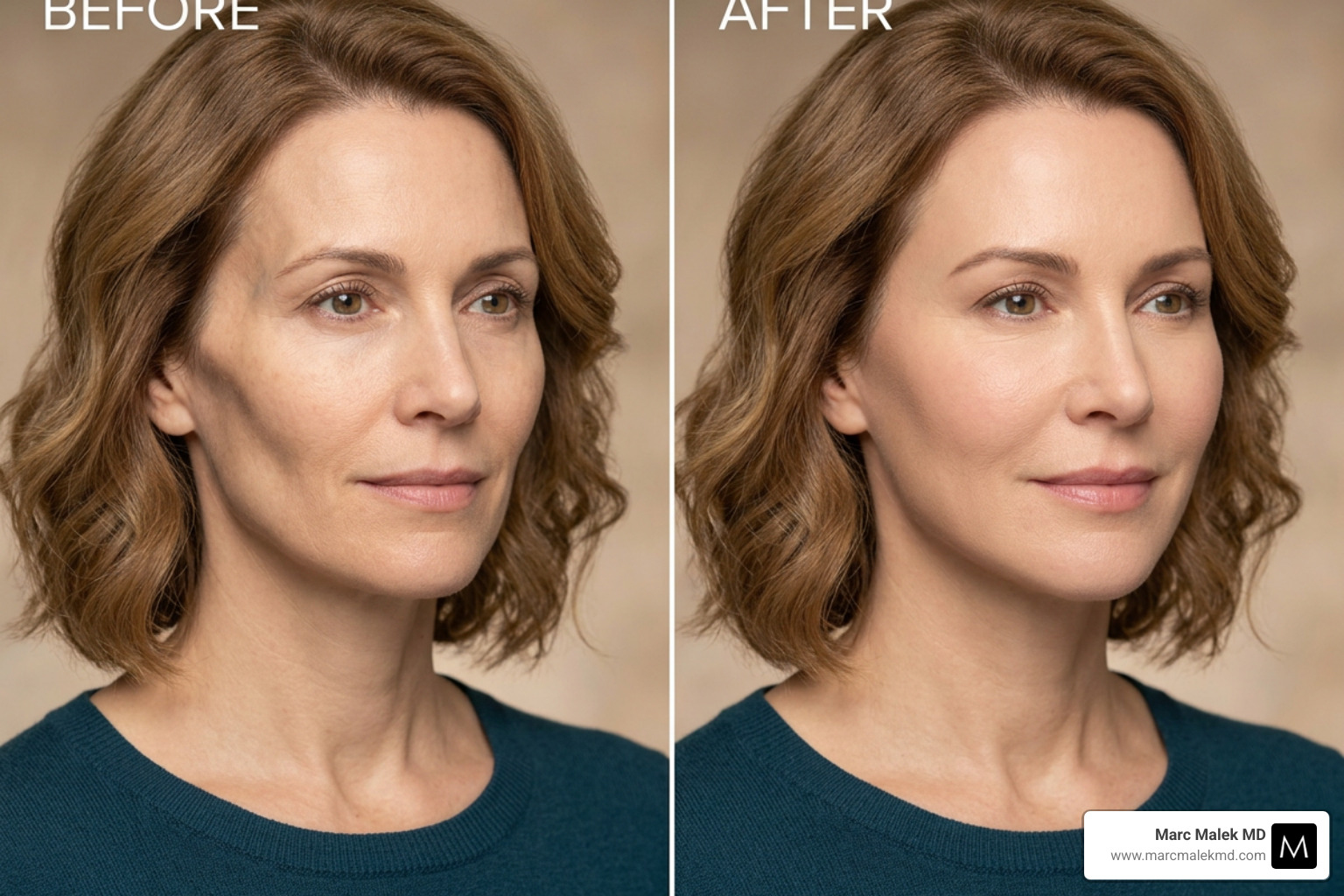
Here are the primary benefits of this treatment:
- Restored Facial Symmetry: Hollowing often happens unevenly. Filling the temples restores a balanced, symmetrical look to the upper face.
- The “Heart-Shaped” Face: In youth, faces tend to be wider at the top and taper toward the chin. Temple filler helps recreate this desirable heart-shaped or oval silhouette.
- Softening Angular Contours: When temples hollow out, the sharp edges of the orbital rim (eye socket) and zygomatic arch (cheekbone) become prominent. Filler softens these “bony” transitions for a kinder, more approachable look.
- Eye Area Refreshment: By adding volume to the temples, we provide a subtle “pull” on the skin around the eyes, which can help reduce the appearance of “crow’s feet” and drooping eyelids.
Comparison: Hyaluronic Acid vs. Biostimulators for Temples
| Feature | Hyaluronic Acid (e.g., Voluma) | Biostimulators (e.g., Sculptra) |
|---|---|---|
| Mechanism | Immediate volume via gel | Stimulates natural collagen growth |
| Result Speed | Instant | Gradual (over 2-4 months) |
| Longevity | 12 to 18 months | Up to 2 years or more |
| Reversibility | Yes (with hyaluronidase) | No |
| Best For | Immediate correction | Long-term structural reinforcement |
Achieving a Non-Surgical Facelift with Temple Dermal Filler
One of the most exciting aspects of treating the temples is what we call the “indirect lift.” While we aren’t performing surgery, the clinical validation of temporal lifting techniques shows that adding volume to the upper face can have a cascading positive effect on the lower face.
Think of your facial skin like a tent. If the support poles (your temples and cheeks) lose height, the tent fabric sags. By restoring the “poles” in the temple area, we create a lateral brow lift, which opens up the eyes. This tension can also help with Non-Surgical Facial Rejuvenation by providing a slight upward pull on the midface, potentially improving the appearance of nasolabial folds and even reducing the look of early jowls.
Choosing the Best Temple Dermal Filler for Your Needs
Not all fillers are created equal, especially when it comes to the temples. Because this area requires structural support, we typically use high-density, robust gels that can withstand the movement of the temporal muscle (the muscle you use when you chew).
- Juvéderm Voluma XC: This is a top-tier choice and was the first HA filler FDA-approved specifically for temple hollowing. It is known for its longevity—lasting up to 13 months or more—and its ability to provide a significant lift.
- Restylane Lyft: Another robust HA filler that provides excellent “G-prime” (lifting capacity). It is highly effective for deeper hollowing.
- Radiesse: A calcium hydroxylapatite filler that provides immediate volume and stimulates collagen. It is excellent for those needing significant structural correction.
- Sculptra Aesthetic: Unlike HA fillers, Sculptra is a biostimulator. It doesn’t give an instant result but works over several months to rebuild your body’s own collagen.
The choice often comes down to your unique anatomy and whether you prefer an instant change or a gradual, long-term improvement. During your consultation, we help determine which product will integrate best with your tissue for a natural feel.
The Procedure: What to Expect During Your Treatment
If you’re nervous about needles, take a deep breath—the temple area is surprisingly one of the least painful areas to treat.

The Step-by-Step Process
- Consultation: We start by assessing your full facial balance. It’s important to understand What is the Difference Between Botox and Dermal Fillers? so we can decide if you need volume (fillers) or muscle relaxation (Botox) to achieve your goals.
- Numbing: We apply a topical numbing cream for about 20–40 minutes. Most modern fillers also contain lidocaine, an anesthetic that numbs the area from the inside out as the treatment progresses.
- Injection Technique: Depending on your needs, we may use a fine needle for a “deep bolus” (placing the filler deep on the bone for maximum lift) or a blunt-tipped cannula for “subcutaneous threading” (spreading the filler more superficially for a smooth surface). Cannulas are often preferred as they significantly reduce the risk of bruising and vascular injury.
- Duration: The actual injections usually take only 15 to 30 minutes.
- Syringe Count: Most patients require 1 to 2 syringes per side to see a transformative result, though this varies based on the severity of the hollowing.
Safety, Recovery, and Potential Risks
At Marc Malek MD, patient safety is our absolute priority. The temple is a “high-rent” district of the face, meaning it contains important blood vessels and nerves. This is why choosing an experienced, medically qualified injector is non-negotiable.
Common Side Effects
Most patients experience very little downtime. You might see:
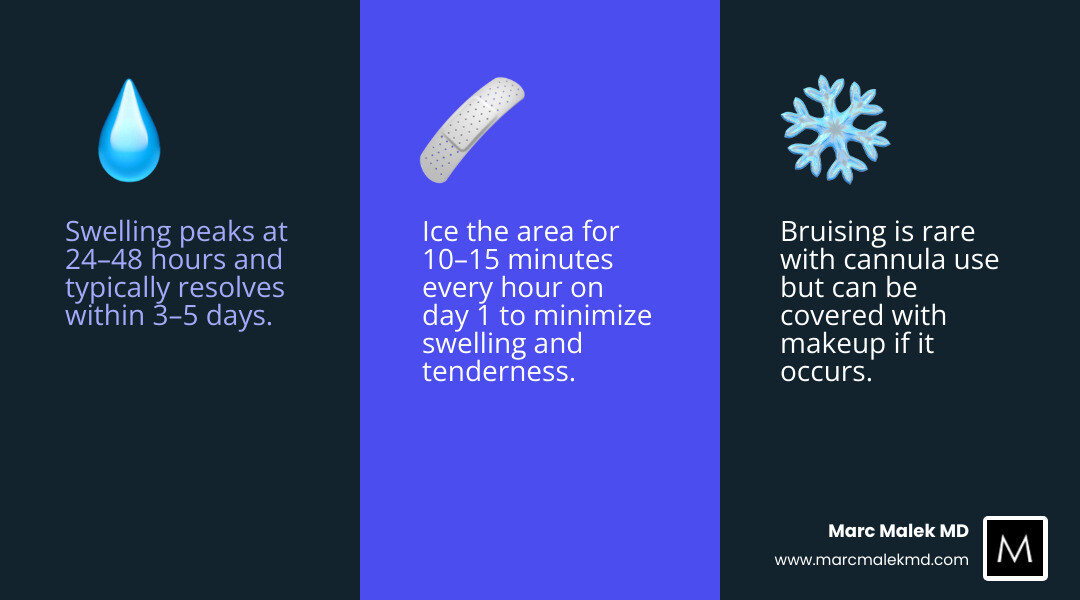
- Swelling: Usually peaks at 24–48 hours and then subsides.
- Bruising: Rare when using a cannula, but possible.
- Tenderness: You might feel some “tightness” or mild pain when opening your mouth wide or chewing for a few days.
Rare Risks and Prevention
While rare, serious complications like vascular occlusion (when filler accidentally enters a blood vessel) can occur. This is why we carry hyaluronidase, an enzyme that can immediately dissolve HA fillers if a problem is detected. Research on the management of vascular occlusion emphasizes that early intervention is key.
Other rare risks include temporary alopecia (hair thinning at the injection site) or skin necrosis. However, with our deep understanding of facial anatomy and the use of slow, low-pressure injection techniques, these risks are minimized.
Aftercare Protocols
- No Gym: Avoid strenuous exercise for 24 to 48 hours to keep swelling down.
- Hands Off: Don’t massage or press on your temples for at least 72 hours.
- Sleep Right: Try to sleep on your back for the first night or two.
Frequently Asked Questions about Temple Fillers
How much does temple filler cost?
The cost of temple dermal filler in the Scottsdale and Phoenix area varies based on the type of filler used and the number of syringes required. On average, you can expect to spend between $800 and $2,400. While this may seem like an investment, results last over a year, making the “cost per month” quite reasonable for the level of rejuvenation provided.
Is the temple filler procedure painful?
Most patients describe the sensation as a “pressure” or a “weird clicking sound” rather than sharp pain. Because the filler is often placed deep, you don’t feel much on the surface. The lidocaine in the gel takes effect quickly, making the second half of the procedure even easier than the first.
Who is a good candidate for temple dermal filler?
You are likely an excellent candidate if:
- You have noticed a “gaunt” or “skeletal” look to your upper face.
- You are a slim individual or a frequent exerciser (the “runner’s face” often includes hollow temples).
- You feel your brow has dropped or your eyes look “heavy.”
- You have realistic expectations and are in generally good health.
Conclusion
The temples may be a small part of your face, but they play a massive role in how young and healthy you appear. Restoring this “forgotten” area can bring your entire face back into proportional balance, softening your features and providing a subtle, sophisticated lift.
At Marc Malek MD, we believe in an artistic approach to cosmetic medicine. We don’t just fill lines; we look at the architecture of your face to ensure every treatment looks natural and harmonious. If you’re ready to say goodbye to the “peanut effect” and hello to a refreshed, balanced version of yourself, we invite you to take the next step.
Schedule a consultation for temple dermal filler at our Scottsdale office today and discover why this is the secret weapon in modern anti-aging.