

Understanding the Endoscopic Brow Lift: A Modern Solution for Upper Facial Rejuvenation
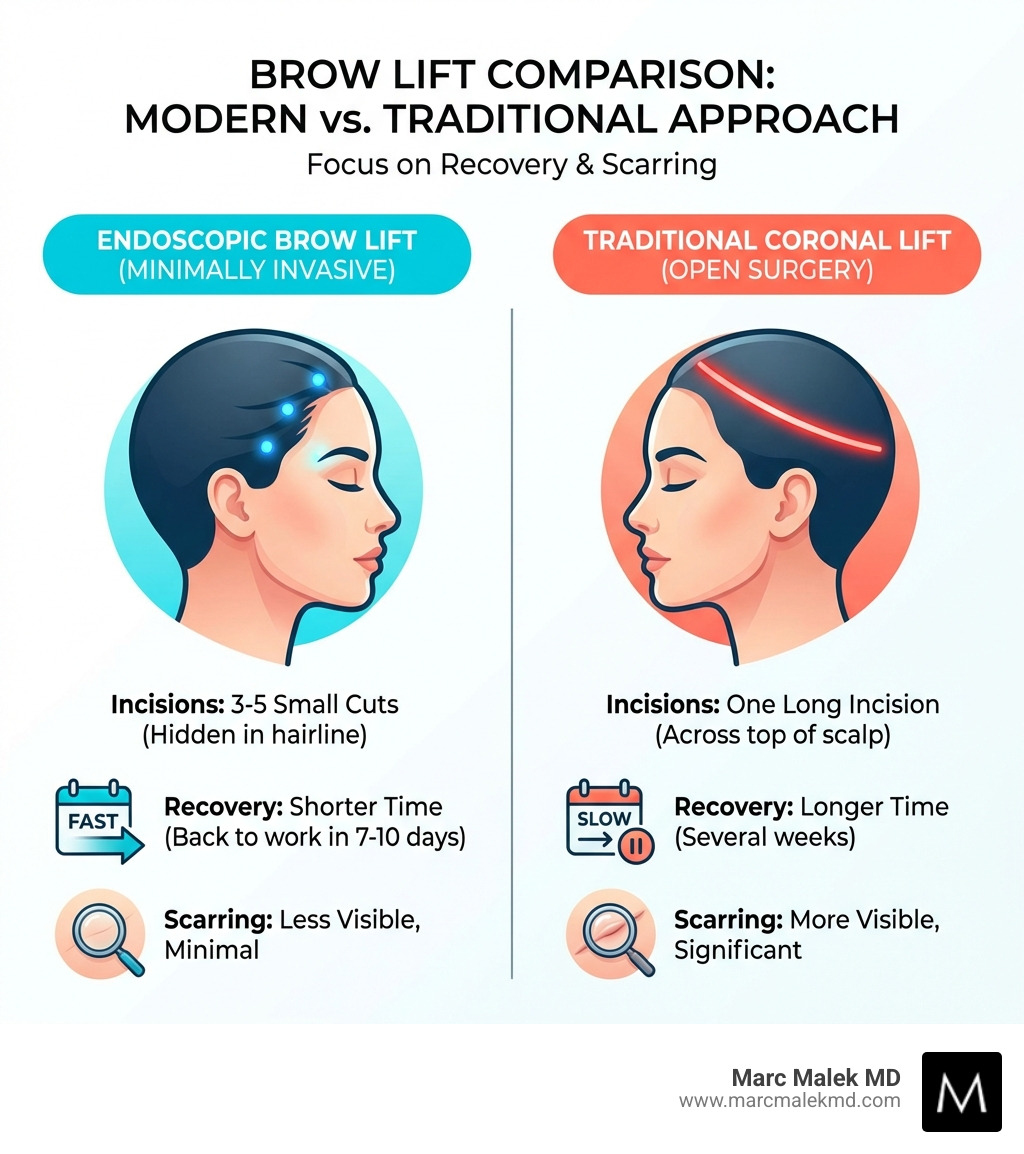
An endoscopic brow lift is a minimally invasive cosmetic procedure that lifts sagging eyebrows and smooths forehead wrinkles through small incisions hidden in the hairline. Unlike traditional brow lifts that require one long incision across the scalp, this modern technique uses a tiny camera (endoscope) and specialized instruments inserted through 3-5 small cuts, resulting in less scarring, reduced recovery time, and natural-looking results.
Quick Facts About Endoscopic Brow Lift:
- Procedure Time: Approximately 1 hour
- Recovery: Return to work in 7-10 days
- Results Duration: Up to 10 years or more
- Patient Satisfaction: Greater than 98%
- Incisions: 3-5 small cuts hidden in hairline
- Anesthesia: General or IV sedation
As time passes, eyebrows naturally descend and lose their youthful arch. This downward drift creates a tired, sad, or even angry appearance that doesn’t match how you actually feel inside. The forehead develops deep horizontal lines, and frown lines etch themselves between the brows. For many people, the upper eyelids start to feel heavy or crowded as sagging brow tissue pushes downward.
The endoscopic approach addresses these concerns through a technique that has revolutionized brow lifting since it was first described in the literature in 1994. More than half of brow rejuvenation procedures performed today use this endoscopic method, and for good reason.
Why patients choose endoscopic over traditional methods:
- Minimal visible scarring
- Less risk of hair loss around incisions
- Reduced bleeding during surgery
- Shorter, more comfortable recovery
- Lower risk of nerve damage
- Ability to precisely target specific areas
The procedure works by releasing the tissues that hold the brow down, repositioning forehead muscles that create wrinkles, and securing everything in a lifted position. Small absorbable devices or sutures hold the tissues in place while healing occurs, then dissolve naturally over several months.
What is an Endoscopic Brow Lift and How Does It Compare?
An endoscopic brow lift, also known as an endobrow or endoscopic forehead lift, is a sophisticated surgical procedure designed to restore a more youthful and rested appearance to the upper third of the face. This technique uses an endoscope – a thin tube equipped with a tiny camera and light – to allow our surgeons to visualize the underlying tissues and muscles of the forehead on a monitor. Through a few small, strategically placed incisions hidden within the hairline, specialized instruments are then used to lift and reposition the brow and forehead tissues.
The key difference between an endoscopic brow lift and traditional brow lift techniques lies in its minimally invasive nature. Traditional methods, such as the coronal brow lift, involve one long incision made across the top of the head, typically from ear to ear, behind the hairline. While effective, this approach can result in a longer recovery, more significant scarring, and a higher risk of hair loss or numbness.
With the endoscopic approach, we can achieve remarkable results with significantly less trauma to the tissues. This translates to smaller incisions, reduced scarring, and a quicker, more comfortable recovery for our patients here in Scottsdale and Phoenix, Arizona.
How an Endoscopic Brow Lift Differs from Other Techniques
When considering brow rejuvenation, it’s helpful to understand the various options available. While we often recommend the endoscopic brow lift for its advanced benefits, we also offer other techniques depending on your unique needs:
- Traditional (Coronal) Brow Lift: As mentioned, this involves a single, continuous incision across the scalp. It allows for significant lifting and removal of excess skin but comes with more extensive scarring and recovery.
- Temporal Brow Lift: This technique focuses on lifting the outer (temporal) part of the eyebrows through incisions hidden in the temples. It’s ideal for addressing sagging in the outer brow and can be performed with smaller incisions than a coronal lift.
- Direct Brow Lift: This involves an incision directly above the eyebrow, allowing for precise removal of skin and lifting. While effective for specific brow asymmetries or very heavy brows, it leaves a visible scar directly above the brow, making it less cosmetically appealing for many patients.
- Pretrichial Brow Lift (Hairline Brow Lift): This involves an incision placed just inside or along the hairline. It allows for brow elevation and can also lower a high hairline, but the incision line can sometimes be visible.
For a more comprehensive overview of all your options, you can explore our detailed guide on brow lift options.
In a systematic review comparing open versus endoscopic techniques, researchers highlighted the evolution of brow lifting. While various approaches exist, the endoscopic brow lift has emerged as a preferred method for many due to its less invasive nature. A study published in 2013 also acknowledged that while all brow lift procedures carry risks, further assessment is needed to definitively compare the safety of endoscopic versus open surgery A review of brow lift techniques.
The Main Benefits of Choosing an Endoscopic Approach
Choosing an endoscopic brow lift offers several compelling advantages that make it a popular choice for our patients seeking upper facial rejuvenation:
- Minimal Scarring: This is perhaps the most significant benefit. The small incisions (typically 3-5) are strategically placed behind the hairline, making them virtually invisible once healed. This is a stark contrast to the longer, more noticeable scar associated with traditional open brow lifts.
- Reduced Risk of Hair Loss: Because the incisions are small and carefully placed within the hair-bearing scalp, the risk of hair loss (alopecia) around the incision sites is significantly lower compared to techniques that involve larger scalp incisions.
- Less Bleeding and Swelling: The endoscopic technique causes less trauma to the tissues, resulting in less bleeding during the procedure and generally less bruising and swelling during recovery.
- Shorter Recovery Period: Patients typically experience a quicker and more comfortable recovery. Many of our patients in Arizona can return to work or light activities within 7-10 days, with most visible signs of surgery resolving within a few weeks. The procedure itself can often be completed in about one hour.
- Natural-Looking Results: The precise control offered by the endoscope allows our surgeons to make subtle, natural-looking adjustments to the brow position. We aim to create a refreshed, rested appearance that improves your natural beauty, avoiding an overly “pulled” or surprised look.
- High Patient Satisfaction: The outcomes speak for themselves. Patient satisfaction with the endoscopic brow lift is remarkably high, often reported at greater than 98%. This reflects the excellent aesthetic results and manageable recovery associated with the procedure.
- Reduced Numbness: While some temporary numbness is common after any brow lift, the minimally invasive nature of the endoscopic approach may lead to a lower incidence or shorter duration of permanent changes in sensation compared to more extensive procedures.
Are You an Ideal Candidate for an Endoscopic Brow Lift?
Deciding whether an endoscopic brow lift is right for you involves a thorough consultation where we assess your unique facial anatomy, aesthetic goals, and overall health. We believe in candid discussions about your health and expectations to ensure the best possible outcome.
Generally, good candidates for an endoscopic brow lift are men and women in good overall health who wish to achieve a younger, more refreshed look. You should have realistic expectations about the procedure’s capabilities and understand that while it offers significant improvement, it doesn’t halt the aging process entirely.
Common reasons patients seek an endoscopic brow lift include:
- Brow Ptosis (Sagging Eyebrows): Your brows may have descended, resting too low on your face.
- Forehead Wrinkles: Deep horizontal creases across the forehead that convey an aged appearance.
- Hooded Eyelids: Excess skin or tissue above the upper eyelids that can make eyes appear smaller or obstructed. This can often be due to a low brow position rather than just excess eyelid skin.
- Tired or Angry Appearance: A perpetually tired, sad, or angry expression caused by drooping brows or deep frown lines between the eyebrows.

Indications: Who Benefits Most?
The endoscopic brow lift is particularly well-suited for individuals who exhibit:
- Mild to Moderate Brow Sagging: Patients with noticeable but not severe brow ptosis who can benefit from a subtle yet significant lift.
- Good Skin Elasticity: Ideal candidates typically have good skin quality, which allows the tissues to respond well to repositioning and settle smoothly.
- Desire to Avoid Long Scars: If minimal visible scarring is a top priority, the hidden incisions of the endoscopic technique are a major advantage.
- Younger Patients: This procedure is often an excellent choice for younger individuals who are starting to show early signs of brow descent and forehead aging, as it provides effective rejuvenation without the more extensive intervention of traditional methods.
- Men with Receding Hairlines: Because the incisions are placed behind the hairline, it can be a good option for men concerned about further hairline recession or those who prefer to keep their hairline intact.
- Correcting Brow Asymmetry: The precise control offered by the endoscope can be very effective in addressing slight asymmetries in brow position.
Contraindications: When to Consider Alternatives
While the endoscopic brow lift is a fantastic option for many, it’s not suitable for everyone. We may recommend alternative treatments or procedures if you have:
- Excessive Skin Laxity: For patients with very significant skin redundancy and laxity in the forehead, a traditional open brow lift or a pretrichial approach might offer a more comprehensive and durable correction.
- Very High Hairline: Although the incisions are hidden, in cases of an extremely high or receding hairline, the procedure might further lift the hairline. In such instances, a hairline brow lift (pretrichial) could be a better option as it can actually lower the hairline while lifting the brow.
- Significant Frontal Bossing (Convex Forehead): An excessively curved forehead can sometimes make instrument passage challenging, making other techniques more suitable.
- Lagophthalmos (Inability to Close Eyes Completely): If you already have difficulty closing your eyes, a brow lift could exacerbate this condition. A thorough pre-operative evaluation is crucial to identify such risks.
- Unrealistic Goals: It’s important to have a clear understanding of what the procedure can realistically achieve. We will openly discuss your expectations during the consultation to ensure they align with possible outcomes.
If an endoscopic brow lift isn’t the ideal solution, we can explore other surgical options or discuss non-surgical facial rejuvenation treatments that might better meet your needs and goals.
The Endoscopic Brow Lift Procedure: A Step-by-Step Guide
The endoscopic brow lift is performed as an outpatient procedure, meaning you can return home the same day. We prioritize your comfort and safety, conducting all surgeries in an accredited surgical facility with a highly skilled interprofessional team. This team typically includes your surgeon, an anesthesiologist or nurse anesthetist, an operating room nurse, and a surgical assistant, all working together to ensure optimal care. The procedure itself is relatively quick, often completed in about one hour.
Before the Surgery: Consultation and Preparation
Your journey to a refreshed appearance begins with a detailed consultation. During this initial meeting, we will:
- Review Your Medical History: We’ll ask about past surgeries, current medications (including over-the-counter drugs, supplements, and herbal remedies), allergies, and any existing medical conditions. It’s crucial to be completely candid about your health.
- Conduct a Physical Examination: We’ll assess your facial structure, skin quality, brow position, and the extent of forehead wrinkles. We’ll also take photographs to document your starting point.
- Discuss Your Aesthetic Goals: This is your opportunity to clearly communicate what you hope to achieve. We’ll help you understand what’s realistically possible and tailor a surgical plan to your unique needs.
- Provide Pre-Operative Instructions: To ensure a smooth procedure and recovery, we will instruct you to:
- Stop Smoking: Smoking significantly impairs healing and increases complication risks. We’ll ask you to cease smoking well in advance of your surgery.
- Avoid Certain Medications: You’ll need to stop taking aspirin, anti-inflammatory drugs (like ibuprofen), and certain herbal supplements for a period before surgery, as they can increase bleeding.
- Arrange for Post-Op Care: You’ll need a trusted friend or family member to drive you home after surgery and ideally stay with you for at least the first night.
During the Surgery: The Endoscopic Technique
On the day of your surgery, you’ll arrive at our surgical facility in Scottsdale or Phoenix.
- Anesthesia: You will typically receive either general anesthesia (meaning you’ll be completely asleep) or intravenous (IV) sedation combined with local anesthesia. The choice depends on your preference and the complexity of the procedure.
- Incision Placement: Our surgeon will make 3 to 5 small incisions, each usually less than an inch long, hidden discreetly within your hairline. These minimal access points are a hallmark of the endoscopic brow lift.
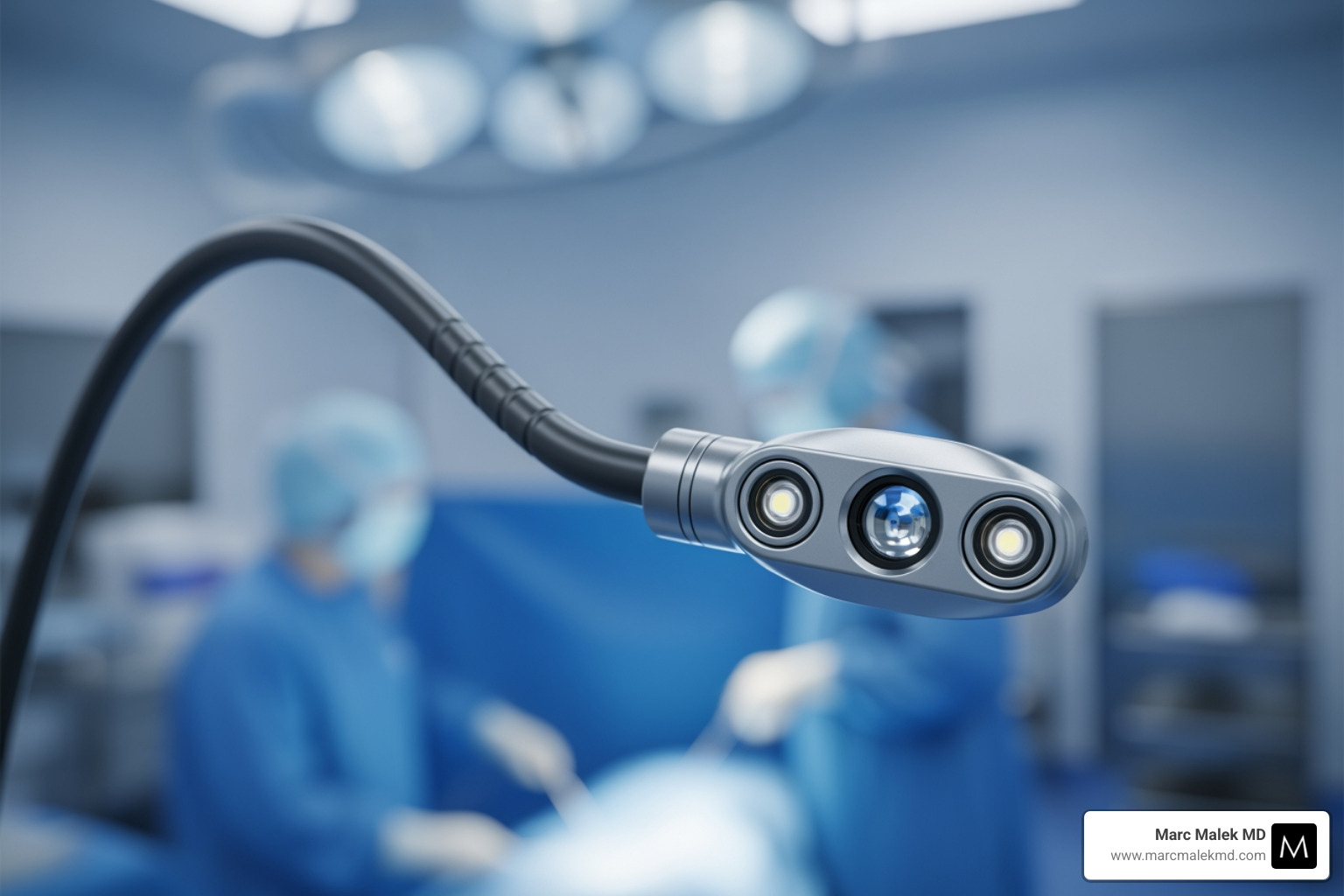
- Endoscope Insertion: Through one of these small incisions, a thin endoscope, equipped with a camera, is inserted. This allows our surgeon to have a magnified, high-definition view of the underlying muscles and tissues on a screen.
- Tissue Release and Dissection: Using specialized instruments inserted through the other incisions, our surgeon will carefully release the periosteum (the membrane covering the bone) and other tissues that pull the brow downward. This often involves releasing the arcus marginalis and dissecting in the subperiosteal plane.
- Muscle Modification: We will address the muscles responsible for forehead wrinkles and frown lines. This includes selectively weakening or partially resecting the corrugator supercilii muscles (which cause vertical frown lines between the brows) and the procerus muscle (which causes horizontal lines at the bridge of the nose). The frontalis muscle, responsible for horizontal forehead lines and brow elevation, may also be subtly adjusted.
- Key Anatomical Structures Involved and At Risk: During this delicate process, our surgeon carefully steers around critical structures. These include the frontal branch of the facial nerve (which controls forehead movement), and the supraorbital and supratrochlear nerves (which provide sensation to the forehead and scalp). The sentinel vein, a small vessel, is also carefully managed to avoid injury. A detailed anatomical overview of the forehead highlights the complexity and precision required.
- Forehead Tissue Repositioning: Once the tissues are adequately mobilized and the muscles adjusted, the entire forehead and brow complex is gently lifted to a more youthful and aesthetically pleasing position.
- Fixation: To maintain the new brow position, the liftd tissues are secured. This is typically done using small, absorbable devices (like Endotine implants, which dissolve over several months) or sutures that anchor the tissues to the underlying bone or deep temporal fascia.
- Closure: Finally, the small incisions are carefully closed with sutures or small clips.
Immediately After the Surgery
Once the procedure is complete, you will be moved to a recovery room where our interprofessional team will monitor you closely as the anesthesia wears off.
- Dressing: A light, soft head dressing may be applied to minimize swelling and provide gentle compression.
- Drainage: Minimal drainage is normal, but any significant bleeding will be addressed immediately by our team.
- Head Elevation: We will instruct you to keep your head liftd, even when resting, to help reduce swelling.
- Cold Compresses: Applying cold compresses intermittently around the eyes for the first 24 hours can further help manage swelling and discomfort.
- Post-Operative Instructions: You’ll receive detailed instructions on how to care for your incisions, manage pain, and what to expect during the initial recovery period.
Recovery, Results, and Potential Risks
After your endoscopic brow lift, it’s normal to experience some swelling and bruising around the forehead and eyes. You might also notice temporary numbness, tingling, or itching in the scalp area, which usually subsides as nerves recover. A mild headache is also common. Our team will provide you with specific instructions on how to manage these symptoms and ensure a comfortable recovery. Following these guidelines carefully is key to achieving the best possible results.
Often, patients combine an endoscopic brow lift with other procedures for a more comprehensive facial rejuvenation. For instance, it frequently complements eyelid surgery (blepharoplasty) to address both brow position and excess skin around the eyes.
What is the recovery from an endoscopic browlift like?
The recovery period for an endoscopic brow lift is generally much quicker and more comfortable than with traditional techniques. Here’s a typical timeline:
- First Week: Expect mild to moderate swelling and bruising, particularly around the eyes and forehead. Keeping your head liftd, even while sleeping, and applying cold compresses will be important. You should rest and avoid strenuous activities. Pain medication, if needed, will be prescribed to manage any discomfort.
- 7-10 Days: Most patients feel well enough to return to work and resume light, non-strenuous daily activities. Any sutures or staples will typically be removed during a follow-up appointment with us.
- 2-3 Weeks: The majority of visible bruising should have resolved, and swelling will have significantly diminished. You can usually resume more moderate activities, but we’ll still advise caution.
- Several Weeks to Months: You should continue to avoid strenuous activity, heavy lifting, and direct sun exposure for several weeks to allow for complete healing and to protect your incisions. The full effects of your endoscopic brow lift will become increasingly apparent as any residual swelling disappears and tissues settle into their new, lifted position, which can take a few months.
The new youthful brow position is usually maintained for up to 10 years, letting you enjoy your refreshed look.
Outlook: How Long Do Results Last?
The results of an endoscopic brow lift are designed to be long-lasting, providing a refreshed and more youthful appearance for many years. Most studies and patient experiences indicate that the aesthetic benefits can endure for up to 10 years or even longer. Our new youthful brow position is usually maintained for a decade, allowing you to thoroughly enjoy your new look.
While the procedure effectively reverses the signs of aging that were present at the time of surgery, the natural aging process will continue. Factors such as genetics, lifestyle choices, and sun exposure can influence the longevity of your results. To help maintain your refreshd appearance, we always recommend consistent sun protection and a healthy skincare regimen. A study investigating long-term brow stabilization by Endotine-assisted endoscopic brow lift with concomitant upper lid blepharoplasty showed promising long-term outcomes Study on long-term stability.
Potential Risks and Side Effects
Like any surgical procedure, an endoscopic brow lift carries potential risks and side effects, though serious complications are rare, particularly when performed by an experienced, board-certified plastic surgeon. We will discuss these thoroughly during your consultation to ensure you are fully informed.
Potential risks and side effects include:
- Anesthesia Risks: As with any surgery requiring anesthesia, there are inherent risks, which will be discussed by your anesthesiologist.
- Infection: While rare, infection at the incision sites is a possibility. We take meticulous precautions, including prophylactic antibiotics, to minimize this risk.
- Bleeding: Some bleeding is normal, but excessive bleeding or hematoma (a collection of blood under the skin) can occur.
- Scarring: Although the incisions are small and hidden, any surgical incision will result in a scar. These are typically inconspicuous and fade over time.
- Asymmetry: While we strive for perfect symmetry, slight differences in brow position can occur. Minor asymmetries can often be corrected with non-surgical treatments like Botox or, in rare cases, a revision surgery.
- Changes in Sensation (Paresthesia): Temporary numbness, tingling, or altered sensation in the forehead or scalp is common and usually resolves. In very rare cases, it can be persistent.
- Hair Loss at Incisions (Alopecia): Though less common with the endoscopic technique, temporary or permanent hair loss around the incision sites can occur.
- Facial Nerve Injury: This is an extremely rare but potentially serious complication. Injury to the frontal branch of the facial nerve can lead to temporary or permanent weakness or paralysis of the forehead muscles, affecting eyebrow movement. Our surgeons employ advanced anatomical knowledge and precise techniques to avoid this.
- Overcorrection: In some instances, the brow may be lifted too high, creating a “surprised” look. This is why a natural, conservative approach is often preferred.
A comprehensive review of complications in brow lifts, both surgical and non-surgical, underscores the importance of choosing a qualified and experienced surgeon to minimize these risks A review of brow lift complications.
Conclusion: Reclaim Your Refreshed Appearance
The endoscopic brow lift stands out as a sophisticated and highly effective solution for rejuvenating the upper face. By addressing sagging eyebrows, smoothing forehead wrinkles, and lifting a tired gaze, it can truly transform your appearance, helping you look as vibrant and energetic as you feel. We are proud that more than half of brow rejuvenation procedures performed today are endoscopic, reflecting its proven efficacy and patient satisfaction rates exceeding 98%.
This minimally invasive procedure offers numerous benefits over traditional techniques, including discreet incisions, a shorter recovery period, and natural-looking, long-lasting results that can endure for up to 10 years or more. It’s an investment in your confidence and a testament to modern aesthetic surgery.
Choosing the right surgeon is paramount to achieving the beautiful, harmonious results you desire. Here at Marc Malek MD, we combine extensive expertise with a personal and artistic approach, focusing on patient comfort and delivering natural outcomes. Our commitment to patient-focused care ensures that your journey to a refreshed appearance is safe, comfortable, and custom specifically to you.
If you’re in Scottsdale, Phoenix, or anywhere in Arizona and considering an endoscopic brow lift to open up a more youthful gaze, we invite you to explore your options with us. Our team is dedicated to helping you achieve your aesthetic goals with precision and care.
Learn more about achieving a youthful look with a Brow Lift in Scottsdale