

Why Insurance Might Cover Your Eyelid Surgery (and When It Won’t)
How to get insurance to pay for eyelid surgery starts with proving it’s not just cosmetic—you need to demonstrate that drooping eyelids are causing functional vision problems. Most insurance companies will cover blepharoplasty only when specific medical criteria are met.
Quick Answer: The 4 Steps to Get Insurance Coverage
- Prove Medical Necessity – Document that your eyelids obstruct your vision (at least 30% loss in your superior visual field)
- Get the Right Tests – Complete visual field testing showing improvement when eyelids are taped up
- Meet the Measurements – Your Margin Reflex Distance (MRD1) must be ≤ 2.0 mm
- Submit Proper Documentation – Provide standardized photos, physician notes, and pre-authorization
The reality is simple: upper eyelid surgery has a much better chance of insurance coverage because it’s more likely to affect your vision. Lower eyelid surgery is almost always considered cosmetic.
The average cost of cosmetic eyelid surgery is $3,339 for the surgeon’s fee alone—but when the procedure is deemed medically necessary, your insurance may cover it entirely. That’s why understanding the difference between a cosmetic improvement and a functional repair is so important.
Some people don’t even realize they’re constantly raising their eyebrows to lift their eyelids, leading to chronic headaches. Others struggle to check blind spots while driving or experience eye strain from reading. These are the kinds of functional impairments that shift eyelid surgery from “cosmetic” to “medically necessary.”
This guide will walk you through exactly what insurance companies look for, what documentation you need, and how to steer the approval process—from your first consultation to handling a potential denial.
The First Hurdle: Proving Medical Necessity
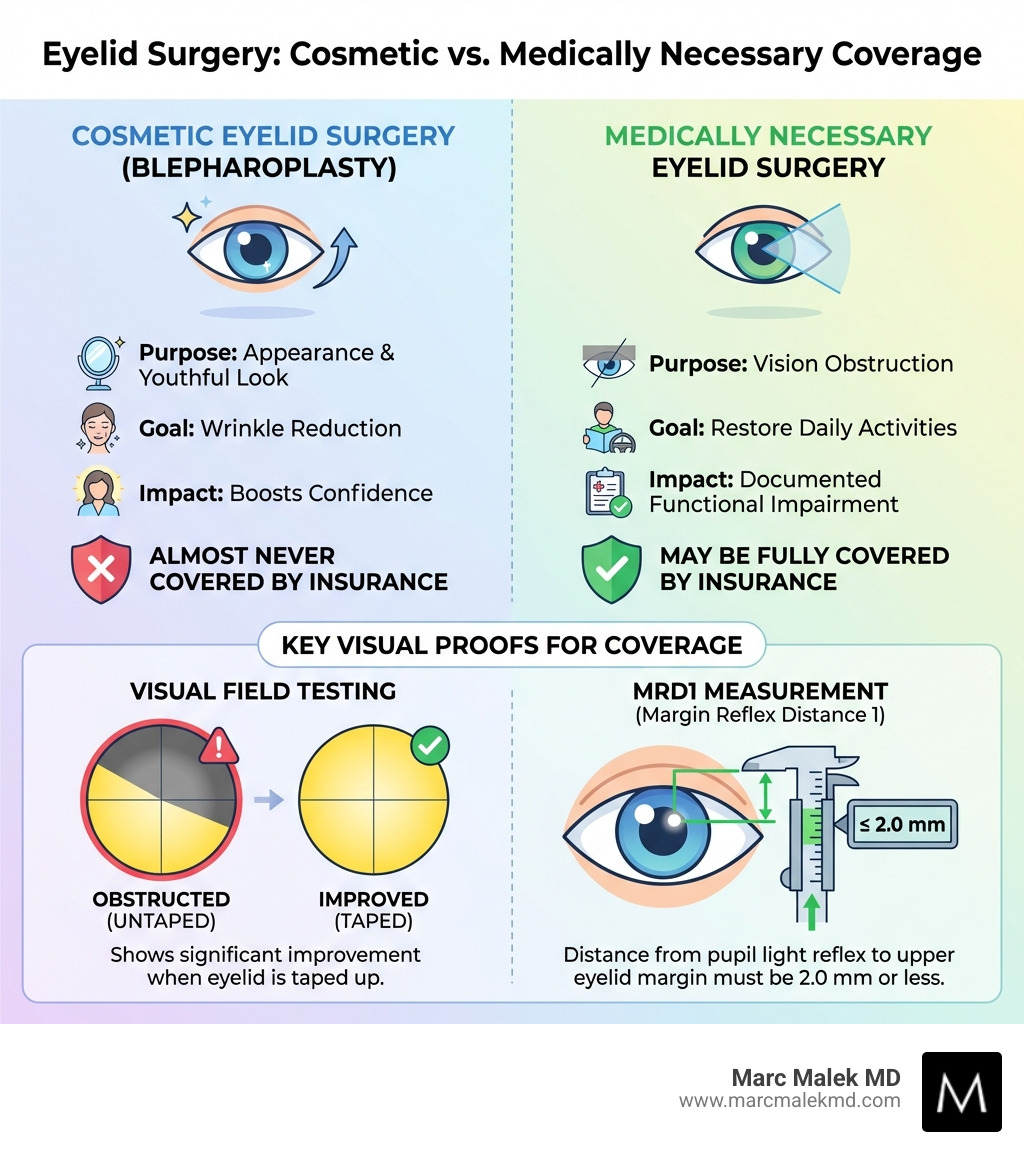
When we consider eyelid surgery, or blepharoplasty, the first and most critical distinction we must make is whether the procedure is cosmetic or medically necessary. This difference is the gateway to understanding how to get insurance to pay for eyelid surgery. Insurance providers are businesses, and their primary goal is to cover procedures that restore function or alleviate medical conditions, not to improve appearance alone.
Cosmetic vs. Medically Necessary Blepharoplasty
The core difference between cosmetic and medically necessary blepharoplasty lies in its primary objective.
Cosmetic blepharoplasty is performed solely to improve your appearance. This might involve reducing wrinkles, removing excess skin and fat for a more youthful look, or addressing under-eye bags that don’t obstruct vision. These procedures are typically elective, driven by aesthetic goals, and are almost never covered by insurance. The investment for these procedures comes entirely out of your pocket.
Medically necessary blepharoplasty, on the other hand, aims to correct a functional problem. This means your drooping eyelids are actively impairing your vision or causing other health issues. When your eyelids interfere with daily activities, such as driving, reading, or even just seeing clearly, the surgery transitions from an aesthetic choice to a functional necessity. In such cases, insurance is much more likely to cover the procedure.
Here’s a quick comparison:
| Criteria | Cosmetic Blepharoplasty | Medically Necessary Blepharoplasty |
|---|---|---|
| Goal | Aesthetic improvement, youthful appearance | Restore vision, alleviate functional impairment |
| Key Symptoms | Wrinkles, puffiness, mild sagging without obstruction | Vision obstruction, eye strain, headaches, difficulty daily activities |
| Insurance Likelihood | Very low (almost never covered) | High (if criteria met and well-documented) |
| Cost | 100% out-of-pocket | Potentially covered entirely or partially by insurance |
Qualifying Conditions: Dermatochalasis and Ptosis
Two common conditions often make eyelid surgery medically necessary: dermatochalasis and ptosis. Understanding these is key to building your case.
Dermatochalasis refers to the presence of excessive, baggy skin in the upper or lower eyelids. As we age, our skin loses elasticity, and gravity takes its toll, leading to this excess tissue. In the upper eyelids, this can create a “hooded” appearance where the skin actually hangs over the natural crease and can even rest on your eyelashes. When this excess skin becomes severe enough to obstruct your field of vision, particularly your peripheral or superior (upper) vision, it becomes a medical concern. Patients often report difficulty seeing objects above them or to the sides, which can be dangerous when driving or engaging in other activities.
Ptosis (pronounced TOE-sis) is the drooping of the upper eyelid itself, caused by a weakness or dysfunction of the levator muscle, which is responsible for lifting the eyelid. Unlike dermatochalasis, where excess skin is the culprit, ptosis means the eyelid margin (the edge of the eyelid) itself falls to a lower-than-normal position. This can cover the pupil, directly blocking your central vision. Ptosis can be congenital (present from birth), or it can develop due to aging, trauma, neurological conditions, or even prolonged contact lens wear. Patients with ptosis may unconsciously tilt their head back or constantly raise their eyebrows to try and see better, leading to chronic headaches and eye strain.
Both dermatochalasis and ptosis can significantly impact your quality of life. Scientific research on blepharoplasty supports both the functional and aesthetic benefits of these procedures.
Upper vs. Lower Eyelid Coverage
When it comes to insurance coverage, the location of the drooping makes a significant difference:
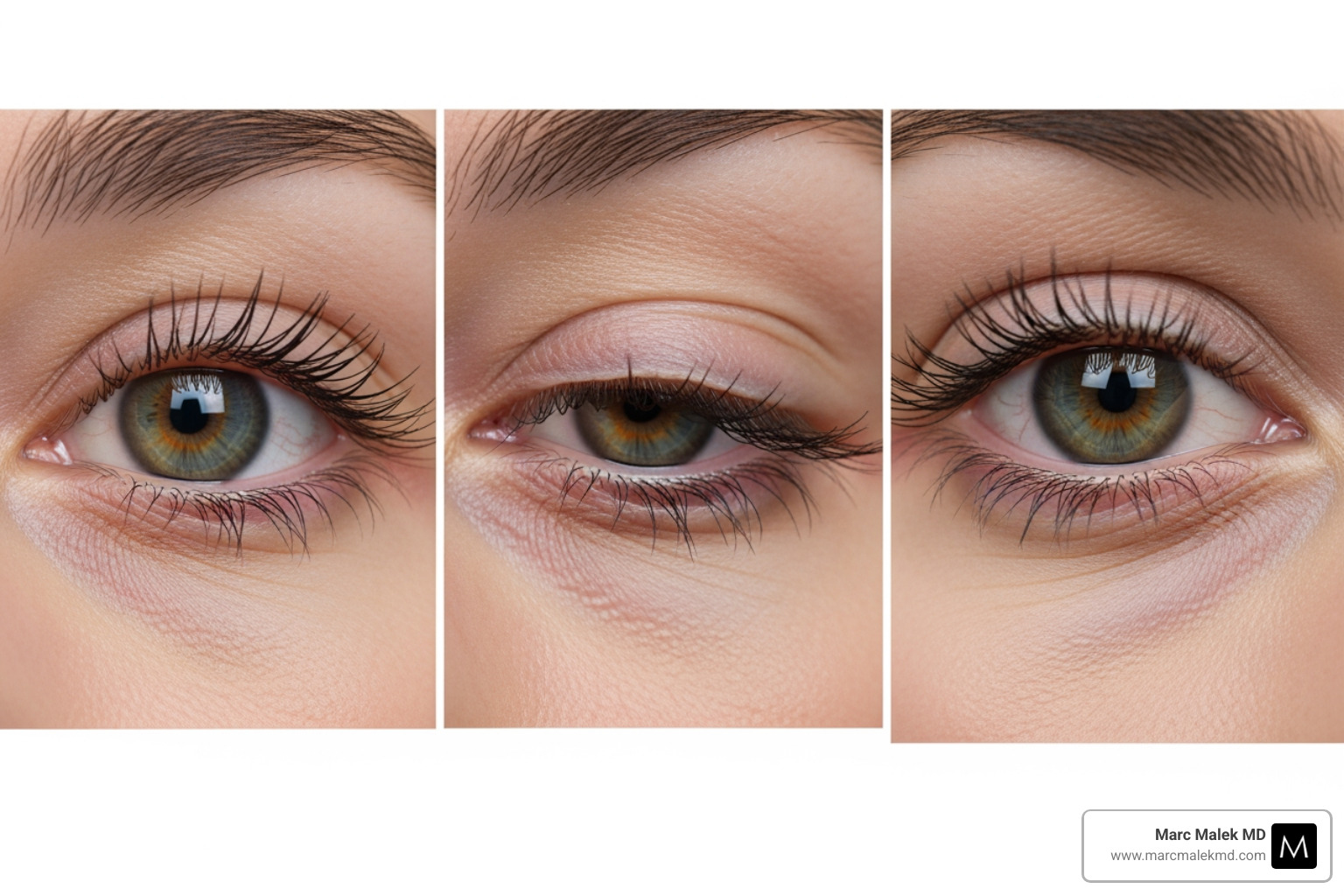
- Upper Eyelid Surgery: This procedure has a much better chance of insurance coverage because drooping upper eyelids are far more likely to affect your vision. If excess skin or a droopy eyelid (dermatochalasis or ptosis) obstructs your peripheral or superior vision, it directly impacts your ability to perform daily tasks safely. We’ve seen many patients in Scottsdale, Phoenix, and across Arizona who experience significant relief and improved vision after upper eyelid surgery.
- Lower Eyelid Surgery: This is almost always considered cosmetic. Concerns like under-eye bags, puffiness, or fine lines in the lower eyelids typically do not impair vision. While these issues can make you look tired or older, they rarely pose a functional medical problem. Therefore, insurance companies generally do not cover lower eyelid blepharoplasty.
It’s important to understand this distinction as you start on your journey to understand how to get insurance to pay for eyelid surgery.
Building Your Case: The Ultimate Documentation Checklist
Insurance companies “love numbers” because they’re objective. To get insurance to pay for eyelid surgery, we need to provide undeniable proof that your condition is medically necessary. This means gathering specific, quantifiable evidence through diagnostic tests and detailed documentation. Think of it like building a legal case for your eyes!
The Visual Field Test: Quantifying Your Vision Loss
One of the most crucial pieces of evidence is the visual field test. This diagnostic test measures your peripheral vision and helps to quantify how much your drooping eyelids are obstructing your sight. It’s a key requirement for most insurance providers.
Here’s how it generally works and why it’s so important:
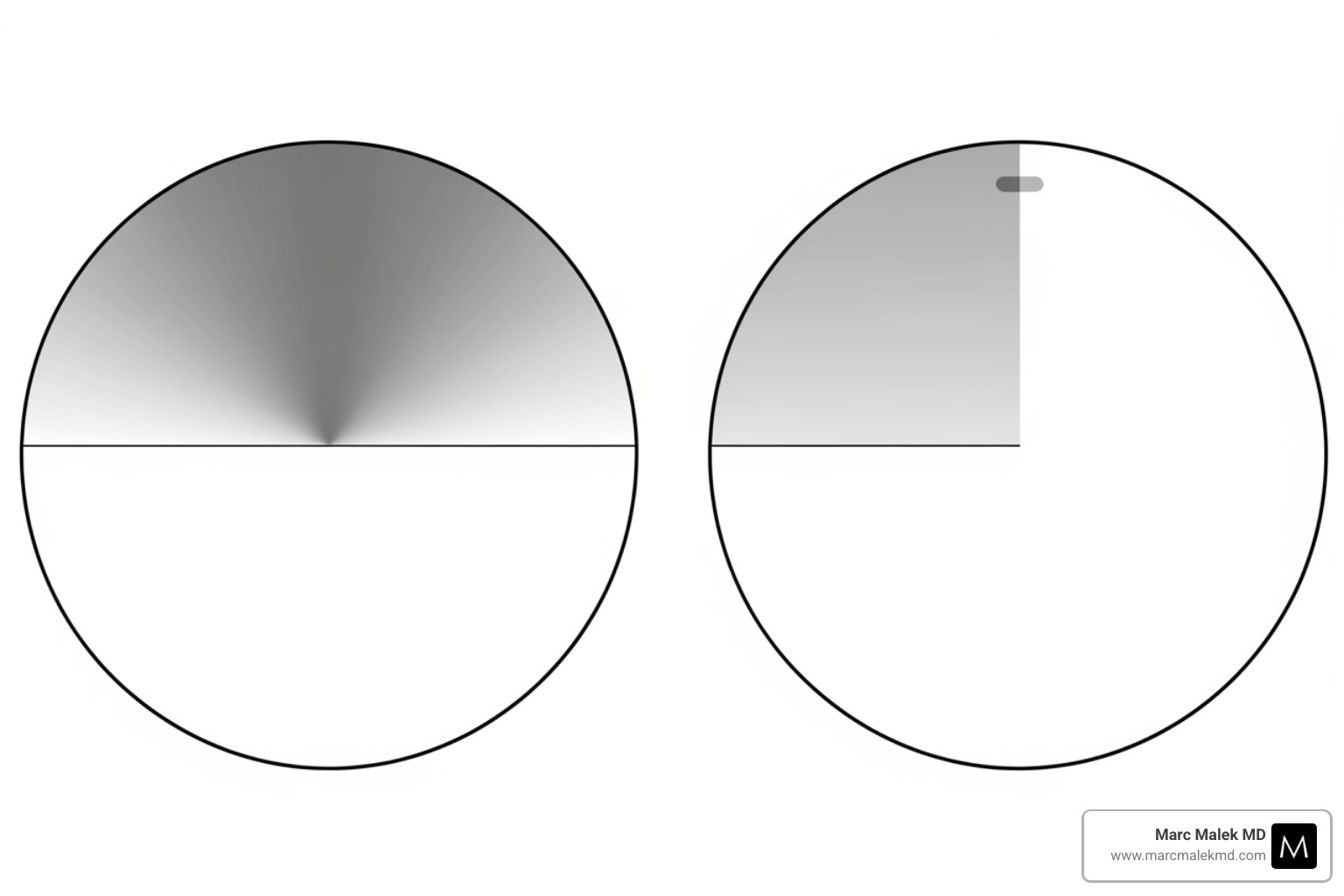
- Baseline Measurement (Untaped): You’ll sit in front of a machine that presents lights at various points in your peripheral vision. You press a button each time you see a light. This creates a map of your visual field with your eyelids naturally drooping.
- Corrected Measurement (Taped): The test is then repeated, but this time, your eyelids will be gently taped up or liftd to simulate the results after surgery. This allows us to measure your potential vision without the obstruction.
- The Comparison: The insurance company will compare these two results. If the visual field test shows that lifting your eyelids significantly improves your peripheral vision—often by at least 15 degrees, or restores 30% to 50% of your blocked visual field—you’ve got quantifiable proof of medical necessity. Some insurance companies want to see at least 50% vision obstruction before they’ll approve coverage, while others may accept 20% or 30% loss. This “taped test” is critical because it objectively demonstrates the functional improvement the surgery will provide.
Critical Measurements and Standardized Photography
Beyond the visual field test, other objective measurements and visual evidence are vital for your insurance claim.
- Margin Reflex Distance (MRD1): This measurement is particularly crucial for cases of ptosis. MRD1 measures the distance from the center of your pupil to the edge of your upper eyelid. Most insurers require this distance to be within 2 millimeters (≤ 2.0 mm) for coverage approval. A normal MRD1 is typically 4-5 mm, so a measurement of 2 mm or less indicates significant drooping. A low MRD1 directly correlates with superior visual field impairment.
- Physician’s Documentation: Your doctor’s notes are paramount. They need to thoroughly document your symptoms and how your drooping eyelids impact your daily life. This isn’t just about vision; it includes details like:
- Difficulty reading, driving, or performing hobbies.
- Chronic headaches or eyebrow fatigue from constantly raising your forehead to see.
- Eye irritation or dryness from skin folds rubbing together.
- Any other functional difficulties related to your eyelids.
The more detailed and specific your physician is about these complaints, the stronger your case will be. An overview from the American Academy of Ophthalmology provides valuable insights into this process that can help you understand what to expect.
- Standardized Photography: High-quality, standardized photographs are another non-negotiable piece of evidence. These photos need to clearly show the physical obstruction caused by your eyelids. Your doctor will take images with your head upright, looking straight ahead, and ensuring the corneal light reflex (the reflection of light on your cornea) is visible and not obscured by your eyelid. These photos visually corroborate the measurements and functional complaints, making it undeniable that your eyelids are indeed affecting your vision.
The goal here is to leave no doubt in the insurance company’s mind that your eyelid surgery is a medical necessity, not a cosmetic desire.
How to Get Insurance to Pay for Eyelid Surgery: The Approval Process
Navigating the insurance approval process can feel daunting, but with the right steps and persistence, it’s entirely manageable. Understanding how to get insurance to pay for eyelid surgery involves a clear administrative journey.
Your First Steps: Consultation and Pre-Authorization
Your journey begins with a thorough evaluation and a critical administrative step:
- Initial Consultation: The very first step is to schedule a consultation with a qualified medical professional. In our Scottsdale and Phoenix offices, we recommend starting with a board-certified plastic surgeon or an ophthalmologist who specializes in oculoplastic surgery. During this consultation, we will assess your symptoms, perform a comprehensive eye examination, and determine if your condition meets the criteria for medical necessity. If needed, we may refer you to an ophthalmologist for specialized visual field testing.
- Reviewing Your Insurance Policy: Before anything else, it’s crucial to understand your own insurance plan. We encourage our patients in Arizona to carefully review their policy documents or contact their insurance provider directly to understand their specific benefits related to blepharoplasty. Look for clauses regarding “medically necessary procedures” and “cosmetic exclusions.” Knowing your policy inside and out will save you time and frustration down the line.
- Pre-Authorization (Prior Approval): This is a crucial administrative step. Once we determine that your eyelid surgery is medically necessary and we’ve gathered all the required documentation (visual field tests, MRD1 measurements, physician notes, standardized photos), we will submit a request for pre-authorization to your insurance company. Pre-authorization is essentially asking for approval before the procedure is performed. It confirms that your insurance company agrees that the surgery is medically necessary and will cover it. Never undergo surgery without obtaining pre-authorization, as doing so could result in your claim being denied.
What to Do if Your Insurance Claim is Denied
It’s common for initial claims to be denied. Don’t be discouraged! Insurance companies are businesses, and sometimes initial denials are just part of their process. We need to be prepared to appeal.
- Understand the Reason for Denial: The first step after receiving a denial letter is to carefully read it and understand exactly why your claim was denied. Was there insufficient documentation? Did they deem it cosmetic? Did you not meet specific numerical criteria? Knowing the reason will guide your appeal.
- The Appeals Process: This is your second chance to make your case. Many people give up too easily at this stage, but persistence often pays off. The appeals process typically involves:
- Gathering Additional Evidence: This might mean updated visual field tests, more detailed physician notes, or even a second opinion from another qualified eye specialist. Sometimes, simply resubmitting the existing documentation with a more compelling “letter of medical necessity” from your surgeon can make a difference.
- Writing an Appeal Letter: Your surgeon’s office will often help you draft a formal appeal letter addressing each denial reason directly and presenting the strong evidence you’ve collected.
- Following Up: Be prepared to follow up regularly with your insurance provider on the status of your appeal. This shows determination and ensures your case isn’t forgotten.
Our team in Scottsdale is experienced in navigating these appeals and will work closely with you to present the strongest possible case to your insurance provider.
Understanding the Financials: Costs, Combinations, and Financing
Even with medical necessity, understanding the financial aspects of eyelid surgery is vital. This includes knowing what happens if you combine procedures, the typical costs if insurance doesn’t cover it, and available financing options.
Combining Medically Necessary and Cosmetic Procedures
It’s quite common for patients to have both a functional need (like vision impairment from upper eyelids) and cosmetic desires (like addressing under-eye bags). The good news is that these can often be combined.
When we perform combined surgery, such as a medically necessary upper eyelid lift to improve vision and a cosmetic lower eyelid blepharoplasty for aesthetic reasons, insurance will typically only cover the portion deemed medically necessary. This means:
- Functional Upper Lid Surgery: The costs associated with addressing dermatochalasis or ptosis in the upper eyelids, including surgeon’s fees, anesthesia, and facility charges for that specific part of the procedure, may be covered by your insurance provider if all medical necessity criteria are met.
- Cosmetic Lower Lid Surgery: The costs for the lower eyelid procedure, which is almost always considered cosmetic, will be out-of-pocket expenses for you.
We will provide itemized billing, clearly separating the medically necessary components from the cosmetic ones. This transparency ensures you understand exactly what your insurance is expected to cover and what your personal financial responsibility will be.
How to get insurance to pay for eyelid surgery and what it costs if they don’t
If your insurance does not cover your blepharoplasty—either because it’s deemed purely cosmetic, or you don’t meet the strict medical necessity criteria—it’s important to understand the typical costs involved.
The average surgeon’s fee for cosmetic eyelid surgery is around $3,339. However, this is just one component of the total cost. When you add in other essential elements, the total investment can climb significantly:
- Surgeon’s Fee: This covers the surgeon’s expertise and time.
- Anesthesia Fees: This covers the services of the anesthesiologist and the cost of anesthesia.
- Facility Fees: This covers the use of the surgical facility, including staff, equipment, and supplies.
- Pre- and Post-Operative Care: This can include consultations, follow-up appointments, and any necessary medications.
When you factor everything in, most patients can expect to invest between $4,000 to $8,000 or more for eyelid surgery, depending on whether you’re having upper lids, lower lids, or both done, and the complexity of the procedure.
Financing Options for Your Eyelid Surgery
If your insurance doesn’t cover your blepharoplasty, or if you’re opting for a cosmetic procedure, several financing options are available to help make the cost more manageable:
- Health Savings Accounts (HSAs) and Flexible Spending Accounts (FSAs): If you have one of these accounts, you can use pre-tax dollars to pay for qualified medical expenses, which can include medically necessary procedures and sometimes even cosmetic ones if they have a functional component.
- Medical Credit Cards: Specialized credit cards, such as CareCredit, offer deferred interest or low-interest payment plans for healthcare expenses.
- Personal Loans: Many banks and credit unions offer personal loans that can be used for elective medical procedures. These often have fixed interest rates and repayment terms.
- In-House Payment Plans: Many surgical practices, including ours at Marc Malek MD in Scottsdale, offer their own flexible payment plans to help patients manage costs directly.
- Third-Party Financing: Companies like Medicard (a general example, as financing options vary by region) offer financing specifically for medical and cosmetic procedures, allowing you to break the cost into affordable monthly payments. You can explore options like these by searching for “medical financing” in Arizona or by visiting sites such as Medicard.com.
We believe everyone deserves access to care that improves their quality of life, and we’re dedicated to helping our Arizona patients find suitable financial solutions.
Frequently Asked Questions about Insurance and Blepharoplasty
We often hear similar questions from our patients in Scottsdale and Phoenix as they explore how to get insurance to pay for eyelid surgery. Here are some of the most common ones:
What specific symptoms should I mention to my doctor?
When discussing your concerns with us, be very specific about any functional impairments. Mention any difficulty with driving, reading, or seeing in your peripheral vision. Also report chronic headaches from straining your forehead muscles, eye fatigue, or irritation from skin rubbing on your lashes. Describe when your eyelids feel heavy and how these issues impact your daily activities. The more detail you provide about your symptoms and their impact, the stronger your case for medical necessity.
How do I start the process to get insurance to pay for eyelid surgery?
The first step is to schedule a consultation with a board-certified plastic surgeon or an ophthalmologist. Here at Marc Malek MD, we’ll perform a thorough examination, document your symptoms, and determine if you are a candidate for medically necessary surgery. If so, we’ll initiate the required testing, such as visual field tests and precise measurements, to build your case for insurance coverage.
Will Medicare cover my eyelid surgery?
Yes, Medicare follows similar rules to private insurance regarding eyelid surgery. If your eyelid surgery is proven to be medically necessary to correct a functional impairment (like vision loss), Medicare Part B may cover 80% of the cost after your deductible is met. Just like with private insurance, you must provide evidence that it’s medically necessary. This evidence includes a doctor’s medical record clarifying a functional difficulty or disturbance related to your eyelids and showing evidence of injury or disease as the cause. Color photographs showing the physical effect of your condition are also required. For more detailed information, you can refer to resources like the Centers for Medicare & Medicaid Services (CMS) coverage database.
Your Path to Clearer Vision and Renewed Confidence
Understanding how to get insurance to pay for eyelid surgery is truly about becoming an advocate for your own health. The process may seem intricate, but with the right guidance, thorough documentation, and a little persistence, it is entirely manageable. We’ve seen countless patients in Scottsdale and across Arizona achieve clearer vision and renewed confidence by successfully navigating this path.
Remember the key steps: prove medical necessity with objective data, gather comprehensive documentation, pursue pre-authorization diligently, and don’t hesitate to appeal if an initial claim is denied. Your comfort, safety, and well-being are our top priorities. At Marc Malek MD, we use a personal and artistic approach, focusing on patient comfort and delivering long-lasting, natural-looking results.
We are here to support you through every stage of this journey. Learn more about your eyelid surgery options and schedule a consultation with us today to discuss how we can help you achieve clearer vision and a more comfortable, confident you.