

Understanding FUE Hair Implants: The Modern Solution to Hair Loss
FUE hair implant (Follicular Unit Excision) is a minimally invasive hair restoration technique that extracts individual hair follicles from donor areas using micro-punches (0.7-1.2mm) and transplants them to thinning or balding areas. Unlike traditional strip harvesting (FUT), FUE leaves no linear scar, requires no sutures, and offers faster recovery—typically allowing patients to return to work within 24-48 hours.
Key Facts About FUE Hair Implants:
- Procedure: Individual follicles extracted using tiny punches and implanted into recipient sites
- Recovery: 1-2 weeks before exercise; donor area heals in ~7 days
- Results: New growth visible at 3-4 months; full results at 9-12 months
- Cost: Typically $3.50-$10 per graft; total range $4,000-$15,000
- Permanence: Transplanted follicles are DHT-resistant and considered permanent
- Scarring: Small dot scars vs. linear scar from FUT strip method
Hair loss affects over 50 million men and 30 million women in the United States. For many, thinning hair takes a serious toll on self-confidence and appearance. While previous generations faced limited options—from obvious hair plugs to visible linear scars—modern Follicular Unit Excision represents a significant advancement in hair restoration.
The procedure has evolved considerably since it was first described in 1988. Today’s FUE techniques use advanced technology like SmartGraft and NeoGraft systems that automatically count, sort, chill, and moisten harvested follicles to maximize survival rates. The International Society of Hair Restoration Surgery (ISHRS) updated their guidelines in 2018 to reflect these improvements and properly describe the surgical skill involved.
Unlike the older FUT “strip method” that removes a section of scalp and leaves a linear scar, FUE harvests follicles one at a time. This creates only tiny, scattered scars that are virtually undetectable—even with very short hairstyles. The technique also allows surgeons to harvest hair from non-scalp areas like the beard or chest when needed.
For health-conscious individuals seeking lasting results with minimal downtime, FUE offers a compelling solution. The procedure is performed under local anesthesia, most patients experience minimal discomfort, and the transplanted hair grows naturally for life.
Fue hair implant terms simplified:
Defining the FUE Hair Implant: More Than Just Extraction
When we talk about a fue hair implant, we are really discussing a precision surgical technique that has revolutionized the way we look at hair loss. For years, the industry used the term “extraction,” but the International Society of Hair Restoration Surgery (ISHRS) recently shifted the terminology to “Follicular Unit Excision.” Why the change? Because “excision” more accurately describes the surgical skill required to create a tiny circular incision around a hair follicle before it is removed.
At its core, the fue hair implant involves using micro-punches—ranging from 0.6 mm to 1.0 mm in size—to isolate naturally occurring groups of one to four hairs. These groups are known as follicular units. Because we are removing these units individually, there is no need for the large, traditional scalpel incisions used in older methods. According to Scientific research on FUE methodology, this sutureless method is highly effective because it targets the “tightest zone” of the hair follicle—the attachment area of the arrector muscle—loosening it just enough for a clean harvest.
One of the most beautiful things about this procedure is the biology behind it. The hair follicles we harvest from the back and sides of your head (the donor area) are genetically programmed to be resistant to Dihydrotestosterone (DHT). DHT is the hormone primarily responsible for male and female pattern baldness. When we move these follicles to a new home on your scalp, they keep that resistance. This means your fue hair implant isn’t just a temporary fix; it’s a permanent addition to your hairline.
FUE vs. FUT: Choosing the Right Restoration Path
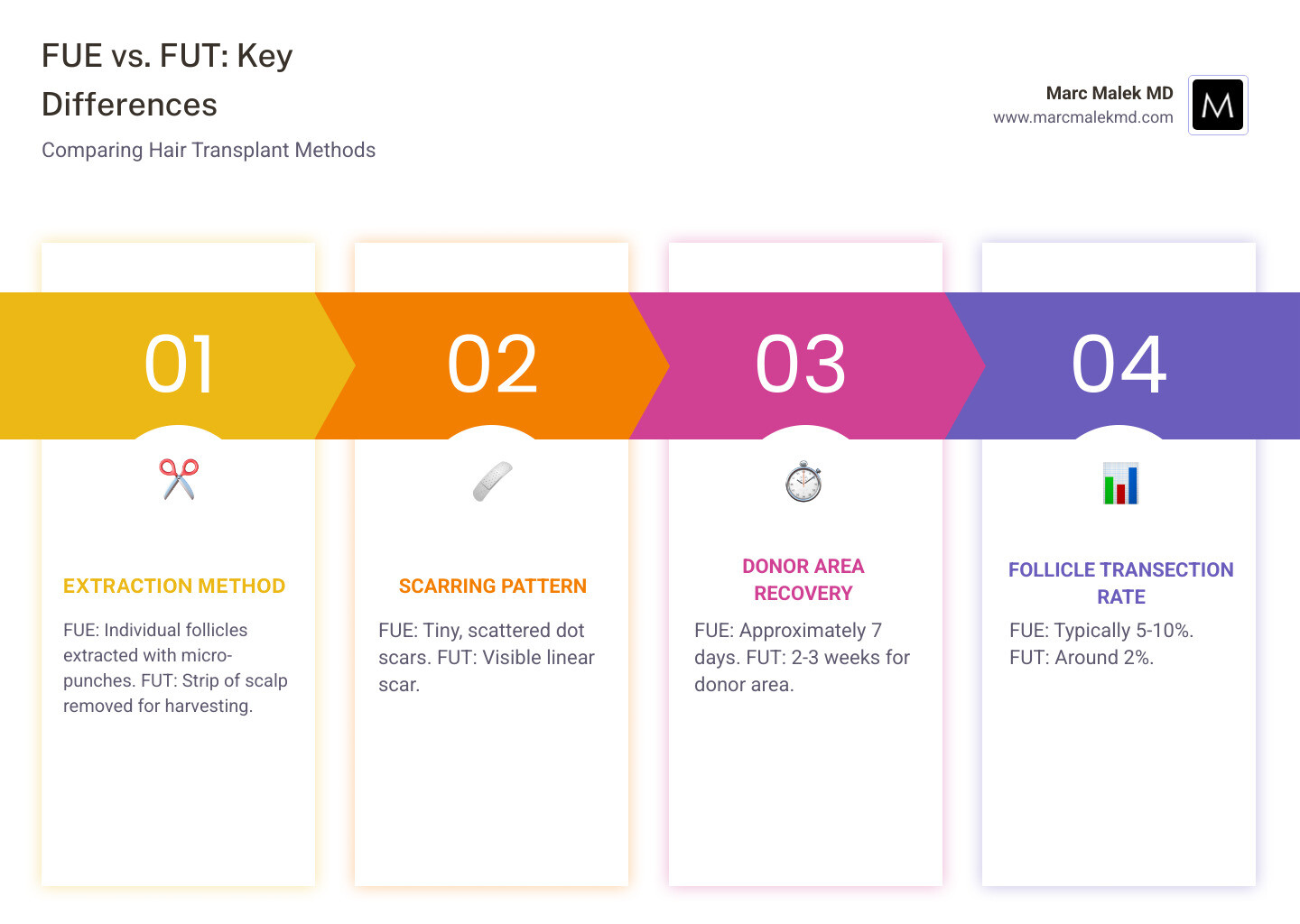
In our Scottsdale and Phoenix offices, one of the most common questions we hear is: “What’s the difference between FUE and the strip method?” To help you visualize the choice, we’ve broken down the key differences in the table below.
| Feature | FUE (Follicular Unit Excision) | FUT (Follicular Unit Transplantation) |
|---|---|---|
| Harvesting Method | Individual follicle excision | Linear strip of scalp removed |
| Scarring | Tiny, scattered “dot” scars | Permanent linear scar |
| Recovery Time | Fast (7 days for donor area) | Slower (2-3 weeks for donor area) |
| Pain Level | Minimal post-op discomfort | Higher due to sutures/tension |
| Hair Style Options | Can wear hair very short | Requires longer hair to hide scar |
| Transection Rate | 5% to 10% | Approximately 2% |
| Cost | Usually higher (labor intensive) | Generally more affordable |
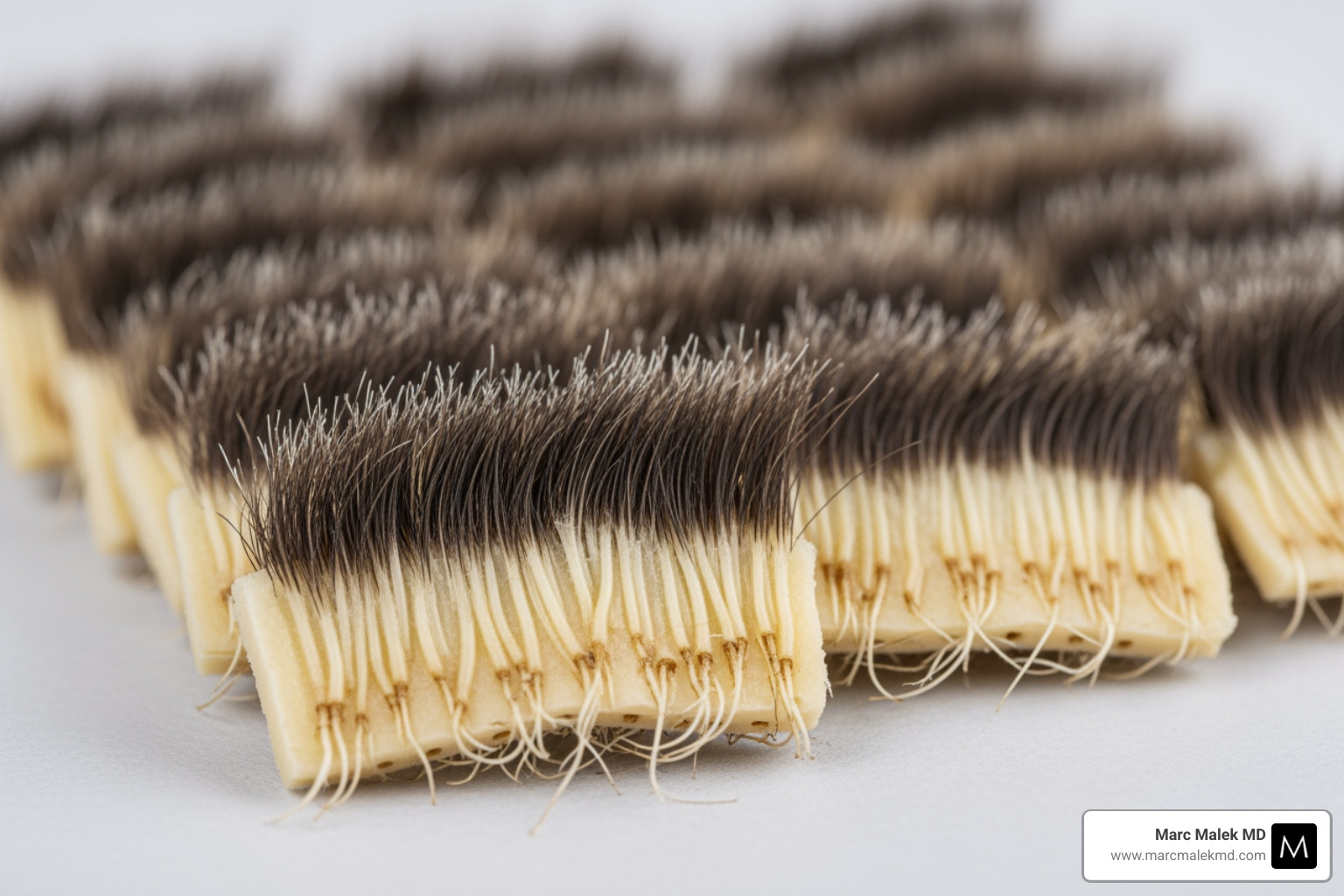
The “Strip Method” (FUT) involves removing a long, thin piece of scalp, which is then dissected into grafts under a microscope. While this is efficient for moving large numbers of hairs, it leaves a permanent linear scar. For our patients in Arizona who enjoy an active lifestyle or prefer short, faded haircuts, that scar can be a dealbreaker.
In contrast, the fue hair implant allows for a “scarless” look. While every surgery technically leaves some mark, the tiny 1mm dots left by FUE blend into the surrounding skin so well they are virtually invisible to the naked eye. This makes it the gold standard for patient comfort and aesthetic flexibility.
Sometimes, we recommend a multi-modal approach. For instance, many patients benefit from More info about hair restoration with PRP (Platelet-Rich Plasma). PRP can be used alongside your fue hair implant to stimulate the scalp, improve graft survival, and speed up the healing process. It’s all about creating the healthiest environment possible for your new hair to thrive.
The Surgical Journey: From FOX Test to Graft Placement
We believe that every successful hair restoration starts long before the first incision. The journey begins with a thorough evaluation of your “Safe Donor Area” (SDA). We have to ensure you have enough healthy hair to move without thinning out the back of your head too much.
One specialized tool we use is the FOX Test. This involves extracting about 100 grafts to see how easily they come out. Some people have “tight” follicles that are prone to transection (damage during extraction). About 74% of patients are classified as good candidates (FOX 1, 2, or 3). If the test shows your follicles are easily damaged, we might discuss alternative methods to ensure you get the best results.
On the day of your procedure, we focus entirely on your comfort. We use local anesthesia to numb both the donor and recipient areas. You’ll be awake, perhaps watching a movie or chatting with our team, while we perform the meticulous work of harvesting.
The Step-by-Step FUE Hair Implant Procedure
The actual extraction can follow a few different technical paths:
- The Two-Step Technique: A sharp punch scores the skin around the follicle, and it is then pulled out with fine forceps.
- The Three-Step Technique: This is a more advanced approach. First, we score the skin with a sharp punch. Then, we use a blunt instrument to dissect the follicle from the deeper tissue. Finally, it is extracted. This blunt dissection significantly reduces the risk of cutting the hair bulb, increasing the graft survival rate from 92% to as high as 98%.
Once the grafts are out, they don’t just sit on a table! We keep them in a chilled saline or Ringer’s lactate solution. This keeps the cells hydrated and healthy while we prepare the “recipient sites”—the tiny openings where your new hair will live. We take an artistic approach here, carefully angling each site to match the natural growth pattern of your original hair.
Advancements in FUE Technology
The world of fue hair implant technology is moving fast. We’ve seen a shift from manual hand-punches to sophisticated automated systems.
- SmartGraft: This is a game-changer. It’s a closed system that automatically counts, sorts, and—most importantly—chills and moistens the follicles the moment they are removed. By reducing human handling and air exposure, SmartGraft helps ensure the highest possible survival rate for every follicle.
- NeoGraft: Another popular automated system that uses suction to help extract grafts, though it often involves more manual handling of the grafts in petri dishes compared to newer closed systems.
- Robotic Assistance: Systems like ARTAS use algorithms to identify the best grafts for extraction, though manual expertise remains vital for creating a natural-looking hairline.
According to Research on graft survival and transection rates, the key to success isn’t just the machine—it’s the surgeon’s hands. Even with the best tech, the “human factor” in Scottsdale ensures that the density and direction of your hair look like a work of art, not a computer program.
Recovery and Results: What to Expect After Surgery
One of the best things about a fue hair implant is the recovery. Because there are no large incisions, the donor area typically heals in about 7 days. You might see some “pit” scarring—tiny white dots—but these are easily hidden by your hair.
In the recipient area, you’ll have tiny scabs for about 10 to 14 days. We tell our Arizona patients to take it easy for a bit; while you can return to desk work in 24-48 hours, you should wait at least a week or two before hitting the gym for heavy lifting or intense cardio.
Long-Term Growth Timeline for Your FUE Hair Implant
Patience is a virtue, especially with hair! Your new hair won’t look like a mane overnight. Here is the typical timeline:
- 0–4 Months (Dormancy/Shedding): Don’t panic! It is perfectly normal for the transplanted hair shafts to fall out in the first few weeks. This is called “shock loss” or temporary telogen effluvium. The roots are still there, safe and sound, just resting.
- 4–8 Months (Emergence): You’ll start to see fine, thin hairs poking through. They might look a bit like “baby hair” at first, but they will thicken over time.
- 8–12 Months (Maturation): This is where the magic happens. About 75% to 80% of your final result will be visible. The hair reaches a natural length and texture.
- 12–24 Months (Full Results): By the one-year mark, most patients see their full results. Some continue to see thickening and improvement well into the second year.
Post-Operative Care and Maintenance
To get those “fantastic, long-lasting results” we strive for at Marc Malek MD, you have to be a partner in your recovery. We recommend:
- Head Elevation: Sleep with your head liftd for the first few nights to minimize swelling.
- Gentle Washing: We’ll give you specific instructions on how to gently clean your scalp starting around day two or three. No scrubbing!
- Sun Protection: The Arizona sun is no joke. Protect your scalp from direct sunlight for several weeks to prevent darkening the incision sites.
- No Scratching: As the scabs form, it might get itchy. Resist the urge to pick! Picking can dislodge a graft before it has “taken root.”
Candidacy, Costs, and Clinical Considerations
Who is the ideal candidate for a fue hair implant? Generally, it’s someone over the age of 25 with a stable hair loss pattern and a healthy donor area. If your hair loss is still rapidly progressing, we might suggest stabilizing it first with medical treatments like Minoxidil or Finasteride.
One of the unique advantages of FUE is non-scalp harvesting. If the hair on the back of your head is thin, we can sometimes look to the beard or chest. Beard hair is particularly thick and can provide great density when mixed with scalp hair.
The Cost Factor
Let’s talk numbers. In Arizona, the cost of a hair transplant can range from $4,000 to $15,000. Most clinics, including our own, often price by the graft. A common industry standard is around $3.50 per graft, though this can go up to $10 depending on the complexity and technology used (like SmartGraft).
While FUE is typically more expensive than the strip method (sometimes up to three times the cost), the benefits of “no linear scar” and a faster return to your lifestyle often outweigh the price difference for our patients.
Frequently Asked Questions about FUE
Is an FUE hair transplant permanent?
Yes! The follicles are harvested from the “Safe Donor Area,” which is resistant to the hormones that cause balding. Once they take root in their new location, they will continue to grow for the rest of your life.
How much does an FUE procedure cost?
As mentioned, most patients in the Phoenix and Scottsdale area can expect to pay between $4,000 and $15,000. The total depends on how many grafts you need to achieve your desired density. A small touch-up might be 500 grafts, while a significant restoration could be 2,500 to 3,500 grafts.
Does the donor area grow back after extraction?
This is a common misconception. No, once a hair follicle is removed from the donor area, it does not grow back there. This is why we are so careful not to “overharvest.” We ensure that we leave enough hair behind so the donor area still looks full and natural.
Conclusion
At Marc Malek MD, we don’t just see a “bald spot”—we see an opportunity to restore your confidence through an artistic and personal approach. Whether you are coming to us from Scottsdale, Phoenix, or anywhere in the beautiful state of Arizona, our goal is to provide a proportionally balanced look that fits your face and your lifestyle.
The fue hair implant is the “FUE Factor” that bridges the gap between surgical precision and natural beauty. By focusing on patient comfort and utilizing the latest advancements in technology, we help you achieve results that look like you were born with them.
Ready to take the next step toward a fuller head of hair? We invite you to Schedule a consultation for hair restoration with PRP or a full FUE evaluation. Let’s work together to promote a healthy lifestyle and a look you can be proud of.