

Smooth Moves: The Ultimate Guide to CO2 Laser Resurfacing for Stretch Marks
What You Need to Know About CO2 Fractional Laser for Stretch Marks
CO2 fractional laser for stretch marks is one of the most effective clinical treatments available today for reducing the visible appearance of these common skin scars. Whether your stretch marks come from pregnancy, rapid growth, or weight changes, this guide will help you understand exactly how the treatment works and what results you can realistically expect.
Quick answer:
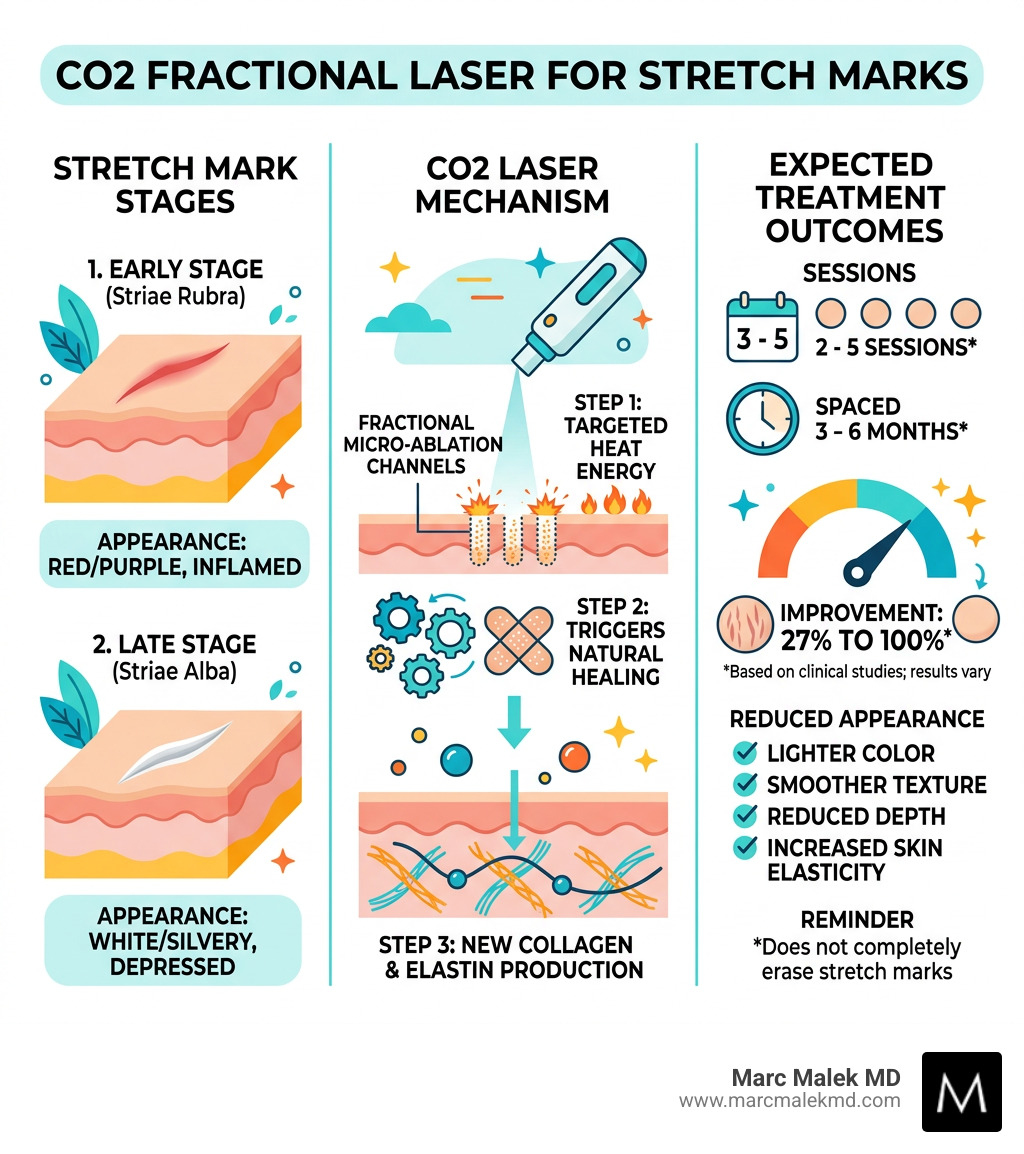
- CO2 fractional laser uses targeted heat energy to trigger the skin’s natural healing process
- It stimulates new collagen and elastin production in the dermis — the deep layer where stretch marks form
- Most patients need 2 to 5 sessions spaced 3 to 6 months apart
- Clinical studies show improvement rates ranging from 27% to 100%, depending on stretch mark age and skin type
- It works on both red (striae rubra) and white (striae alba) stretch marks, though results vary
- It does not completely erase stretch marks — but it can significantly reduce their appearance
Stretch marks affect more than 70% of pregnant women and a similar proportion of people going through puberty. Despite being completely harmless, they can deeply affect body confidence. For years, creams and lotions were the main option — and the evidence behind them is weak at best.
Today, fractional CO2 laser technology has changed what’s possible. It’s one of the few treatments with real clinical data behind it, and it works by going deeper than any topical product ever could.
But it’s not the right choice for everyone. Skin type, stretch mark severity, and downtime tolerance all matter when deciding if this is your best path forward.
Co2 fractional laser for stretch marks basics:
Understanding Stretch Marks and Why They Form
Stretch marks, known medically as striae distensae, are essentially a form of dermal scarring. They occur when the skin is forced to stretch beyond its natural elastic limits in a short period. This rapid expansion causes the middle layer of the skin (the dermis) to tear, allowing the deeper layers to show through.
In our Scottsdale and Phoenix locations, we often see stretch marks categorized into two main stages:
- Striae Rubra: These are “young” stretch marks. They appear red, purple, or pink because the blood vessels beneath the skin are still visible through the tears. At this stage, the skin is often itchy and slightly raised.
- Striae Alba: Over time, the blood vessels recede, and the marks fade into a silvery-white or depressed scar-like appearance. These are “mature” stretch marks and are generally more difficult to treat with topical solutions.
Statistics show that stretch marks are incredibly common, affecting up to 90% of people during puberty or pregnancy. Beyond these life stages, rapid muscle growth from bodybuilding or the prolonged use of corticosteroids can also trigger their formation. While many people focus on the surface appearance, the real damage is deep within the collagen and elastin fibers. Just as we discuss in our guide on Preventing and Repairing Sun Damage, maintaining the integrity of these fibers is the key to healthy, smooth skin.
How CO2 Fractional Laser for Stretch Marks Works
The co2 fractional laser for stretch marks is often considered the “gold standard” for skin resurfacing. But how does a beam of light fix a deep tear in the skin?
The laser uses a specific wavelength of 10,600nm, which is highly attracted to the water content in your skin cells. When the laser hits the target area, it vaporizes the damaged tissue in a very controlled way. The “fractional” part of the name is the secret sauce: instead of removing the entire surface of the skin, the laser creates thousands of microscopic, deep columns of thermal injury, known as Micro-Ablative Columns (MAC).
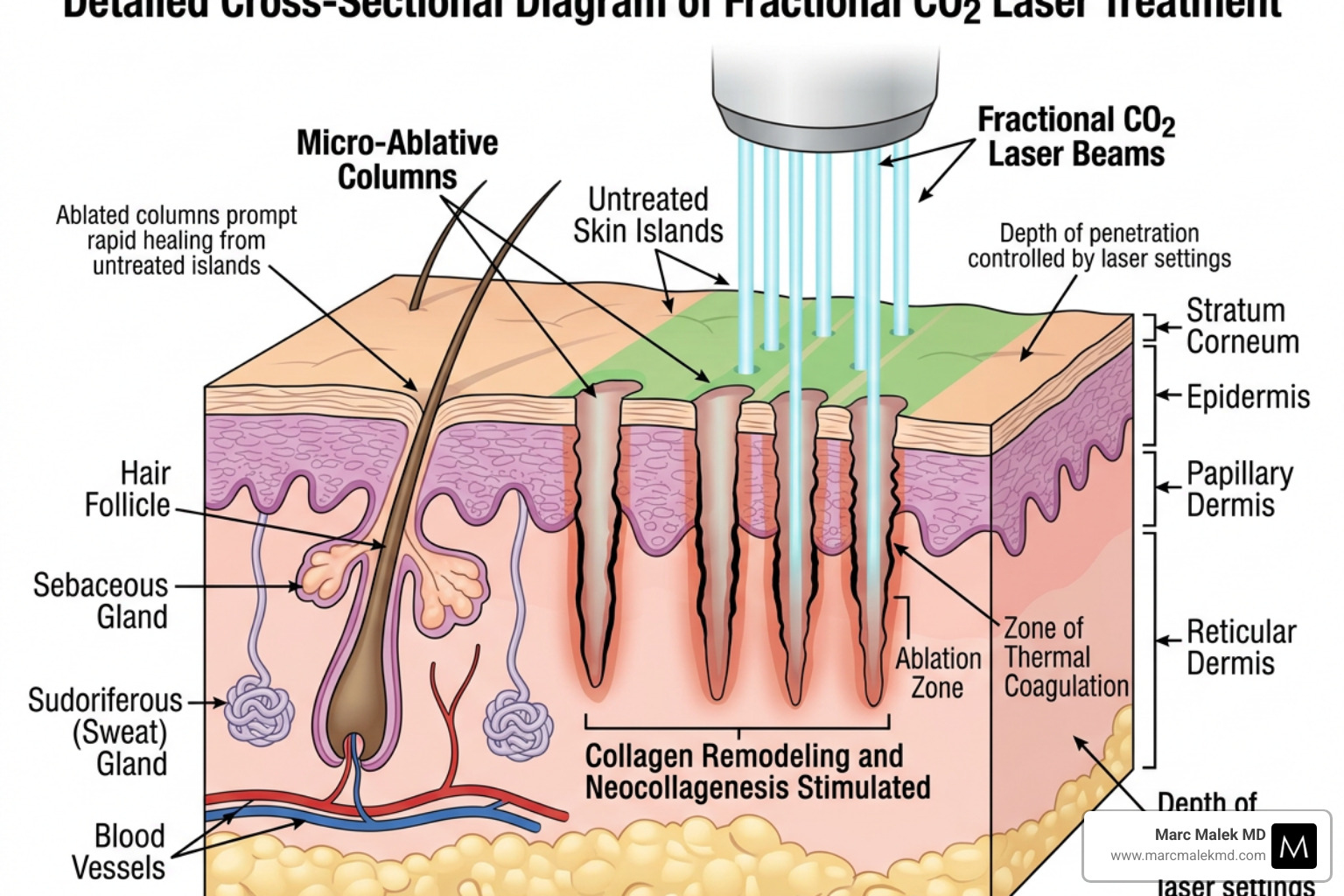
By leaving tiny “islands” of untreated skin between these columns, the body can heal much faster than with traditional ablative lasers. This process triggers a vigorous healing response. According to Scientific research on laser treatment success rates, this targeted injury is what allows for significant remodeling of the scar tissue. For those interested in the broader applications of this technology, you can find More info about laser skin resurfacing on our dedicated service page.
The Science of Neocollagenesis in CO2 Fractional Laser for Stretch Marks
The primary goal of using a co2 fractional laser for stretch marks is to spark “neocollagenesis”—the creation of brand-new collagen. When the laser creates those Micro-Ablative Columns, it sends a high-priority signal to your fibroblasts (the cells responsible for collagen production) to get to work.
This leads to:
- Dermal Remodeling: The old, disorganized scar tissue is replaced by organized, healthy collagen fibers.
- Epidermal Thickening: The thin, “tissue-paper” texture of the stretch mark becomes thicker and more resilient.
- Skin Tightening: The heat from the laser causes immediate contraction of existing collagen fibers, providing a subtle tightening effect on loose skin.
You can see the dramatic impact of this collagen renewal by browsing our CO2 Laser Resurfacing Gallery.
Comparing CO2 Fractional Laser for Stretch Marks to Other Modalities
While the CO2 laser is powerful, it isn’t the only tool in the shed. Depending on your skin type and the color of your stretch marks, we might consider other options like RF Microneedling or the Nd:YAG laser.
| Feature | CO2 Fractional Laser | RF Microneedling | Nd:YAG Laser |
|---|---|---|---|
| Primary Action | Ablative (removes skin) | Thermal (heat via needles) | Non-ablative (vascular) |
| Best For | Deep, white striae alba | All skin types, tightening | Red striae rubra |
| Downtime | 7–10 days | 2–3 days | Minimal |
| Risk of PIH | Higher (Type IV+) | Very Low | Low |
For instance, clinical studies have shown that the Long-Pulsed Nd:YAG laser can be highly effective for striae alba, sometimes showing more significant width reduction than CO2, with a lower risk of permanent hyperpigmentation. However, for deep texture changes, CO2 remains a top contender. We often use these technologies to Erase Scars with the Help of Laser Technology across various parts of the body.
What to Expect During and After Treatment
We prioritize your comfort throughout the entire process. A typical session for co2 fractional laser for stretch marks takes between 30 and 60 minutes, depending on the size of the area being treated (such as the abdomen vs. just the hips).
During the Treatment:
- Numbing: We apply a high-strength topical anesthesia for about 45 minutes before starting.
- The Sensation: Most patients describe a “snapping” sensation or intense heat. We use integrated cooling devices to blow cold air on the skin, which significantly improves comfort.
After the Treatment:
- Immediate Reaction: The area will look and feel like a severe sunburn. Erythema (redness) and swelling are completely normal.
- The “Grid” Phase: You may see a tiny grid pattern on your skin—these are the Micro-Ablative Columns healing.
- Peeling: Around day 3, the skin will begin to peel or flake. It is vital not to pick at this skin, as doing so can lead to scarring or pigmentation issues.
- Recovery: Most patients are back to normal activities within 7 to 10 days, though the pinkness can linger for a few weeks.
Interestingly, the technology used here is quite versatile; we even discuss The Benefits of Laser Hair Removal on Scarred Areas for those looking to manage hair growth in regions where stretch marks or scars are present.
Optimizing Results: Candidates, Parameters, and Aftercare
Success with a co2 fractional laser for stretch marks depends heavily on customization. No two bodies are the same, and neither are their stretch marks.
Ideal Candidates: Those with lighter skin tones (Fitzpatrick Types I-III) generally have the lowest risk of complications. However, with conservative settings and expert care, we can treat darker skin tones. If the risk of post-inflammatory hyperpigmentation (PIH) is too high, we may suggest RF Microneedling as a safer alternative.
Treatment Parameters: We adjust the laser’s power (often between 12W and 20W), pulse duration, and spot spacing based on the severity of the marks. For severe, deep stretch marks, a higher density and deeper penetration are required to reach the damaged dermis. Practitioners can refer to this Comprehensive Settings Guide for CO2 Laser Parameters for technical nuances.
Post-Treatment Aftercare:
- Hydration: Use repair products containing hyaluronic acid to keep the skin moist.
- Sun Protection: This is non-negotiable. Use SPF 30+ on the treated area for at least 3 months to prevent PIH.
- Avoid Irritants: Skip the hot tubs, saunas, and intense workouts for the first week to minimize swelling.
Frequently Asked Questions about Laser Stretch Mark Removal
Can CO2 laser completely remove stretch marks?
In the spirit of honesty that we maintain at Marc Malek MD, it is important to note that stretch marks are permanent changes to the skin’s structure. While co2 fractional laser for stretch marks can provide an improvement ranging from 27% to 100%, “complete removal” is rare. Most patients see a significant blending of color and a much smoother skin texture, making the marks far less noticeable to the naked eye.
How many sessions are typically required?
While some see results after one visit, most patients require 3 to 5 sessions to achieve optimal results. We typically space these treatments 4 to 6 weeks apart to allow the skin’s natural healing cycle to complete and for new collagen to mature.
Is the treatment safe for all skin types?
The CO2 laser is an aggressive treatment. For patients with darker skin (Fitzpatrick IV-VI), there is a higher risk of hyperpigmentation. In these cases, we use more conservative energy settings, longer intervals between sessions, or may recommend a different technology altogether to ensure the safety and beauty of your skin.
Conclusion
At Marc Malek MD, we believe that everyone deserves to feel confident in their skin. Whether you are looking to address changes after pregnancy or growth spurts, our artistic and personal approach ensures that your treatment is as unique as you are. By combining the latest technology, like the co2 fractional laser for stretch marks, with a focus on patient comfort and long-lasting results, we help our Scottsdale and Phoenix patients achieve the “smooth moves” they desire.
Ready to reclaim your skin confidence? Schedule a consultation for laser skin resurfacing with our team today and let us create a personalized plan for your journey to smoother skin.