

How Much Does a Receding Hairline Transplant Actually Cost
What Does a Receding Hairline Transplant Actually Cost?
Hair transplant cost for receding hairline procedures in Canada and the US typically falls in this range:
| Graft Count | Typical Use Case | Estimated Cost (CAD) | Estimated Cost (USD) |
|---|---|---|---|
| 800–1,500 | Early recession, temples | $4,000–$12,000 | $4,000–$12,000 |
| 1,500–2,500 | Moderate hairline loss | $8,000–$15,000 | $8,000–$15,000 |
| 2,500–3,000+ | Advanced recession | $12,000–$21,000+ | $12,000–$25,000+ |
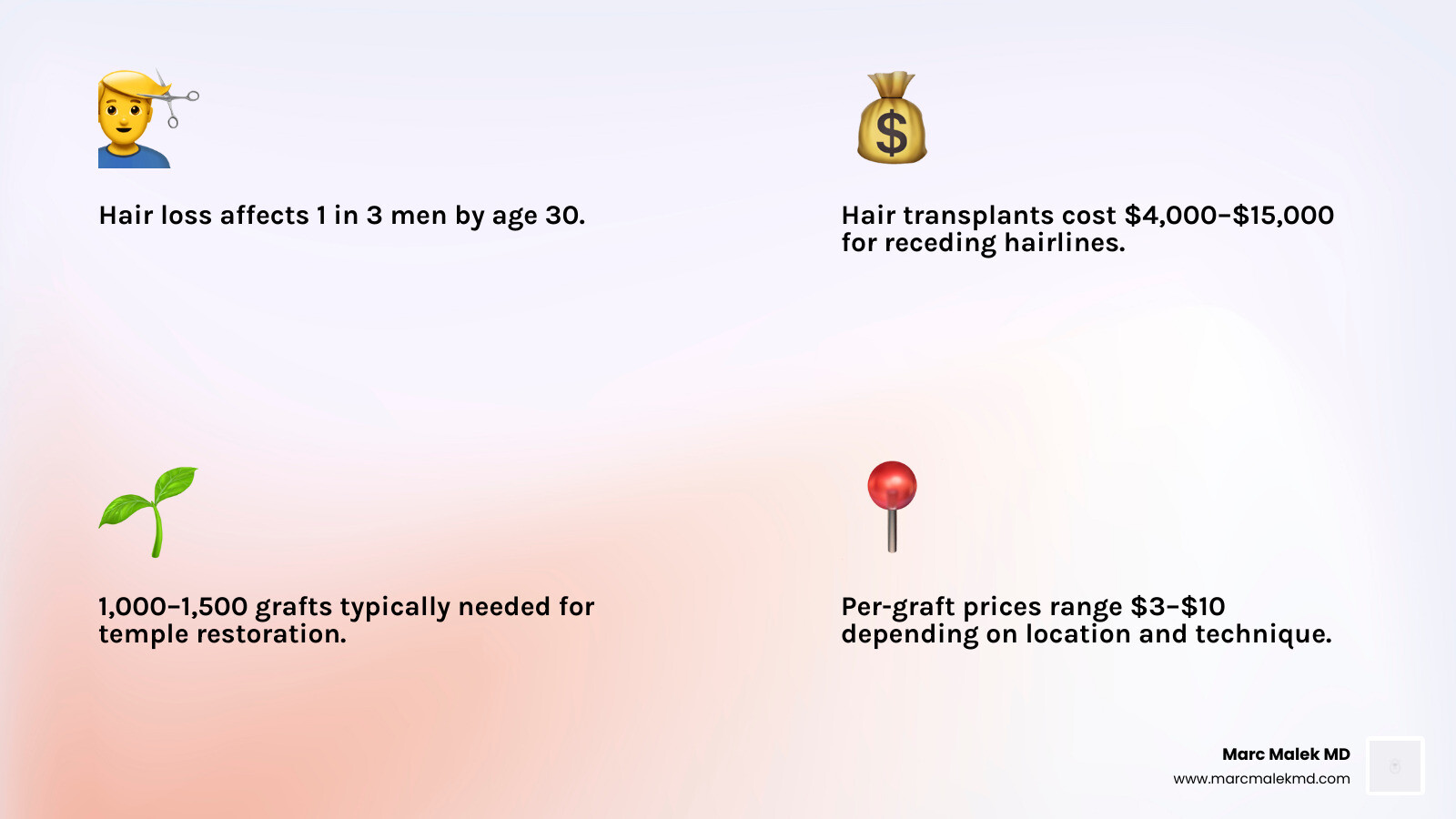
Per-graft pricing generally runs $3.50–$10 USD, depending on your location, technique, and surgeon experience.
A receding hairline is one of the most common concerns men bring to a plastic surgeon’s office. Hair loss affects roughly 1 in 3 men — and for many, it hits confidence hard long before it becomes severe.
The good news? Modern hair transplant surgery has come a long way. Today’s techniques move your own healthy follicles — those naturally resistant to balding — into thinning areas, creating results that look and grow like your real hair.
But cost is almost always the first question. And the honest answer is: it depends on more factors than most people expect. The number of grafts you need, the technique used, your surgeon’s experience, and even your city all play a role.
This guide breaks it all down so you can walk into a consultation knowing exactly what to ask — and what to expect.
Average Hair Transplant Cost for Receding Hairline
When we look at the national landscape for hair restoration, the numbers can feel a bit like a moving target. In the United States, the average cost for a hair transplant generally sits between $6,000 and $12,000, though more extensive sessions can easily exceed $15,000. For a specific hair transplant cost for receding hairline focus—where the goal is often temple restoration or lowering a high forehead—the price is heavily dictated by the number of follicular units (grafts) required to achieve a natural density.
In the Phoenix and Scottsdale, Arizona area, we often see per-graft pricing ranging from $3 to $10. This variation exists because every scalp is different. Some patients have thick, coarse hair that provides excellent coverage with fewer grafts, while others with fine hair may require a higher density to achieve the same visual result.
Geographic Variations and Local Averages
Location plays a massive role in what you will ultimately pay. In major metropolitan hubs like New York City or Los Angeles, you might see a 20% to 50% premium on surgical fees due to higher overhead costs. Fortunately, for those of us in Scottsdale and Phoenix, the market is competitive but balanced. You can expect premium, board-certified surgical expertise without the extreme “coastal” markups found in NYC.
| Region/City | Average Cost (2,000 Grafts) | Per-Graft Range |
|---|---|---|
| National Average (USA) | $8,000 – $15,000 | $4 – $10 |
| Scottsdale / Phoenix, AZ | $7,000 – $14,000 | $3 – $9 |
| New York City | $10,000 – $20,000 | $5 – $10 |
| Miami | $6,000 – $15,000 | $3 – $8 |
It is important to remember that these are just averages. A “budget” clinic might offer lower prices, but in plastic surgery, you often get what you pay for. A cheap procedure can lead to an “unnatural” look or poor graft survival, which ultimately costs more to repair later.
Key Factors Influencing the Price of Hairline Restoration
If you’ve been researching, you know that no two quotes look exactly the same. That’s because several variables influence the final price of your hair transplant cost for receding hairline.
- The Number of Grafts: This is the biggest factor. A graft is a tiny piece of scalp tissue containing 1 to 4 hair follicles. If you only need to fill in the corners of your temples, you might only need 800 grafts. If you want to lower your entire hairline by an inch, you might need 2,000 or more.
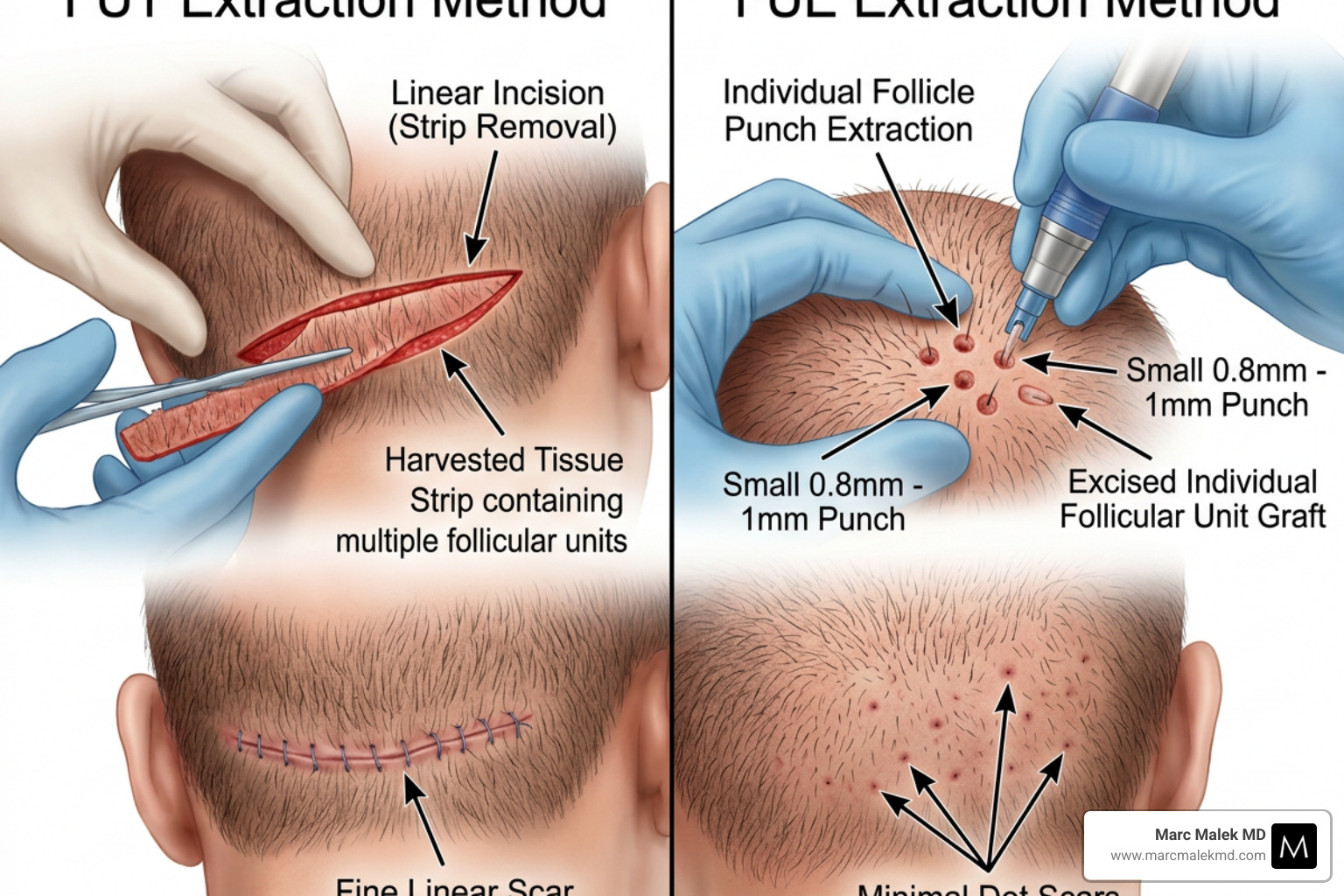
- The Technique Used: Methods like FUE (Follicular Unit Extraction) are more labor-intensive for the surgeon and typically cost more than the older FUT (strip) method.
- Surgeon Expertise: A board-certified plastic surgeon with decades of experience in hairline design will charge more than a technician-led clinic. Hairline restoration is an art form; the surgeon must account for the angle, direction, and “swirl” of your natural hair.
- Facility and Anesthesia Fees: These are the “behind-the-scenes” costs of running a sterile, safe surgical suite and ensuring you are comfortable during the 4 to 8-hour procedure.
The FUE procedure details involve extracting individual follicles one by one, which avoids the linear scar associated with traditional methods. While this takes longer, it is often the preferred choice for men who like to keep their hair short.
Comparing FUE, FUT, and DHI Techniques
Understanding the technology is key to understanding the price.
- FUT (Follicular Unit Transplantation): Also known as the “strip method,” this involves removing a small strip of skin from the back of the head. It is often more affordable because it is faster for the surgeon. However, it leaves a linear scar.
- FUE (Follicular Unit Extraction): This is the gold standard for many. We use a micro-punch tool to remove individual follicles. There are no stitches and no linear scars. Because it is so meticulous, the labor intensity drives the cost up.
- DHI (Direct Hair Implantation): This is a variation of FUE where a specialized tool (an implanter pen) is used to place the hair immediately after extraction. Some studies suggest this leads to a higher graft survival rate, often cited up to 95%, but it comes with a premium price tag.
You can read more about the FUT vs FUE differences to see which might be the best fit for your lifestyle and budget.
How Many Grafts are Needed for a Receding Hairline?
We often get asked, “How much hair do I actually need?” A helpful rule of thumb is the “fist rule.” Generally, a balding area the size of your fist requires about 1,200 to 1,500 grafts to achieve decent density.
For a receding hairline specifically:
- Mild Recession (Norwood 2): 800 to 1,200 grafts. This usually covers the “M” shape at the temples.
- Moderate Recession (Norwood 3): 1,200 to 1,800 grafts. This fills the temples and strengthens the frontal bridge.
- Hairline Lowering: 1,500 to 2,500+ grafts. This is for patients who want to move their entire hairline forward to create a smaller forehead.
Our goal is always a “mature” hairline. If we place the hairline too low, it may look great at 25 but look unnatural at 55. We focus on a design that will age gracefully with you.
Recovery, Longevity, and Surgical Risks
Once the surgery is done, the journey is just beginning. Most patients can return to non-physical work within 2 to 3 days, but you should expect about 10 to 14 days of visible healing. During this time, small scabs will form around the grafts and eventually fall off.
One thing that surprises many is “shock loss.” About 4 to 6 weeks after the procedure, the newly transplanted hairs will actually fall out. Don’t panic! This is a natural part of the process. The follicle itself is alive and well beneath the skin; it’s just entering a resting phase. You will start to see results in 6 to 9 months, with the full, thick effect visible at the one-year mark.
Is it Permanent?
Yes. Hair transplant surgery is considered a permanent solution. The follicles taken from the back and sides of your head are genetically programmed to resist the hormones that cause balding (DHT). Research on the longevity of hair follicles shows that while your hair may thin slightly as you age (just like everyone else’s), the transplanted hair should remain for the rest of your life.
However, a transplant does not stop your original hair from falling out. This is why we often recommend a maintenance plan to protect the non-transplanted hair surrounding your new hairline.
Financing and Alternatives to Surgery
We understand that $10,000 is a significant investment. Because hair transplants are almost always considered cosmetic, they are rarely covered by insurance. However, that doesn’t mean they are out of reach.
Most reputable clinics in Arizona offer financing options. Providers like CareCredit or Beautifi allow you to break the total cost into manageable monthly payments, often with 0% interest for the first 6 to 24 months.
Non-Surgical Hair Transplant Cost for Receding Hairline Options
If you aren’t ready for surgery, or if your hair is just beginning to thin, there are highly effective non-surgical routes. At Marc Malek MD, we are big believers in the power of Hair Restoration with PRP (Platelet-Rich Plasma).
PRP therapy involves drawing a small amount of your own blood, spinning it in a centrifuge to concentrate the growth factors, and injecting it back into the scalp. This “wakes up” dormant follicles and can significantly thicken a thinning hairline.
Why choose PRP?
- Cost: Significantly lower than surgery (usually $500–$1,500 per session).
- Downtime: Zero. You can go back to work immediately.
- Natural: It uses your own body’s healing mechanisms.
For many of our Scottsdale patients, we use PRP as a standalone treatment or as a “booster” after a transplant to ensure the highest possible graft survival. You can find more info about hair restoration with PRP on our dedicated service page.
Frequently Asked Questions about Hairline Restoration
What is the best age for a hairline hair transplant?
While there is no “perfect” age, most surgeons recommend waiting until at least age 25, and ideally age 30. Why? Because hair loss patterns are often unpredictable in your early 20s. If we give you a perfect hairline at 21, but you continue to lose the hair behind that line, you’ll end up with a strange “island” of hair that requires even more surgery to fix.
Does insurance cover hair transplants for receding hairlines?
In 99% of cases, no. Insurance companies view this as an elective cosmetic procedure. The only exceptions are rare cases where hair loss is the result of a traumatic injury, burn, or a specific reconstructive medical necessity.
How long do the results of a hairline transplant last?
The results are permanent. Because the donor hair is harvested from the “permanent zone” at the back of the head, those hairs will continue to grow for decades. However, the rest of your native hair may continue to thin, which is why long-term maintenance is so important.
Conclusion
At Marc Malek MD, we don’t believe in “cookie-cutter” hairlines. Every face is different, and every head of hair requires a unique, artistic touch to ensure the results look natural today and twenty years from now.
Whether you are looking for a full surgical restoration in our Scottsdale office or you want to explore more info about hair restoration with PRP, we focus on your comfort and long-term satisfaction. Our approach combines surgical precision with an artistic eye to give you a hairline that restores not just your hair, but your confidence.
If you’re ready to stop guessing about the hair transplant cost for receding hairline and want a personalized quote, we invite you to schedule a consultation with us today. Let’s build a plan that fits your goals and your budget.