

Reclaiming Your Jawline: Understanding and Treating Sagging Skin
Get rid jowls with a range of effective treatments, from simple lifestyle changes to advanced medical procedures. Here’s what works:
- Non-Surgical Options – Dermal fillers, radiofrequency treatments (like Morpheus8), and ultrasound therapy (Ultherapy) can tighten skin and restore volume.
- Surgical Procedures – Facelifts and neck lifts provide the most dramatic and long-lasting results for moderate to severe jowling.
- Prevention & At-Home Care – Daily sunscreen (SPF 30+), retinoids, facial exercises, and proper hydration can slow jowl development.
- Lifestyle Changes – Quit smoking, maintain a stable weight, and protect your skin from sun damage.
Noticing sagging skin along your jawline? You’re not alone. Jowls are a common sign of aging caused by a loss of skin’s natural collagen and elastin, combined with gravity, genetics, and lifestyle factors.
The good news is that effective treatments exist for every stage. Whether you’re looking for prevention, non-surgical rejuvenation with fillers or energy devices, or the dramatic, long-lasting results of surgery, there is a solution. This guide will walk you through everything you need to know about jowls—from their causes to the most effective treatments—so you can choose the right approach for your goals and budget.
Understanding Jowls: What They Are and Why They Form
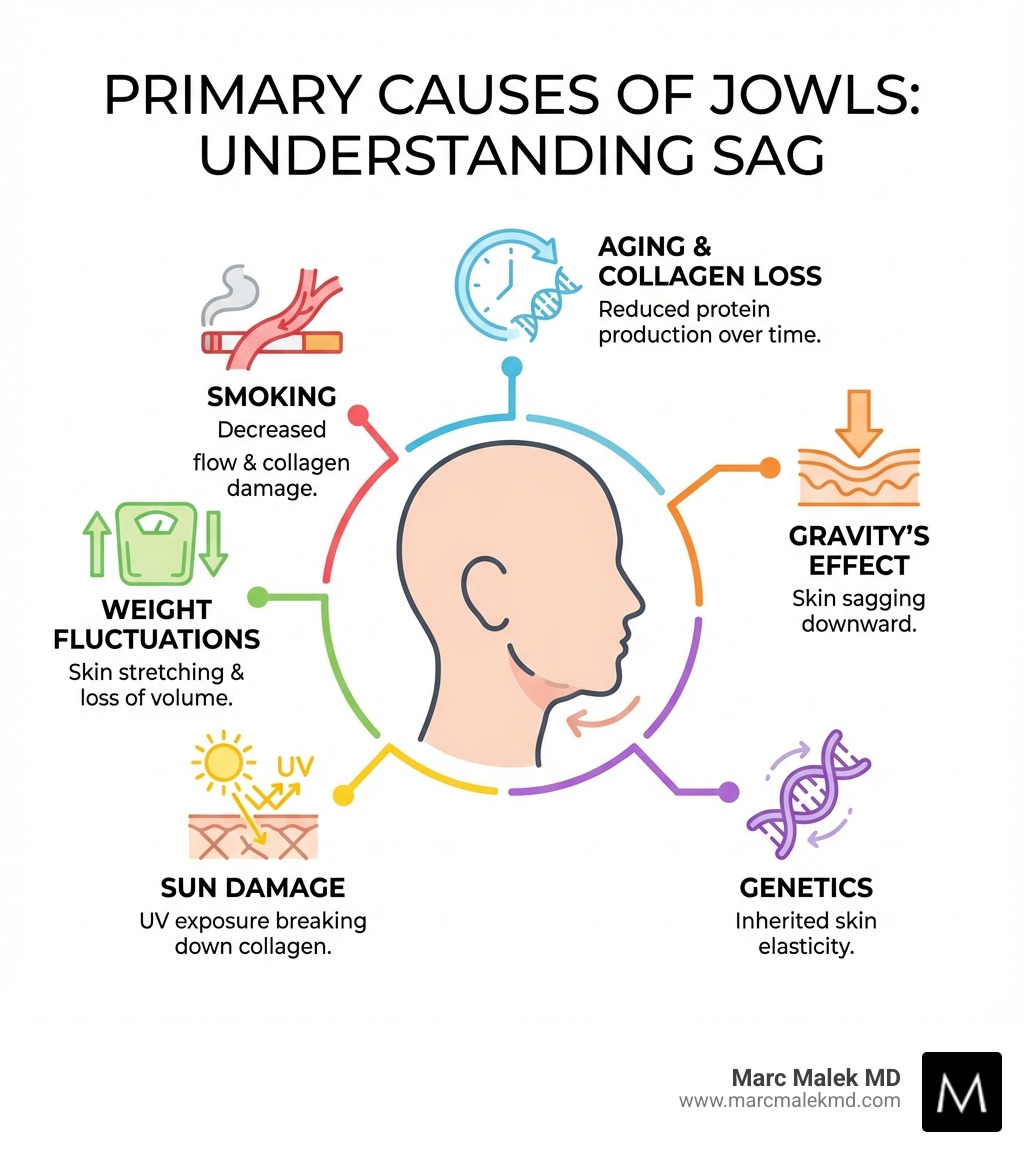
Jowls are the sagging skin and fat that droop below the jawline, obscuring its definition. This common sign of aging can affect self-confidence. At its core, jowl formation is a natural process driven by the loss of two key proteins: collagen, which provides structure, and elastin, which provides elasticity.
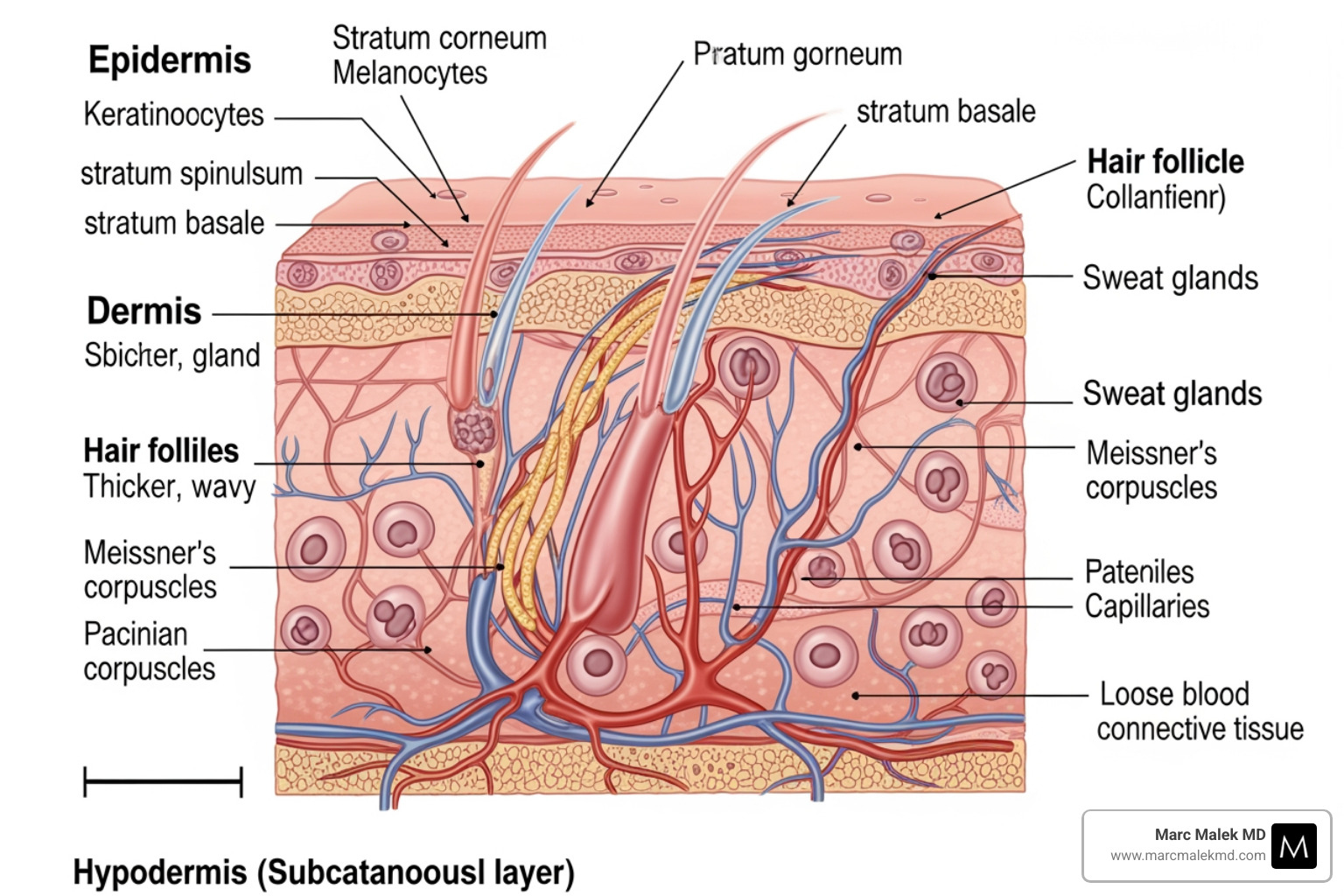
As we age, our bodies produce less of these proteins. Combined with the constant pull of gravity, the skin on the lower face begins to sag. Several other factors can accelerate this process:
- Genetic Predisposition: Your family history can influence how early and to what degree you develop jowls.
- Sun Damage: UV radiation is a major contributor, breaking down collagen and elastin fibers. Daily use of broad-spectrum sunscreen (SPF 30+) is crucial for prevention.
- Smoking: This habit constricts blood vessels, reduces oxygen to the skin, and actively destroys collagen and elastin.
- Weight Fluctuations: Significant weight changes can stretch the skin, and if it loses elasticity, it may not retract fully, leading to sagging.
- “Tech Neck”: Constantly looking down at devices can contribute to skin laxity in the neck and jawline area.
- Poor Diet and Dehydration: A diet lacking essential nutrients and proper hydration can compromise skin health and its ability to repair itself.
As the American Academy of Dermatology notes, while these factors contribute, the primary cause is the natural aging process. You can find more information on what causes our skin to age here: What causes our skin to age?
The Different Stages of Jowling
Jowls develop gradually. Understanding these stages helps determine the best treatment:
- Pre-jowl Sulcus (Early): A slight indentation appears on either side of the chin, often in the late 30s or early 40s, as volume loss begins.
- Mild Jowling: The skin begins to droop slightly over the jawbone, softening the jawline’s definition.
- Moderate Sagging: The jowls become more noticeable, creating a “broken” jawline and reducing the distinction between the chin and neck.
- Severe Jowls: The jowls hang significantly below the jawline, creating a heavy appearance. Surgical options are often the most effective at this stage.
Prevention and At-Home Care: Your First Line of Defense
While aging is inevitable, you can slow the progression of jowls and maintain a more youthful jawline with diligent at-home care. These practices support overall skin health and can improve the results of professional treatments.
- Skincare Routines: A consistent regimen is your best defense.
- Sunscreen (SPF 30+): Apply broad-spectrum sunscreen daily to prevent UV rays from breaking down collagen and elastin.
- Antioxidants: Use serums with Vitamin C and E to protect skin cells from environmental damage.
- Retinoids: Retinol or prescription retinoids boost collagen production and improve skin texture.
- Hydration: Moisturizers with hyaluronic acid keep skin plump and resilient.
- Healthy Diet: A diet rich in fruits, vegetables, lean proteins, and healthy fats supports skin health. Vitamins C and E are crucial for collagen synthesis, while omega-3 fatty acids reduce inflammation. Avoid excess sugar, which can damage collagen.
- Facial Massage: Gentle, upward massage along the jawline and neck can improve circulation and reduce puffiness.
- Lifestyle Choices: Quit smoking, limit alcohol, maintain a stable weight, and try to sleep on your back to avoid creasing the skin.
Do Facial Exercises and Natural Remedies Really Help?
Many wonder if “face yoga” can help get rid of jowls. These exercises aim to strengthen underlying muscles, potentially creating a firmer foundation for the skin. Common exercises include tilting your head back and puckering (“Kiss the Sky”) or pushing your lower jaw forward (“Jaw Jut”).
While some studies suggest benefits for facial muscle tone, the scientific evidence for significant skin tightening is limited. A 2021 review noted that while exercise improves overall skin health, its direct impact on reversing jowls is not well-established. You can read more about this review here: 2021 review on facial exercises
The verdict? Facial exercises are a low-risk way to potentially improve muscle tone and circulation, especially for early jowling. However, they are not a substitute for professional treatments for moderate to severe sagging.
How to Get Rid of Jowls with Non-Surgical Treatments
When at-home care isn’t enough, non-surgical treatments offer effective options for mild to moderate jowling with minimal downtime, performed in our Scottsdale, AZ office.
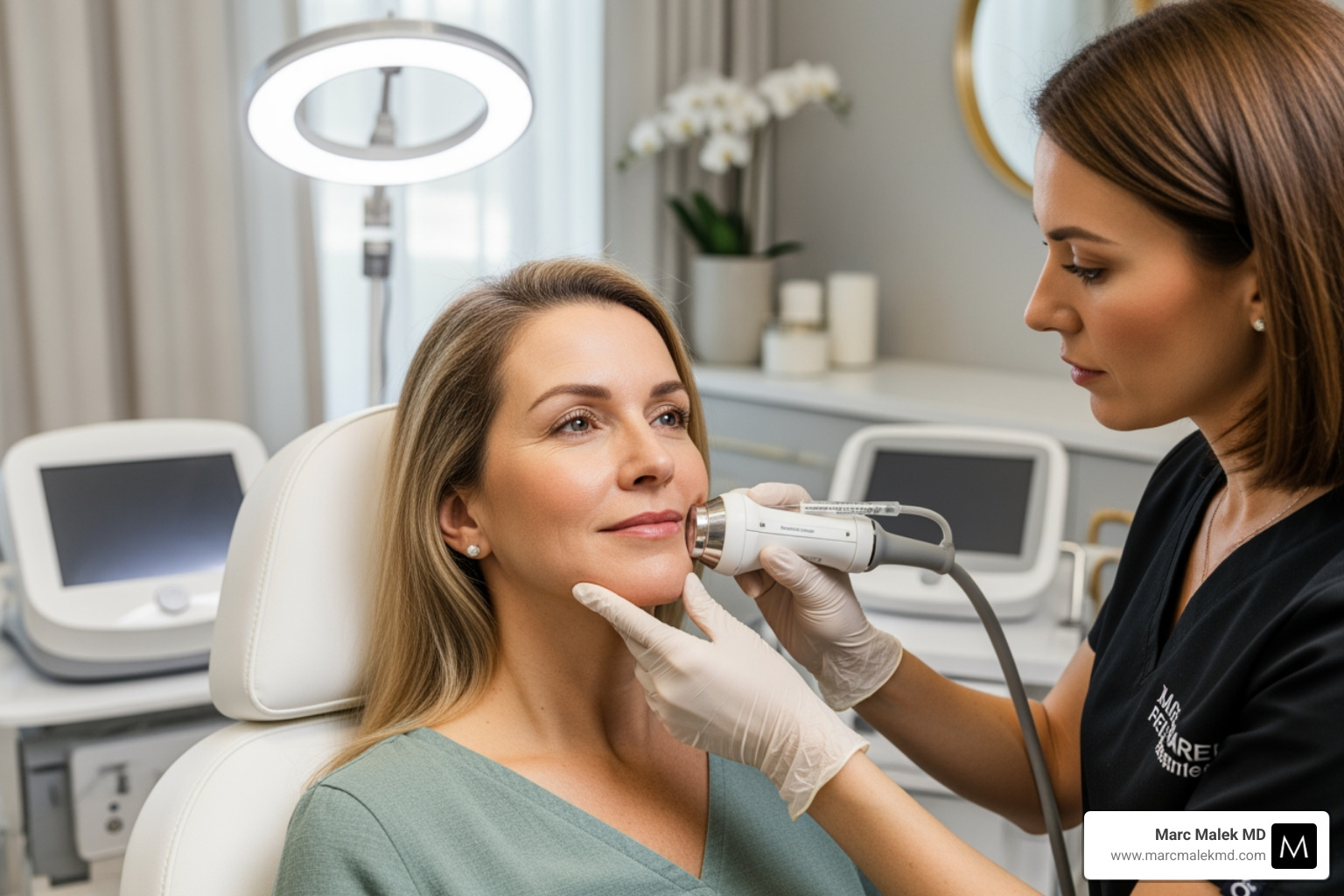
Non-surgical facial rejuvenation has advanced significantly. You can find more information on these options here: More info about Non-Surgical Facial Rejuvenation
Here’s a quick comparison of popular non-surgical treatments for jowls:
| Treatment Type | How it Works | Cost | Downtime | Results |
|---|---|---|---|---|
| Dermal Fillers | HA fillers restore volume and contour the jawline for an immediate, subtle lift. | $$ | Minimal (possible bruising/swelling) | 6 months to 2 years |
| Radiofrequency (RF) | Controlled heat stimulates new collagen to gradually tighten skin. Examples: Morpheus8, JuvaShape. | $$$ | 1–3 days of redness/swelling | Builds over weeks to months; lasts ~12–18 months |
| Ultrasound Therapy | Focused ultrasound triggers deep collagen production for natural lifting. Example: Ultherapy. | $$$$ | Minimal | Improves over 2–3 months; lasts ~12–18 months |
How can I get rid of jowls without surgery using fillers?
Fillers are excellent for early to moderate jowling when volume loss is a key factor.
- Volume restoration in the cheeks, temples, or jawline can soften jowls by supporting and lifting nearby skin.
- Jawline contouring with products like JUVÉDERM VOLUX XC sharpens definition.
- Results are temporary (about 6 months to 2 years) and require maintenance. Learn more: More info about Dermal Fillers and Injections
How do energy-based devices work?
These treatments stimulate your body’s collagen to firm and lift skin.
- Radiofrequency (RF): Devices like Morpheus8 and JuvaShape (Vshape Ultra) deliver heat to remodel collagen and tighten skin. More here: More info about Vshape Ultra
- Ultrasound: Ultherapy focuses energy at precise depths to trigger neocollagenesis for gradual lifting. Evidence summary: Research on Ultherapy effectiveness
Understanding Jowls: What They Are and Why They Form
Jowls are the sagging skin and fat that droop below the jawline, creating a less defined facial contour. This common sign of aging is primarily caused by the body’s reduced production of collagen and elastin, the proteins responsible for skin’s firmness and elasticity. As these proteins deplete, gravity’s constant pull leads to the visible sagging we call jowls.
Beyond natural aging, several factors can accelerate jowl formation:
- Genetic Predisposition: Your genes play a significant role in skin structure and aging.
- Sun Damage: UV radiation is a primary cause of premature aging, as it breaks down collagen and elastin. Daily sunscreen is essential.
- Smoking: This habit damages skin by restricting blood flow and directly breaking down collagen and elastin fibers.
- Weight Fluctuations: Rapid weight changes can leave behind loose, inelastic skin, making jowls more prominent.
- “Tech Neck”: The posture of looking down at devices can contribute to neck and jawline laxity over time.
For more information on skin aging, the American Academy of Dermatology is a valuable resource: What causes our skin to age?
The Different Stages of Jowling
Jowls develop progressively, and the stage of development helps determine the best treatment:
- Pre-jowl Sulcus (Early): A slight indentation appears on either side of the chin, often in the late 30s or early 40s, as volume loss begins. Non-surgical treatments are highly effective at this stage.
- Mild Jowling: The skin begins to droop slightly over the jawbone, softening the jawline’s definition.
- Moderate Sagging: The jowls become more noticeable, creating a “broken” jawline and reducing the distinction between the chin and neck.
- Severe Jowls: The jowls hang significantly below the jawline, creating a heavy appearance. Surgical options typically offer the most comprehensive and lasting results.
Prevention and At-Home Care: Your First Line of Defense
Taking proactive steps and maintaining diligent at-home care can significantly impact the onset and severity of jowls. While we can’t stop time, we can certainly slow its visible effects on our jawline.
- Skincare Routines: Consistency is key.
- Sunscreen (SPF 30+): Daily application of a broad-spectrum sunscreen protects against harmful UV rays that break down collagen and elastin.
- Antioxidants: Incorporate serums with Vitamin C and E to combat free radicals that accelerate aging.
- Retinoids: Over-the-counter retinol or prescription retinoids can stimulate collagen production and improve skin elasticity.
- Hydration: Keep your skin well-hydrated with moisturizers containing hyaluronic acid to keep it plump and resilient.
- Targeted Treatments: Look for firming creams and serums containing peptides, which can signal the skin to produce more collagen.
- Healthy Diet: Fueling your body with nutrient-rich foods supports skin health from within. Ensure your diet includes plenty of Vitamin C and E, which are vital for collagen synthesis, and limit sugar.
- Facial Massage: Gentle, regular facial massages can improve blood circulation and promote lymphatic drainage, which can reduce puffiness and support skin health.
- Lifestyle Choices: Quit smoking, moderate alcohol intake, maintain a stable weight, and try to sleep on your back to avoid creating repetitive compression on your face.
Do Facial Exercises and Natural Remedies Really Help?
We often get asked if facial exercises can truly help get rid jowls. The idea is to strengthen the underlying muscles of the face and neck to provide better support for the skin. Common exercises include the “Kiss the Sky,” “Neck Curl,” and “Jaw Jut.”
While many individuals report anecdotal success, the scientific evidence for significant skin tightening is limited. A 2021 review concluded that there’s not extensive evidence for facial exercises aiding with facial rejuvenation, though it acknowledged that exercise improves overall skin health. You can read more about this review here: 2021 review on facial exercises
Our Take: Facial exercises are a low-risk, no-cost addition to your routine. They can improve muscle tone and circulation, but they are unlikely to provide dramatic results for moderate to severe sagging. Think of them as a supportive measure, not a standalone solution.
How to Get Rid of Jowls with Non-Surgical Treatments
If you want more noticeable improvement than skincare alone—but aren’t ready for surgery—minimally invasive options can lift and tighten with little downtime in our Scottsdale, AZ office. These are ideal for early signs of laxity, good skin elasticity, or for maintaining prior results. Explore more: More info about Non-Surgical Facial Rejuvenation
Here’s a concise comparison of effective options to get rid jowls:
| Treatment Type | How it Works | Cost | Downtime | Results |
|---|---|---|---|---|
| Dermal Fillers | HA gels restore lost volume and contour the jawline for an immediate lift. | $$ | Minimal | 6 months to 2 years |
| Radiofrequency (RF) | Heat stimulates collagen and elastin for gradual tightening. Examples: Morpheus8, JuvaShape. | $$$ | 1–3 days | Builds over weeks to months; ~12–18 months |
| Ultrasound Therapy | Focused energy triggers deep collagen for a natural lift. Example: Ultherapy. | $$$$ | Minimal | Improves over 2–3 months; ~12–18 months |
How can I get rid of jowls without surgery using fillers?
Dermal fillers target volume loss that contributes to early jowling.
- Restore midface and jawline volume to lift and smooth pre-jowl areas.
- Sculpt the jawline (e.g., JUVÉDERM VOLUX XC) for crisper definition.
- Temporary results require maintenance. Learn more: More info about Dermal Fillers and Injections
How do energy-based devices work?
- Radiofrequency (RF): Morpheus8 (microneedling + RF) and JuvaShape (Vshape Ultra) heat deeper layers to remodel collagen and tighten skin. Details: More info about Vshape Ultra
- Ultrasound: Ultherapy creates thermal points beneath the skin to stimulate new collagen for gradual lifting. Research: Research on Ultherapy effectiveness
Results are not as dramatic as surgery but can be significant for the right candidates with minimal downtime.
Surgical Solutions for a Lasting Lift
For moderate to severe jowling—or if you want the most comprehensive, long-lasting change—surgery remains the gold standard. Surgical options address lax skin and deeper structural changes for durable results. Compare approaches here: Facelift Options: Surgical vs. Non-Surgical
What are the best surgical options to get rid of jowls?
- Facelift (Rhytidectomy): Repositions the SMAS layer and removes excess skin for a naturally refreshed lower face and jawline. Learn more: More info about a Facelift
- Neck Lift (Platysmaplasty): Tightens the platysma, removes excess skin/fat, and refines the neck–jawline transition; ideal for “turkey neck.” Learn more: What is a neck lift?
- Mini-Facelift: Shorter incisions and quicker recovery for early to mild jowling.
The best choice depends on your anatomy, goals, and downtime—determined during consultation.
What is the recovery process like?
- First week: Swelling/bruising and discomfort are expected; rest with your head liftd and follow instructions.
- Weeks 2–3: Marked improvement; many return to non-strenuous work.
- Months 1–3: Gradual return to normal activity and exercise as swelling resolves.
- Final results: Typically refined at 6–12 months.
Adhering to post-operative guidance optimizes healing and outcomes.
Frequently Asked Questions about Jowl Treatments
We understand you likely have many questions about jowls and the available treatments. Here are answers to some of the most common inquiries we receive in our Scottsdale, AZ office:
At what age do jowls typically appear?
While there’s no set age, initial signs can appear in the late 30s or early 40s. Jowls become more common and pronounced in the 50s and beyond as collagen and elastin levels decline. Genetics, sun exposure, and lifestyle choices can significantly influence when they appear and how severe they become.
How do I choose the right jowl treatment for me?
The best treatment depends on the severity of your jowls, desired results, budget, and how much downtime you can accommodate.
- Mild Jowling: Non-surgical options like dermal fillers, Morpheus8, or Ultherapy are often sufficient.
- Moderate to Severe Jowling: A mini-facelift or a full facelift/neck lift may be necessary for the most effective and lasting results.
The most important step is a professional consultation to assess your specific needs and create a personalized treatment plan.
What are the risks of jowl treatments?
All medical procedures have potential risks.
- Non-Surgical Risks: Common side effects are temporary and include bruising, swelling, and redness. Less common risks include asymmetry or lumpiness. Rare but serious complications like vascular occlusion with fillers are why choosing an experienced injector is crucial.
- Surgical Risks: In addition to swelling and bruising, risks include infection, scarring, nerve injury, and those associated with anesthesia.
Choosing a board-certified plastic surgeon with experience in facial rejuvenation is the best way to minimize risks and ensure a safe, successful outcome. Our team in Scottsdale, AZ prioritizes patient safety and will discuss all potential risks with you.
Your Path to a Firmer, More Youthful Jawline
The journey to get rid jowls and reclaim a firmer, more youthful jawline is a personal one. From preventative skincare to advanced non-surgical and surgical procedures, the power to redefine your profile is within reach.
Understanding the causes and stages of jowling is the first step. For early signs, a consistent skincare routine and healthy lifestyle can make a significant difference. For more noticeable sagging, non-surgical options like fillers, radiofrequency, and ultrasound therapy offer effective rejuvenation with minimal downtime. For the most comprehensive and lasting results, surgical solutions like facelifts and neck lifts remain the gold standard.
At Marc Malek MD, we believe in a personalized approach, combining artistry with medical expertise to deliver fantastic, natural-looking results. We are dedicated to your comfort, safety, and promoting a healthy lifestyle for proportionally balanced bodies.
If you’re ready to explore your options for a more defined and youthful jawline, we invite you to connect with us.
Schedule a consultation with us today to discuss your Necklift options and other solutions for your jawline concerns: Schedule a consultation to discuss your Necklift options