

Understanding the Power of Laser Skin Renewal
Full face laser resurfacing is a powerful cosmetic procedure that uses focused laser energy to remove damaged outer layers of skin and stimulate deep collagen production. Here’s what you need to know:
Quick Facts:
- What it treats: Deep wrinkles, sun damage, acne scars, uneven skin tone, age spots
- How it works: Laser vaporizes damaged skin cells and heats deeper layers to trigger collagen growth
- Recovery time: 7-14 days for initial healing, 3-6 months for full results
- Main types: CO2 laser (deeper treatment) and Erbium laser (gentler option)
- Best candidates: People with fair to medium skin seeking dramatic improvement
- Results: Long-lasting change, often requiring just one treatment
If you’ve been struggling with skin concerns that creams and serums can’t fix, you’re not alone. Many people find that despite their best efforts with skincare routines, some damage goes too deep for topical treatments to reach.
That’s where laser resurfacing comes in. This advanced procedure works beneath the surface of your skin. It removes the damaged outer layer while simultaneously heating the dermis below. This controlled injury triggers your body’s natural healing response, creating fresh collagen and revealing smoother, firmer, more youthful-looking skin.
The procedure has evolved significantly from earlier laser treatments. Modern technology allows doctors to precisely control the depth and intensity of treatment. This means better results with more predictable healing.
The results can be dramatic. Studies show laser resurfacing can reduce wrinkles by up to 90% and significantly improve the appearance of scars and sun damage. For many patients, it’s the closest thing to turning back the clock on aging skin.
What is Full Face Laser Resurfacing and How Does It Work?
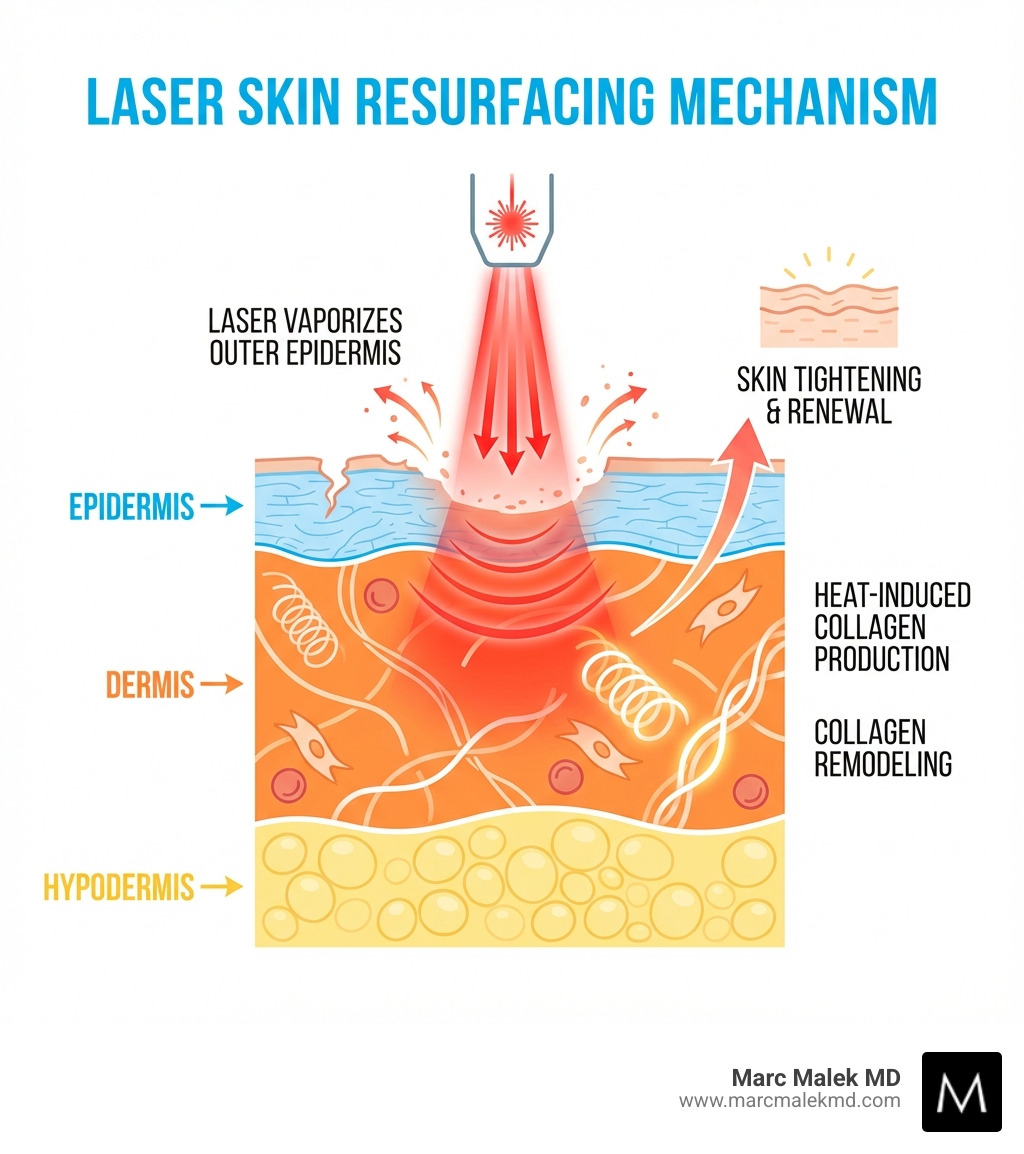
Full face laser resurfacing is a cosmetic procedure that uses focused light energy to improve the skin’s appearance by removing the outer layers of damaged skin. Think of it as a highly precise, controlled exfoliation that goes much deeper than any scrub or peel you’ve ever tried. It’s designed to treat a wide array of skin imperfections across your entire face, offering a comprehensive rejuvenation.
The magic happens through a process called ablation, where the laser precisely vaporizes damaged skin cells. This isn’t just about removing old skin; it’s about stimulating a powerful healing response within your body. The laser energy creates a controlled thermal injury, heating the deeper layers of your skin, known as the dermis. This heat activates specialized cells called fibroblasts, which are the architects of your skin’s structural support.
These activated fibroblasts then get to work, initiating a process called neocollagenesis – the production of new, fresh collagen. Collagen is the essential protein that gives your skin its firmness, elasticity, and youthful bounce. As new collagen is formed and existing collagen fibers contract, you experience significant skin remodeling and tightening. This comprehensive approach helps to smooth out imperfections, improve texture, and restore a more vibrant complexion. Scientific research highlights how this process induces connective tissue remodeling, leading to long-term benefits for your skin.
The Science of Skin Renewal
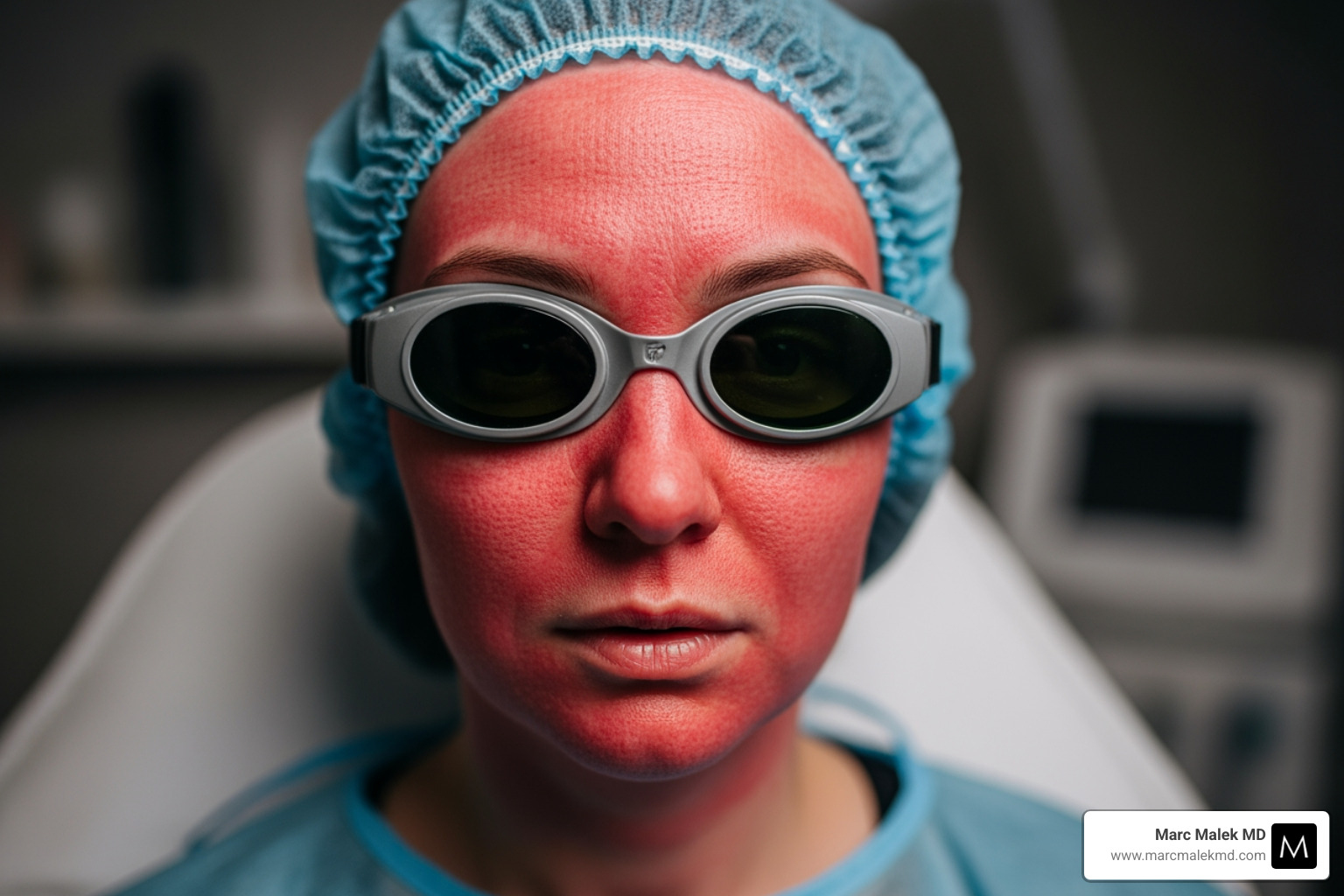
The journey to renewed skin begins with the precise removal of the epidermis, your skin’s outermost layer. This step immediately addresses superficial imperfections like fine lines, uneven pigmentation, and rough texture. But the true power of Full face laser resurfacing lies in the subsequent heating of the dermis.
This dermal heating triggers a dual effect. First, it causes immediate collagen contraction, providing an initial tightening effect that you might notice soon after the procedure. Second, and more importantly, it initiates the long-term production of new collagen. Over weeks and months, this new collagen continues to build, restructuring your skin from within. This healing process ultimately leads to noticeably smoother, firmer skin, with improved elasticity and a more even tone. It’s a fundamental approach to improving your skin’s health and appearance, working from the inside out. For more in-depth information on how these treatments contribute to overall skin health, you can explore our resources on Non-Surgical Facial Rejuvenation.
Types of Laser Resurfacing: Finding the Right Match for Your Skin
When considering Full face laser resurfacing, it’s helpful to understand that not all lasers are created equal. The technology has advanced significantly, offering different approaches to suit various skin concerns and desired outcomes. Generally, laser resurfacing falls into a few main categories: ablative, non-ablative, and fractional lasers. Fully ablative lasers, often using CO2 or Erbium technology, are particularly potent for significant skin rejuvenation.
Lasers work by emitting specific wavelengths of light that are absorbed by target chromophores in the skin, such as water or melanin. In the case of ablative lasers, water is the primary chromophore, allowing for precise vaporization of skin tissue. Understanding these distinctions is key to choosing the right treatment. For a broader look at available options, check out our page on Laser Skin Resurfacing.
Ablative vs. Non-Ablative Lasers
The primary distinction in laser resurfacing lies between ablative and non-ablative treatments.
- Ablative lasers are the more intensive option. They work by vaporizing the outermost layers of your skin (epidermis) and heating the underlying dermis. This creates a controlled wound that prompts your body to produce new collagen as it heals. This approach offers more dramatic results for significant concerns but comes with a longer recovery period.
- Non-ablative lasers, on the other hand, are less aggressive. They heat the underlying skin tissue without removing the outer layer. While they still stimulate collagen production, their effects are more subtle, and they require less downtime.
For those seeking significant change from Full face laser resurfacing, ablative lasers are typically the preferred choice due to their ability to address deeper concerns. For a comprehensive medical review of ablative techniques, you can refer to this Ablative Laser Resurfacing medical review.
CO2 vs. Erbium Lasers
Within the field of ablative laser resurfacing, the two most common types are CO2 (Carbon Dioxide) and Erbium (Er:YAG) lasers. Both are highly effective but have distinct characteristics that make them suitable for different needs.
| Feature | CO2 Laser Resurfacing | Erbium Laser Resurfacing |
|---|---|---|
| Best For | Deep wrinkles, significant sun damage, severe scars | Fine lines, superficial wrinkles, pigmentation issues |
| Recovery Time | Up to two weeks | One full week |
| Side Effects | More pronounced redness, higher risk of dyspigmentation (especially for darker skin types) | Less redness, lower risk of pigmentation changes |
| Ideal Candidate | Lighter skin tones (Fitzpatrick I-II) seeking dramatic results | Wider range of skin tones, including some darker skin types (with caution), seeking gentler treatment |
CO2 lasers emit infrared light at a wavelength of 10,600 nm, which is strongly absorbed by water in the skin. This allows for deeper penetration and more significant collagen contraction, making them excellent for pronounced signs of aging. However, this deeper action means a longer recovery and a higher risk of side effects, especially for individuals with darker skin tones (Fitzpatrick IV-VI).
Erbium lasers, emitting at 2,940 nm, are also absorbed by water but with much greater precision, causing less thermal damage to surrounding tissues. This results in a gentler treatment with faster healing and a lower risk of pigmentation changes, making them a potentially good choice for a wider range of skin tones, though careful assessment is always necessary.
Are You a Candidate? Conditions Treated and Important Considerations
Considering Full face laser resurfacing is a significant step, and determining if you’re a good candidate involves a thorough assessment. We take into account your unique skin type, medical history, and, crucially, your expectations for the procedure. Our goal is to ensure that laser resurfacing is the right path for you to achieve your desired results.
Skin Concerns Addressed by Laser Treatment
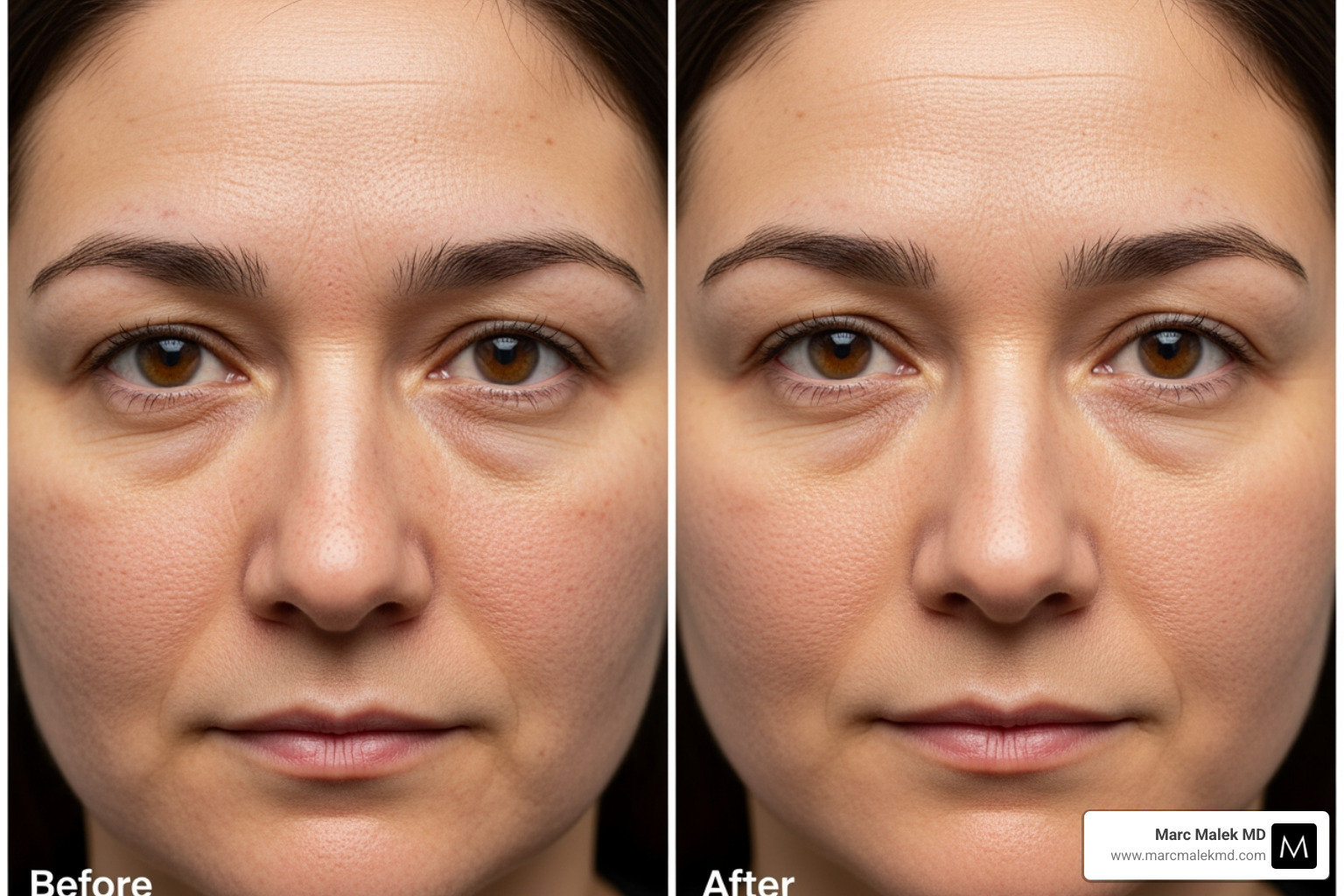
Full face laser resurfacing is a versatile treatment capable of addressing a wide range of skin imperfections and concerns. It’s often chosen by individuals in Scottsdale and Phoenix looking for significant improvement in their complexion. Some of the conditions we can effectively treat include:
- Deep wrinkles and fine lines: From crow’s feet to perioral lines around the mouth, laser resurfacing can dramatically smooth out these signs of aging.
- Sun damage: Years of Arizona sun exposure can lead to significant damage. Laser treatment helps reverse the effects of photodamage, including rough texture and discoloration.
- Age spots and uneven skin tone: It can effectively reduce the appearance of sunspots, liver spots, and other forms of hyperpigmentation, leading to a more uniform complexion.
- Rough texture: If your skin feels coarse or uneven, laser resurfacing can refine its texture, making it feel smoother and softer.
- Acne scars: Whether you have pitted (boxcar, ice pick) or rolling acne scars, laser treatment can significantly minimize their appearance, creating a smoother skin surface. For more details on scar treatments, read our blog on Erase Scars with the Help of Laser Technology.
- Surgical scars: Laser resurfacing can also be used to improve the texture and visibility of certain surgical scars.
- Sagging skin: By stimulating collagen production and contraction, the procedure can offer a noticeable tightening effect, improving mild to moderate skin laxity.
Who Is a Good Candidate?
The ideal candidate for Full face laser resurfacing is someone looking for dramatic and lasting improvement in their skin’s appearance, particularly in the Scottsdale and Phoenix areas. You might be a good candidate if you:
- Have fair to medium skin tones (Fitzpatrick I-III): These skin types generally respond best to ablative lasers, with a lower risk of post-inflammatory hyperpigmentation (PIH). While Erbium lasers offer options for a wider range of skin tones, a thorough assessment is always crucial.
- Exhibit significant photoaging: If you have pronounced wrinkles, considerable sun damage, and textural irregularities, you stand to benefit greatly from the procedure.
- Desire dramatic results: This is an intensive treatment that delivers noticeable, transformative changes, unlike more subtle, non-ablative options.
- Are in good overall health: A strong immune system and general good health are important for optimal healing and recovery.
- Are a non-smoker: Smoking can severely impair the healing process and increase the risk of complications. We highly recommend quitting at least two weeks before and after treatment to ensure the best possible outcome.
Who Should Avoid This Procedure?
While Full face laser resurfacing offers incredible benefits, it’s not suitable for everyone. Certain conditions can increase risks or lead to unsatisfactory results. You should generally avoid this procedure if you have:
- Active acne or active infections: Treating skin with active breakouts or infections, especially herpes simplex virus (cold sores), can spread the infection and lead to complications. If you’re prone to cold sores, we’ll prescribe prophylactic antiviral medication.
- Autoimmune diseases or a compromised immune system: Conditions that affect your body’s healing capabilities can make laser resurfacing risky.
- A history of keloid scarring: If your skin tends to form raised, thick scars, ablative laser resurfacing may not be appropriate.
- Recent isotretinoin use (Accutane): If you’ve taken oral isotretinoin within the last 6-12 months, your skin may be too fragile for laser treatment, increasing the risk of scarring.
- Darker skin tones (Fitzpatrick IV-VI): While advancements in laser technology have made some fractional treatments safer for darker skin, fully ablative CO2 lasers carry a significantly higher risk of permanent pigmentation changes (hyperpigmentation or hypopigmentation). We exercise extreme caution and may recommend alternative treatments or less aggressive laser options for these skin types.
- Are pregnant or breastfeeding: For the safety of both mother and baby, laser treatments are generally postponed during pregnancy and breastfeeding.
A thorough consultation with our specialists in Scottsdale or Phoenix will help us determine if Full face laser resurfacing is the right and safest option for you.
The Complete Patient Journey: From Prep to Post-Care
Starting on a Full face laser resurfacing journey involves a carefully planned process, from initial preparation to diligent post-treatment care. Our team in Arizona is dedicated to guiding you through every step, ensuring your comfort and optimizing your results. The procedure itself typically takes between 30 minutes to two hours, depending on the extent of treatment and the specific laser used. It is performed on an outpatient basis, meaning you’ll go home the same day. We offer various anesthesia options, including local anesthesia, sedation, or, in some cases, general anesthesia for full-face treatments, to ensure you remain comfortable throughout.
How to Prepare for Full Face Laser Resurfacing
Proper preparation is crucial for a successful outcome and smooth recovery from Full face laser resurfacing. We will provide detailed instructions custom to your needs, but generally, preparation involves:
- Sun avoidance: You’ll need to strictly avoid tanning and heavy sun exposure for at least four weeks prior to your treatment. Daily use of a broad-spectrum sunscreen is essential. For more tips on protecting your skin, see our guide on Sun Protection is Key in Enjoying the Arizona Sun.
- Stop smoking: As mentioned, smoking significantly impairs healing. We require you to stop smoking at least two weeks before and after your procedure.
- Avoid photosensitizing medications: Certain medications can make your skin more sensitive to light. We’ll provide a list of medications to avoid for at least 72 hours before your treatment.
- Antiviral prophylaxis: If you have a history of cold sores (herpes simplex), we will prescribe antiviral medication to start a few days before your procedure and continue afterward to prevent an outbreak.
- Topical retinoid pre-treatment: In some cases, we may recommend applying a topical retinoid to your skin for about four weeks before the procedure to optimize skin condition.
- Arranging transport home: If you receive sedation during your procedure, you’ll need to arrange for someone to drive you home safely.
The Recovery Timeline: What to Expect
The recovery process after Full face laser resurfacing is a journey, and while it requires patience, the results are well worth it. Here’s a general timeline of what you can expect:
- Initial healing (7-14 days): This is the most intensive phase. You’ll likely experience a sensation similar to a severe sunburn, with significant redness, swelling, and possibly some itching.
- Peeling: Around day 3-5, your skin will begin to peel as the damaged outer layers shed to reveal fresh, new skin underneath. It’s crucial not to pick or force this peeling.
- Redness: While the initial intense redness subsides within the first two weeks, a pinkish appearance can linger for two to three months, and in some cases, up to six months or even a year. This is a normal part of the healing process as your skin regenerates.
- Full results: While you’ll see improvements earlier, the full effects of collagen remodeling and skin tightening will become evident over three to six months as your skin completely settles and refreshs.
For more detailed information on what to expect during recovery, the Cleveland Clinic offers comprehensive insights on Laser Skin Resurfacing.
Essential Post-Treatment Care for Optimal Healing
Diligent post-treatment care is vital for minimizing complications, promoting healing, and achieving the best possible results from your Full face laser resurfacing. Our team in Scottsdale and Phoenix will provide specific instructions, but key practices include:
- Gentle cleansing: You’ll need to gently clean the treated areas two to five times a day. We’ll recommend a mild cleanser and specific techniques, like using your fingers only, to avoid irritation.
- Vinegar soaks: Performing compresses with a diluted vinegar solution (e.g., one teaspoon of distilled white vinegar in two cups of cold water) for 5 minutes, every 3-4 hours, for about 7 days, can help with healing and prevent infection.
- Occlusive ointments: Applying a thick layer of occlusive ointment like Aquaphor or plain Vaseline (petroleum jelly) to the treated areas is essential to keep the skin moist and prevent scab formation. This will be recommended for about 7 days until peeling is complete.
- Avoiding sun exposure: Strict sun avoidance is non-negotiable. Avoid natural sunlight and tanning booths for at least four weeks.
- Daily broad-spectrum SPF 30+: Once your skin has healed enough, wearing a broad-spectrum sunscreen with an SPF of at least 30 (or even 50+) every single day is paramount to protect your new skin and maintain your results.
- Moisturizing: Liberally apply a gentle, recommended moisturizer to keep your skin hydrated as it heals.
- Avoiding harsh products: Steer clear of any harsh skincare products, exfoliants, or irritants during your recovery period.
- When to resume makeup: We generally advise against applying makeup for at least 14 days, or until your skin is fully healed, to prevent irritation and infection. Once you can, green-based, oil-free makeups can help camouflage any residual redness.
Results, Costs, and Comparisons
After dedicating time and care to your Full face laser resurfacing journey, you’ll be eager to understand the long-term outlook, financial considerations, and how this transformative treatment compares to other options available in Arizona. Our treatment goals are always aligned with your desires for a healthier, more youthful complexion.
Typically, only one full ablative laser treatment is needed to see significant improvements, though the number of treatments can vary based on individual skin concerns and desired results. The longevity of these results can be quite impressive, often lasting for several years.
Long-Term Benefits and Maintaining Your Glow
The benefits of Full face laser resurfacing extend far beyond the initial healing period. You can look forward to:
- Dramatic improvement in texture: Your skin will feel significantly smoother and softer.
- Wrinkle reduction: Fine lines and deep wrinkles will be visibly diminished.
- Scar improvement: The appearance of acne scars and other textural irregularities will be notably reduced.
- Lasting collagen boost: The stimulation of new collagen continues to improve your skin’s firmness and elasticity for months after the procedure, providing a long-term anti-aging effect.
To maintain these fantastic results and your radiant glow, a diligent skincare routine and strict sun protection are crucial. Regular use of broad-spectrum sunscreen, especially in sunny Arizona, is your best defense against future sun damage and premature aging. Explore more about Preventing and Repairing Sun Damage to ensure your skin stays protected and vibrant.
How Full Face Laser Resurfacing Compares to Other Rejuvenation Treatments
Full face laser resurfacing stands out among skin rejuvenation treatments due to its intensity and dramatic results. Here’s how it generally compares to other popular options:
- Compared to Chemical Peels: While deep chemical peels can offer significant exfoliation and renewal, laser resurfacing typically provides more precise control over depth of penetration and often achieves more dramatic results for deep wrinkles and severe scarring. Laser treatments also stimulate collagen more effectively.
- Compared to Microneedling with PRP: Microneedling with PRP is excellent for improving skin texture, tone, and mild scarring with minimal downtime. However, laser resurfacing is generally more aggressive and delivers more pronounced results for severe concerns like deep wrinkles, significant sun damage, and advanced acne scars. The downtime is also considerably longer with laser resurfacing.
Intensity, Downtime, and Results Magnitude:
Full face laser resurfacing is on the more intensive end of the spectrum. It involves a longer downtime compared to less invasive treatments like chemical peels or microneedling, but it also delivers a greater magnitude of results. For those in Scottsdale and Phoenix seeking a truly transformative change for significant skin issues, laser resurfacing often provides the most comprehensive and long-lasting improvement.
Investment and Treatment Frequency
The cost of Full face laser resurfacing is an investment in your skin’s long-term health and appearance. While specific pricing can only be determined after a personal consultation, costs can vary significantly based on factors such as:
- Practitioner experience: Highly experienced and board-certified specialists, like those at Marc Malek MD, may have higher fees due to their expertise and track record of excellent results.
- Geographic location: Pricing can differ across various areas within Arizona, such as Scottsdale or Phoenix.
- Type of laser used: The specific laser technology employed (e.g., CO2 vs. Erbium) and its settings can influence the overall cost.
- Extent of treatment: While we’re discussing full face, the intensity and number of passes can also impact pricing.
While we are unable to provide specific numbers without a consultation, you should anticipate a range that reflects the advanced nature of this procedure.
A significant advantage of Full face laser resurfacing is that it is typically a single procedure for most patients to see substantial improvements. This means you won’t need to return for multiple sessions to achieve your primary goals. However, to maintain your optimal results, periodic touch-up treatments may be recommended over the years, alongside a consistent, protective skincare regimen.
Conclusion: Begin Your Change
Full face laser resurfacing offers a truly transformative solution for those in Scottsdale and Phoenix seeking to address deep wrinkles, severe sun damage, stubborn acne scars, and overall skin textural irregularities. It’s a powerful procedure that goes beyond superficial fixes, using your body’s natural healing capabilities to build new, healthy skin from within.
The journey involves careful preparation, a dedicated recovery period, and diligent post-treatment care, but the benefits are profound: smoother, firmer, younger-looking skin that can last for years. We believe in a personal and artistic approach, focusing on patient comfort and delivering fantastic, long-lasting results that promote a healthy lifestyle for proportionally balanced bodies.
If you’re ready to explore the potential of Full face laser resurfacing and open up a more radiant you, we invite you to take the next step. Our expert team at Marc Malek MD in Arizona is here to assess your unique needs, answer all your questions, and craft a personalized treatment plan custom to your aesthetic goals.
Don’t let skin concerns hold you back any longer. Find the transformative power of advanced laser technology. Schedule a consultation for Laser Skin Resurfacing with us today and begin your change towards luminous, revitalized skin.