

Everything You Need to Know About Jawline Contouring
What Is a Jaw Dermal Filler — and Is It Right for You?
Jaw dermal filler is a non-surgical injectable treatment that adds volume, structure, and definition to the lower face. A licensed provider injects a gel-like substance — most often hyaluronic acid — along the jawline and chin to reshape and contour the area.
Here’s what you need to know at a glance:
| Question | Quick Answer |
|---|---|
| What does it treat? | Weak jawline, jowls, asymmetry, volume loss |
| How long does it take? | About 20 minutes |
| Is there downtime? | Minimal — most people return to normal activities the same day |
| How long do results last? | Typically 15–18 months |
| Does it hurt? | Most patients feel only mild pressure with numbing cream applied |
| Is it reversible? | Yes — hyaluronic acid fillers can be dissolved if needed |
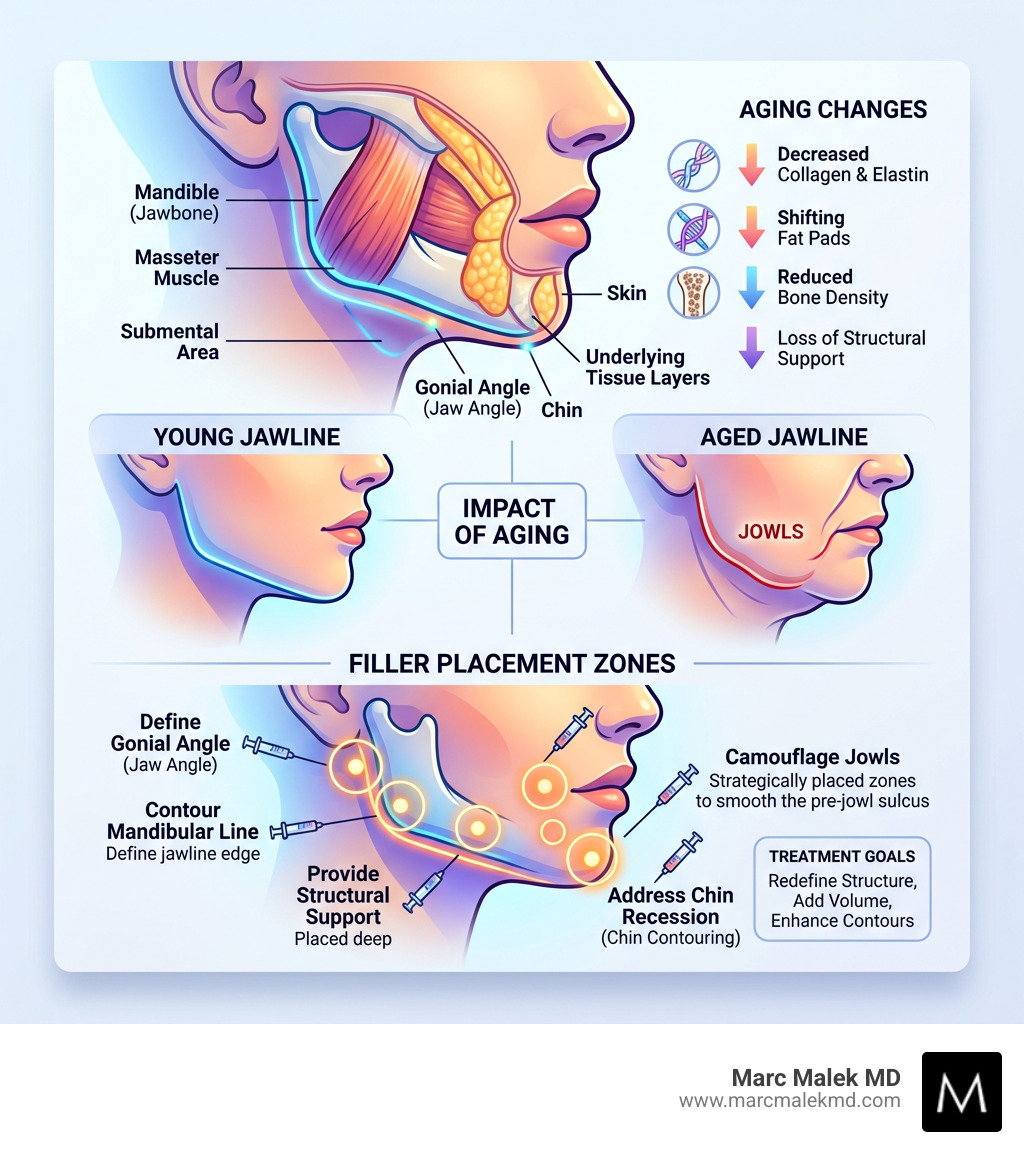
A sharp, defined jawline is one of the most sought-after features in facial aesthetics — for both men and women. But genetics, aging, and weight changes can all soften the jaw over time. Collagen breaks down. Fat shifts. Bone density decreases. The result? A less defined lower face, jowling, and a profile that no longer matches how you feel on the inside.
The good news: you don’t need surgery to address it.
Jaw dermal filler has grown significantly in popularity as part of a broader shift toward non-surgical facial rejuvenation. From 2015 to 2019, the total number of injectable treatments in the U.S. increased by 17.8%, with Americans spending over $1.6 billion on injectables in 2019 alone — and that number continues to climb.
What makes jawline filler particularly effective isn’t just the volume it adds. It’s where and how it’s placed. Skilled injectors don’t simply fill the sagging area — they rebuild the underlying structure of the jaw, working from the bone outward to lift and redefine the entire lower face.
In this guide, we’ll walk you through everything: how the treatment works, what to expect, how to choose the right filler type, and how to find a provider you can trust.
Understanding Jowls and the Science of Facial Aging
To understand how jaw dermal filler works, we first have to look at why the jawline changes as we get older. One of the most common complaints we hear from our patients in Scottsdale and Phoenix is the appearance of “jowls”—that sagging skin that hangs below the jawline.
Jowls aren’t just a skin problem; they are the result of a “perfect storm” of internal changes. As we age, our bodies produce significantly less collagen and elastin. These proteins are the scaffolding of our skin, keeping it firm and snappy. Without them, the skin loses its ability to stay tight against the bone.
Furthermore, facial fat pads, which provide youthful volume in the cheeks, begin to descend due to gravity. This fat shifts downward and pools along the jawline. Simultaneously, we experience bone resorption—the literal shrinking of our jawbone. When the bone structure underneath gets smaller, the overlying skin and fat have nothing to hold onto, leading to that soft, blurred look. Genetics also play a big role in how early these changes appear and how prominent your jowls might become.
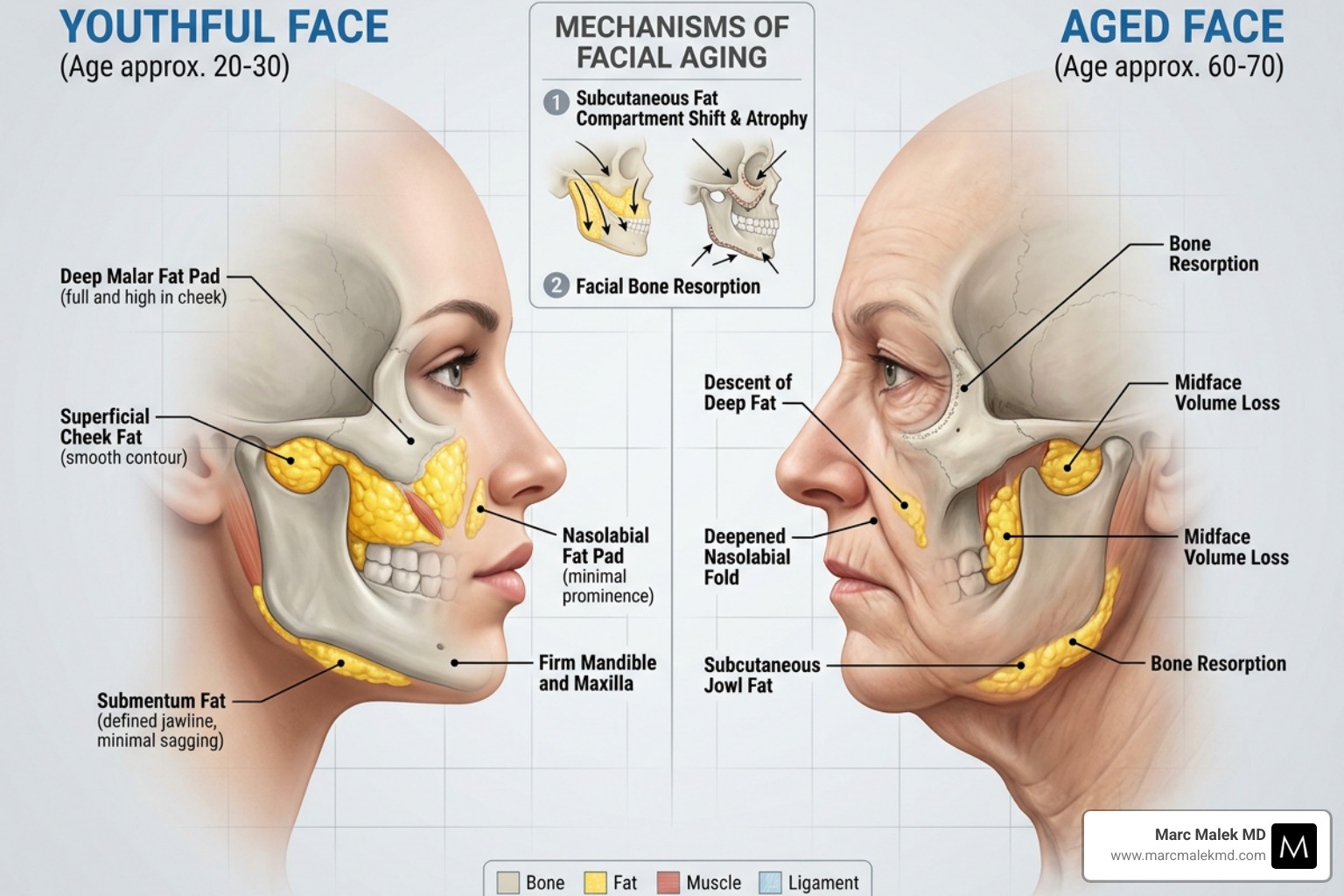
By understanding these biological shifts, we can move away from just “filling wrinkles” and toward non-surgical facial rejuvenation that addresses the root cause: loss of structural support.
How Jaw Dermal Filler Restores Lower Face Structure
Think of jaw dermal filler as internal scaffolding. Instead of trying to pull the skin back (like a surgical facelift), we are rebuilding the foundation that has been lost. By placing filler strategically along the mandible (jawbone), we can recreate the crisp, sharp border that defines a youthful face.
There are several key anatomical points we focus on:
- The Gonial Angle: This is the “corner” of your jaw near the ear. Enhancing this area provides a stronger frame for the face.
- The Mandibular Body: Creating a straight, uninterrupted line from the ear to the chin.
- The Pre-jowl Sulcus: This is the dip that often forms on either side of the chin. Filling this “hollow” masks the appearance of jowls and straightens the jawline.
These treatments use biocompatible materials that integrate smoothly with your natural tissues. Depending on your goals, we choose between different types of formulas. For more details, explore our page on dermal fillers and injections.
| Filler Type | Main Component | Best For | Longevity |
|---|---|---|---|
| Hyaluronic Acid (HA) | Natural Sugar Molecule | Instant volume, hydration, reversibility | 12–18 months |
| Collagen-Stimulating | CaHa or PLLA | Structural rebuilding, long-term collagen growth | 18–24+ months |
Choosing the Best Type of Jaw Dermal Filler
Not all fillers are created equal. The “best” one depends on your skin thickness, the degree of sagging, and your desired timeline.
- Hyaluronic Acid (HA): Brands like Juvéderm Volux XC or Restylane Lyft are popular because they are firm enough to mimic bone but can be dissolved if you change your mind. In an 18-month study, HA fillers showed a 43.1% improvement in jawline volume loss.
- Calcium Hydroxylapatite (CaHa): Known as Radiesse, this is a “biostimulator.” It provides immediate lift and then encourages your body to grow its own collagen. Research shows it can improve moderate to severe sagging for up to a year or more.
- Poly-L-lactic acid (PLLA): Marketed as Sculptra, this doesn’t give instant results but works over several months to thicken the skin and restore volume through a controlled inflammatory response.
Current scientific research on injectable fillers for jaw rejuvenation emphasizes that a combination of these materials often yields the most natural and durable results.
Achieving Natural Results with Jaw Dermal Filler
The fear of looking “overfilled” or “boxy” is common. However, the goal of a skilled injector is facial balancing, not just adding bulk. By focusing on the bone structure rather than the soft tissue, we ensure the results look chiseled, not puffy.
For many patients, we recommend a “full face” approach. Sometimes, a weak jawline is actually made worse by a lack of chin projection. By combining jaw and chin filler, we create a harmonious profile. It is also important to understand the difference between Botox and dermal fillers; while fillers add volume, Botox may be used in the masseter muscles to slim the face or in the neck to reduce “bands” that pull the jawline down.
The Treatment Process: What to Expect
The actual procedure for jaw dermal filler is remarkably quick, often called a “lunchtime lift.”
- Consultation: We start by assessing your bone structure and skin laxity.
- Numbing: A topical numbing cream is applied for 15–20 minutes to ensure you’re comfortable.
- The Injection: We may use a fine needle for precision or a blunt-tipped cannula. A cannula is often preferred for the jawline because it requires fewer entry points and reduces the risk of bruising.
- The Duration: The actual injecting usually takes about 20 minutes.
While fillers are fantastic for mild to moderate jowling, it’s important to know when a different approach is needed. If there is significant skin excess, we may discuss facelift options: surgical vs. non-surgical to ensure you get the results you’re looking for.
Preparing for Your Jaw Dermal Filler Appointment
To get the best results and minimize bruising, preparation starts a week before your visit:
- Skincare: Stop using retinol-based products or glycolic acid seven days prior to avoid skin sensitivity.
- Medications: Avoid blood thinners like aspirin, ibuprofen, and certain supplements (Vitamin E, Ginkgo) for one week, as these increase bruising risk.
- Lifestyle: Skip alcohol for at least 48 hours before your appointment.
- Health: Disclose your full medical history, especially if you have a history of cold sores or autoimmune conditions.
Recovery and Aftercare for Jaw Dermal Filler
One of the biggest benefits of jaw dermal filler is the lack of downtime. You can usually head straight back to work. However, you should follow these “house rules” for the first 24–48 hours:
- Hands Off: Don’t massage or put heavy pressure on the jaw.
- Stay Cool: Avoid saunas, hot tubs, and strenuous exercise that raises your body temperature.
- Sleep Right: Try to sleep on your back with your head slightly elevated to minimize swelling.
- Hydrate: Water helps HA fillers settle and look their best.
Most swelling subsides within a few days, but it takes about two weeks for the filler to fully integrate into your tissues. For more on hyaluronic acid longevity and maintenance, consistency is key—scheduling touch-ups before the filler has completely dissolved often requires less product over time.
Benefits, Risks, and Candidacy
The benefits are clear: immediate definition, no surgery, and results that can last up to 18 months. However, no medical procedure is without risk.
Common side effects include temporary redness, swelling, and minor bruising. Rare but serious complications can include:
- Vascular Occlusion: This happens if filler is accidentally injected into a blood vessel. This is why choosing an expert injector with deep anatomical knowledge is non-negotiable.
- Nodules: Small lumps that may form if the filler doesn’t integrate properly (more common with biostimulators).
According to safety statistics on aesthetic procedures, dermal fillers have an excellent safety profile when performed by qualified medical professionals.
Frequently Asked Questions about Jawline Contouring
Does getting jawline filler hurt?
Most patients describe the sensation as a “pinch” or “pressure” rather than true pain. We use topical numbing agents, and many modern fillers (like the Juvéderm XC line) contain lidocaine, a numbing agent, mixed directly into the gel to keep you comfortable throughout the process.
How many syringes of filler will I need for my jowls?
This varies based on your anatomy. For mild jowling, 1–2 syringes per side (2–4 total) is common. If we are also augmenting the chin for a complete “profile balancing” effect, we may use more. During your consultation, we provide a personalized plan so there are no surprises.
How long do jawline filler results typically last?
On average, results last 15 to 18 months. Factors that affect this include your metabolism (how fast your body breaks down the gel), the type of filler used, and lifestyle factors like sun exposure and smoking.
Conclusion
At Marc Malek MD, we believe that aesthetic medicine is a blend of science and art. Whether you’re looking to reclaim the jawline of your youth or create the chiseled profile you’ve always wanted, our team in Scottsdale is here to help. Dr. Malek’s artistic approach ensures that every treatment is tailored to your unique facial structure, promoting a proportionally balanced look that feels natural.
If you’re ready to see what jaw dermal filler can do for your confidence, we invite you to reach out. We focus on patient comfort and long-lasting results that help you embrace your best self. For more information, visit our jaw dermal filler services page or schedule a consultation at our Scottsdale or Phoenix locations today.