

Why Effective Laser Hair Removal Matters for Your Confidence
Effective laser hair removal is a medical procedure that uses concentrated laser light to target and damage hair follicles, significantly reducing hair growth over time. Here’s what you need to know about its effectiveness:
Key Facts About Effective Laser Hair Removal:
- Success Rate: Achieves approximately 75% hair reduction after a complete treatment course
- Treatment Duration: Most people need 2-6 sessions spaced 4-8 weeks apart
- Best Candidates: Most effective for individuals with dark hair and lighter skin
- Results Timeline: Expect 10-25% reduction after the first session
- Longevity: Results can last months to years, though not completely permanent
If you’re tired of the endless cycle of shaving, waxing, and dealing with razor bumps, you’re not alone. Laser hair removal is one of the most common cosmetic procedures in the United States, and for good reason—it offers a long-term solution to unwanted hair that traditional methods simply can’t match.
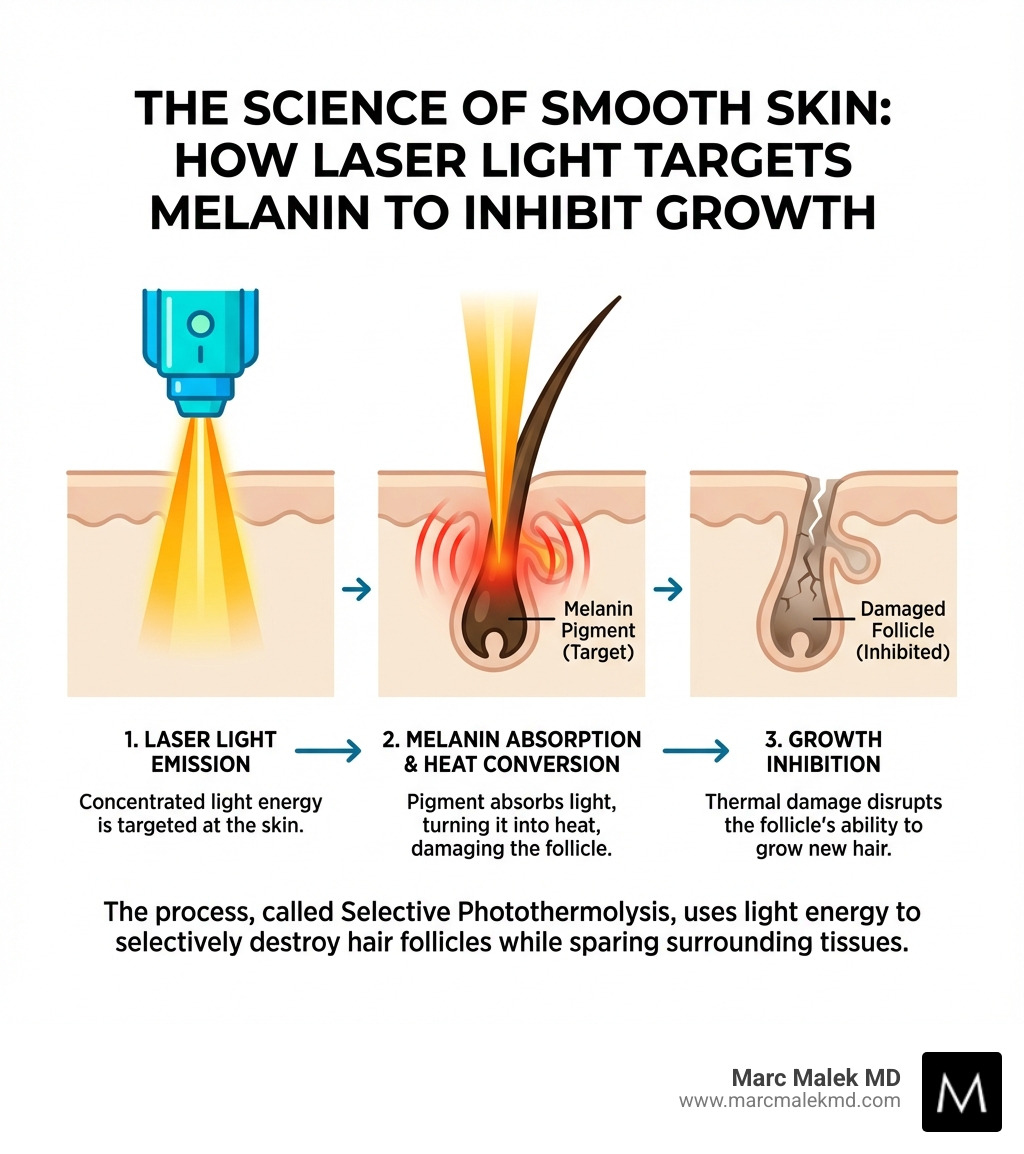
The science behind effective laser hair removal is surprisingly straightforward. The laser targets melanin (the pigment) in your hair follicles, converting light energy into heat. This heat damages the follicle enough to slow or stop future hair growth. The process, called selective photothermolysis, allows the laser to destroy hair follicles while leaving surrounding skin unharmed.
But here’s the catch: not all laser hair removal is created equal. The effectiveness depends on several factors—the type of laser used, your skin and hair type, the skill of your provider, and following the right treatment protocol. Multiple sessions are necessary because hair grows in different phases, and lasers only work on actively growing follicles.
The Science Behind Smooth Skin: How Laser Hair Removal Works
To truly understand effective laser hair removal, we need to dig into the fascinating science that makes it all possible. At its core, laser hair removal operates on a principle known as selective photothermolysis. This fancy term simply means that the laser targets specific components (photo) with heat (thermo) to cause destruction (lysis), all while being selective enough to spare surrounding tissues.
The primary target for hair removal lasers is melanin, the pigment that gives hair its color. When the concentrated laser light is emitted, the melanin in your hair shaft and follicular epithelium absorbs this light energy. This absorption rapidly converts the light into heat, which then damages the hair follicle. Think of it like a tiny, super-fast oven heating up only the hair, effectively disrupting its ability to grow back.
However, the hair on our bodies isn’t always in the same stage of growth. Our hair follicles cycle through several phases:
- Anagen (Growth Phase): This is when the hair is actively growing and contains the most melanin.
- Catagen (Transition Phase): Hair growth slows, and the follicle shrinks.
- Telogen (Resting Phase): The hair is fully formed but inactive, eventually shedding.
- Exogen (Shedding Phase): The old hair sheds, and new hair begins to grow.
For laser hair removal to be most effective, the hair follicle must be in the anagen, or active growth, phase. During this phase, the hair is still attached to the follicle and has a rich supply of melanin, making it an ideal target for the laser. This is precisely why multiple sessions are necessary. At any given time, only a certain percentage of your hair follicles are in the anagen phase. By scheduling treatments several weeks apart, we can catch more hairs as they enter this crucial growth stage, ensuring that over time, all follicles are targeted for optimal reduction.
After a laser session, you won’t see all the treated hairs disappear immediately. Instead, a process of hair shedding occurs over the days and weeks following your treatment. This is a natural sign that the targeted follicles have been successfully damaged and are releasing the treated hairs. This delayed shedding is part of the journey to smoother skin. For a deeper dive into the science, you can explore A review of laser hair removal science.
Key Factors for Effective Laser Hair Removal
While the science of selective photothermolysis is universal, its application must be custom to each individual. Several key factors influence how effective laser hair removal will be for you:
- Skin and Hair Contrast: The ideal candidate for laser hair removal traditionally has thick, dark hair and light skin. This high contrast allows the laser to easily differentiate between the melanin in the hair and the melanin in the surrounding skin, minimizing the risk of damage to the skin while maximizing absorption by the hair follicle.
- Fitzpatrick Skin Types: We categorize skin tones using the Fitzpatrick scale, ranging from Type I (very pale, always burns) to Type VI (darkest brown, never burns). While early laser technology was limited, advancements now allow us to safely and effectively treat all skin types. However, darker skin tones require specific laser wavelengths and settings to prevent pigment changes.
- Hair Color: Dark hair contains abundant melanin, making it an excellent target for the laser. Unfortunately, light-colored hair—such as gray, red, blond, or white—contains very little melanin, making it much less responsive to current laser technology. If your hair lacks pigment, the laser simply won’t have a target to heat.
- Hair Thickness: Coarse, thick hairs tend to respond better to treatment than fine hairs. Thicker hairs have more melanin and can absorb more laser energy, leading to more significant damage to the follicle.
- Hormonal Influences: Sometimes, excessive hair growth isn’t just a cosmetic concern; it can be linked to underlying medical conditions. Conditions like hirsutism (excessive male-pattern hair growth in women) or hypertrichosis (generalized excessive hair growth) may be caused by hormonal imbalances, such as those seen in Polycystic Ovarian Syndrome (PCOS). In such cases, a thorough preliminary medical examination, including blood chemistry tests, might be necessary to diagnose and address any underlying hormonal issues in conjunction with laser treatment. Our approach to medical hair removal laser therapy is always custom to your specific phototype and hair color, ensuring the safest and most effective outcome.
Choosing Your Weapon: A Guide to Laser Technologies
Achieving truly effective laser hair removal isn’t just about having a laser; it’s about having the right laser and, crucially, a highly skilled operator wielding it. The effectiveness and safety of your treatment depend on several technical parameters that can be adjusted.
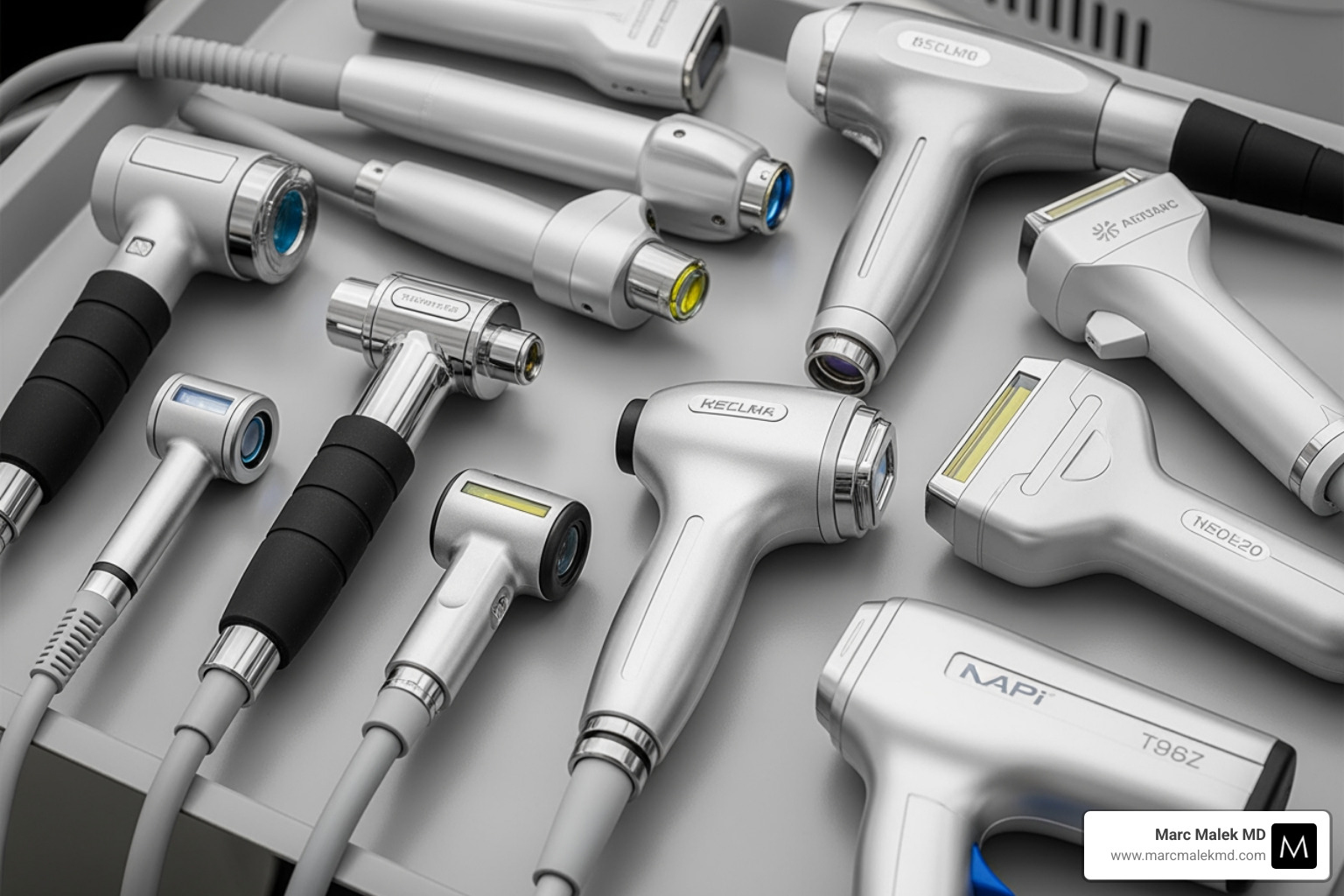
- Wavelength: This is arguably the most critical parameter, as different wavelengths are absorbed differently by melanin and penetrate to varying depths. A clinic needs a range of wavelengths to effectively treat all skin types, target hair follicles at various depths (which can range from 2 to 7mm below the skin’s surface), and address different hair colors. For instance, Alexandrite lasers are generally better for lighter skin, while Nd:YAG lasers are safer for darker skin tones.
- Pulse Width: This refers to how long the laser energy is delivered. Fine hairs heat up quickly and require shorter pulse widths (around 5-10 milliseconds), whereas thicker hairs need longer pulse widths (40-60 milliseconds) to heat more slowly and effectively. As your hair follicles miniaturize over the course of treatment, the pulse width may need to be adjusted.
- Spot Size: The size of the laser beam affects both penetration depth and treatment speed. Larger spot sizes allow for deeper penetration, making them ideal for treating deeper hair follicles (like those in the bikini area) and covering larger body areas more quickly. Smaller spot sizes are better for superficial follicles, such as those on the upper lip.
- Fluence (Power): This is the energy density delivered by the laser. For permanent hair reduction, the follicle needs to be heated to a specific temperature (around 65-70 degrees Celsius) to cause irreversible damage. High-quality lasers capable of delivering sufficient power (fluence) are essential; lower-powered systems might only achieve temporary hair loss.
We believe that a high-quality laser must be accompanied by a skilled operator for superior results. Our expert technicians are trained to safely alter wavelength, pulse width, spot size, and fluence, customizing each treatment to your specific needs. It’s this combination of advanced technology and human expertise that truly defines effective laser hair removal.
Laser Types and Their Applications
Here’s a comparison of the primary laser types we use for effective laser hair removal, highlighting their specific applications:
| Laser Type | Wavelength | Best for Skin Type | Best for Hair Type | Key Characteristics & Effectiveness |
|---|---|---|---|---|
| Alexandrite | 755 nm | Lighter skin tones (Fitzpatrick I-III) | Finer, lighter hairs; dark hairs | One of the most popular. High melanin absorption. Well tolerated (average pain 2.3/4). May require more sessions for deep follicles. |
| Diode | 808-810 nm | Moderate skin tones (Fitzpatrick I-IV) | Coarse hair, medium to dark pigments | Very effective for a broad range of skin types. Good penetration depth. Well tolerated (average pain 2.0/4). |
| Nd:YAG | 1064 nm | Darker skin tones (Fitzpatrick IV-VI) | Coarse, dark hairs; deep follicles | Longest wavelength, deepest penetration. Safest for darker skin types. Less tolerable (average pain 3.5/4). |
Why a Multi-Wavelength Approach Can Be More Effective
Hair reduction isn’t a one-size-fits-all process. As treatment progresses, the characteristics of your hair can change dramatically. Initially, you might have thick, dark terminal hairs. After a few sessions, these might transform into finer, blonder hairs, and eventually, many could become soft, miniaturized vellus hairs. This evolution requires an adaptive approach.
This is where the concept of a ‘rotational regimen’ truly shines, offering a novel strategy for effective laser hair removal. Instead of relying on a single laser type for the entire treatment course, a rotational regimen sequentially applies different laser wavelengths based on the evolving characteristics of your hair. For instance, we might start with an Nd:YAG laser for very dark, thick hair on a darker skin type, transition to a diode laser as the hair thins, and then finish with an Alexandrite laser for any remaining finer, lighter hairs. This adaptive strategy ensures that we are always using the most appropriate technology for the hair’s current state.
Our research into this rotational regimen has shown promising results. Studies indicate that this sequential use of lasers, adapting to changing hair characteristics, significantly improves treatment efficacy. For example, a new rotational approach combining Nd:YAG, diode, and Alexandrite lasers achieved an impressive 75.07% hair reduction at six months across all treated body areas. This comprehensive approach also led to a significant reduction in average hair thickness, from approximately 250 µm to a mere 40 µm, and a remarkable increase in vellus hair percentage from 20% to 90%, while overall hair density remained unchanged. This demonstrates that by rotating our “weapons,” we can achieve superior and more comprehensive results than with single-laser treatments. You can learn more about this innovative method in Research on a new rotational approach.
The Path to Effective Laser Hair Removal: Preparation, Procedure, and Aftercare
Starting on your journey to smoother skin requires careful preparation and understanding of the process. At Marc Malek MD in Scottsdale, we prioritize your safety and satisfaction, starting with a thorough consultation.
The Importance of a Consultation
Before any laser hair removal treatment, a personal consultation is not just recommended, it’s essential. This is your opportunity to discuss your goals, concerns, and medical history with a board-certified provider. We’ll assess your skin type, hair color, and hair thickness, and determine if laser hair removal is the right option for you. This crucial step allows us to tailor a treatment plan specifically to your needs, ensuring the safest and most effective laser hair removal experience. Laser hair removal is a medical procedure involving powerful lasers, so choosing a qualified and experienced professional is paramount.
How to Prepare for Your Session
Proper preparation is key to maximizing the effectiveness of your treatment and minimizing potential side effects. Here’s a list of pre-treatment instructions we typically provide:
- Avoid Sun Exposure: For at least six weeks before and after your treatment, it’s crucial to limit sun exposure on the areas you plan to treat. This includes tanning beds and sunless tanning creams. Tanned skin can reduce the laser’s effectiveness and increase the risk of adverse reactions like pigment changes.
- Stop Waxing and Plucking: The laser targets the melanin in the hair root, so it needs to be present in the follicle. Avoid waxing, plucking, threading, or electrolysis for at least four to six weeks before your session. Shaving, however, is perfectly fine and encouraged.
- Shave the Area: We recommend shaving or trimming the treatment area one to two days before your appointment. This ensures the laser energy focuses on the follicle rather than burning hair on the surface of the skin, which can cause discomfort and reduce efficacy.
- Avoid Certain Medications: Inform us about all medications you are taking, including over-the-counter drugs like aspirin or anti-inflammatory medications, as some can increase photosensitivity or bleeding risk. If you have a tendency to scar, a history of keloids, or outbreaks of cold sores or genital herpes, please let us know.
- Skin Lightening: For some darker skin types, we might recommend a skin bleaching cream for a few weeks prior to treatment. This helps reduce melanin in the skin, allowing for safer and more effective laser energy delivery to the hair follicles.
For more detailed guidance, you can refer to the AAD preparation guidelines.
What to Expect During and After Treatment
Your comfort and safety are our top priorities during every session.
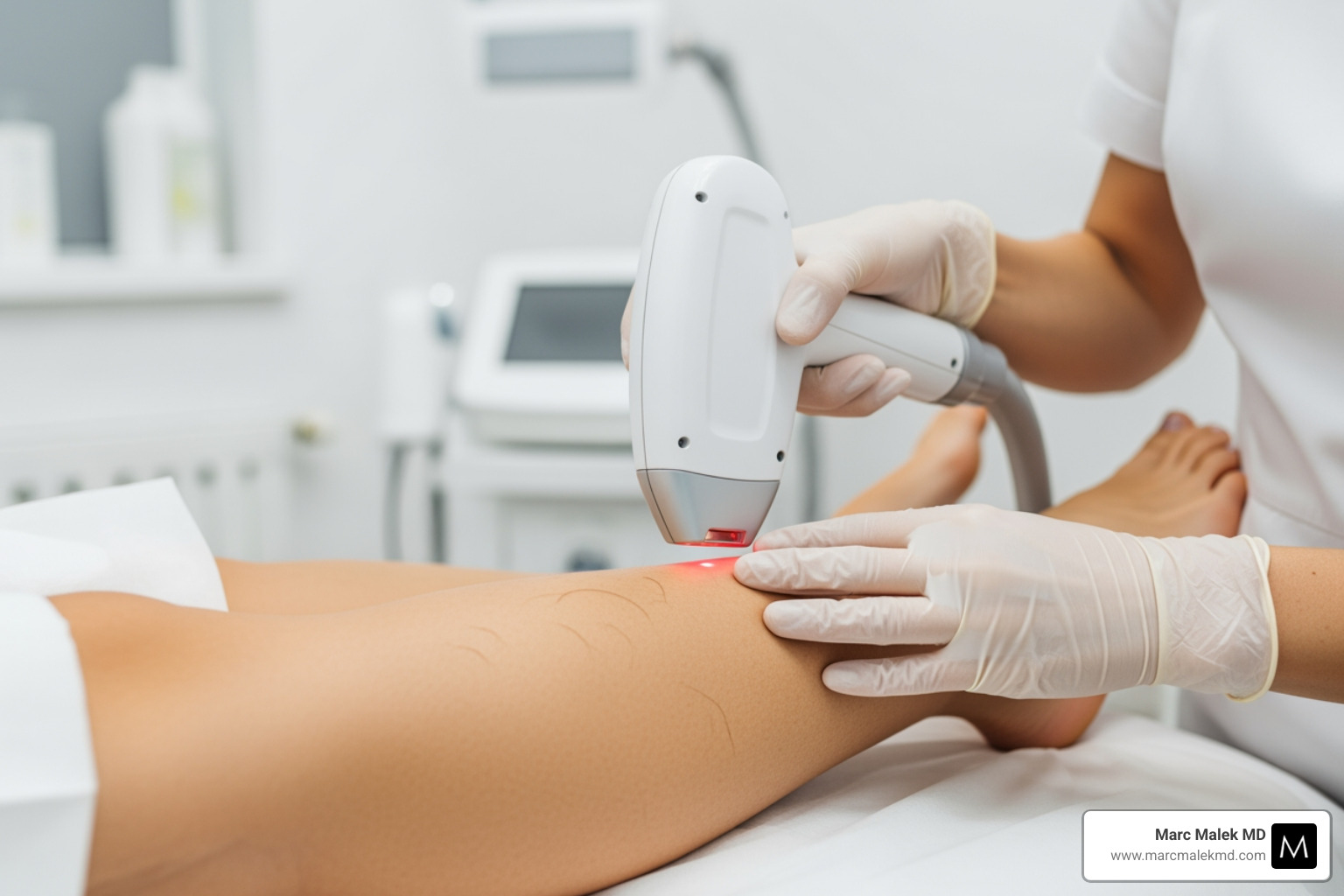
During the Procedure:
- Duration: The length of your session will depend on the size of the treatment area. Small areas, like the upper lip, can be treated in less than a minute, while larger areas such as the back or legs might take up to an hour.
- Sensation: Most patients describe the sensation as a series of warm pinpricks or a rubber band snapping against the skin. While discomfort is subjective, many find it less painful than waxing. For sensitive areas, we can apply a topical anesthetic cream beforehand to improve your comfort.
- Protective Eyewear: You will be provided with special goggles to protect your eyes from the laser light. Our technicians will also wear protective eyewear.
- Cooling: To protect your skin and improve comfort, our lasers are equipped with integrated cooling systems, or we may use a cooling gel or cold air device.
After the Procedure:
- Immediate Reactions: It’s completely normal for the treated area to appear red (erythema) and slightly swollen (perifollicular edema) for a few hours, sometimes up to a couple of days. This indicates that the treatment has been effective. Applying a cool compress or ice pack can help alleviate any discomfort.
- Aftercare Tips:
- Avoid direct sun exposure, tanning beds, and sun lamps for at least six weeks. Use a broad-spectrum, water-resistant sunscreen with an SPF of 30 or higher daily, especially on exposed areas.
- Use gentle, fragrance-free cleansers and moisturizers on the treated skin.
- Avoid abrasive treatments, hot showers, saunas, and pools for 24-48 hours.
- Do not pick or scratch any dry or peeling skin.
- Shaving is acceptable between sessions, but continue to avoid waxing, plucking, or threading to ensure the hair root remains intact for subsequent treatments.
- In rare cases of inadvertent epidermal injury, topical antibiotics may be prescribed. We may also recommend topical steroid creams to minimize erythema and swelling if needed.
Results vs. Risks: What to Realistically Expect
When considering effective laser hair removal, it’s important to have realistic expectations regarding both the outcomes and potential risks. We aim for significant hair reduction, which is often considered permanent, rather than complete, permanent hair removal for every single follicle.
After your first treatment, most people typically see a 10% to 25% reduction in hair growth. Over the course of multiple sessions, this reduction becomes much more substantial. While hair that regrows is generally much finer and lighter, many patients report not seeing hair for months to even years.
Most individuals require between two to six treatments for optimal results. These sessions are typically spaced four to eight weeks apart to align with your hair’s natural growth cycle, ensuring we target follicles during their most receptive anagen phase. For a general understanding, refer to this General overview of laser hair removal.
However, laser hair removal isn’t suitable for everyone. There are certain contraindications, including:
- Pregnancy: Laser treatments are not recommended for pregnant individuals.
- Certain Medications: Some medications, like acne treatments (e.g., isotretinoin) or blood thinners, can make your skin more sensitive or increase risks.
- Skin Conditions: If you have active skin infections, keloid scars, or are prone to cold sores or genital herpes, we’ll need to assess your suitability carefully.
- Tattoos: Lasers cannot be used over tattooed areas, as they would target the tattoo pigment.
- Skin Cancer History: Individuals with a history of skin cancer should consult their healthcare provider before considering laser hair removal.
Achieving Long-Term Effective Laser Hair Removal
The longevity of your laser hair removal results can vary. While it doesn’t guarantee that every single hair will be gone forever, it provides a long-lasting reduction in hair growth. The hair that does eventually regrow is often much finer, lighter, and less dense, making it far less noticeable than before.
To maintain that lasting smoothness, maintenance sessions may be necessary. These “touch-up” treatments, typically once every 6 to 12 months, help to manage any new hair growth that may emerge over time. Many of our patients express high satisfaction with the convenience and confidence that comes with this long-term hair reduction. For more details on what to expect over the long term, explore What to expect from laser hair removal.
Understanding the Potential Risks
While effective laser hair removal is generally safe when performed by experienced professionals like those at Marc Malek MD, it’s important to be aware of potential risks. Most side effects are temporary and mild:
- Common Side Effects: Temporary redness (erythema) and swelling (perifollicular edema) are almost universally experienced and typically resolve within a few hours to a few days. Slight discomfort during the procedure is also common.
- Less Common Risks:
- Pigment Changes: Darkening (hyperpigmentation) or lightening (hypopigmentation) of the skin can occur, especially in individuals with darker skin tones or those with recent sun exposure. These changes are usually temporary but can be permanent in rare cases.
- Blisters or Burns: Although rare, improper laser settings or inadequate cooling can lead to blisters or burns. This underscores the critical importance of choosing a highly qualified and experienced provider.
- Scarring: Scarring is extremely rare but can occur, particularly if burns are severe or if the skin is not properly cared for post-treatment.
- Paradoxical Hypertrichosis: In very rare instances, laser treatment can paradoxically stimulate new hair growth in adjacent areas, particularly with certain skin types or IPL devices.
- Ocular Complications: If appropriate eye protection is not worn, severe eye injury is a risk, especially when treating areas near the eyes.
At Marc Malek MD, our commitment to patient safety means we adhere to strict protocols and use advanced laser technology. Our trained personnel have thorough knowledge of the mechanisms, techniques, and potential complications, ensuring we take every precaution to minimize risks and ensure your treatment is as safe and effective as possible.
Frequently Asked Questions about Laser Hair Removal
We understand you might have many questions about effective laser hair removal. Here are some of the most common inquiries we receive:
Is laser hair removal truly permanent?
This is perhaps the most common question we hear! While many sources refer to it as “permanent hair removal,” it’s more accurate to describe it as permanent hair reduction. The laser works by damaging the hair follicle to inhibit future growth. Once a follicle is effectively destroyed, it cannot grow hair again. However, not all follicles are destroyed, and some may only be damaged, leading to finer, lighter hair regrowth over time. Additionally, hormonal changes can sometimes activate dormant follicles.
So, while you can achieve long-lasting hair-free results for months or even years, it’s not a guarantee that every single hair will be gone forever. The good news is that any hair that does eventually return is typically much finer, lighter, and less noticeable. Many of our patients find that occasional maintenance sessions are all that’s needed to keep their skin beautifully smooth.
How many sessions will I need?
The number of sessions required varies significantly from person to person, as it depends on several factors:
- Hair Growth Cycle: As we discussed, lasers are most effective on hairs in the active growth (anagen) phase. Since hair cycles through different phases, multiple treatments are needed to target all hairs.
- Treatment Area: Some areas, like the underarms and bikini line, tend to respond more quickly than others.
- Hair and Skin Type: Individuals with high contrast (dark hair, light skin) often see faster results.
- Hormonal Factors: Conditions like PCOS can influence hair growth and may require more sessions or ongoing maintenance.
Typically, most people need between two to six treatments to achieve significant hair reduction. These sessions are usually spaced four to eight weeks apart, allowing enough time for new hairs to enter the anagen phase. During your consultation, we’ll develop a personalized treatment plan and give you a more precise estimate based on your unique profile.
Does laser hair removal hurt?
Pain is a subjective experience, but we can tell you what most patients report! Many describe the sensation as a quick, warm snap or a rubber band flicking against the skin. It’s often compared to being less painful than waxing or threading.
The level of discomfort can also depend on the laser type and the area being treated:
- The Nd:YAG (1064 nm) laser is sometimes reported as less tolerable, with an average pain score of 3.5 out of 4 in studies.
- Diode (808–810 nm) and Alexandrite (755 nm) lasers are generally well-tolerated, with average pain scores around 2.0 to 2.3 out of 4.
We prioritize your comfort, and our advanced laser systems often incorporate built-in cooling mechanisms to help manage sensation. For more sensitive areas, we can also apply a numbing cream prior to your session. Most patients find the procedure quick and the discomfort very manageable, often decreasing with each subsequent session as the hair becomes finer.
Your Next Step to Lasting Smoothness
Achieving truly effective laser hair removal is more than just a cosmetic procedure; it’s a science, an art, and an investment in your comfort and confidence. It requires the perfect synergy of advanced technology, precise parameters, and, most importantly, a highly skilled and experienced operator.
At Marc Malek MD, we believe in a personal and artistic approach to every treatment. Located conveniently in Scottsdale and serving the greater Phoenix, Arizona area, we are dedicated to delivering fantastic, long-lasting results. We focus on your comfort and convenience, helping you achieve a proportionally balanced body and promoting a healthy lifestyle.
If you’re ready to say goodbye to the endless cycle of shaving and waxing and accept the lasting smoothness that effective laser hair removal can offer, your next step is simple: a personal consultation. This allows us to understand your unique needs, assess your skin and hair type, and craft a customized treatment plan custom just for you.
Let us help you find the freedom of beautifully smooth skin.
Schedule your laser hair removal consultation today and start on your journey to lasting smoothness.