

Understanding Dermal Fillers: A Modern Approach to Facial Rejuvenation
Dermal fillers are gel-like substances injected beneath the skin to restore lost volume, smooth lines and wrinkles, and improve facial contours. They’re one of the most popular non-surgical cosmetic treatments available today, offering immediate results with minimal downtime.
Quick Facts About Dermal Fillers:
- What they do: Plump thin lips, improve shallow contours, soften facial creases, diminish wrinkles, and restore volume to cheeks and temples
- How long they last: Typically 6-18 months, depending on the type of filler used
- Recovery time: Minimal downtime; most people return to daily activities immediately
- Popularity: More than 3 million people in the United States get dermal fillers each year
- FDA status: Multiple types are FDA-approved as medical device implants for facial rejuvenation
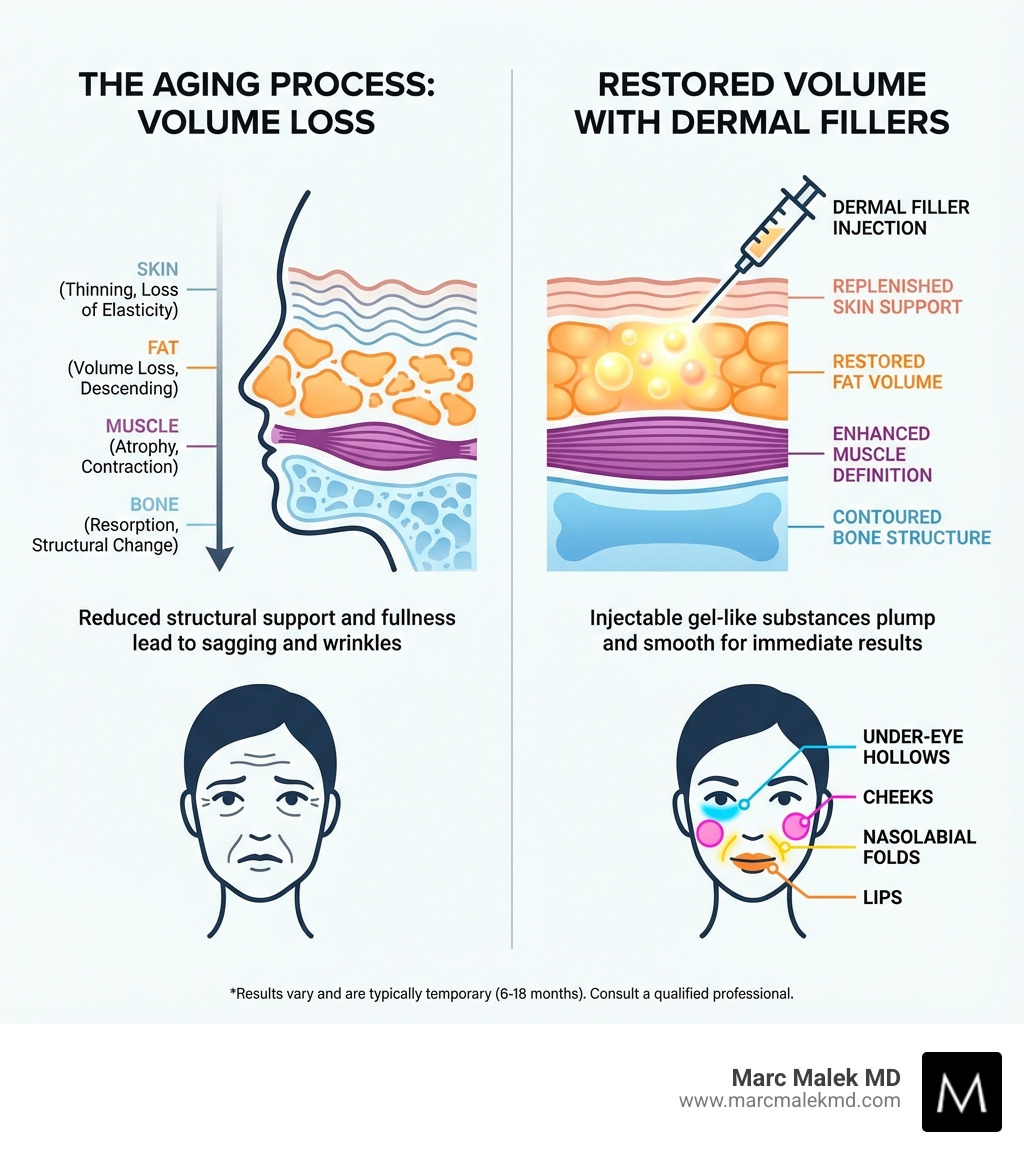
As we age, our faces naturally lose subcutaneous fat. Our facial muscles work closer to the skin surface, making smile lines and crow’s feet more apparent. The facial skin also stretches, adding to the loss of facial volume. Sun exposure, heredity, and lifestyle all contribute to these visible signs of aging.
Dermal fillers address these concerns by restoring what time has taken away. Unlike surgical procedures, these injectable treatments can be performed during a quick office visit, often taking less than half an hour. The results are visible immediately, though some swelling may temporarily obscure the final outcome.
Whether you’re looking to smooth deep wrinkles, plump your lips, or restore youthful fullness to your cheeks, dermal fillers offer a customizable solution. The key to success lies in understanding how they work, choosing the right type for your needs, and working with a qualified provider who understands facial anatomy and aesthetics.
What Are Dermal Fillers and How Do They Work?
The journey of aging is a natural part of life, and with it come changes to our appearance, particularly on our faces. As we mature, our bodies undergo several changes that contribute to visible signs of aging. One of the primary culprits is the natural loss of subcutaneous fat, the cushioning layer just beneath our skin. This fat loss causes our facial muscles to work closer to the skin’s surface, making lines and wrinkles more pronounced.
Beyond fat loss, the very structure of our skin begins to change. The production of essential proteins like collagen and elastin, which provide volume, flexibility, and strength to healthy, young skin, starts to decline. This leads to reduced skin elasticity and firmness. Simultaneously, the amount of hyaluronic acid (HA), a key molecule responsible for keeping our skin hydrated and plump, also decreases. These combined factors result in facial skin stretching, volume loss, and the formation of creases and wrinkles. External elements like sun exposure, genetics, and lifestyle choices further accelerate these changes.
This is where dermal fillers step in. Essentially, dermal fillers are gel-like substances, often referred to as injectable implants, designed to replenish lost volume, smooth out lines, and improve facial contours. When expertly injected beneath the skin, these fillers act as a scaffold, lifting and supporting the skin. They literally fill in the spaces where volume has been lost, effectively diminishing facial lines, softening creases, and improving the appearance of scars. By restoring fullness and structure, dermal fillers can help turn back the clock, giving your face a more youthful and refreshed look without the need for surgery.
For a deeper dive into non-surgical options for facial rejuvenation, you can explore our insights on More info about Non-Surgical Facial Rejuvenation.
Types, Benefits, and Applications
The appeal of dermal fillers lies in their ability to deliver significant aesthetic improvements with remarkable convenience. Patients often appreciate the immediate results they see after treatment, which can be a real confidence booster! The minimal downtime associated with most filler procedures means you can often return to your daily activities almost immediately. Compared to surgical options, dermal fillers can also be a more cost-effective way to achieve a younger, more refreshed appearance. Plus, the treatment is highly customizable, allowing us to tailor the approach to your unique facial anatomy and aesthetic goals.
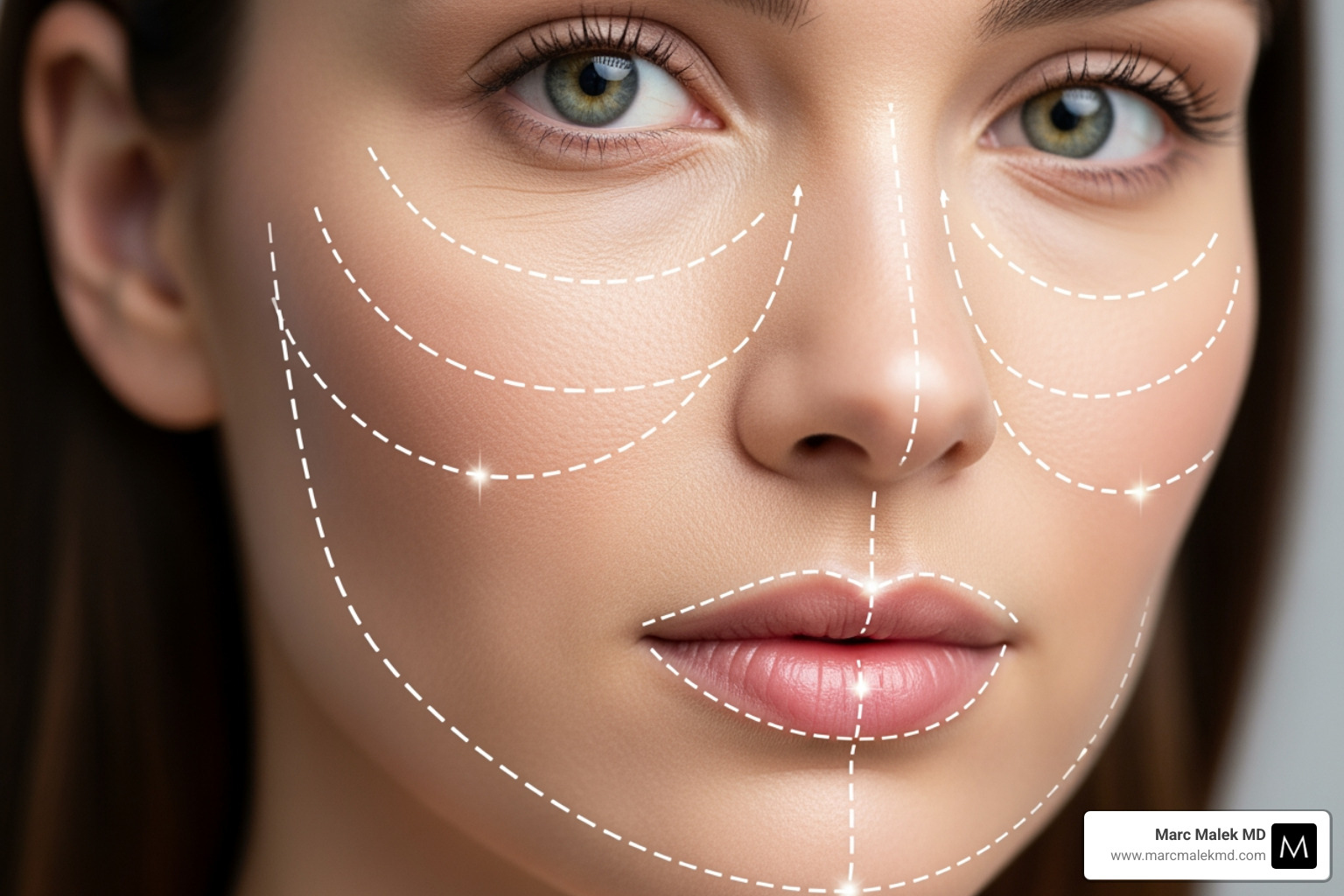
Dermal fillers are incredibly versatile and can be used to address a wide range of concerns across various facial areas. Some of the most common treatment zones include:
- Cheeks: To restore lost volume, lift sagging skin, and improve contours.
- Lips: To plump thin lips, define the vermillion border, and diminish vertical lip lines.
- Nasolabial Folds: The lines extending from the sides of the nose to the corners of the mouth, often called “smile lines.”
- Marionette Lines: Lines that run downwards from the corners of the mouth, giving a downturned or sad appearance.
- Under-eye Hollows (Tear Troughs): To reduce the appearance of dark circles and a tired look.
- Chin: To smooth a chin crease, improve projection, or improve facial symmetry.
- Jawline: To create a more defined and sculpted jawline.
- Hands: To restore lost volume and reduce the appearance of veins and tendons, rejuvenating their appearance.
Common Types of Fillers
The world of dermal fillers offers a variety of options, each with unique properties and ideal applications. Understanding their compositions can help you make an informed decision with your provider.
- Hyaluronic Acid (HA) Fillers: These are by far the most popular type. Hyaluronic acid is a substance naturally found in our skin, playing a crucial role in hydration and volume. HA fillers are gel-like, biodegradable, and temporary, typically lasting 6 to 18 months. A fantastic benefit is that HA fillers can be dissolved with an enzyme if you’re not satisfied with the results or in case of complications. Popular brands you might recognize include Juvederm, Restylane, and Revance RHA, each with different textures and densities suited for various areas like lips, cheeks, and fine lines.
- Calcium Hydroxylapatite (CaHA) Fillers: Found primarily in bones, CaHA is a heavier, thicker filler that also stimulates your body’s natural collagen production over time. Results typically last around a year, and sometimes up to three years for deeper wrinkles. Radiesse is a well-known example of a CaHA filler.
- Poly-L-lactic Acid (PLLA) Fillers: This is a biocompatible, biodegradable synthetic substance that works as a collagen stimulator. Instead of simply filling, PLLA helps your body gradually create its own collagen, leading to subtle and natural-looking results that can last two years or more. Sculptra is a common PLLA filler, often used for broader areas of volume loss.
- Polymethylmethacrylate (PMMA) Fillers: PMMA fillers contain microspheres that remain beneath the skin indefinitely, providing lasting volume and firmness. Bellafill is an example of a PMMA filler, approved for specific uses like nasolabial folds and acne scars. These are considered permanent and are generally not recommended for first-time filler patients due to their non-reversible nature.
- Autologous Fat Injections: Also known as facial fat grafting, this method uses your body’s own fat, harvested via liposuction from another area, purified, and then injected into the face. Since it’s your own tissue, allergic reactions are not a concern. The results are meant to last indefinitely, though some of the transferred fat may not survive. This is a more involved procedure, often considered surgical.
For more detailed information on the different options for smoothing wrinkles, please refer to our educational resource: Facial fillers for wrinkles – Educational Resource.
What Dermal Fillers Can Achieve
The possibilities with dermal fillers are truly remarkable, offering a wide array of improvements that contribute to a more youthful and harmonious facial appearance. We can use them to:
- Plump thin lips: Creating fuller, more defined lips.
- Improve shallow contours: Enhancing cheeks, temples, and jawline for better facial balance.
- Soften facial creases and wrinkles: Targeting lines around the nose and mouth (nasolabial folds, marionette lines).
- Diminish vertical lip lines: Often referred to as “smoker’s lines.”
- Improve the appearance of recessed scars: Such as those left by acne.
- Restore volume to cheeks and temples: Addressing the gaunt or hollowed look that can come with aging or certain medical treatments.
- Improve facial symmetry: Creating a more balanced and aesthetically pleasing facial structure.
- Decrease or remove the shadow of the lower lids: Reducing the appearance of under-eye hollows.
- Smooth a chin crease: Refining the chin area.
These applications demonstrate the versatility of dermal fillers in helping you achieve your aesthetic goals. To learn more about how these treatments can be custom for you, visit our page on More info about Dermal Fillers and Injections.
The Dermal Filler Procedure: From Consultation to Recovery
Starting on a dermal filler journey is an exciting step toward facial rejuvenation. Our goal is to ensure you feel comfortable, informed, and confident every step of the way. Here’s what you can typically expect, from your initial consultation to your recovery.
The Initial Consultation
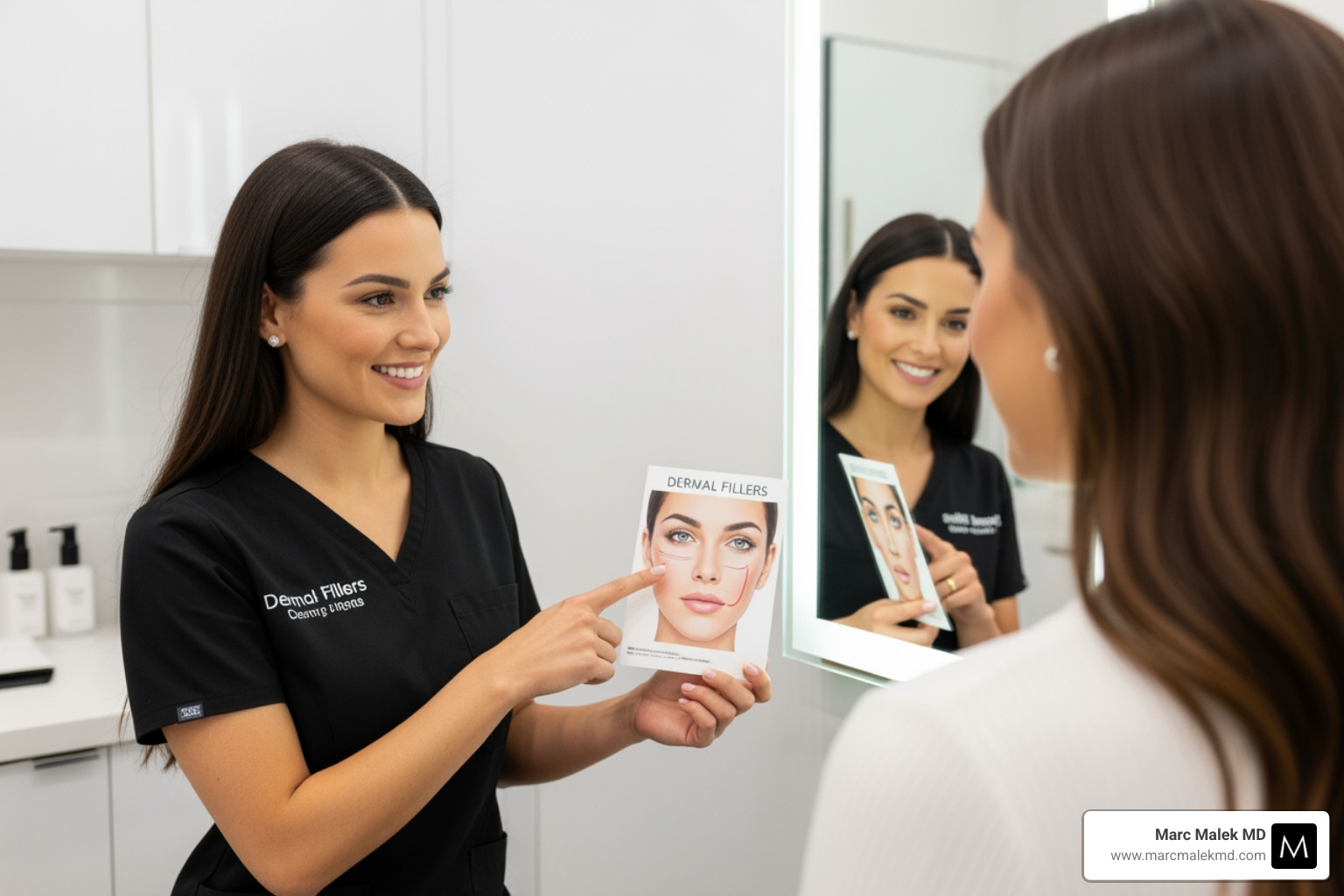
Your treatment journey begins with a thorough consultation. This is a crucial step where we discuss your aesthetic goals, concerns, and expectations. We’ll perform a detailed facial analysis, examining your unique facial anatomy and identifying areas where dermal fillers can provide the most natural and impactful results.
We will also conduct a comprehensive review of your medical history, including any allergies, current medications (especially blood thinners like NSAIDs), and pre-existing medical or skin conditions. It’s vital to be completely candid during this discussion, as your health history helps us select the safest and most effective filler type for you.
Based on this assessment, we’ll recommend the most suitable dermal fillers and outline a personalized treatment plan. We’ll explain the procedure in detail, including the expected outcomes, potential risks, and any necessary pre-treatment preparation. Our aim is to ensure you have a clear understanding of the process and hold realistic expectations for your results.
During and After Your Treatment
On the day of your treatment, we’ll start by thoroughly cleansing the injection sites. To ensure your comfort, a topical anesthetic will be applied to numb the area. Many modern dermal fillers also come pre-mixed with lidocaine, an anesthetic, further minimizing discomfort during the injections.
Using a very fine needle, we will carefully inject precise amounts of the chosen dermal filler into strategic areas beneath your skin. We’ll inject, gently massage the area, and evaluate the results, making adjustments as needed to achieve a smooth and natural-looking improvement. The entire process is usually quite quick, often taking anywhere from a few minutes to less than an hour, depending on the number of areas being treated.
Following your treatment, we’ll provide you with specific post-treatment care instructions. It’s common to experience some mild swelling, redness, bruising, or tenderness at the injection sites. Applying an ice pack can help alleviate these temporary side effects. We typically recommend avoiding strenuous activities or rigorous exercise for a day or two after your injections, and it’s wise to avoid heavy salt or alcohol intake for the first 2-3 days to help reduce swelling. It’s also important not to massage the filler once it’s in place.
Most people find they can return to their normal daily activities immediately after the procedure. While mild bruising and swelling may persist for a few days, these usually resolve quickly, revealing your refreshed and refreshd appearance.
Safety First: Risks and FDA Guidelines for Dermal Fillers
Patient safety is our utmost priority. While dermal fillers are generally considered safe when administered by a qualified professional, it’s crucial to understand the potential risks and adhere to strict safety guidelines. Minimizing these risks starts with choosing an experienced and skilled injector who possesses a deep understanding of facial anatomy and aesthetic principles.
Potential Risks and Side Effects of Dermal Fillers
Like any medical procedure, dermal filler injections carry potential risks and side effects, though most are temporary and mild.
Common side effects that typically resolve within a few days to a week include:
- Bruising
- Swelling
- Redness
- Pain
- Tenderness
- Itching
- Rash
Less common risks can include:
- Inflammation
- Infection at the injection site
- Lumps or nodules, which may require treatment
- Asymmetry, where the treated areas appear uneven
- Allergic reactions, though rare with HA fillers
Serious complications, while very rare, are important to be aware of and include:
- Vascular Occlusion: This is the most serious risk, occurring when dermal filler is accidentally injected into a blood vessel, blocking blood flow. This can lead to tissue death (necrosis) in the affected area, and in extremely rare cases, vision changes, blindness, or even stroke. Areas around the nose are particularly risky due to communicating blood vessels.
- Severe allergic reactions (anaphylactic shock): Extremely rare but possible.
For comprehensive information on the risks associated with dermal fillers, we encourage you to consult the official FDA resource: Dermal Fillers (Soft Tissue Fillers) – FDA Resource.
FDA Recommendations and Warnings
The U.S. Food and Drug Administration (FDA) plays a critical role in ensuring the safety and effectiveness of dermal fillers. They classify dermal fillers as medical device implants and have specific recommendations and warnings for both patients and providers:
- FDA-Approved Fillers Only: Always ensure that the dermal fillers being used are FDA-approved, properly labeled, and come in sealed vials or pre-filled syringes. These are prescription-only devices, meaning they should only be administered by licensed healthcare professionals.
- Dangers of DIY Injections: The FDA explicitly warns against buying or using dermal fillers sold directly to the public online or in non-medical settings. These products may be fake, contaminated, or unapproved, posing significant health risks. Never attempt to inject yourself with dermal fillers.
- Unapproved Needle-Free Devices: Devices that claim to inject dermal fillers without a needle (e.g., “hyaluron pens”) are not approved by the FDA. These devices use high pressure, lack control over filler placement, and can lead to serious injuries.
- Injectable Silicone Warning: The FDA has not approved injectable silicone for any aesthetic procedures, including body contouring, breast, or buttock augmentation. Using silicone can lead to severe, permanent complications.
- Seeking Immediate Medical Attention: If you experience any unusual pain, vision changes, a white, gray, or blue appearance of skin near the injection site, or any signs of a stroke (sudden difficulty speaking, numbness or weakness in your face, arms, or legs, difficulty walking, visual changes, facial drooping) during or shortly after your procedure, seek immediate medical attention.
- Reporting Adverse Events: The FDA encourages patients and healthcare providers to report any problems or injuries with FDA-regulated products to MedWatch, their safety information and adverse event reporting program.
Your safety is paramount. Always choose a qualified and experienced provider who uses FDA-approved products and adheres to the highest medical standards.
Your Treatment Journey: Candidacy, Longevity, and Choosing a Provider
Your journey to rejuvenation with dermal fillers is highly personal. Our approach focuses on delivering natural-looking results that complement your unique features, promoting not just aesthetic improvement but also overall well-being. Achieving long-term success and maintaining a healthy lifestyle are key components of this journey.
Are You a Good Candidate for Dermal Fillers?
While dermal fillers offer fantastic results for many, they are not suitable for everyone. Generally, ideal candidates for dermal filler treatments are:
- In good overall physical health.
- Non-smokers, as smoking can impair healing and affect filler longevity.
- Have realistic expectations about the outcomes of the treatment.
- Are beginning to show early signs of aging, such as fine lines, wrinkles, or volume loss.
However, there are certain contraindications where dermal fillers should be avoided or approached with extreme caution:
- Active skin infections, inflammation, or rashes in the treatment area.
- Known bleeding disorders.
- A history of severe allergies or anaphylaxis, especially to components of the filler or local anesthetics.
- Safety during pregnancy or breastfeeding is not established, so it’s generally advised to avoid fillers during these times.
- Individuals under 22 years of age are not typically approved for most dermal filler uses.
During your consultation, we’ll thoroughly assess your suitability for dermal fillers to ensure both your safety and the best possible results.
How Long Do Fillers Last?
The duration of dermal filler results is one of the most common questions we receive, and it largely depends on several factors.
| Filler Type | Average Longevity |
|---|---|
| Hyaluronic Acid (HA) | 6 to 18 months (e.g., Juvederm, Restylane, Revance RHA) |
| Calcium Hydroxylapatite (CaHA) | Up to 1 year for contouring, up to 3 years for wrinkles (e.g., Radiesse) |
| Poly-L-lactic Acid (PLLA) | 2 years or more (e.g., Sculptra) |
| Polymethylmethacrylate (PMMA) | Indefinitely (e.g., Bellafill) |
| Autologous Fat Injections | Indefinitely (some fat may not survive) |
Several factors influence how long your results will last:
- Filler Type: As seen in the table above, different materials have different degradation rates.
- Treatment Area: Fillers in highly mobile areas like the lips tend to break down faster than those in less active areas like the cheeks.
- Patient Metabolism: Each individual’s body metabolizes the filler at a different rate.
- Activity Level: High activity levels or strenuous exercise can potentially shorten the lifespan of some fillers.
Since most dermal fillers are temporary, maintenance treatments are required to sustain your desired results. We’ll work with you to establish a follow-up schedule that fits your needs and helps you enjoy continuous rejuvenation.
How to Choose a Qualified Provider
Choosing the right provider for your dermal filler injections is perhaps the most critical decision you’ll make. The skill, experience, and artistic eye of your injector directly impact the safety and quality of your results.
Here’s what to look for when selecting a qualified provider in Scottsdale, Phoenix, or anywhere in Arizona:
- Credentials: Prioritize board-certified plastic surgeons or dermatologists. These specialists have undergone extensive medical training, including in-depth knowledge of facial anatomy and aesthetic procedures. If an RN or PA performs injections, ensure they are working under the close supervision of a qualified physician, preferably a board-certified cosmetic surgeon.
- Experience and Training: Look for a provider with substantial experience specifically in performing dermal filler injections. They should have a deep understanding of facial anatomy to avoid critical blood vessels and nerves. An experienced injector possesses a well-developed aesthetic eye, capable of delivering natural-looking improvements rather than an overfilled appearance.
- Reviewing Before-and-After Photos: Ask to see a portfolio of their work. This allows you to evaluate their aesthetic style and ensure it aligns with your desired outcomes.
- Focus on Safety: A reputable provider will always prioritize your safety, using only FDA-approved products, discussing all risks, and having a plan in place for managing any potential complications.
A medical procedure like dermal filler injections should be treated with the same seriousness as any other healthcare decision. For assistance in finding a qualified professional, you can use resources like Find a Plastic Surgeon.
Comparing Your Options: Fillers vs. Other Cosmetic Treatments
Dermal fillers are a powerful tool in facial rejuvenation, but they are just one piece of the puzzle. Often, the most comprehensive and satisfying results come from a combination of treatments custom to your specific needs. Understanding how dermal fillers compare to other cosmetic procedures can help us craft a holistic rejuvenation plan for you.
Fillers vs. Neurotoxins
It’s common to confuse dermal fillers with neurotoxins like Botox, but they work in fundamentally different ways to address different types of wrinkles:
- Dermal Fillers: These are gel-like substances that add volume and literally “fill in” static wrinkles and lines. Static wrinkles are visible even when your face is at rest, often caused by volume loss and skin laxity. Dermal fillers also plump lips, improve contours, and restore fullness.
- Neurotoxins (e.g., Botox): These are injectable drugs that work by temporarily relaxing the muscles responsible for dynamic wrinkles. Dynamic wrinkles appear when you make facial expressions (e.g., frown lines, crow’s feet). Neurotoxins prevent these muscles from contracting, smoothing the overlying skin.
In many cases, combining both dermal fillers and neurotoxins provides a more comprehensive rejuvenation, addressing both static and dynamic wrinkles for a smoother, more youthful appearance. To learn more about their differences, read our article on What is the Difference Between Botox and Dermal Fillers?.
Fillers vs. Surgical Procedures
When considering facial rejuvenation, the choice between non-surgical options like dermal fillers and surgical procedures (like a facelift) often arises.
- Dermal Fillers: These are ideal for addressing volume loss, softening lines, and enhancing contours. They offer immediate results with minimal downtime and are generally less expensive. However, they are temporary and cannot achieve the dramatic lifting and skin tightening that surgery can provide. Dermal fillers can, however, be an excellent way to delay the need for more invasive surgical interventions.
- Surgical Procedures (e.g., Facelift): Surgery is typically recommended for significant skin laxity, severe sagging, and deeper structural changes that fillers cannot adequately correct. A facelift, for example, can remove excess skin, tighten underlying muscles, and reposition tissues for a more profound and long-lasting result.
We often discuss both options during consultations, helping you understand which approach best suits your concerns and desired longevity. For a detailed comparison, explore Facelift Options: Surgical vs. Non-Surgical.
Complementary Skin Rejuvenation Treatments
For a truly holistic approach to facial rejuvenation, dermal fillers can be wonderfully complemented by other skin treatments that address different aspects of skin health and appearance. These procedures can improve skin texture, tone, and overall radiance, further enhancing the results of your filler treatments.
Some popular complementary treatments include:
- More info about Laser Skin Resurfacing
- More info about Microneedling with PRP
- More info about Chemical Peels
These treatments, among others like HydraFacial with Dermaplaning, V-Shape Ultra, JuvaShape, and Photofacial, can work synergistically with dermal fillers to achieve comprehensive and stunning results.
Conclusion
Dermal fillers represent a remarkable advancement in non-surgical facial rejuvenation, offering an effective, safe, and customizable solution for combating the visible signs of aging. From restoring lost volume and smoothing wrinkles to enhancing facial contours and symmetry, these versatile injectables provide immediate, natural-looking results with minimal downtime.
However, the success and safety of your dermal filler treatment hinge critically on the expertise of your provider. Choosing a board-certified plastic surgeon or dermatologist with extensive experience, a deep understanding of facial anatomy, and a keen artistic eye is paramount. Here at Dr. Marc Malek MD, we pride ourselves on a personal and artistic approach, focusing on patient comfort, convenience, and delivering fantastic, long-lasting, and natural-looking results for our patients in Scottsdale, Phoenix, and across Arizona.
If you’re considering dermal fillers to refresh your appearance and restore your youthful glow, we invite you to take the first step.
Schedule your consultation for Dermal Fillers and Injections with us today to discuss how we can help you achieve your aesthetic goals.