

What Is a CO2 Fractional Laser and Why Does It Matter for Your Skin?
CO2 fractional laser is one of the most powerful skin resurfacing technologies available today — and for good reason.
Quick answer: A CO2 fractional laser uses targeted beams of carbon dioxide laser energy to remove damaged skin in microscopic columns, while leaving surrounding tissue intact. This triggers your skin’s natural healing process, building new collagen and replacing old, damaged skin with smoother, firmer tissue.
Here’s what it treats at a glance:
- Fine lines and wrinkles (including around the eyes and mouth)
- Acne scars and surgical scars
- Sun damage, age spots, and uneven skin tone
- Enlarged pores and rough skin texture
- Skin laxity on the face, neck, chest, and hands
- Sebaceous hyperplasia and certain precancerous lesions
If diet, exercise, or basic skincare haven’t moved the needle on concerns like deep scarring or significant sun damage, fractional CO2 laser targets the root of the problem — at the cellular level — in a way that topical products simply can’t.
What makes fractional technology different from older laser methods is how it delivers energy. Instead of resurfacing the entire skin surface at once, it treats only a fraction of the skin at a time, leaving small bridges of healthy tissue untouched. Those healthy bridges speed up healing dramatically — often bringing full recovery within 7 to 10 days.
The results? Significant skin improvements that can last several years with proper care.
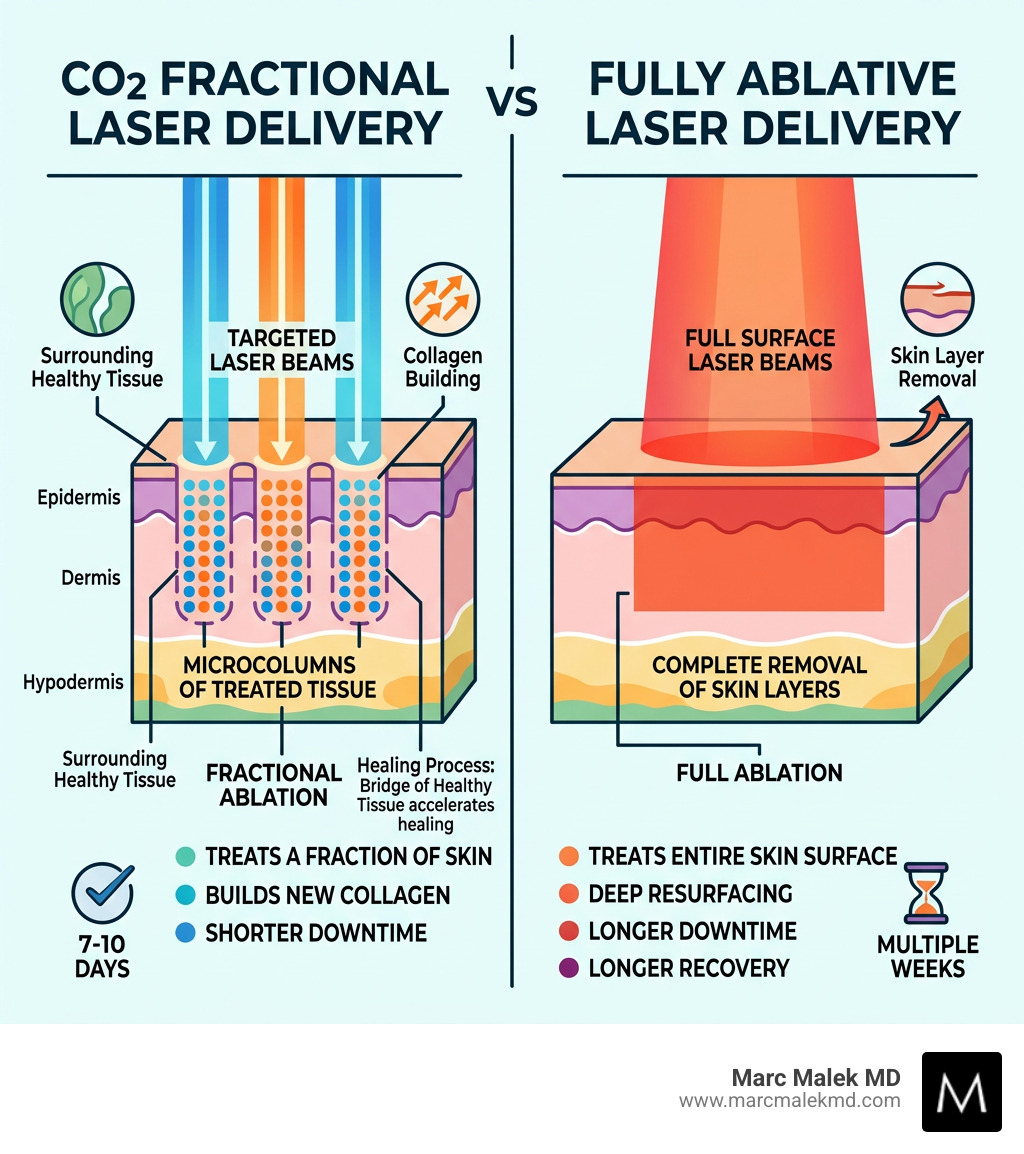
C02 fractional laser word guide:
Understanding the Science of the c02 Fractional Laser
To understand why the c02 fractional laser is so effective, we have to look at the physics of light and how it interacts with our biology. The CO2 laser operates at a specific wavelength of 10,600nm. In dermatology, this is a “magic number” because it is highly absorbed by water. Since our skin cells are roughly 70% water, the laser energy is absorbed almost instantly upon contact.
This process is rooted in the principle of selective photothermolysis, a concept developed by researchers like Anderson and Parrish. While many lasers target pigment (melanin) or blood (hemoglobin), the CO2 laser is “tissue-selective” because it targets the water within the tissue itself.
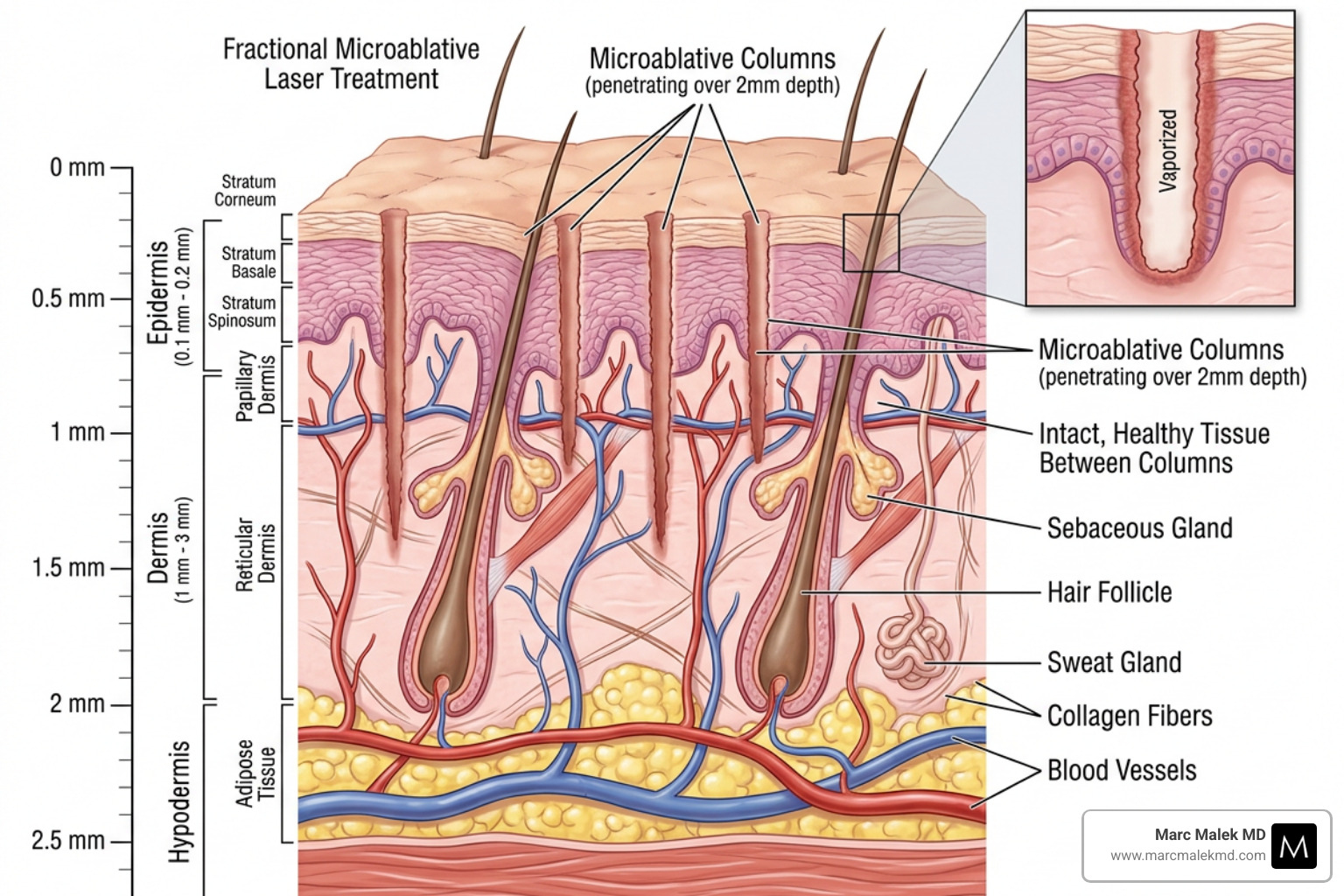
When the laser hits the skin, it creates what we call microablative columns (MACs). Imagine a lawn aerator that pulls out tiny plugs of soil to let the grass breathe; the c02 fractional laser does something similar to your skin. It vaporizes microscopic “wells” of tissue that can reach depths of over 2mm.
This triggers a two-phase reaction:
- Epidermal Vaporization: The outermost layer of damaged skin is evaporated, physically removing sun spots and rough texture.
- Dermal Heating: The heat from the laser shrinks existing collagen fibers and sends a “wake-up call” to fibroblasts (the cells that make collagen).
By leaving the skin between these columns untouched, the body can bridge the gaps quickly. This allows for re-epithelialization—the growth of new skin—to occur in as little as 2 to 3 days, significantly reducing the “raw” phase associated with older, non-fractional lasers.
Key Benefits and Conditions Treated
One of the reasons we recommend the c02 fractional laser at our Scottsdale and Phoenix locations is its sheer versatility. It isn’t just a “wrinkle treatment”; it’s a comprehensive skin-remodeling tool.
Fine Lines and Deep Wrinkles
As we age, our collagen supply dwindles, leading to static wrinkles (lines that stay even when your face is at rest). The CO2 laser is particularly effective for “crow’s feet” around the eyes and forehead lines. By stimulating new Type 3 collagen synthesis—a process that continues for up to 6 months post-treatment—the skin becomes visibly thicker and more resilient.
Sun Damage and Dyschromia
Arizona residents are no strangers to the sun. Over time, UV exposure leads to liver spots, sun spots, and actinic keratoses (precancerous scaly patches). The laser vaporizes these damaged cells, allowing new, healthy skin to take their place.
Sebaceous Hyperplasia
These are those small, yellowish, waxy bumps that appear on the face when oil glands become trapped. While some research suggests Erbium lasers are an alternative, the CO2 laser remains a powerful tool for vaporizing these bumps and preventing their recurrence.
Treating Acne Scars with c02 Fractional Laser
Acne scars are notoriously difficult to treat because they involve both surface texture issues and deep tethering of the skin. The c02 fractional laser is widely considered the gold standard for boxcar and rolling scars.
The laser works by breaking up the fibrous bands of scar tissue and replacing them with organized, smooth collagen. However, for “ice-pick” scars, scientific reviews suggest combination therapy—including microneedling, subcision, or TCA peels—may be more effective. At Marc Malek MD, we often combine technologies to erase scars based on the specific type of scarring present.
Addressing Eyelid Laxity and Perioral Lines
For those not quite ready for a surgical blepharoplasty, the c02 fractional laser offers a “non-surgical eyelid lift.” It is incredibly effective at tightening the thin, crepey skin of the lower eyelids.
Similarly, it is the definitive treatment for perioral lines—often called “smoker’s lines” or “barcode lines.” Unlike fillers, which merely mask the lines, the laser removes the abnormal, inelastic tissue and forces the skin to rebuild itself from the inside out.
Comparing c02 Fractional Laser to Other Rejuvenation Methods
Choosing the right treatment often comes down to balancing results with downtime. Here is how the c02 fractional laser stacks up against other popular options:
| Feature | CO2 Fractional Laser | Non-Ablative (Fraxel) | Microneedling |
|---|---|---|---|
| Mechanism | Ablative (removes skin) | Non-Ablative (heats skin) | Mechanical (needles) |
| Depth | Deep (up to 2mm+) | Moderate | Superficial to Moderate |
| Downtime | 7–10 days | 3–5 days | 1–2 days |
| Sessions | 1–2 for major results | 3–5 sessions | 3–6 sessions |
| Best For | Deep wrinkles, severe scars | Pigmentation, mild lines | Texture, mild scarring |
c02 Fractional Laser vs. Chemical Peels
While deep chemical peels can produce dramatic results, they are often less “controllable” than a laser. A laser allows us to dial in the exact depth and intensity for every square millimeter of the face. This precision leads to more predictable recovery and the ability to customize the treatment—offering “light” resurfacing for younger patients and “deep” ablation for advanced aging.
Ideal Candidates and Contraindications
The c02 fractional laser is most predictable on lighter skin tones (Fitzpatrick types I-III). Because the laser generates significant heat, individuals with very dark skin tones have a higher risk of post-inflammatory hyperpigmentation (PIH).
You should generally avoid this treatment if you:
- Have a history of keloid formation or excessive scarring.
- Are currently pregnant or breastfeeding.
- Have used isotretinoin (Accutane) within the last 6 to 12 months.
- Have an active infection or cold sore in the treatment area.
The Treatment Experience and Recovery Timeline
We prioritize your comfort throughout the entire process. Because the c02 fractional laser is a powerful tool, we use a multi-modal approach to pain management.
- Preparation: We apply a high-strength topical numbing gel about an hour before the procedure. In some cases, we may use local nerve blocks (similar to what you receive at the dentist) to ensure you feel minimal discomfort.
- The Procedure: The actual laser application takes between 30 to 60 minutes for a full face. You may feel a sensation of heat or “snapping,” but it is generally well-tolerated.
- Immediate Aftermath: Right after the treatment, your skin will feel like it has a severe sunburn. This heat sensation usually lasts for about 2 to 4 hours.
The 7-Day Healing Progression
- Days 1–2: Redness and swelling are at their peak. The skin may “weep” slightly, which is a normal part of the healing process.
- Days 3–4: The skin begins to feel tight and may turn a bronzed or brownish color.
- Days 5–7: Peeling begins. It is crucial not to pick at the skin; let it fall off naturally to reveal the fresh, pink tissue underneath.
- Week 2 and Beyond: Most people return to work and normal activities after 7 to 10 days. A residual pinkness may linger for 3 to 6 weeks (or longer for very deep treatments), but this can usually be covered with mineral makeup.
You can view real-world transformations in our CO2 Laser Resurfacing Gallery.
Essential Aftercare and Safety Protocols
Proper aftercare is 50% of the result. If you don’t protect the new skin, you risk infection or poor healing.
- Vinegar Soaks: We often recommend gentle soaks using a diluted white vinegar solution (1 tablespoon per cup of water). This helps keep the skin clean and maintains a slightly acidic pH that wards off bacteria.
- Ointment is Key: Keeping the skin occluded (covered) with petroleum jelly or Aquaphor is vital for the first week. This prevents crusting and allows the new skin cells to migrate across the surface easily.
- Prophylaxis: If you have a history of cold sores, we will prescribe an antiviral medication to start two days before your treatment. This is essential because the laser heat can trigger a viral outbreak.
- Sun Avoidance: This is non-negotiable. You must stay out of the sun entirely for the first two weeks. After that, a broad-spectrum mineral sunscreen (zinc oxide or titanium dioxide) is your best friend.
Safety is also a priority for our staff. When treating certain conditions like warts, research on viral particles in laser plumes shows that a dedicated smoke evacuator is necessary to keep the environment sterile and safe.
Frequently Asked Questions about c02 Fractional Laser
How many sessions are typically required for results?
Most patients see a dramatic improvement after just one session. However, for deep acne scarring or very deep wrinkles, a series of 2 to 3 sessions spaced several months apart may be recommended to reach your ultimate goal.
Is the procedure painful during and after?
With our numbing protocols and nerve blocks, most patients rate the pain during the procedure as a 3 or 4 out of 10. Afterward, the “sunburn” sensation is the most common complaint, but this fades within a few hours. We provide detailed instructions on using ice packs and over-the-counter relievers to keep you comfortable.
How long do the skin tightening results last?
Because the laser creates new collagen, the results are long-lasting. With proper sun protection and a medical-grade skincare routine, the benefits of a c02 fractional laser treatment can last for several years. Of course, the natural aging process continues, so many patients opt for “maintenance” treatments every few years.
Conclusion
At Marc Malek MD, we believe that skin rejuvenation is both a science and an art. Whether you are looking to erase years of sun damage, smooth out acne scars, or simply reclaim a youthful glow, the c02 fractional laser is a transformative option.
Dr. Malek and our team in Scottsdale and Phoenix take a personal, artistic approach to every patient. We focus on your comfort and convenience, ensuring that your results are not only fantastic but proportionally balanced with your natural features.
Ready to see what the gold standard of skin resurfacing can do for you? Schedule a consultation for laser skin resurfacing with us today and start your journey to better skin.