
Understanding the Real Impact of Breast Implant Illness

BII symptoms are a collection of health concerns reported by individuals with breast implants, ranging from chronic fatigue and joint pain to brain fog and anxiety. While not yet recognized as an official medical diagnosis, these symptoms affect thousands of women worldwide and can significantly impact quality of life.
The most commonly reported BII symptoms include:
- Fatigue (41.1% of cases)
- Joint and muscle pain (30.9%)
- Anxiety (22.9%)
- Cognitive difficulties or “brain fog” (22.5%)
- Autoimmune disease symptoms (22.6%)
- Hair loss (19.6%)
- Depression (16.9%)
- Skin rashes (16.7%)
- Weight changes (16.5%)
According to the FDA’s review of over 10,000 Medical Device Reports, symptoms can appear anywhere from immediately after surgery to more than 40 years later, with an average onset of 5.6 years after implantation.
Many women experience real, debilitating symptoms that their doctors struggle to explain. One study found that of 785 patients who had their implants removed, 687 reported improvement in their symptoms afterward. Yet because routine medical tests often come back normal, these patients frequently feel dismissed by healthcare providers.
The challenge is that BII presents differently in each person. Some women develop symptoms shortly after augmentation, while others feel fine for years before noticing changes. The symptoms can mimic other conditions like fibromyalgia, chronic fatigue syndrome, or autoimmune disorders, making diagnosis complicated.
This article breaks down everything you need to know about BII symptoms, from the most common complaints to the latest research on causes and treatments. Whether you’re considering breast implants, already have them, or are experiencing unexplained health issues, understanding these symptoms is the first step toward making informed decisions about your health.
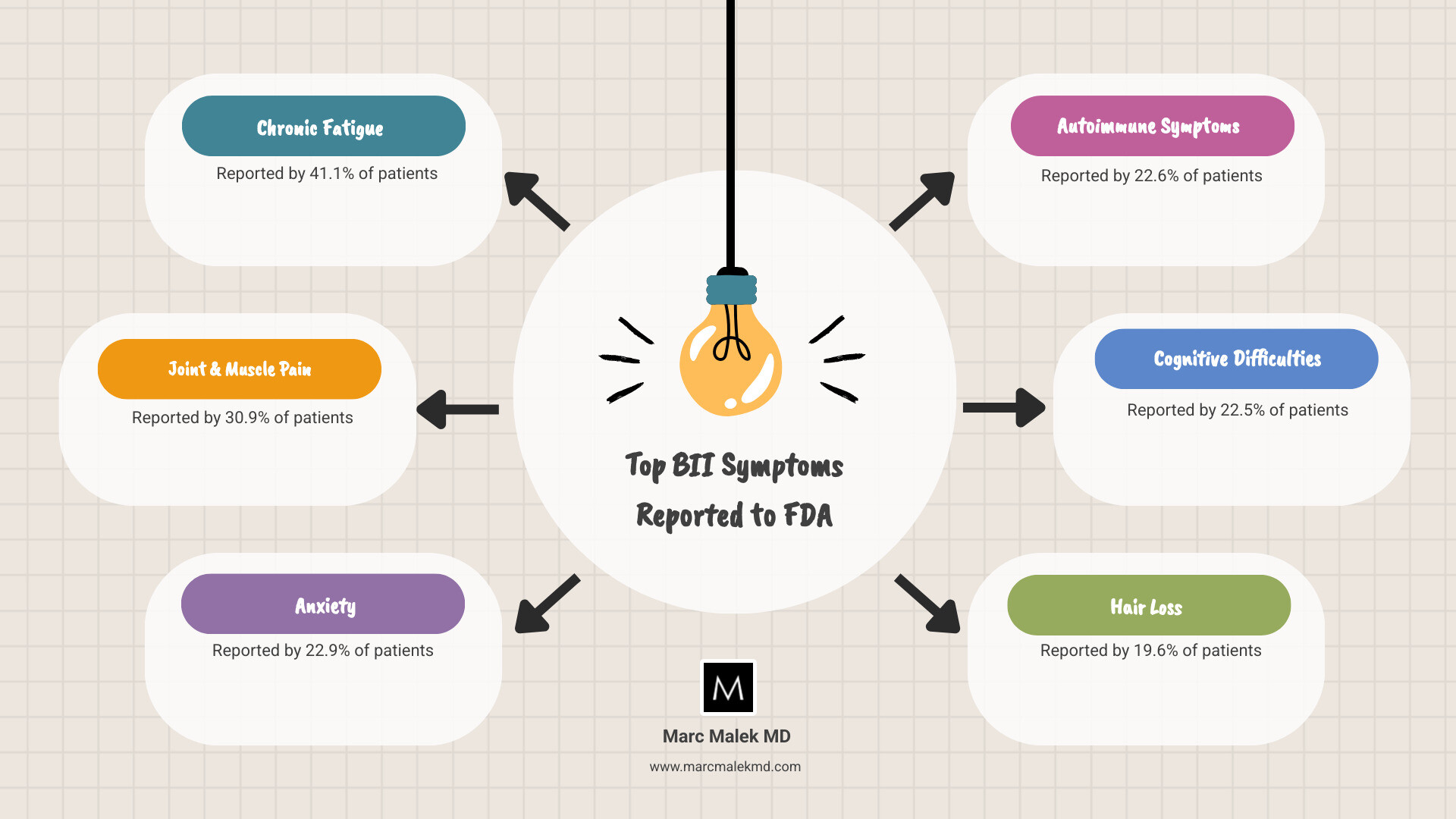
Bii symptoms terms at a glance:
What is Breast Implant Illness (BII)?
Breast Implant Illness (BII) is a term used by patients and some clinicians to describe a wide array of systemic symptoms that individuals report experiencing after breast augmentation or reconstruction with implants. BII is not currently recognized as an official medical diagnosis. Instead, it’s considered a “cluster of symptoms that don’t fit into any other classic disease diagnosis,” as Diana Zuckerman, PhD, president of the National Center for Health Research, explains. She believes that it will eventually be recognized as a medical condition.
The symptoms attributed to BII can be extensive and varied, affecting different body systems. These health concerns can arise regardless of the type of breast implant—whether saline or silicone, textured or smooth. This means that the material or surface of the implant doesn’t necessarily protect against the potential development of bii symptoms.
One of the perplexing aspects of BII is the timeline of symptom onset. While some individuals may begin experiencing health issues immediately following their implant surgery, others might not notice any changes until years, or even decades, later. The FDA’s review of Medical Device Reports (MDRs) found that the average time to symptom onset was 5.6 years, but the range spanned from 0 to 42.5 years after implantation. This variability makes it challenging to draw immediate cause-and-effect conclusions, but it highlights the importance of long-term health monitoring for anyone with breast implants.
The Current Scientific Understanding of BII
Despite the growing awareness and the increasing number of patients reporting bii symptoms, the precise causes and mechanisms behind Breast Implant Illness are still not fully understood. However, researchers and medical professionals are actively exploring several theories.
One prominent theory suggests that BII may stem from an autoimmune or inflammatory reaction within the body. In this scenario, the breast implant, regardless of its material, is perceived by the immune system as a foreign object, triggering a chronic inflammatory response. Some experts believe that silicone, in particular, may act as a chronic stimulator of the immune system. Some experts note that while a high percentage of people are fine with breast implants, there is a real minority that is susceptible to BII, suggesting that in these individuals, implants might trigger an autoimmune or inflammatory response.
Another promising area of research focuses on the potential role of bacterial biofilm. This is a sticky, protective layer of bacteria that can form on the surface of any implant, including breast implants. Scientists are investigating whether this biofilm could contribute to the development of bii symptoms by constantly stimulating the immune system or releasing toxins.
The complexity of studying BII lies in its subjective nature and the lack of specific diagnostic criteria or biomarkers. Michael DeLong, MD, a researcher at UCLA, acknowledges these challenges, stating, “It’s hard to study a link between breast implants and BII symptoms, but we’re trying to learn more.” Research is ongoing to establish clearer connections, understand the underlying biological mechanisms, and develop more definitive diagnostic and treatment protocols. For now, the medical community continues to gather data and conduct studies to shed more light on this evolving health concern.
A Comprehensive Guide to BII Symptoms
When we talk about bii symptoms, we’re referring to a broad spectrum of health complaints that can significantly affect a person’s daily life. These symptoms are not always immediately apparent and can develop over time, making them difficult to connect directly to breast implants without careful observation. The FDA’s review of Medical Device Reports (MDRs) provides a crucial insight into the most frequently reported issues. This extensive dataset, encompassing over 10,000 reports, revealed an average time of 5.6 years from implant placement to the onset of symptoms, underscoring the importance of long-term vigilance.
The reported issues are diverse, ranging from generalized discomfort to specific physical and cognitive impairments. This wide range contributes to the challenge of diagnosis, as many bii symptoms can mimic those of other common conditions. However, the consistency with which these symptoms are reported by individuals with breast implants, particularly those who experience improvement after implant removal, suggests a compelling link that warrants serious attention.
Common Systemic and Physical BII Symptoms
The physical manifestations of BII can be debilitating, often affecting multiple systems throughout the body. Here are some of the most frequently reported systemic and physical bii symptoms, alongside statistics from the FDA’s MDR analysis:
- Chronic fatigue (41.1%): This isn’t just feeling tired; it’s a persistent, overwhelming exhaustion that isn’t relieved by rest and significantly impairs daily activities.
- Joint and muscle pain (30.9%): Many individuals experience unexplained aches, stiffness, and weakness in their joints and muscles, sometimes resembling conditions like fibromyalgia.
- Hair loss (19.6%): Unexplained hair thinning or shedding can be a distressing symptom.
- Skin rashes (16.7%): Various skin issues, including unexplained rashes, dry skin, and changes in skin pigmentation, are commonly reported.
- Weight changes (16.5%): This can manifest as either unexplained weight gain or loss, often despite no changes in diet or exercise.
- Temperature intolerance: Feeling unusually sensitive to cold or heat.
- Dry eyes and mouth: Persistent dryness that can be uncomfortable and affect quality of life.
- Headaches: Chronic or recurrent headaches and migraines are frequently reported.
- Gastrointestinal issues: Digestive problems, including bloating, nausea, and changes in bowel habits, are also common.
- Night sweats: Unexplained episodes of heavy sweating during sleep.
- Tingling or numbness in arms and legs: Sensations that can indicate nerve involvement.
- Burning pain around chest wall or breasts: Localized pain that can be constant or intermittent.
- Shortness of breath or heart palpitations: Respiratory and cardiac symptoms, even in the absence of underlying heart or lung disease.
- New or persistent infections: Recurring sinus, yeast, or urinary tract infections.
- Foul body odor: An unusual or metallic taste in the mouth or persistent body odor.
Here’s a list of the top 10 most frequently reported systemic symptoms from the FDA’s Medical Device Reports:
- Fatigue (41.1%)
- Joint Issues (30.9%)
- Anxiety (22.9%)
- Autoimmune diseases (22.6%)
- Cognitive difficulties (‘Fog’) (22.5%)
- Hair Loss (19.6%)
- Illness (unspecified) (18.7%)
- Depression (16.9%)
- Rash (16.7%)
- Weight changes (loss, gain, other) (16.5%)
Cognitive and Emotional BII Symptoms
Beyond the physical, bii symptoms can profoundly affect mental and emotional well-being, often described as a significant shift from previous cognitive capabilities and emotional stability. These symptoms can be particularly frustrating as they are less tangible and harder to quantify, yet they are very real to those experiencing them.
- Brain fog (22.5%): This widely reported symptom includes difficulty concentrating, problems with word retrieval, memory loss, and a general feeling of mental cloudiness. It can make everyday tasks challenging and impact work and social interactions.
- Anxiety (22.9%): Many individuals with BII experience heightened anxiety, panic attacks, and a pervasive sense of unease.
- Depression (16.9%): Unexplained feelings of sadness, hopelessness, and a loss of interest in activities once enjoyed are common.
- Memory loss: Beyond general brain fog, some report significant issues with short-term and long-term memory.
- Difficulty concentrating: A struggle to focus on tasks or follow conversations.
- Sleep disturbance: Insomnia or other sleep disorders, leading to further fatigue and exacerbating other symptoms.
- Mood swings: Unpredictable and intense emotional fluctuations.
- Panic attacks: Sudden episodes of intense fear accompanied by physical symptoms like racing heart, shortness of breath, and dizziness.
- Emotional instability: A general feeling of being overwhelmed or unable to regulate emotions.
- Suicidal thoughts: In severe cases, individuals have reported experiencing suicidal thoughts, highlighting the profound impact BII can have on mental health.
These cognitive and emotional symptoms often intertwine with physical ones, creating a complex and debilitating picture for those affected by BII.
Potential Long-Term Effects
The chronic nature of bii symptoms can lead to significant long-term health implications if left unaddressed. While the direct causal link is still under scientific investigation, the persistent inflammation and immune system dysregulation hypothesized in BII can contribute to a range of chronic conditions.
One notable concern is the development or exacerbation of autoimmune diseases. Our data shows that 22.6% of MDRs reported autoimmune diseases. Conditions such as rheumatoid arthritis, lupus, Sjögren’s syndrome, Hashimoto’s thyroiditis, and multiple sclerosis have been mentioned in conjunction with BII. This suggests that the continuous immune response triggered by implants might predispose susceptible individuals to these conditions or worsen existing ones.
Other potential long-term effects include:
- Chronic inflammation: A persistent state of inflammation throughout the body can damage tissues and organs over time.
- Persistent pain: Unresolved joint and muscle pain can become chronic, leading to reduced mobility and quality of life.
- Long-term fatigue: Chronic fatigue can be debilitating, making it difficult to maintain employment, engage in social activities, or care for oneself.
- Hormonal imbalances: Reports suggest issues like estrogen/progesterone imbalance, diminishing hormones, or early menopause.
- Decline in vision or vision disturbances: Some patients report changes in their eyesight.
- Liver and kidney dysfunction: While less common, severe systemic issues could potentially impact organ function.
Given these potential long-term impacts, it is paramount for individuals with breast implants to monitor their health closely and seek medical attention for any unexplained or persistent bii symptoms. Early recognition and intervention can be crucial in managing these effects and improving overall well-being. For more information about breast implant safety, we encourage you to visit our dedicated page: More info about breast implant safety.
The Path to Diagnosis and Treatment
Navigating a diagnosis for Breast Implant Illness can be a challenging journey, largely because BII is not yet an official medical diagnosis with standardized criteria. This means there isn’t a single, definitive test that can confirm BII. Instead, diagnosis often becomes a process of exclusion, where healthcare providers carefully rule out other potential conditions that could be causing similar symptoms.
This diagnostic approach emphasizes the importance of a thorough medical history, where patients detail their symptoms, their onset, and their potential correlation with implant surgery. Patient advocacy plays a crucial role here, as individuals must articulate their experiences clearly and persistently to ensure their concerns are taken seriously. Many patients find that they’ve been dismissed by doctors who attribute their normal routine test results to other causes, or even psychological factors. This is why finding an experienced diagnostician who understands the complexities of BII is so important.
How is BII Diagnosed?
Diagnosing BII requires a comprehensive approach that considers the patient’s entire health picture. Since there’s no specific test for BII, medical professionals must act as “medical detectives,” ruling out other conditions that share similar symptoms. This process often involves a series of tests and consultations with specialists.
Here’s a comparison of bii symptoms with other conditions often considered in a differential diagnosis:
| BII Symptoms (Commonly Reported) | Fibromyalgia (General Symptoms) | Lyme Disease (General Symptoms) | Autoimmune Disorders (General Symptoms) |
|---|---|---|---|
| Chronic fatigue, unexplained exhaustion | Widespread chronic pain, fatigue | Fatigue, joint pain, neurological issues | Fatigue, joint pain, skin rashes |
| Joint and muscle pain, weakness | Tender points, sleep problems, brain fog | Bullseye rash (early), nerve pain | Dry eyes/mouth, inflammation, swelling |
| Brain fog, memory loss, concentration | Cognitive difficulties (“fibro fog”) | Cognitive difficulties, headaches | Organ-specific symptoms (e.g., thyroid) |
| Hair loss, dry skin, rashes | Headaches, irritable bowel syndrome | Headaches, facial palsy | Hair loss, photosensitivity |
| Anxiety, depression, mood swings | Anxiety, depression | Depression, anxiety | Depression, anxiety |
| Temperature intolerance, night sweats | Sensitivity to cold/heat, restless legs | Fever, chills, night sweats | Fever, inflammation |
| Gastrointestinal issues | Irritable bowel syndrome | Gastrointestinal upset | Digestive issues (e.g., Crohn’s) |
| Swollen lymph nodes | None specific | Swollen lymph nodes | Swollen glands, inflammation |
| Tingling/numbness in limbs | Numbness/tingling (paresthesia) | Numbness/tingling | Raynaud’s phenomenon, nerve issues |
| Shortness of breath, heart palpitations | None specific | Shortness of breath, heart block | None specific |
To differentiate BII from these and other conditions, doctors may order various tests:
- Blood tests for inflammation/autoimmunity: These can include tests like C-reactive protein (CRP), erythrocyte sedimentation rate (ESR), antinuclear antibodies (ANA), and specific autoimmune panels to check for conditions like lupus, rheumatoid arthritis, or other connective tissue diseases.
- Thyroid function tests: To rule out hypo- or hyperthyroidism, which can cause symptoms like fatigue, weight changes, and mood disturbances.
- Consulting a rheumatologist: For patients with significant joint pain, muscle weakness, or other suspected autoimmune features, a referral to a rheumatologist can help rule out or diagnose specific autoimmune disorders.
- Other specialized tests: Depending on the specific symptoms, further investigations might include neurological evaluations, allergy testing, or gastrointestinal workups.
The importance of exploring all possible causes before settling on a diagnosis of BII cannot be overstated. An experienced diagnostician in Arizona will take the time to listen to your full story, conduct a thorough physical examination, and order appropriate tests to ensure no other underlying condition is missed.
How is BII Treated?
For many individuals experiencing bii symptoms, the most effective treatment is the removal of the breast implants, a procedure known as explantation. This surgical intervention involves not only taking out the implants but often also removing the surrounding scar tissue capsule, a process called capsulectomy. The decision to perform a partial capsulectomy (removing only part of the capsule) or a total capsulectomy (removing the entire capsule) depends on various factors, including the condition of the capsule and the surgeon’s assessment.
The compelling evidence for explantation as a treatment comes from patient reports and studies indicating a high rate of symptom improvement post-surgery. The FDA’s review showed that of the 785 reports providing information on symptom status after implant removal, an impressive 687 noted improvement. This aligns with scientific research, including a study published in Nature Scientific Reports in 2022 and several other studies, which have shown that people who reported they had BII often experienced a significant improvement in their bii symptoms after surgery to remove their breast implants. You can read more about this research here: Scientific research on symptom improvement after surgery.
While explantation is often the primary recommendation for treating BII, some individuals may also explore non-surgical symptom management approaches. These can include lifestyle modifications, dietary changes (such as anti-inflammatory diets), and stress reduction techniques. These strategies aim to support the body’s healing process and alleviate symptoms, either in conjunction with or as an alternative to explantation, particularly for those whose symptoms are milder or who are not yet ready for surgery.
Not everyone with breast implants develops BII. As some experts point out, a “real minority” of people are susceptible. This highlights the consideration for individual susceptibility, suggesting that genetic predispositions or specific immune responses might play a role in who develops bii symptoms. For those in Arizona considering breast implants or struggling with symptoms, a comprehensive discussion with a qualified plastic surgeon is essential to understand all potential risks and treatment pathways.
Your Next Steps: Risk, Regulation, and Seeking Help

Understanding bii symptoms and their potential impact is the first step, but knowing what to do next is equally important. Taking control of your health journey involves being informed about risks, understanding regulatory actions, and knowing how to find the right medical support.
Who is at Risk and What is the FDA’s Role?
Currently, there is no definitive risk profile that can predict who will develop BII. While some theories point to a possible predisposition to autoimmune or inflammatory conditions in susceptible individuals, the precise factors that put someone at risk remain unclear. This uncertainty makes it challenging to advise patients definitively on their individual risk beyond general probabilities.
The U.S. Food and Drug Administration (FDA) has significantly increased its attention to BII in recent years, acknowledging the growing number of patient reports. In 2021, the FDA began requiring breast implant manufacturers to include information about the risk of systemic symptoms in their warning labels and patient decision checklists. This means that anyone considering breast implants in Arizona or elsewhere should receive comprehensive information about potential adverse events, including bii symptoms, before undergoing surgery. The FDA also restricts the sale and distribution of breast implants to health providers who review a specific checklist with patients, ensuring informed consent. You can view the FDA’s black box warning requirement here: warning requirement for implants.
The FDA continues to monitor Medical Device Reports (MDRs), which are voluntary reports submitted by patients and healthcare providers about adverse events related to medical devices. This ongoing surveillance helps the agency gather data and track trends related to bii symptoms. If you suspect you have BII, reporting your symptoms can contribute to this vital database and help inform future regulatory actions. You can submit a report through the FDA’s MedWatch program.
What Should You Do If You Suspect You Have BII?
If you are experiencing any bii symptoms and believe they might be related to your breast implants, taking proactive steps is crucial for your health and peace of mind.
- Keep a detailed symptom journal: Document all your symptoms, when they started, their severity, and any factors that seem to worsen or improve them. This detailed record will be invaluable when discussing your concerns with a doctor.
- Talk to your primary care doctor: Your family physician is a good starting point. They can conduct initial evaluations, order basic tests to rule out common conditions, and provide referrals to specialists if needed. Be persistent and clear about your concerns regarding your implants.
- Seek a board-certified plastic surgeon: It’s essential to consult with a plastic surgeon who is not only board-certified but also experienced with BII and explant surgery. Unfortunately, some doctors may be dismissive of bii symptoms due to the lack of official diagnosis. Many patients report finding a supportive surgeon only after exhausting other medical avenues and undergoing extensive testing. Look for a surgeon who takes your concerns seriously and has a proven track record in explantation.
- Verify surgeon credentials: To ensure you’re choosing a qualified professional, you can verify your surgeon’s certification through the American Board of Plastic Surgery (ABPS). This certification indicates that a surgeon has met rigorous standards for training, knowledge, and experience in plastic surgery.
- Do not be afraid to get a second opinion: If you feel your concerns are not being adequately addressed, or if you’re uncomfortable with a proposed treatment plan, seeking a second (or even third) opinion is always a wise decision. Your health is paramount, and you deserve a medical team that listens and supports you.
You are your own best advocate. By being informed and proactive, you can steer your health journey effectively and find the right support in Arizona.
Conclusion
Breast Implant Illness (BII) represents a complex and challenging health concern for many individuals with breast implants. While not yet an official medical diagnosis, the overwhelming number of patient reports and the consistent pattern of bii symptoms underscore that these experiences are very real and can significantly impact quality of life. From chronic fatigue and joint pain to brain fog and emotional distress, the diverse range of symptoms demands attention and compassionate medical care.
Current research continues to explore the exact causes of BII, with theories pointing to autoimmune responses, inflammatory reactions, and the role of bacterial biofilms. What we do know is that for many, explantation—the surgical removal of breast implants and often the surrounding capsule—offers the most promising path to symptom improvement. The FDA’s data and various studies show a high rate of symptom resolution after implant removal, providing hope for those who have suffered for years.
Empowering patients to advocate for their health is central to addressing BII effectively. This means being informed, carefully documenting symptoms, and seeking out board-certified plastic surgeons in Arizona who have expertise in BII and explant surgery. It’s about finding a medical team that listens, validates your experiences, and partners with you to find the best solutions.
At Marc Malek MD, we understand the profound impact that bii symptoms can have on your life. Dr. Malek offers a personal and artistic approach to complex breast surgery, focusing on patient comfort, convenience, and promoting a healthy lifestyle for proportionally balanced bodies. If you are experiencing bii symptoms or have concerns about your breast implants, we encourage you to take the next step.
Schedule a consultation for your breast revision concerns today.