

The Secret to Bright Eyes is Tear Trough Filler
Why So Many People Are Turning to Tear Trough Filler for Tired Eyes
Tear trough filler is a minimally invasive treatment that uses hyaluronic acid gel injections to restore lost volume beneath the eyes, reducing the appearance of dark circles, hollows, and shadows for a more rested, refreshed look.
Quick answers:
- What it is: A non-surgical injectable treatment for the under-eye hollow
- How long it takes: 20–60 minutes
- Results: Visible immediately; full effect within 1–2 weeks
- How long it lasts: Typically 9–18 months
- Average cost: Around $684 per syringe
- Reversible? Yes — hyaluronic acid can be dissolved with hyaluronidase
You get enough sleep. You drink your water. But every morning, the mirror tells a different story — dark hollows, shadows, and a tired look that no amount of rest seems to fix.
The cause is often structural, not lifestyle. The under-eye area is one of the first places to show signs of aging and volume loss. Genetics can make it worse. And no eye cream can replace lost volume.
That’s exactly where tear trough filler comes in.
It’s one of the most in-demand cosmetic treatments today — and for good reason. The results are immediate, the downtime is minimal, and when done by the right provider, the outcome looks completely natural.
This guide walks you through everything you need to know: how the treatment works, what to expect, who it’s right for, and how to make sure you’re in safe hands.

Understanding the Anatomy of the Under-Eye Area
To understand why tear trough filler is so effective, we first have to look at the unique anatomy of the periorbital region. The “tear trough” isn’t just a random wrinkle; it is a specific anatomical feature known as the nasojugal groove.
According to the scientific definition of the tear trough, this area is a deep crease between the lower eyelid and the upper cheek. It is formed by the tear trough ligament, a true osteocutaneous ligament that tether the skin down to the underlying bone of the orbital rim.
Why Do Hollows Appear?
For many of our patients in Scottsdale and Phoenix, these hollows appear for a few key reasons:
- Genetics: Some of us are simply born with a deeper nasojugal groove or maxillary hypoplasia (a flatter midface bone structure), meaning shadows appear even in childhood.
- The Aging Process: As we age, we experience bone resorption—literally, the bones of our face thin and the eye sockets widen.
- Fat Pad Descent: The fat pads that once sat high in the cheeks begin to shift downward, leaving a gap between the lower eyelid fat and the cheek fat.
- The Orbicularis Retaining Ligament: This ligament weakens over time, allowing orbital fat to bulge (creating “bags”) while the area below it sinks, creating a harsh shadow.
- Skin Thinning: The skin under the eyes is the thinnest on the body. As collagen production slows, this skin becomes even more translucent, making underlying blood vessels and the “shadow” of the trough more visible.
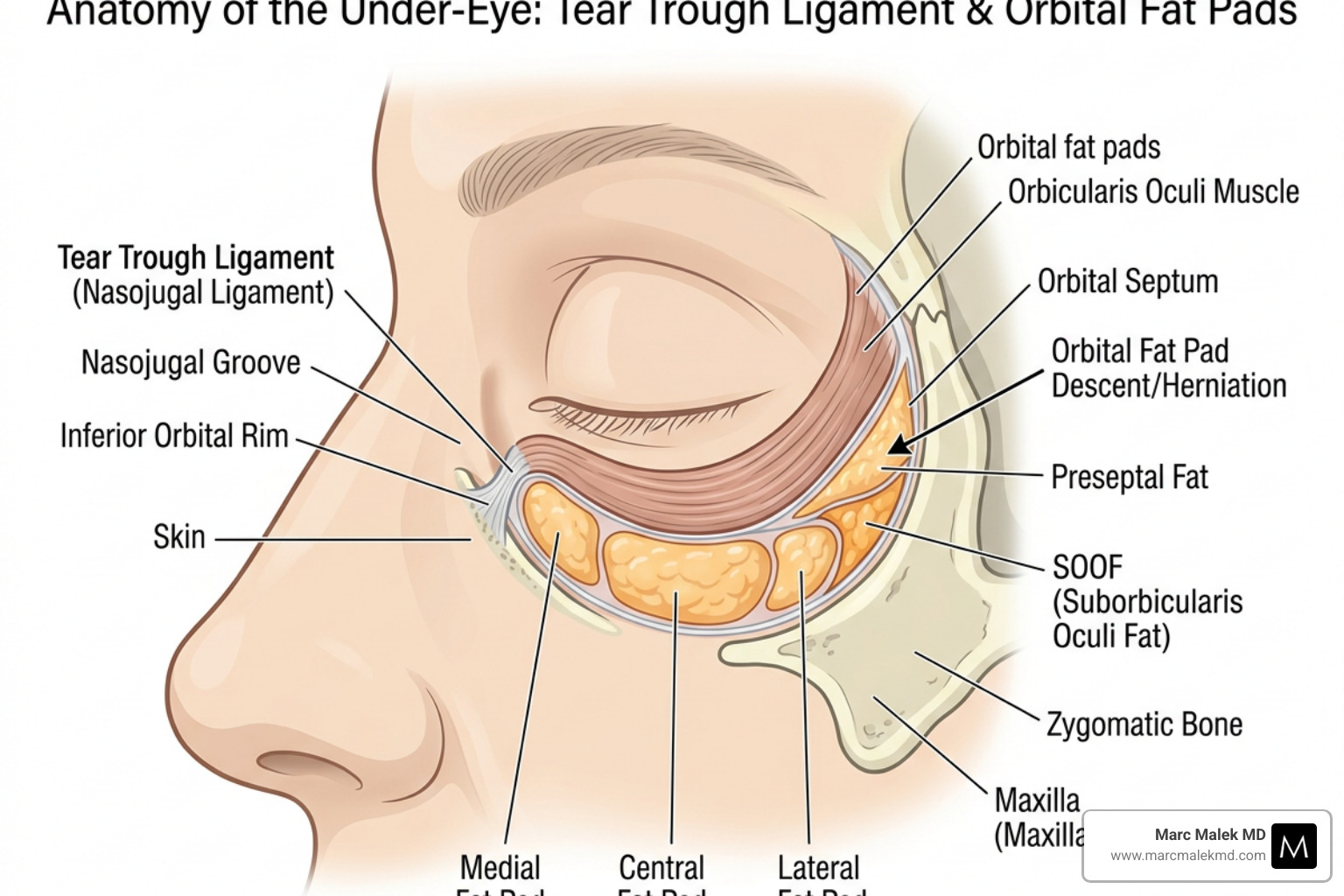
How Tear Trough Filler Works to Rejuvenate the Eyes
If the problem is a lack of volume, the solution is to put that volume back. We use Dermal Fillers and Injections specifically formulated for this delicate area.
Most modern fillers are made of hyaluronic acid (HA), a sugar molecule that occurs naturally in your skin. HA is hydrophilic, meaning it can hold up to 1,000 times its weight in water. When we inject this biocompatible gel into the hollow, it acts like a soft cushion, lifting the skin and smoothing the transition between the eye and the cheek.
The Science of Safety and Efficacy
Is it safe? A prospective study on the safety of HA fillers for tear troughs published in Plastic and Reconstructive Surgery — Global Open concluded that hyaluronic acid fillers are safe and provide high patient satisfaction with a very low complication rate when performed by experts.
Beyond just “filling a hole,” tear trough filler offers several benefits:
- Light Reflection: By smoothing the surface, light reflects off the under-eye area evenly rather than getting “trapped” in a dark shadow.
- Hydration: The HA gel improves the quality of the overlying skin by drawing in moisture.
- Collagen Stimulation: Research suggests that the mechanical stretching of the skin by the filler may stimulate de novo collagen production.
- Tyndall Effect Prevention: In our practice, we use advanced techniques to ensure the filler is placed at the correct depth. If filler is placed too superficially, it can cause a bluish discoloration known as the Tyndall effect. By placing the product deep, we ensure the results look like your natural skin.
The Treatment Experience: From Preparation to Recovery
When you visit us for a tear trough filler session, the actual injection process usually takes only about 15 to 30 minutes. We begin with a thorough consultation to map out your facial anatomy and ensure you are a good candidate.
We typically apply a topical anesthetic or use fillers pre-mixed with lidocaine to ensure the process is as comfortable as possible. Most patients describe the sensation as a light pressure rather than pain.
The Microcannula Advantage
While some injectors use traditional needles, we often prefer the microcannula technique. A cannula is a blunt-tipped tool that slides through the tissue rather than cutting through it.
| Feature | Needle Injection | Microcannula Injection |
|---|---|---|
| Tip Type | Sharp | Blunt/Rounded |
| Bruising Risk | Higher (may pierce vessels) | Lower (pushes vessels aside) |
| Entry Points | Multiple | Usually one per side |
| Precision | High for small depots | Excellent for smooth spreading |
| Comfort | Slight stinging | Feeling of “tugging” or pressure |
Our goal is supraperiosteal placement—injecting the filler deep, right against the bone. This provides the most structural support and the most natural look. We use conservative amounts, often just 0.2 mL to 0.5 mL per eyelid, to avoid an “overfilled” or puffy appearance. After the injection, we may use gentle massage techniques to ensure the gel is perfectly distributed.
Preparing for Your Tear Trough Filler
To get the best results and minimize the chance of bruising, preparation is key. We recommend the following steps as part of a holistic approach to Non-Surgical Facial Rejuvenation:
- Avoid Blood Thinners: For 5–7 days before your appointment, stay away from aspirin, ibuprofen (Advil/Motrin), and naproxen.
- Supplements: Pause vitamin E, ginkgo biloba, and fish oil, as these can increase bleeding.
- Alcohol Avoidance: Skip the wine or cocktails for at least 48 hours before your treatment.
- Dental Work: Do not schedule any dental cleanings or procedures two weeks before or after your filler, as this can increase the risk of infection.
- Health Status: If you are feeling under the weather or have an active skin infection near the eyes, it is best to reschedule.
Recovery and Aftercare for Tear Trough Filler
One of the best parts about this treatment is that there is virtually no downtime. You can usually go right back to your day in Scottsdale or Phoenix. However, you should follow these aftercare tips for the first 48 hours:
- Swelling Management: Use ice packs periodically (20 minutes on, 20 minutes off) for the first two days.
- Arnica Cream: Applying Arnica can help resolve any minor bruising more quickly.
- Sleep Elevated: Try to sleep with an extra pillow to keep your head elevated, which helps drainage and reduces morning puffiness.
- Activity Restrictions: Avoid strenuous exercise, saunas, and intense heat for 24–48 hours.
- Hands Off: Avoid touching or rubbing the area. If you feel a small bump, we will show you how to gently massage it, but otherwise, let the area settle.
Candidacy, Costs, and Alternatives to Injections
While tear trough filler is a “holy grail” for many, it isn’t for everyone.
Ideal candidates have good skin elasticity and a clear “hollow” without significant skin laxity. Poor candidates may include those with severe “festoons” (malar edema), significant fat herniation (large bags that require surgery), or those who are prone to chronic facial swelling.
Understanding the Investment
The average cost for hyaluronic acid filler is approximately $684 per syringe, though this can vary based on the specific product used (such as Juvederm Volbella or Restylane Eyelight) and the complexity of your case. Most patients require one to two syringes for a full treatment.
When considering the cost, it’s helpful to understand What is the Difference Between Botox and Dermal Fillers? While Botox is for dynamic wrinkles (like crow’s feet), filler is for volume. Filler also tends to last much longer—anywhere from 9 months to nearly two years in the tear trough area because there is very little muscle movement there to break the product down.
Alternatives to Filler
If you aren’t ready for needles, or if your concerns are more related to pigment than volume, consider these options:
- Lower Blepharoplasty: For those with severe fat bags, surgery is the only way to permanently reposition or remove fat.
- Topical Caffeine: Excellent for temporary vasoconstriction to reduce morning puffiness.
- Sun Protection: Daily SPF is non-negotiable to prevent further skin thinning and “crepey” texture.
- Polynucleotides: A newer injectable option that focuses on skin regeneration rather than just volume.
Frequently Asked Questions
Are under-eye fillers safe?
Yes, when performed by a board-certified professional who understands facial anatomy. While rare, risks include bruising, swelling, or the Tyndall effect. Extremely rare complications like vascular occlusion can occur if filler enters a blood vessel, which is why we always have hyaluronidase (a dissolving enzyme) on hand as a “safety net.”
How long do the results typically last?
Most patients can expect their results to last between 9 and 18 months. In some cases, because the under-eye area is so still, the filler can last even longer. We recommend a follow-up assessment at the two-week mark and maintenance treatments every year or so.
Does the procedure hurt?
Most patients rate the discomfort as a 1 or 2 out of 10. We use numbing cream and very fine instruments to ensure the experience is as stress-free as possible. You may feel a “tugging” sensation if a cannula is used, but sharp pain is very uncommon.
Conclusion
At Marc Malek MD, we believe that the best cosmetic work is the kind that no one notices. Our goal is to help you look like the most rested, vibrant version of yourself—not like you’ve “had work done.”
By combining an artistic eye with deep surgical knowledge of facial anatomy, we provide Scottsdale and Phoenix patients with results that are balanced, safe, and beautiful. If you’re tired of looking tired, it might be time to see what a difference a little volume can make.
Ready to reclaim your bright-eyed look? Schedule your consultation for dermal fillers with our team today and let’s create a personalized plan just for you.