
The Ultimate Guide to Hair Implants for Women
Hair Loss Is More Common in Women Than Most People Think
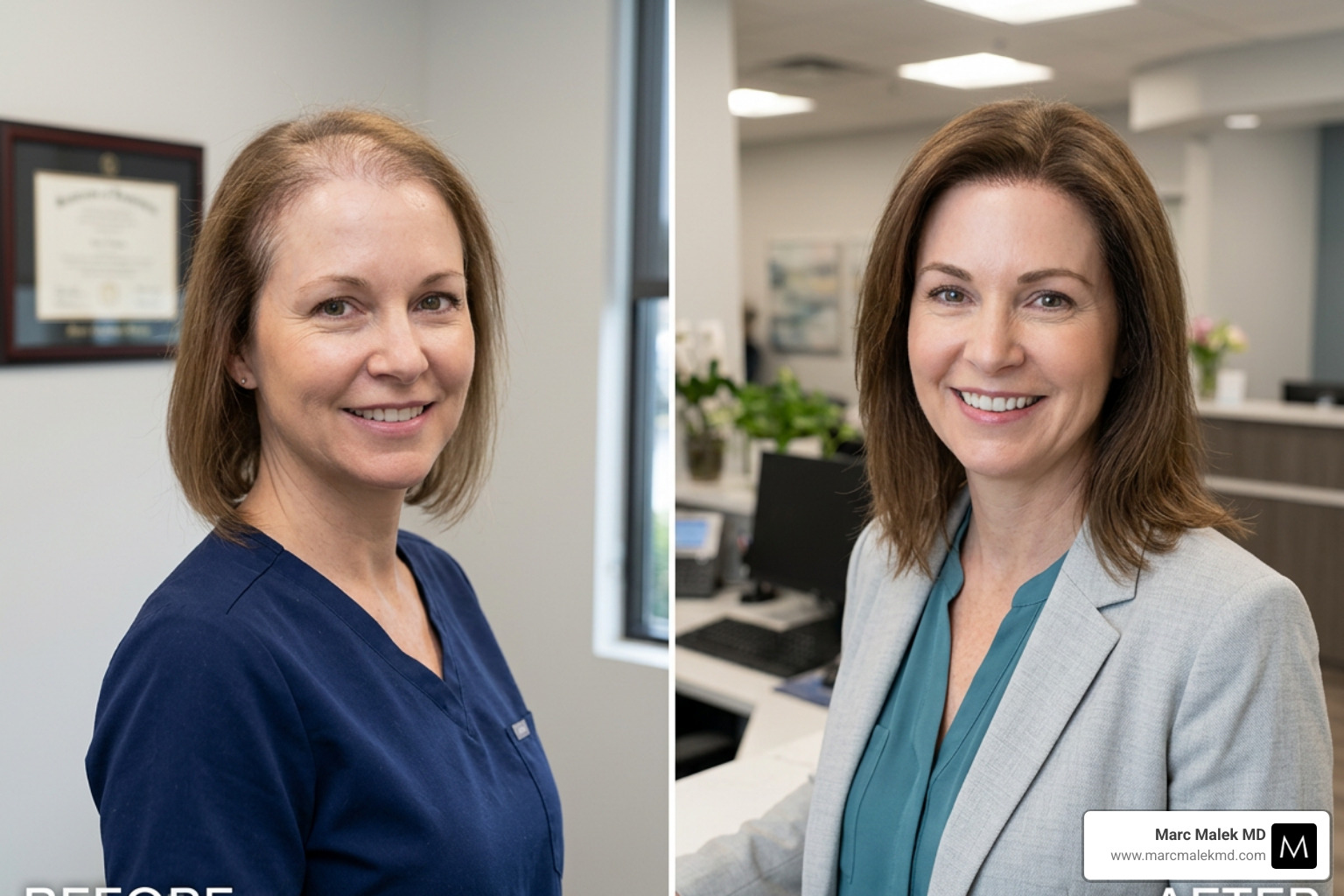
Female hair transplant surgery is a proven, permanent solution for women experiencing thinning hair — and yes, women absolutely can and do get them.
Here’s a quick overview of what you need to know:
- What it is: A surgical procedure that moves hair follicles from a dense donor area to thinning or balding areas of the scalp
- Best candidates: Women with stable hair loss, sufficient donor hair density, and localized or patterned thinning
- Main techniques: FUE (Follicular Unit Extraction) and FUT (Follicular Unit Transplantation), including no-shave options
- Cost range: Typically $6,000 to $15,000+, depending on graft count and complexity
- Recovery: Transplanted hair sheds in weeks 2–3, new growth starts around month 3–4, full results visible by month 12
- Results: Permanent — transplanted follicles resist the hormones that cause hair loss
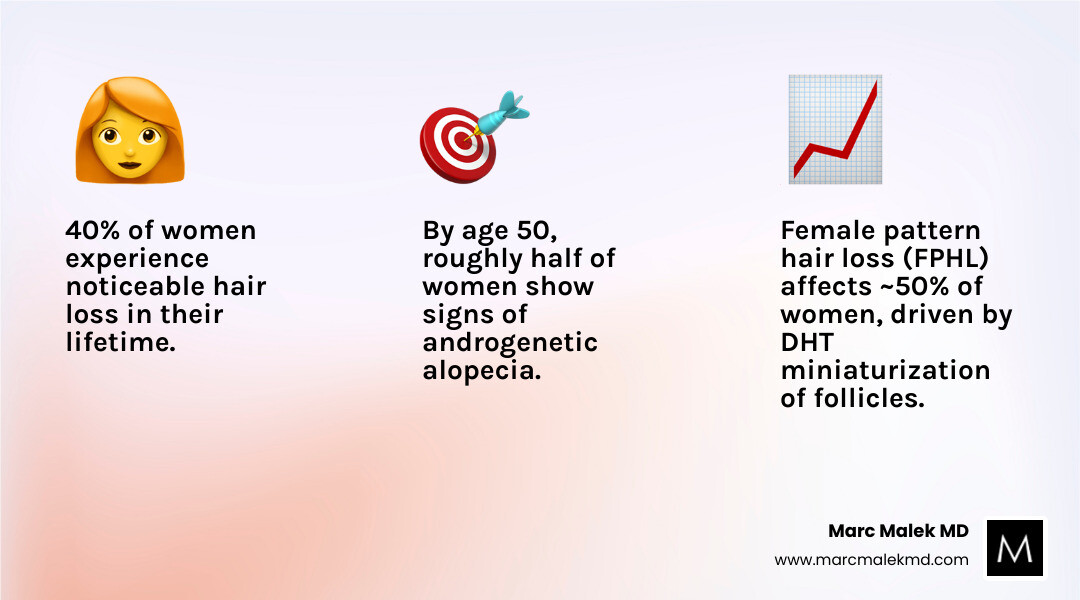
Hair loss affects far more women than most people realize. In fact, 40% of women will experience some degree of hair loss in their lifetime, and by age 50, roughly half of all women show signs of androgenetic alopecia.
Yet only around 13% of all hair transplant surgeries are performed on women.
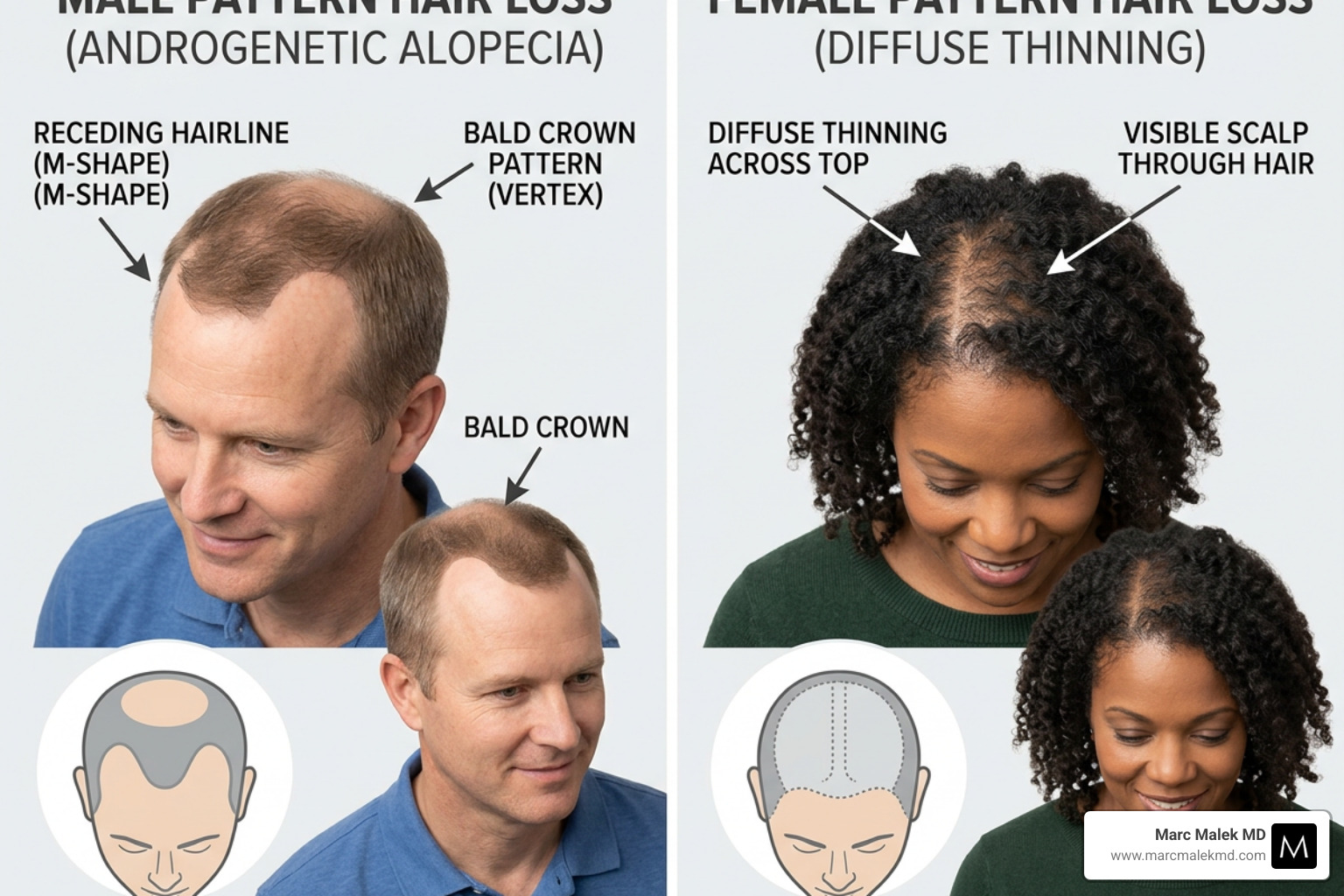
That gap exists not because hair transplants don’t work for women — they do — but because female hair loss is different, more complex, and often misunderstood. Women typically experience diffuse thinning across the scalp rather than the distinct receding hairlines seen in men. That makes candidacy evaluation more nuanced, and it means the surgical approach needs to be tailored specifically to female patterns.
The emotional weight of hair loss for women is real. Hair is deeply tied to identity and confidence. When thinning becomes noticeable — a widening part, a shrinking ponytail, increased shedding — it can affect how you feel in every room you walk into.
This guide breaks down everything you need to know: causes, techniques, candidacy, costs, recovery, and realistic outcomes.
Understanding the Causes of Female Hair Loss
To fix hair loss, we first have to understand why it’s happening. Unlike men, who usually follow a predictable “receding hairline” pattern, women often experience a more generalized thinning. This can make the journey to finding a solution feel like a bit of a detective mission.
The most frequent culprit is female pattern hair loss (FPHL), also known as androgenetic alopecia. This condition affects approximately 50% of women at some point in their lives, often ramping up in the 40s or 50s. While genetics play a huge role, hormones are the primary drivers. Dihydrotestosterone (DHT) can cause hair follicles to “miniaturize,” meaning the hair grows back thinner and shorter until the follicle eventually stops producing hair altogether.
Other common causes include:
- Hormonal Shifts: Significant life events like pregnancy (postpartum shedding) and menopause are major triggers. During menopause, estrogen levels drop, often allowing androgens to exert more influence on the scalp.
- Telogen Effluvium: This is a fancy term for temporary shedding caused by a shock to the system—think high stress, major illness, or even a crash diet. It pushes hair follicles into a resting phase prematurely.
- Traction Alopecia: This is caused by repeated tension on the hair roots, often from tight ponytails, braids, or extensions. Over time, this constant pulling can cause permanent scarring and loss.
- Nutritional Deficiencies: Low levels of iron, zinc, or Vitamin D can wreak havoc on your hair’s ability to stay in the growth phase.
Comparison: Male vs. Female Hair Loss
| Feature | Male Pattern Baldness | Female Pattern Hair Loss (FPHL) |
|---|---|---|
| Primary Pattern | Receding hairline and bald spot on crown | Diffuse thinning across the top/crown |
| Hairline | Frontal hairline often disappears | Frontal hairline is usually preserved |
| Progression | Can lead to total baldness on top | Rarely leads to total baldness; mostly thinning |
| Donor Area | Usually remains very dense at back/sides | Can sometimes be affected by thinning |
Who is a Good Candidate for a Female Hair Transplant?
Not every woman with hair loss is a candidate for surgery. Because women often experience diffuse thinning (thinning everywhere), the “donor area” at the back of the head might also be thinning. If we move thin hair to a thin area, the results won’t look great.
A good candidate typically has:
- Stable Donor Density: Enough healthy, thick hair at the back and sides to move to the top.
- Localized Thinning: Women with a widening part or thinning at the temples but thick hair elsewhere are ideal.
- Realistic Goals: Understanding that a transplant camouflages thinning but cannot return you to the hair density you had at age sixteen.
- Ludwig Classification Status: Surgeons often use the Ludwig scale to determine the stage of loss. Type I (mild) might be managed non-surgically, while Type II and III often benefit from a female hair transplant.
Before proceeding, we always recommend a thorough medical evaluation to rule out underlying issues like thyroid disorders or anemia. For more technical details on the medical criteria, you can explore this Scientific research on Hair Transplantation in Women.
Primary Techniques: FUE vs. FUT for a Female Hair Transplant
In hair restoration, there are two heavy hitters: FUT and FUE. Both are effective, but they cater to different needs, especially for our female patients in Scottsdale and Phoenix.
FUT (Follicular Unit Transplantation)
Often called the “strip method,” FUT involves removing a small strip of scalp from the donor area. This strip is then placed under a microscope, where technicians carefully dissect it into individual follicular units.
- Pros for Women: You don’t have to shave your head. The long hair above the donor site hides the linear scar perfectly. It also typically provides a higher yield of grafts in a single session.
- Cons: It does leave a thin linear scar, though skilled surgeons make this nearly invisible.
FUE (Follicular Unit Extraction)
FUE involves extracting individual hair follicles one by one using a specialized micro-punch tool.
- Pros: No linear scar and a slightly faster physical recovery time.
- Cons: Traditionally, FUE requires shaving a portion of the donor area. For many women with long hair, this is a dealbreaker.
Advantages of No-Shave and Long-Hair Options
We know that for most women, the idea of shaving any part of their head is terrifying. This is why “No-Shave FUE” or “Long-Hair FUE” has become so popular. These techniques allow us to harvest grafts without making it obvious you had a procedure.
By using specialized tools and microscopic dissection, we can work around your existing hair. This means your social downtime is significantly reduced. You can often go back to work or meet friends within a few days, and nobody will be the wiser. It’s all about discretion and preserving your current style while we build for your future one.
Realistic Expectations for Your Female Hair Transplant
Let’s talk heart-to-heart about results. A hair transplant is an artistic redistribution of what you already have. It is not a “hair multiplication” surgery.
- Density: We can significantly improve the appearance of thickness, especially along the part line or the frontal hairline.
- Softness: Female hairlines are naturally softer and less defined than men’s. We focus on an artistic design that mimics this natural, feminine flow.
- The 13% Stat: While only 13% of transplants are on women, those who do have them often report a massive boost in self-esteem.
- Age: The peak age for women seeking these procedures is between 40 and 49, often coinciding with the early stages of menopause-related thinning.
The Recovery Timeline and Aftercare Process
Patience is the name of the game here. You won’t walk out of the clinic with a full head of hair—you’ll walk out with the potential for one.
The Timeline:
- Days 1–7: You might experience some mild swelling or redness. We provide specific instructions on how to gently wash your scalp.
- Weeks 2–4: The “Shedding Phase.” This is the part that scares everyone! The newly transplanted hair shafts will fall out. This is totally normal. The follicle is still alive and well under the skin; it’s just taking a nap.
- Months 3–4: New growth begins. These hairs might be fine and wispy at first.
- Months 6–9: You’ll see a noticeable increase in length and density.
- Month 12: The final reveal. This is when you can truly appreciate the full impact of the transplant.
Aftercare Tips:
- Be Gentle: No harsh scrubbing or high-pressure showers for the first week.
- Sun Protection: Your scalp will be sensitive. Wear a loose-fitting hat if you’re heading out into the Arizona sun.
- Limit Activity: Avoid heavy lifting or intense cardio for about a week to keep blood pressure stable at the graft sites.
Costs and Non-Surgical Alternatives
One of the first questions we hear is, “How much does this cost?” In the Scottsdale and Phoenix area, a female hair transplant typically ranges from $6,000 to $15,000, though extensive cases can go higher.
Factors that influence the price include:
- Graft Count: Are we filling in a small spot at the temple or the entire top of the scalp?
- Technique: No-shave FUE is more labor-intensive and generally costs more than FUT.
- Surgeon Expertise: You are paying for the artistic eye and the medical skill of the team.
Non-Surgical Options
Not everyone is ready for surgery, and that’s okay. We often combine transplants with non-surgical therapies to get the best results.
- PRP Therapy: This is a fantastic option for many women. We take a small sample of your blood, concentrate the growth factors, and inject them into the scalp. It’s great for “waking up” dormant follicles. Learn more about Hair Restoration with PRP.
- Topical Minoxidil: A classic for a reason. It helps extend the growth phase of your hair.
- Low-Level Laser Therapy (LLLT): Using medical-grade lasers to stimulate cellular activity in the follicles.
- Supplements: Addressing iron or zinc deficiencies can sometimes do wonders for hair health.
Frequently Asked Questions about Female Hair Transplants
Is a female hair transplant permanent?
Yes! The hair follicles taken from the donor area (usually the back of the head) are genetically programmed to be resistant to the hormones that cause thinning. Once they take root in their new home, they will continue to grow for a lifetime. However, keep in mind that your non-transplanted hair may still be subject to natural aging and thinning, which is why maintenance is key.
Does the procedure hurt?
We use local anesthesia to numb the area completely. Most of our patients tell us the most “painful” part is the initial pinch of the numbing medicine. During the procedure, you can relax, listen to music, or even catch up on your favorite show. Post-operative discomfort is usually mild and easily managed with standard over-the-counter pain relief.
Can transplants fix eyebrows or other areas?
Absolutely. We often see women who have over-plucked their eyebrows or lost hair due to aging. We can use the same transplant techniques to restore a full, natural brow. We’ve even performed transplants for the pubic region for women who have lost hair due to hormonal changes or laser removal regret. It’s all about restoring what makes you feel like you.
Conclusion
Hair loss doesn’t have to be something you just “accept.” Whether you are dealing with the early signs of a widening part or more significant thinning, there are modern, effective solutions available right here in Scottsdale.
At Marc Malek MD, we believe in a personalized and artistic approach. We don’t just “plug in” hair; we design a restoration plan that respects your natural hair flow and facial proportions. Our goal is to make sure you feel comfortable, confident, and proportionally balanced.
If you aren’t quite ready for a full transplant but want to jumpstart your hair’s health, you might want to Schedule a consultation for Hair Restoration with PRP. It’s a great first step toward reclaiming your confidence. We are here to help you navigate your options and find the path that’s right for your lifestyle and your goals.