

Why Understanding Midface Rejuvenation Matters
Cheek and tear trough filler treatments address different areas of the midface to restore youthful volume. While often discussed together, these procedures target distinct anatomical concerns and require different techniques.
Quick Comparison:
| Aspect | Cheek Filler | Tear Trough Filler |
|---|---|---|
| Target Area | Midface/malar region | Undereye hollow |
| Primary Goal | Restore volume, lift midface | Fill hollows, reduce shadows |
| Injection Depth | Deeper (onto bone/fat) | Superficial to medium |
| Typical Volume | 1-2 ml per side | 0.5-1 ml per side |
| Results Last | Up to 2 years | 6-12 months |
| Complexity | Moderate | High |
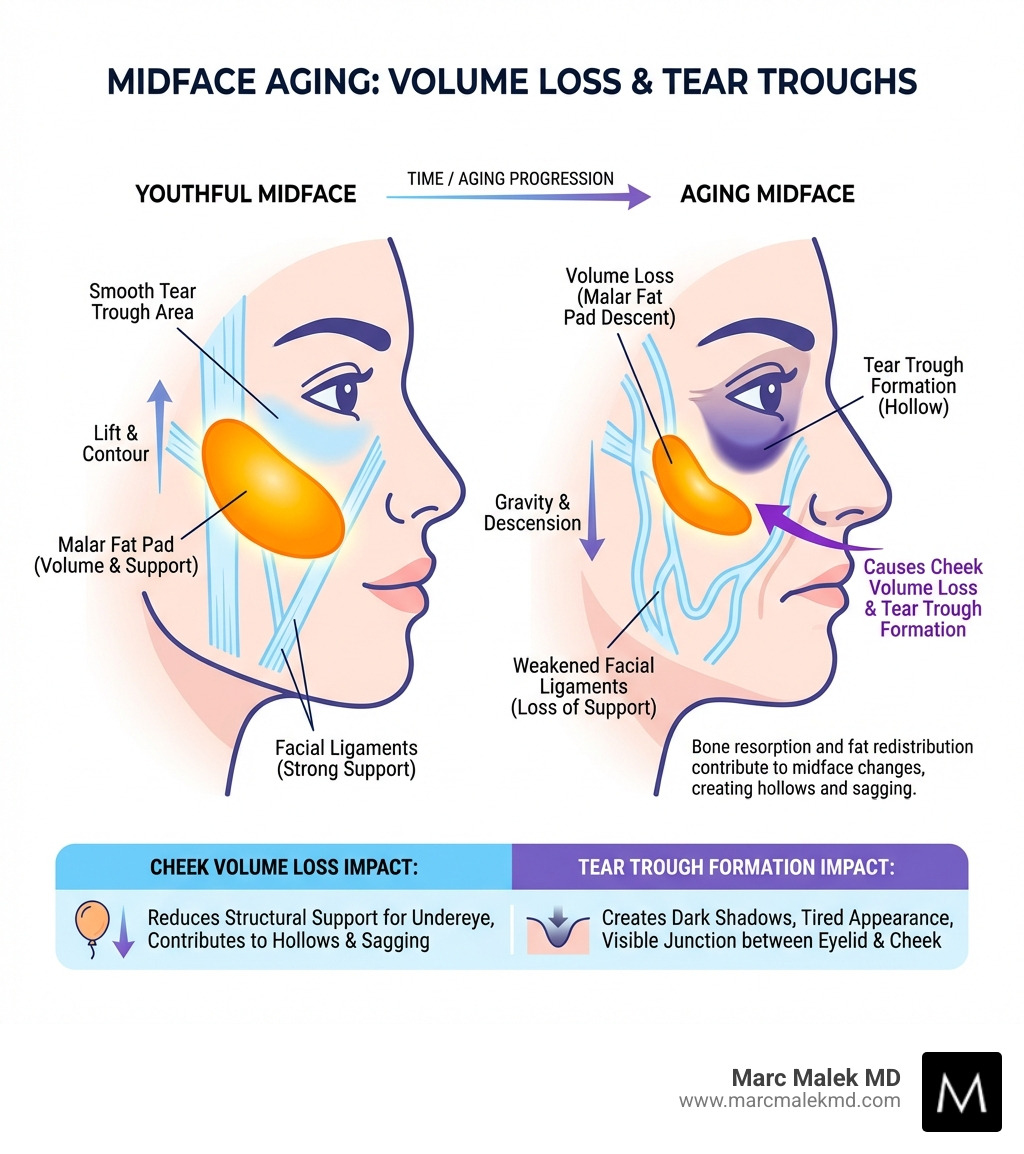
As we age, facial bones thin and fat pads shift, causing the transition from the lower eyelid to the cheek to become a visible hollow. Many assume they need undereye filler for dark circles, but restoring volume to the cheeks often addresses undereye concerns by providing structural support. Experienced practitioners frequently recommend treating the cheeks first to achieve a natural result.
The tear trough is a challenging region. The skin is thin, and improper technique can lead to lumps or the Tyndall effect (bluish discoloration). Choosing a skilled injector is critical.
Cheek and tear trough filler vocab explained:
Understanding the Anatomy of Tear Troughs
The tear trough (nasojugal groove) is the deep crease between the lower eyelid and mid-cheek. This area creates shadows that make us look tired or older. Several factors contribute to its appearance:
- Genetics: Some inherit deep tear troughs that appear as early as their 20s.
- Aging: Facial tissues lose volume, including orbital fat and cheek fat pads. Facial bones also thin, reducing support and making the trough more prominent.
- Skin Thinning: The delicate skin around the eyes thins further with age, making underlying blood vessels and hollowness more visible.
- Ligaments: The tear trough ligament attaches to the maxilla. As facial structures shift, this attachment creates a visible depression.
Effective treatment requires understanding these nuances. Research suggests the deformity can also be linked to the projection of the upper cheek bone. You can explore the scientific research on tear trough anatomy for more detail.
Comparing Cheek and Tear Trough Filler Treatments
While both aim for rejuvenation, cheek and tear trough filler treatments serve distinct purposes.
| Feature | Cheek Fillers | Tear Trough Fillers |
|---|---|---|
| Primary Goal | Restore midface volume, lift skin, and provide foundational support. | Fill undereye hollows and smooth the lid-cheek transition. |
| Target Area | Malar (cheekbone) area. | Deep crease beneath the lower eyelid. |
| Injection Depth | Deep (onto bone or deep fat). | Superficial or pre-periosteal. |
| Common Fillers | Juvéderm Voluma, Restylane Lyft. | Softer HA fillers like Juvéderm Volbella XC. |
| Volume Needed | 1-2 ml per side. | 0.5-1 ml per side. |
| Longevity | Up to 2 years. | 6-12 months. |
| Complexity | Moderate. | High; requires extreme precision. |
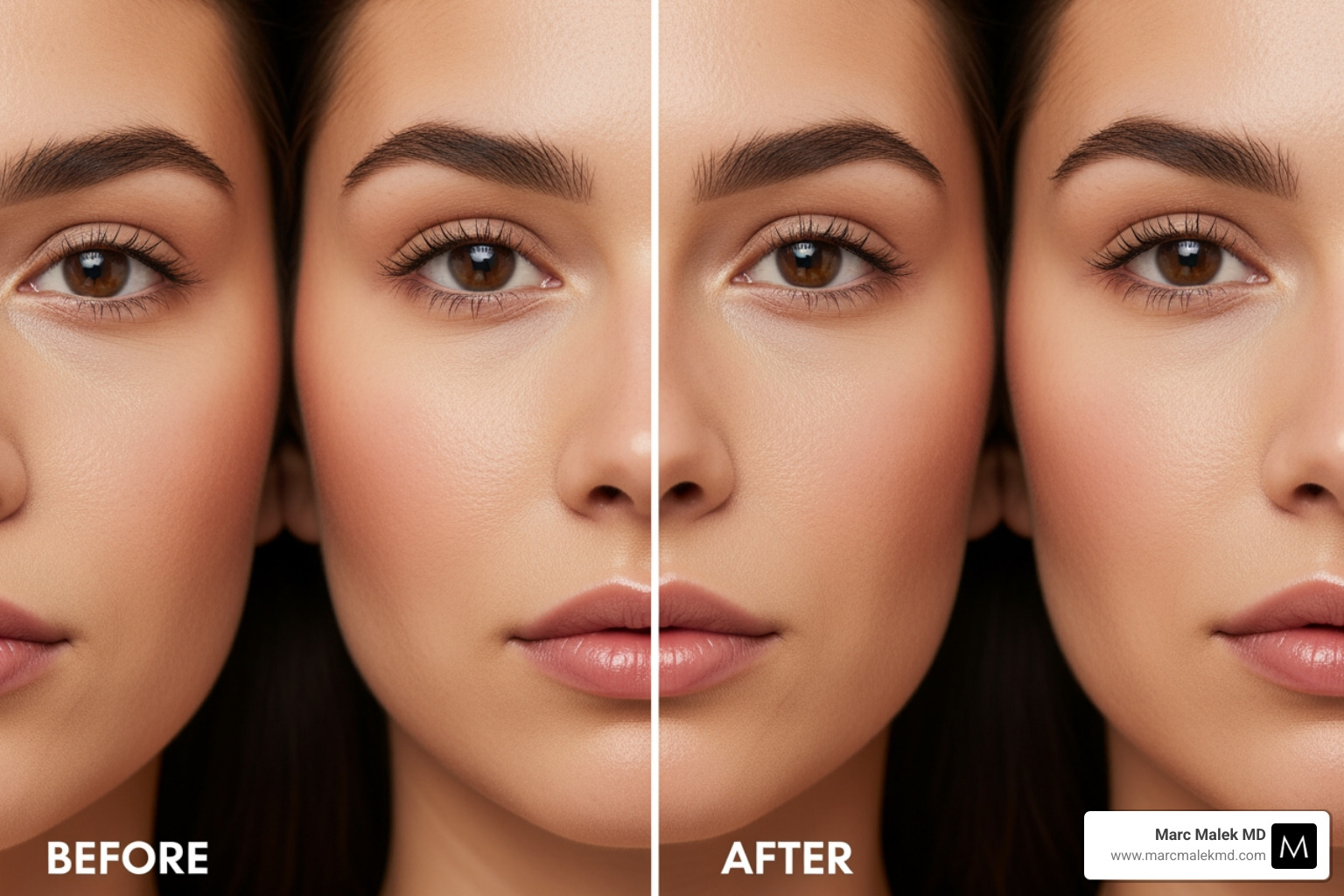
Restoring cheek volume often improves the tear trough area indirectly by providing a natural lift. For more details on volume, see more info about dermal filler volume.
Injection Techniques for Cheek and Tear Trough Filler
For tear trough fillers, precision is vital. We often use a microcannula—a blunt-tipped needle—to reduce bruising and vascular risk. Filler is placed carefully to avoid the Tyndall effect or puffiness. The goal is a seamless blend with surrounding tissue.
Cheek fillers are typically injected deeper into the malar fat pads or onto the bone to provide structural lift. While cannulas are common, needles may be used for specific deep placements. Care is taken to avoid an overfilled appearance. For technical insights, see scientific research on periorbital rejuvenation.
Longevity and Results
Tear trough fillers usually last 6 to 12 months. Because the area is less mobile, some patients see results for up to 1.5 years. The goal is a subtle, rested look.
Cheek fillers use denser gels and last longer, often up to 2 years. They can achieve more significant contouring. Longevity depends on metabolism and lifestyle. Learn more here: more info about dermal filler longevity.
Benefits, Risks, and Ideal Candidates
Benefits of Tear Trough Fillers
- Reduces Shadows: Fills hollows to diminish dark circles caused by shadowing.
- Smoothes Transition: Creates a seamless flow from the eyelid to the cheek.
- Refreshed Look: Patients appear more rested and youthful.
- Non-Surgical: Offers rejuvenation with minimal downtime.
Potential Risks and Side Effects
Common side effects include temporary bruising, swelling, and redness. Less common risks include:
- Lumps or Bumps: Caused by incorrect placement or volume.
- Tyndall Effect: A bluish tint from superficial HA injection.
- Vascular Occlusion: A rare but serious complication where filler blocks a blood vessel. Immediate medical attention is required for pain or vision changes.
Choosing an experienced provider is essential for safety. See more on safety of undereye fillers.
Who is a Good Candidate?
Ideal candidates for tear trough filler have mild to moderate hollowness and good skin elasticity.
We may advise against treatment if you have:
- Severe Undereye Bags: Filler can worsen the appearance of fat prolapse; surgery may be better.
- Malar Bags (Festoons): Filler can exacerbate fluid retention in these areas.
- Very Thin Skin: May lead to visible product or an unnatural look.
- Medical Contraindications: Including pregnancy, breastfeeding, or active infections.
Preparation is key; see preparing for your filler treatment.
Procedure, Recovery, and Alternatives
The Procedure
- Preparation: We cleanse the area and may apply numbing cream. We also review your medical history, any prior filler placement, allergies, and your goals (for example: less hollowing, smoother lid-cheek transition, or more cheek projection).
- Injection: For tear troughs, a micro-cannula is typically used to place small amounts of HA filler. For cheeks, deeper injections restore volume and contour. The process takes 15-30 minutes.
- Post-Injection: We may gently massage the area. Results are visible immediately, but the early look can be affected by temporary swelling.
Recovery Process
- Immediate Effects: Mild swelling and tenderness are normal.
- Bruising: May occur, especially under the eyes, resolving within a week.
- Downtime: Avoid strenuous exercise, heat, and alcohol for 24-48 hours.
- Full Results: Visible within 10-14 days once swelling subsides.
Aftercare Tips (to protect your result)
- Sleep position: If possible, sleep on your back with your head slightly liftd the first 1-2 nights to help minimize swelling.
- Makeup and skincare: Many patients can return to makeup the next day, but follow your injector’s specific instructions (especially for the delicate undereye skin).
- Touching the area: Avoid aggressive rubbing or facial massage for about 1 week unless your provider instructs otherwise.
- Plan around events: Because undereye bruising can be more noticeable, consider scheduling tear trough treatment at least 2 weeks before important photos or travel.
Alternatives to Tear Trough Fillers
Not every undereye concern is caused by hollowing alone. In consultation, we often discuss options based on whether the main issue is volume loss, skin quality, pigment, or fat prolapse:
- Topical Treatments: Creams with caffeine or retinoids can help with minor pigmentation.
- Blepharoplasty: The gold standard for removing significant undereye bags or excess skin.
- Fat Grafting: Uses your own fat for a long-lasting, natural solution.
- Energy-Based Treatments: Lasers or Morpheus8 can improve skin texture and tightness.
In many cases, the most natural-looking plan starts with restoring midface support (cheek volume) and then reassessing whether direct tear trough filler is still needed. This staged approach helps avoid overfilling the undereye and supports a smoother, more refreshed result.
Frequently Asked Questions
When should I choose cheek fillers over tear trough fillers?
If your tear troughs appear deep because of a lack of midface support, treating the cheeks first is often best. Restoring the “foundation” naturally lifts the undereye area. If you have good cheek volume but specific undereye hollowing, direct tear trough filler is the better choice.
Can these treatments be combined?
Yes. Combining cheek and tear trough filler with Botox (for crow’s feet) or Morpheus8 (for skin tightening) provides comprehensive rejuvenation. We plan the timing carefully to ensure optimal results and safety.
How are common filler problems corrected?
Hyaluronic acid fillers can be dissolved using an enzyme called hyaluronidase. This can correct overfilling, lumps, the Tyndall effect, or migration. It provides a safety net for patients. For more details, see more info about dissolving fillers.
Conclusion
Navigating aesthetic treatments can feel overwhelming, but understanding the nuances of procedures like cheek and tear trough filler is the first step toward achieving your aesthetic goals. We’ve explored the intricate anatomy of the midface, the distinct purposes and techniques for each type of filler, and the importance of choosing a highly skilled practitioner.
Whether you’re looking to restore youthful volume to your cheeks, diminish the appearance of tired undereye hollows, or achieve a more balanced and harmonious facial contour, our approach is always personal and artistic. At Marc Malek MD, we believe in delivering fantastic, long-lasting results while prioritizing your comfort and promoting a healthy lifestyle. Our expertise in Scottsdale and Phoenix, Arizona, ensures that you receive care custom to your unique needs, helping you achieve a naturally refreshed and confident look.
If you’re ready to explore how cheek and tear trough filler treatments can refresh your appearance, we invite you to connect with us. Let’s work together to bring out your best self.
Book a consultation today and find the possibilities.