

Why Understanding Liposuction Safety Matters
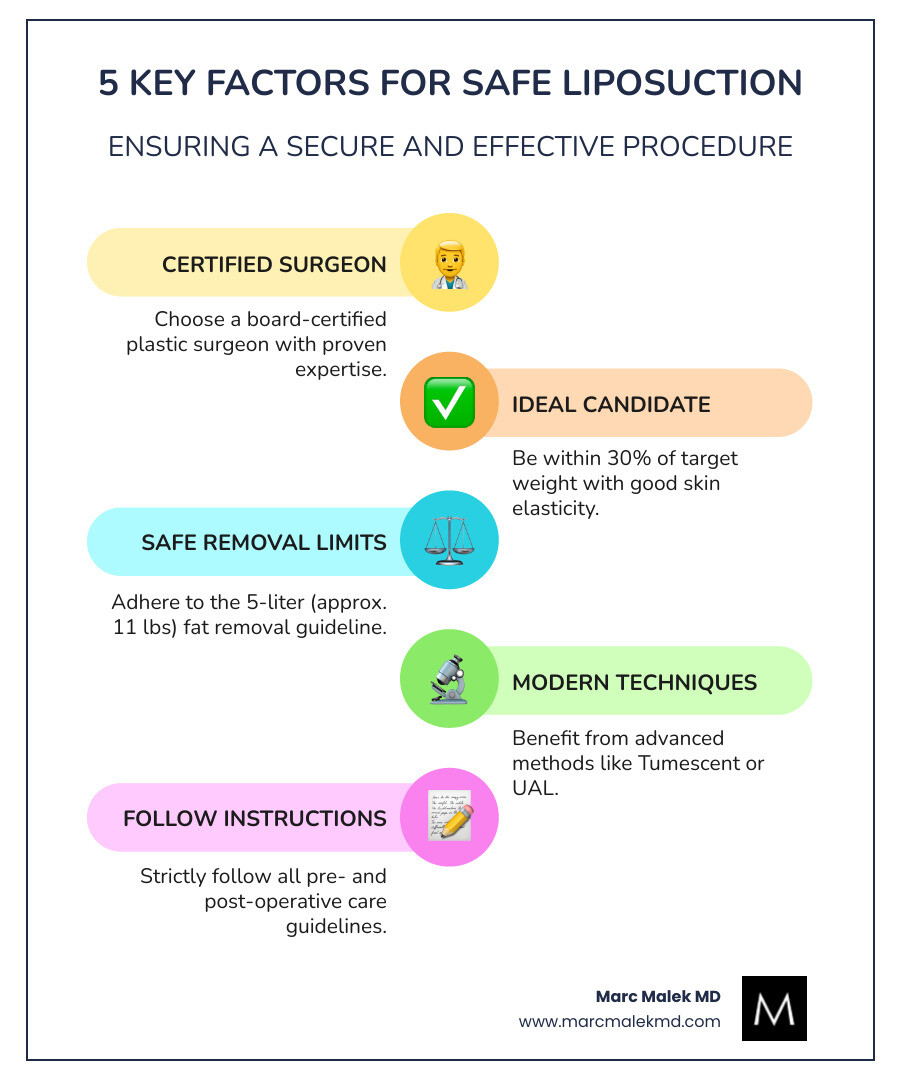
Is liposuction safe is a common question before this popular body contouring procedure. The short answer is yes, when performed by a board-certified plastic surgeon on the right candidate. But like any surgery, it carries risks.
Key Safety Facts:
- Close to 350,000 liposuction procedures were performed in the United States in 2023 with minimal complications
- Modern techniques like tumescent liposuction have significantly reduced risks compared to earlier methods
- Serious complications are rare when performed by experienced, board-certified surgeons
- Patient selection matters – ideal candidates are within 30% of their target weight with good skin elasticity
- Safe removal limits are typically around 5 liters (approximately 11 pounds) in a single session
Liposuction has evolved significantly since its risky beginnings in the 1970s. Early procedures were dangerous, using large, sharp cannulas without numbing fluid or proper aftercare. Today’s liposuction is a refined outpatient procedure with advanced technology, safer anesthesia options, and proven techniques that prioritize patient safety.
Liposuction is a body contouring procedure, not a weight loss solution. It removes stubborn fat deposits that resist diet and exercise, helping you achieve a more balanced, proportional figure. The procedure works best for patients who are already at or near their healthy weight.
Despite its excellent safety record, concerns are valid. While risks exist, they can be minimized through proper patient selection, choosing an experienced surgeon, and following pre- and post-operative instructions.
What is Liposuction and How Has It Evolved?
Liposuction, sometimes referred to as “lipo,” is a surgical procedure that uses suction to remove localized fat deposits from specific areas of the body, helping to sculpt and contour them. It is designed to tackle those stubborn pockets of fat that will not budge, no matter how much you diet or exercise. If you are looking to refine your figure and achieve a smoother silhouette, liposuction can be an effective solution.
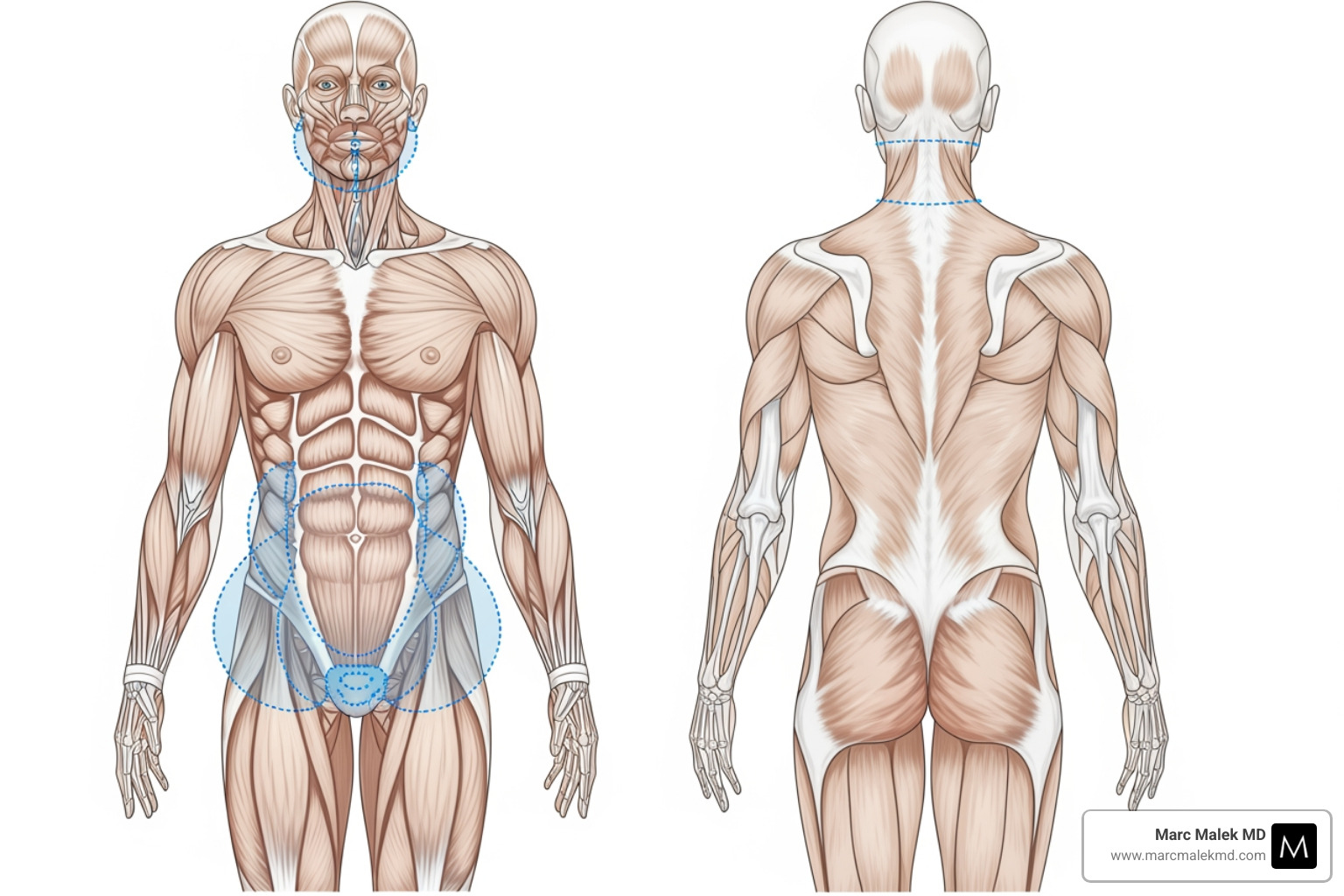
Common areas treated include the abdomen, hips, outer and inner thighs, flanks (love handles), inner knees, upper arms, chin, neck, and the breasts in cases such as male gynecomastia. The goal is not weight loss, but rather to streamline and contour these areas, creating a more proportionally balanced body.
Liposuction’s journey began in 1972, and its evolution has been remarkable. Early techniques were aggressive and risky, using large, sharp cannulas without numbing fluid or proper post-operative care. This led to significant bleeding, bruising, and a painful recovery.
Decades of research, increased surgeon experience, and technological advancements have transformed liposuction into a much safer and more refined procedure. Today, several sophisticated techniques are used:
- Tumescent Liposuction: The most common and widely regarded as very safe. A medicated solution containing lidocaine (a local anesthetic), epinephrine (to reduce blood loss and bruising), and saline is injected into the fatty area before fat removal. This technique significantly reduces bleeding and discomfort.
- Ultrasound-Assisted Liposuction (UAL): Uses ultrasonic energy to liquefy fat cells before they are suctioned out. This can be particularly effective for dense, fibrous areas of fat, like the upper back or enlarged male breasts. VASER liposuction is a popular type of UAL, known for its precision and potential to help with skin tightening.
- Power-Assisted Liposuction (PAL): Uses a cannula that rapidly moves back and forth, making fat removal quicker and often less strenuous for the surgeon, which can support accurate fat removal.
- Laser-Assisted Liposuction (LAL): Uses laser energy to liquefy fat cells. The laser may stimulate collagen production, offering mild skin-tightening benefits in smaller, more delicate areas like the chin and jowls.
Each of these modern techniques aims to improve precision, reduce trauma, and support patient safety and recovery. For more detailed information, please visit our More info about Liposuction page.
Here is a quick comparison of some common liposuction techniques:
| Technique | How it Works | Key Safety/Recovery Points | Best Use Cases |
|---|---|---|---|
| Tumescent Liposuction | Injects large volume of saline, lidocaine, and epinephrine to numb area, constrict blood vessels, and swell fat. | High safety profile due to reduced blood loss and local anesthesia. Often associated with less bruising and discomfort. | Versatile for many different areas. |
| Ultrasound-Assisted (UAL) / VASER | Uses ultrasonic energy to liquefy fat cells before suction. | Can make fat removal easier in fibrous areas and may offer some skin tightening. Requires an experienced surgeon to avoid thermal injury. | Dense, fibrous fat (for example, back, male breasts). Detailed body contouring. |
| Power-Assisted (PAL) | Uses a vibrating cannula to break up fat. | Can allow faster fat removal with less physical effort for the surgeon, supporting precise results. | Larger volumes of fat, fibrous areas, or revision cases. |
| Laser-Assisted (LAL) | Uses laser energy to liquefy fat. | May stimulate collagen for mild skin tightening. Small cannulas are suitable for delicate areas. Requires care to avoid thermal burns. | Smaller, delicate areas (such as chin, jowls). Patients seeking subtle skin tightening. |
The Shift Towards Safer Anesthesia
Anesthesia’s role in liposuction safety is critical. Historically, general anesthesia was common, carrying risks like nausea, hypothermia, and, rarely, severe complications. While still a reasonable option for complex procedures, there has been a shift towards alternatives.
The introduction of the tumescent technique was a major advance. By infiltrating the treatment area with a solution containing lidocaine, surgeons can effectively numb the area, allowing many liposuction procedures to be performed under local anesthesia, sometimes with mild sedation. This reduces reliance on general anesthesia and its associated risks.
Lidocaine has a safe upper limit for dosage. Many surgeons recommend limiting usage to around 35 mg/kg of body weight to prevent toxicity, though higher doses have been demonstrated as safe in specific contexts. Your surgical team carefully calculates the appropriate dosage for safety. For more information on the effects of anesthesia, you can refer to resources like Information on anesthesia effects.
How Technology Improves Liposuction Safety
Beyond anesthesia, advancements in technology have improved the safety and efficacy of liposuction. Modern tools are designed for precision and to minimize trauma to surrounding tissues.
Cannulas used today are typically blunt-tipped and much smaller than their predecessors. This design helps reduce the risk of damaging nerves, blood vessels, or other vital structures during fat removal. Techniques like VASER liposuction, a type of UAL, use ultrasound energy to emulsify fat cells, making them easier to remove and often resulting in less bruising and swelling.
Some technologies, such as certain laser-assisted techniques, also offer the added benefit of promoting mild skin tightening. This can be useful for patients who have some degree of skin laxity, helping the skin to redrape more smoothly over the newly contoured areas. These innovations, combined with increased surgeon expertise, mean that today’s liposuction procedures are designed to be safer while also yielding refined and natural-looking results. To explore how technology improves various plastic surgery procedures, you might find our blog on Technology in Plastic Surgery insightful.
Is Liposuction Safe? A Realistic Look at Risks and Complications
Understanding the potential downsides is just as important as knowing the benefits. While is liposuction safe is a question we answer with confidence, it is crucial to acknowledge that, like any surgical procedure, it carries inherent risks and potential complications. With modern techniques and experienced, board-certified surgeons, serious complications are uncommon. Nearly 350,000 liposuction procedures were performed in the United States in 2023 with minimal complications reported.

Most patients experience common, temporary side effects as part of the normal healing process. These include:
- Bruising: Very common and typically subsides within a few weeks.
- Swelling: Can persist for several weeks or even months, gradually decreasing over time.
- Temporary Numbness: Altered skin sensation or numbness in the treated areas is common and usually resolves as nerves heal.
- Soreness: Expect some discomfort, similar to an intense workout, for a few days to weeks after the procedure.
These effects are part of the journey to your new contours. For a comprehensive overview of liposuction safety, the American Society of Plastic Surgeons provides valuable information on Liposuction Risks and Safety overview.
Potential Serious Complications
While uncommon, it is important to be aware of the more serious complications that can occur with liposuction. Your surgical team discusses these during consultation and takes precautions to reduce risk:
- Infection: Any surgical incision carries a risk of infection. Antibiotics and clear aftercare instructions help minimize this risk. Signs of infection include redness, increased pain, fever, or pus drainage.
- Seroma (Fluid Accumulation): Fluid can accumulate in the spaces where fat was removed. This is called a seroma and may require drainage. For more specific information, you can read Details on Seroma.
- Blood Clots (Deep Vein Thrombosis – DVT): Blood clots can form in the deep veins, typically in the legs. If a clot travels to the lungs (pulmonary embolism), it can be life-threatening. Early ambulation and compression garments help reduce this risk.
- Fat Embolism: A very rare but serious complication where pieces of fat break away, enter the bloodstream, and can travel to the lungs, brain, or heart. It is a medical emergency. Careful techniques and adherence to safe fat removal limits are used to lower this risk.
- Contour Irregularities: Uneven fat removal can lead to wavy, bumpy, or asymmetrical results. This can be related to surgical technique or to skin elasticity.
- Skin Necrosis: In rare cases, skin tissue can be damaged due to compromised blood supply.
- Organ Puncture: Extremely rare, but aggressive or improperly performed liposuction can accidentally puncture internal organs.
- Anesthesia Complications: While local anesthesia minimizes risks, complications can still occur. Lidocaine toxicity, for example, can cause heart and central nervous system problems if excessive amounts are absorbed. Anesthesia is carefully managed to prevent such issues.
Understanding the Long-Term Safety of Liposuction
One appealing aspect of liposuction is that the removed fat cells are gone permanently. Unlike diet and exercise, which only shrink fat cells, liposuction physically removes them.
However, you can still gain weight after liposuction. If you gain a significant amount of weight, the remaining fat cells in the treated areas can expand, and new fat can accumulate in other untreated areas of your body. Maintaining a stable weight through a healthy lifestyle is crucial for preserving long-term results.
Over time, natural aging processes, weight fluctuations, and changes in skin elasticity can also affect your results. If your skin loses firmness and elasticity over the years, the treated areas might not look as taut as they once did. In some cases, patients consider revision surgery or complementary procedures to address these changes or refine results further. Procedures like a More info about Body Lift procedures can be options for addressing significant skin laxity.
Your Role in a Safe Procedure: Candidacy and Surgeon Selection
A safe and successful liposuction journey is a partnership between you and your surgical team. Your active participation and transparency are important. From the moment you consider liposuction, your role includes being honest about your medical history, current medications, and lifestyle choices.
This information allows your surgeon to assess your suitability for the procedure and tailor a plan that supports safety and your desired outcomes. Following all pre-operative and post-operative instructions is also a key part of ensuring your safety and optimizing your recovery.
Who is an Ideal Candidate for Safe Liposuction?
Not everyone is an ideal candidate for liposuction, and proper patient selection is a key factor in ensuring a safe procedure and satisfactory results. The best candidates for liposuction are typically:
- Within 30% of their ideal weight: Liposuction is a body contouring procedure, not a weight-loss solution.
- In good overall health: You should be free from medical conditions that could increase surgical risks, such as uncontrolled diabetes, heart disease, or blood clotting disorders.
- Have good skin elasticity: Good skin tone allows the skin to smoothly redrape over the newly contoured areas after fat removal.
- Have localized fat pockets: Areas of fat that are resistant to diet and exercise, such as love handles, inner thighs, or a double chin.
- Are non-smokers: Smoking impairs healing and increases the risk of complications. Patients are typically asked to stop smoking several weeks before and after surgery.
- Have realistic expectations: Understanding what liposuction can and cannot achieve is vital for satisfaction.
- Have a stable weight: Ideally, your weight should have been stable for at least 6 to 12 months prior to the procedure.
For patients who are significantly overweight or obese, liposuction carries increased risks of complications, including infection, blood clots, and fluid shifts. In such cases, other options for weight management are usually recommended before considering liposuction. The Mayo Clinic provides information on ideal candidates for liposuction here: Information on ideal candidates from Mayo Clinic.
How Much Fat Can Be Safely Removed?
One of the most frequently asked questions is, “How much fat can be safely removed?” While there are no strict regulations, the American Society of Plastic Surgeons (ASPS) provides important safety guidelines. Generally, five liters (approximately 11 pounds) is considered the largest amount of fat that can be safely removed in a single liposuction procedure without requiring an overnight stay in a hospital or accredited facility.
Removing more than 5 liters in one setting increases the risk of complications, including:
- Significant fluid shifts that can disrupt the body’s fluid balance
- Increased risk of blood loss
- Higher risk of kidney, heart, and lung problems
For procedures involving the removal of more than 5 liters of fat, or for patients with certain health conditions, surgeons may require the procedure to be performed in an acute-care hospital or an accredited surgical facility with overnight monitoring. This ensures access to a higher level of care if needed. You can find more details on ASPS safety guidelines for fat removal volume here: ASPS safety guidelines on volume.
The Critical Importance of a Board-Certified Plastic Surgeon
Choosing the right surgeon is one of the most important decisions you will make to support the safety and success of your liposuction procedure.
Board certification by the American Board of Plastic Surgery signifies that a surgeon has undergone extensive training in plastic surgery, passed written and oral examinations, and meets ongoing professional standards. This level of training and expertise is associated with:
- Skilled surgical techniques, patient assessment, and complication management
- Refined aesthetic judgment, since liposuction is both an art and a science
- Use of accredited surgical facilities that meet safety standards
You can verify a surgeon’s credentials through the American Board of Plastic Surgery’s website: Verify your surgeon is certified. Learn more about our approach and Dr. Malek’s qualifications by visiting Meet Dr. Malek.
Navigating Recovery and Ensuring Lasting Results
The journey does not end when the surgery is over; recovery is a crucial phase for both safety and achieving optimal results. Understanding what to expect during this period will help you prepare and heal effectively.
Immediately after liposuction, you can expect some bruising, swelling, and soreness in the treated areas. This is normal. A typical recovery timeline includes:
- Pain: Usually managed with prescribed medication, often subsiding within a few days to a week.
- Bruising: Can last for 2 to 3 weeks, gradually fading.
- Swelling: Can persist for several weeks to a few months. Residual swelling can take up to six months to fully resolve.
- Numbness/Tingling: Temporary changes in sensation are common and usually resolve over time.
You will receive specific instructions for managing pain and swelling, which may include elevating the treated areas and taking appropriate medications if recommended.
Compression garments are a key part of liposuction recovery. You will typically wear a specialized compression garment continuously for several weeks, and then possibly for shorter periods thereafter. This garment helps reduce swelling, promotes fluid drainage, encourages the skin to redrape smoothly over your new contours, and can minimize discomfort.
In some cases, small, temporary drains may be placed to collect excess fluid, reducing the risk of seroma formation. These are typically removed within a few days.
Activity restrictions are also important. Light walking is encouraged soon after surgery to help prevent blood clots, but strenuous exercise and heavy lifting are generally avoided for about 4 to 6 weeks to allow your body to heal.
You should know when to contact your surgeon. If you experience severe pain not relieved by medication, signs of infection (fever, spreading redness, pus), excessive bleeding, or symptoms like shortness of breath or chest pain, reach out to your provider immediately.
Key Aftercare Instructions for a Safe Recovery
Adhering to aftercare instructions is crucial for a smooth recovery and to support the safety and longevity of your results. You will receive a detailed recovery plan, but key instructions often include:
- Incision Care: Keep incision sites clean and dry as instructed to help prevent infection.
- Medication Adherence: Take all prescribed medications, including antibiotics and pain relievers, exactly as directed.
- Importance of Ambulation: Begin light walking as soon as you feel able to promote circulation and reduce the risk of blood clots.
- Avoiding Strenuous Activity: Avoid heavy lifting, vigorous exercise, and activities that could strain the treated areas for the recommended period.
- Follow-Up Appointments: Attend all scheduled follow-up appointments so your healing progress can be monitored and any concerns addressed.
Additional information to help you prepare and recover is available at Patient Forms and Resources.
Frequently Asked Questions about Liposuction Safety
Is liposuction a tool for significant weight loss?
No, liposuction is not a tool for significant weight loss. Liposuction is a body contouring procedure designed to remove localized fat deposits that are resistant to diet and exercise. While you will lose some weight from the fat removed, the average amount is typically only a few pounds. It is not a treatment for general obesity, and the best candidates are those who are already at or near their ideal body weight.
Will the fat come back after liposuction?
The fat cells removed during a liposuction procedure are permanently gone and will not regenerate in the treated area. However, if you gain a significant amount of weight after liposuction, your remaining fat cells (both in treated and untreated areas) can still expand. This can diminish your results or lead to fat accumulating in new areas. Maintaining a healthy lifestyle with a balanced diet and regular exercise is important to help preserve your contours.
Does liposuction get rid of cellulite or loose skin?
Liposuction primarily targets subcutaneous fat and does not reliably get rid of cellulite or significantly tighten loose skin. Cellulite is caused by fibrous bands that pull the skin down, creating dimples and bumps, and liposuction does not alter these bands. If you have significant skin laxity, removing fat without addressing the skin can sometimes make the appearance of loose skin more noticeable. For patients with poor skin elasticity or substantial loose skin, surgeons may recommend combining liposuction with a skin-tightening procedure, such as a Tummy Tuck for the abdomen or an Arm Lift for the upper arms.
Conclusion: Achieving Your Goals with Confidence
The question, is liposuction safe, can be answered positively when the procedure is performed by a board-certified plastic surgeon on a carefully selected candidate, using advanced techniques and appropriate protocols. Modern methods, safer anesthesia, and meticulous patient care have transformed liposuction from its early, higher-risk origins into a reliable option for refining your physique.
At Marc Malek MD, the focus is on providing attentive care and supporting your safety and comfort throughout your journey. Dr. Malek’s personal and artistic approach is aimed at helping you achieve a proportionally balanced body that aligns with your aesthetic goals.
If you are considering liposuction to address stubborn areas that resist diet and exercise, the next step is a personalized consultation to determine if liposuction is the right choice for you and to discuss a treatment plan custom to your needs.