

Understanding the Transformative Power of Eyelid Surgery
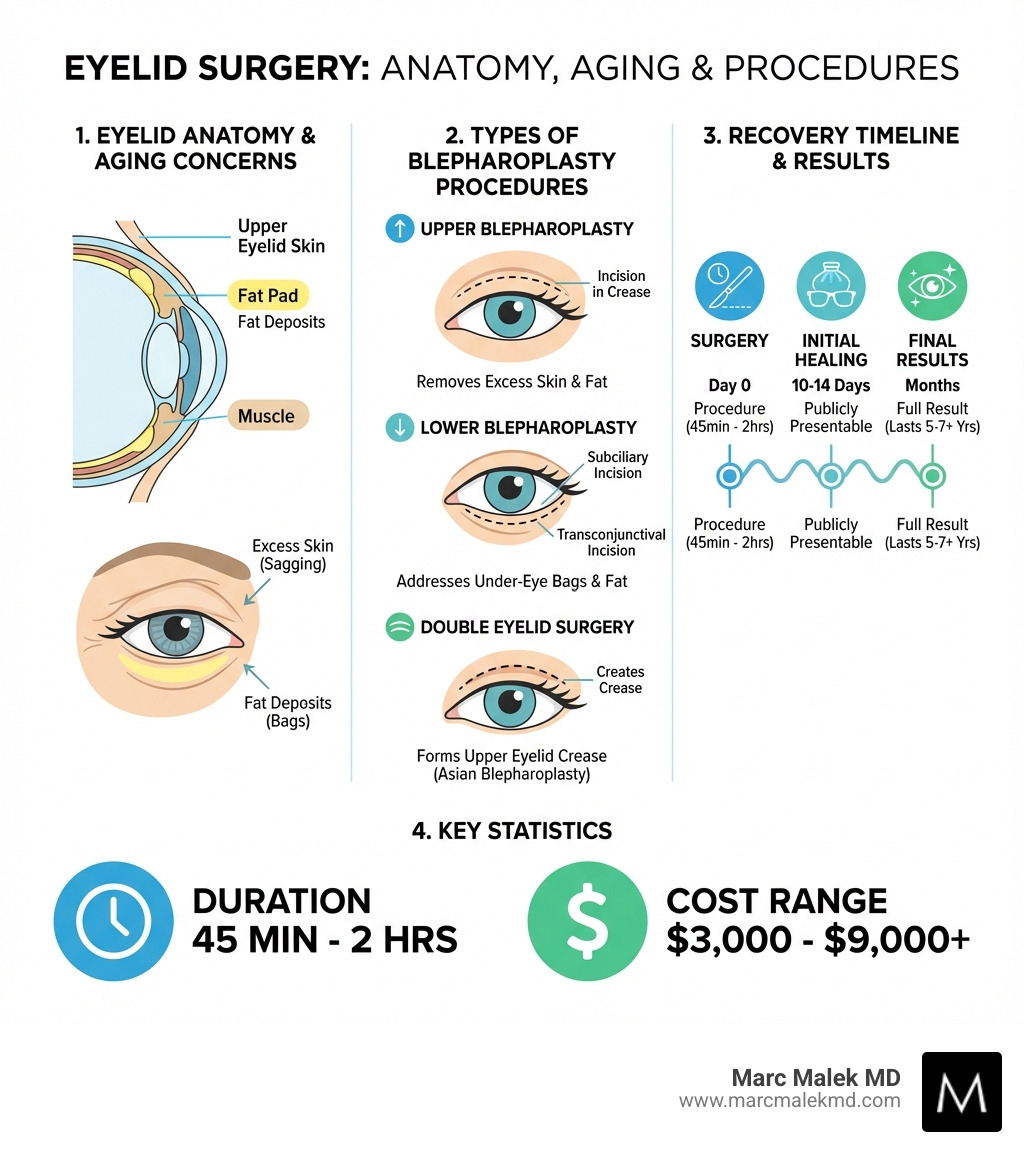
Eyelid surgery, or blepharoplasty, removes excess skin, fat, and muscle from the eyelids to create a more youthful, alert look. Each year, over 100,000 people in the U.S. choose this procedure to fix drooping eyelids, under-eye bags, and puffiness.
Quick Overview:
- What it treats: Sagging upper eyelid skin, puffy eyes, under-eye bags, fatty deposits, fine wrinkles
- Benefits: More youthful appearance, improved vision (if sagging blocks sight), increased confidence
- Types: Upper blepharoplasty, lower blepharoplasty, double eyelid surgery
- Duration: 45 minutes to 2 hours
- Recovery: 10-14 days to feel publicly presentable
- Cost: $3,000 to $9,000+
- Results: Can last 5-7 years to a lifetime
As we age, skin loses elasticity, muscles weaken, and fat can shift, creating a tired appearance. In some cases, excess upper eyelid skin can even obstruct peripheral vision.
Patients may seek eyelid surgery for cosmetic reasons or for functional improvement, such as restoring vision blocked by drooping eyelids. When the procedure corrects vision impairment, insurance may provide coverage.
Modern techniques are highly refined. Surgeons place incisions in natural creases, making scars nearly invisible after healing. The procedure is usually outpatient, and most people return to normal activities within two weeks.
Understanding Blepharoplasty: What It Is and What It Treats
Eyelid surgery, or blepharoplasty, is designed to improve the appearance of the eyelids. Performed on the upper lids, lower lids, or both, it can address aesthetic concerns for a more rested look and functional issues like impaired vision.
The primary goal of eyelid surgery is to reduce bagginess from lower eyelids and remove excess skin from upper eyelids. You can learn more about the procedure from the American Society of Plastic Surgeons.
More about the procedure from the American Society of Plastic Surgeons
It is crucial to understand the difference between cosmetic and medically necessary eyelid surgery.
- Cosmetic Eyelid Surgery: This is performed to improve appearance by reducing puffiness, smoothing wrinkles, and creating a more alert look. Insurance does not typically cover cosmetic procedures.
- Medically Necessary Eyelid Surgery: This is performed when excess eyelid skin (a condition known as dermatochalasis) obstructs vision. In these cases, the surgery is considered medically necessary and may be partially covered by health insurance. A visual field test is often required to document the vision impairment.
Eyelid surgery is highly effective in treating:
- Sagging Upper Eyelid Skin (Dermatochalasis): Loose skin creates folds on the upper eyelid, sometimes impairing vision.
- Puffy Eyes and Fatty Deposits: Puffiness in the eyelids that creates a tired look.
- Under-Eye Bags: Displaced fat and excess skin under the eyes.
- Drooping Lower Eyelids: Reveals the white below the iris.
- Fine Lower Eyelid Wrinkles: Excess skin and wrinkles on the lower eyelid.
The Different Types of Eyelid Surgery
Eyelid surgery is custom to your specific concerns. Here’s a comparison of the main types:
| Type of Eyelid Surgery | Goals | Incision Placement | Primary Concerns Addressed |
|---|---|---|---|
| Upper Blepharoplasty | Remove excess skin and fat from upper lids | Within the natural crease of the upper eyelid | Hooded eyes, sagging skin, vision obstruction, puffiness |
| Lower Blepharoplasty | Reduce under-eye bags, smooth lower lid skin | Just below the lash line or inside the lower eyelid | Under-eye bags, puffiness, fine wrinkles, excess skin |
| Double Eyelid Surgery | Create or improve an upper eyelid crease | Along the desired eyelid crease | Lack of a defined upper eyelid crease (often for Asian patients) |
Let’s dig a little deeper into each type:
-
Upper Blepharoplasty: Focusing on the upper eyelids, this procedure is ideal for “hooded eyes” where excess skin drapes over the eyelid, sometimes impairing vision. An incision is made in the natural crease to remove or reposition fat, tighten muscles, and trim excess skin. The result is a more open, refreshed eye and improved vision. The procedure takes about 45-60 minutes.
-
Lower Blepharoplasty: This procedure targets under-eye bags and loose skin. Incisions are made either just below the lash line to remove excess skin and fat, or inside the lower eyelid (transconjunctival incision). The internal approach is best for removing or repositioning fat in patients who don’t have significant loose skin, leaving no visible scar. Lower blepharoplasty can take up to two hours.
-
Double Eyelid Surgery (Asian Blepharoplasty): This specialized procedure creates or defines an upper eyelid crease (“double fold”) for individuals, often of Asian descent, born without one. It achieves a more prominent eyelid while maintaining the patient’s ethnic identity.
The Benefits of an Eyelid Lift
The benefits of eyelid surgery extend beyond just looking younger and can significantly improve your quality of life.
- Youthful, Rested Appearance: By removing excess skin and fat, eyelid surgery eliminates the tired look associated with aging eyelids, helping patients look and feel more vibrant.
- Increased Self-Confidence: Matching your appearance to how you feel can be empowering, and many patients report a boost in self-esteem after their eyelid surgery in Scottsdale.
- Eliminating Forehead Strain: When sagging eyelids impede vision, people often strain their forehead muscles to see better. Eyelid surgery can alleviate this strain, reducing related tension headaches and brow lines.
- Smoothing Skin Around the Eyes: Removing excess skin can significantly smooth the area around the eyes, contributing to a more youthful look.
- Long-Lasting Results: Results are remarkably durable. Upper eyelid surgery can last from 5-7 years to a lifetime, while lower eyelid surgery rarely needs to be repeated, making it a great long-term investment.
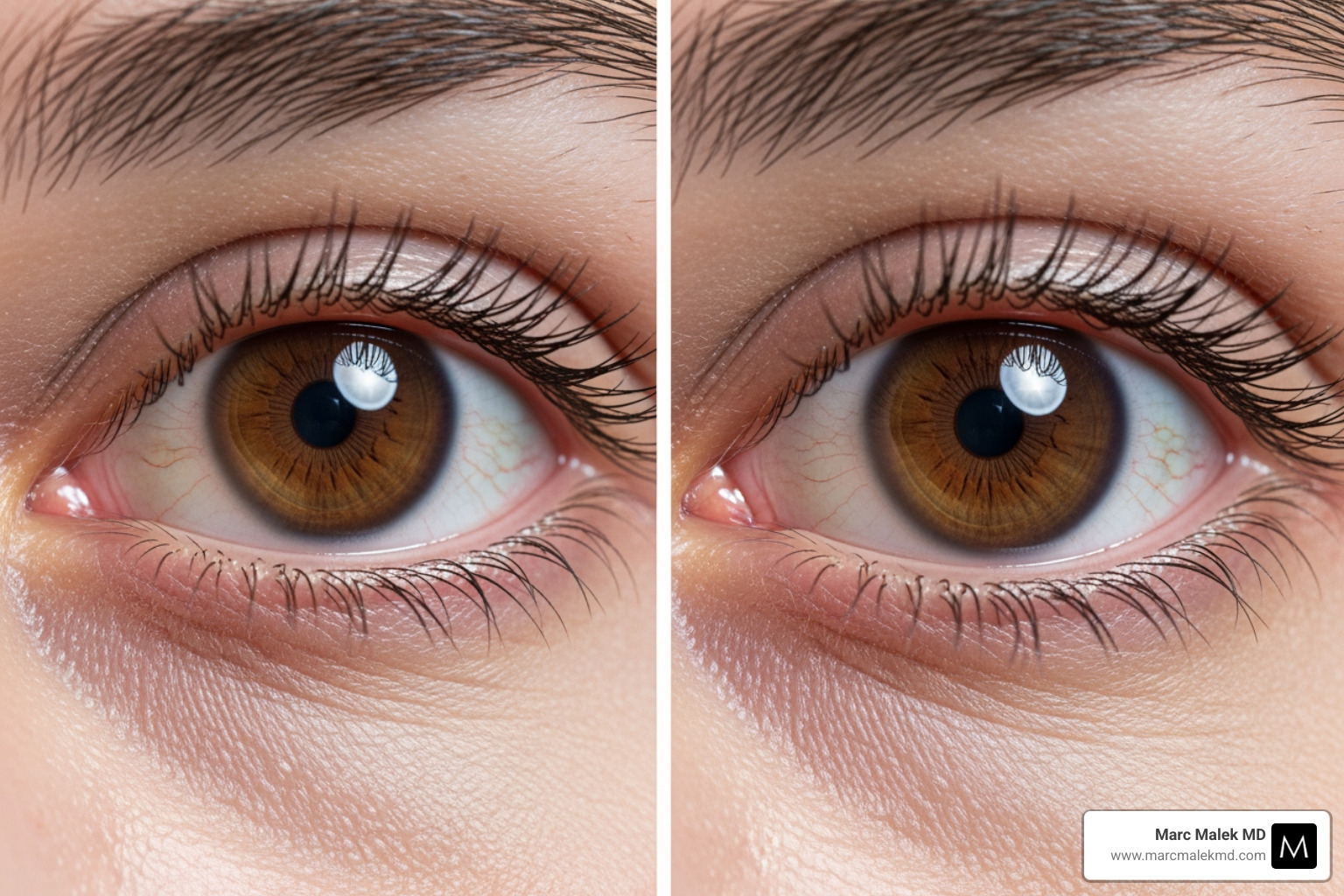
Are You a Candidate? Consultation, Risks, and Alternatives
Deciding if eyelid surgery is right for you involves a careful discussion with a qualified plastic surgeon. We prioritize your safety and satisfaction, which starts with ensuring you’re an ideal candidate.
Ideal Candidate Profile:
- Good General Health: You should be in good physical health without serious medical conditions that could complicate surgery.
- Age 30+: While technically possible for any adult, the best candidates are typically 30 or older, as this is when signs of aging around the eyes become more apparent.
- Non-Smokers: Smoking impairs healing and increases risks. We require patients to stop smoking several weeks before surgery.
- Realistic Expectations: It’s essential to understand what eyelid surgery can and cannot achieve.
Conditions to Discuss:
During your consultation, it’s crucial to disclose your complete medical history. Certain conditions may affect your candidacy or require special precautions:
- Dry Eyes: Chronic dry eyes must be assessed carefully, as surgery can temporarily exacerbate dryness.
- Glaucoma: This condition needs to be discussed with your ophthalmologist before considering surgery.
- Thyroid Disorders: Conditions like Graves’ disease can affect the eyes and may influence surgical planning.
- High Blood Pressure, Cardiovascular Disease, Diabetes: These conditions must be well-controlled for a safe surgery.
- Detached Retina: A history of this requires careful evaluation by an eye specialist.
Potential Risks and Complications:
Eyelid surgery is generally safe when performed by an experienced, board-certified plastic surgeon like Dr. Malek. However, all surgeries have risks, which are typically rare but important to understand:
- Infection
- Bleeding
- Scarring
- Dryness and Irritation
- Difficulty Closing Eyes
- Temporarily Blurred Vision
- Discoloration
- Injury to Eye Muscles (Extremely rare)
- Vision Loss (Extremely rare)
- Need for Follow-Up Surgery
We will discuss all potential risks in detail during your consultation. For a comprehensive overview, we recommend reviewing information from trusted medical sources.
A comprehensive overview of blepharoplasty from Mayo Clinic
What to Expect During Your Consultation
Your consultation is a critical first step. It’s our opportunity to understand your goals and determine the best approach for you. Here’s what to expect during your visit to our Scottsdale office:
- Physical Examination: We will examine your eyelids, facial structures, and skin to assess excess skin, fat, and muscle tone.
- Medical History Review: We will review your medical history, including past surgeries, medications, allergies, and eye conditions.
- Discussing Goals and Expectations: You’ll share what you hope to achieve, and we will provide honest feedback on realistic outcomes.
- Photography: We will take standardized photos for surgical planning and for before-and-after comparisons.
- Visual Field Testing: If sagging eyelids may be affecting your vision, we may recommend a visual field test to document impairment for potential insurance coverage.
- Questions to Ask Your Surgeon: Come prepared with questions about recovery, costs, risks, or anything else. We want you to feel confident and informed.
Dr. Malek believes in a personal and artistic approach, ensuring you feel comfortable and understood throughout the process.
Non-Surgical Alternatives
While surgery is the most effective solution for significant excess skin and fat, non-surgical alternatives can offer improvements for some concerns:
- Dermal Fillers and Injections: For hollowness under the eyes or to soften fine lines, Dermal Fillers and Injections can restore volume.
- Botox for Fine Lines: Botox for fine lines can relax muscles to reduce crow’s feet.
- Laser Skin Resurfacing: Laser Skin Resurfacing can improve skin tone and texture.
- Chemical Peels: Chemical Peels can refresh the skin by removing damaged outer layers.
When Surgery is the Best Option:
Non-surgical treatments can address fine lines and volume loss, but they cannot remove significant excess skin or fat bags. For noticeable sagging or prominent under-eye bags, eyelid surgery is the most effective way to achieve a refreshed, long-lasting result. We will discuss all options with you to find the best path forward.
A Step-by-Step Guide to the Eyelid Surgery Procedure
Understanding the procedural steps can help ease any anxieties and make your experience as comfortable as possible.
Pre-operative Instructions:
To ensure a smooth procedure and recovery, we provide detailed pre-operative instructions, which typically include:
- Stop Smoking: You must stop several weeks before surgery, as smoking hinders healing.
- Avoid Certain Medications: You’ll need to stop taking blood-thinning medications like aspirin and ibuprofen for a specified period.
- Arrange for Post-Op Care: You’ll need someone to drive you home and ideally stay with you for the first night.
Anesthesia Options:
Your comfort is paramount. We will discuss the best anesthesia option for you:
- Local Anesthesia with Sedation: The eye area is numbed, and you receive medication to relax. This is a common choice for upper eyelid surgery and can often be performed in our Scottsdale office.
- General Anesthesia: For more complex procedures or by patient preference, general anesthesia is administered in an accredited surgical facility, meaning you will be completely asleep.
Procedure Duration:
The length of your eyelid surgery depends on the extent of the work being done.
- An upper blepharoplasty typically takes about 45 minutes to one hour.
- If both upper and lower eyelids are done, the procedure can take around two hours.
The Surgical Process
Here’s a general overview of what happens during your eyelid surgery:
Step 1: Anesthesia
You’ll be given anesthesia to ensure you are comfortable and pain-free.
Step 2: The Incision
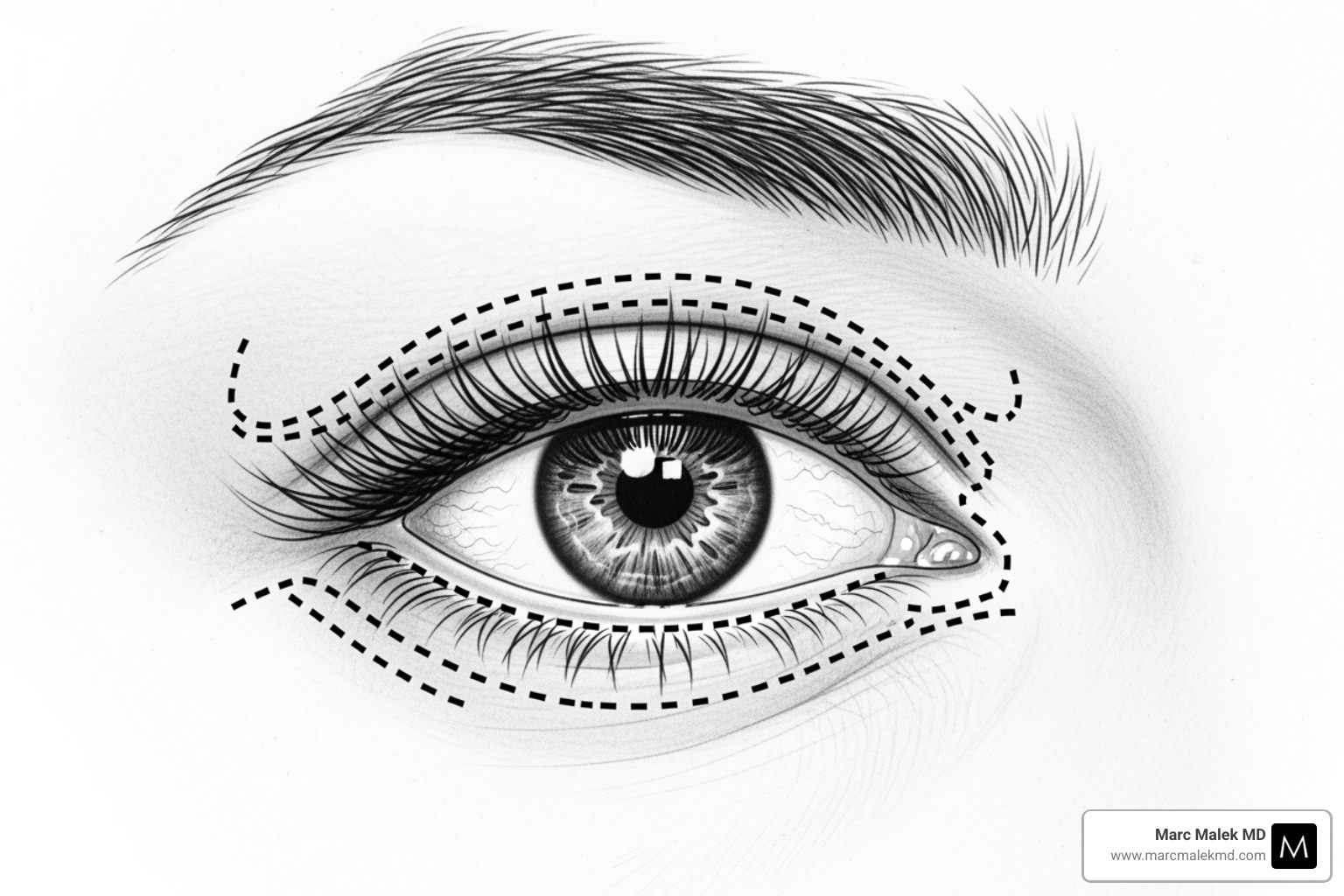
Incisions are placed to minimize visible scarring.
- Upper Eyelid Crease: For upper blepharoplasty, the incision is hidden within the natural eyelid crease.
- Below the Lower Lash Line: For lower blepharoplasty, an external incision is made just below the lower lash line.
- Transconjunctival Technique: For fat removal without excess skin, an incision can be made inside the lower eyelid, leaving no external scar.
Step 3: Tissue Adjustment
Once the incisions are made, the surgeon makes the necessary adjustments:
- Removing Excess Skin: Sagging skin is carefully trimmed away.
- Repositioning Fat: Fat deposits that create puffiness are removed or skillfully repositioned to create a smoother contour. Dr. Malek often prefers repositioning tissue for more natural results.
- Tightening Muscle: Lax underlying muscles may be tightened for better support and a more refined result.
Step 4: Closing the Incisions
Finally, the incisions are closed with fine sutures or surgical skin glue. Stitches on the upper eyelids are typically removed within a week. Eyelid skin heals exceptionally well, and scars fade significantly over time.
Recovery, Results, and Long-Term Care
The recovery phase is an important part of your eyelid surgery journey. Knowing what to expect can help you prepare for optimal healing.
Immediate Post-Op Experience:
Immediately after surgery, you can expect:
- Swelling and Bruising: This is normal. Your eyelids will be puffy and discolored, which will lessen over 10 to 14 days.
- Tightness: Your eyelids may feel tight or sore as they heal.
- Mild Discomfort: You may experience mild discomfort, which is usually manageable with over-the-counter pain medication.
- Temporary Symptoms: You might experience temporarily blurred vision, watery eyes, light sensitivity, or dry/itchy eyes.
Recovery Timeline:
- 7-10 days for initial healing: Pain, bruising, and mild swelling are normal during this period.
- 10-14 days to feel publicly presentable: Most people feel comfortable returning to work and social activities.
- Complete healing: While you’ll look much better after two weeks, final results can take a few months to fully appear.
Post-operative Care:
Following our post-operative instructions is crucial for a smooth recovery:
- Cold Compresses: Apply cold compresses for the first few days to reduce swelling.
- Head Elevation: Sleep with your head liftd for several days to minimize swelling.
- Lubricating Ointment: We may prescribe an ointment or eye drops to keep your eyes moist.
- Activity Restrictions: Avoid strenuous activities, heavy lifting, and intense exercise for at least two to four weeks. Do not rub your eyes or wear contact lenses for a specified period.
- Sun Protection: Protect your healing eyelids by wearing dark sunglasses outdoors.
Longevity of Results:
A major benefit of eyelid surgery is its long-lasting impact. While aging continues, the improvements are significant and durable:
- Upper Eyelid Results: Results from upper eyelid surgery can last from five to seven years to a lifetime.
- Lower Eyelid Results: Lower eyelid surgery is often a one-time procedure, with results that rarely need to be repeated.
Managing Scars After Eyelid Surgery
Concerns about scarring are common, but with eyelid surgery, we take great care to make scars as inconspicuous as possible.
- Inconspicuous Incision Placement: Incisions are placed strategically in natural creases. For upper lids, the incision is hidden in the crease; for lower lids, it’s just below the lash line or inside the eyelid. This allows the scars to become very difficult to detect once healed.
- Healing Process: The skin around the eyes heals very well. Over several months, the fine incision lines will soften and fade, becoming barely noticeable.
- Sun Protection for Scars: Protecting healing scars from the sun is important. Use sunglasses and a high-SPF sunscreen to ensure scars fade optimally.
Frequently Asked Questions About Eyelid Surgery
Here are answers to some of the most common inquiries we receive in our Scottsdale practice:
How much does eyelid surgery cost?
The cost of eyelid surgery varies, generally ranging from $3,000 to $9,000+. Key factors include:
- Surgeon’s Fee: Reflects the surgeon’s experience and expertise.
- Anesthesia Type: Local with sedation vs. general anesthesia will impact the cost. For example, an upper blepharoplasty under local anesthesia may start around $5,500, while general could be around $7,000.
- Facility Fees: Costs differ between an in-office suite and an outpatient surgical center.
- Procedure Complexity: The extent of the surgery (upper, lower, or both) and the techniques used (e.g., fat repositioning) affect the final price. Lower blepharoplasty often starts at $9,000, while a combined procedure could be $15,000 or more.
If the eyelid surgery is deemed medically necessary to improve vision, your insurance might cover a portion of the cost. We will discuss all pricing details during your consultation.
Is eyelid surgery painful?
Many patients are pleasantly surprised by how little discomfort is associated with eyelid surgery.
- Anesthesia During Surgery: You will receive anesthesia, so you won’t feel any pain during the procedure itself.
- Post-procedure Discomfort: After surgery, you may feel mild discomfort or tightness, which is typically manageable with over-the-counter pain relievers. Most patients report a low pain level.
- Typically Mild Pain Level: Compared to other surgical procedures, eyelid surgery is considered one of the least painful cosmetic procedures.
Can eyelid surgery be combined with other procedures?
Yes, eyelid surgery is often combined with other procedures for comprehensive facial rejuvenation. Addressing multiple concerns at once can create a more balanced result and involves a single recovery period. Common complementary procedures include:
- Brow Lift: If you have sagging eyebrows, a brow lift can create a more open upper face.
- Facelift: For more extensive aging in the mid-to-lower face, a Facelift can address jowls and deep folds.
- Neck Lift: A Neck Lift can refine the jawline and create a smoother neck contour.
Combining procedures can be a convenient option. We will discuss whether this is right for your aesthetic goals during your consultation.
Begin Your Rejuvenation Journey
Eyelid surgery is a transformative procedure that offers numerous benefits, from a more youthful and rested appearance to improved vision and increased self-confidence. If you’re tired of looking tired, or if sagging eyelids are impacting your daily life, it might be time to consider what blepharoplasty can do for you.
At our practice in Scottsdale, we believe in a personal and artistic approach to plastic surgery. Dr. Malek uses his expertise to deliver fantastic, long-lasting results, focusing on your comfort, convenience, and overall well-being. We understand that choosing to undergo eyelid surgery is a significant decision, and we are here to guide you every step of the way, ensuring you feel informed, supported, and excited about your journey.
To learn more and see if you are a candidate for this procedure, schedule a consultation today. We look forward to helping you achieve your aesthetic goals and uncover a brighter, more confident you.