

Understanding What to Expect from Breast Reduction Surgery
Breast reduction scars are an unavoidable but manageable outcome of breast reduction surgery. If you’re considering this procedure, understanding what scars will look like, where they’ll be located, and how they’ll heal over time is crucial for setting realistic expectations.
Here’s what you need to know about breast reduction scars:
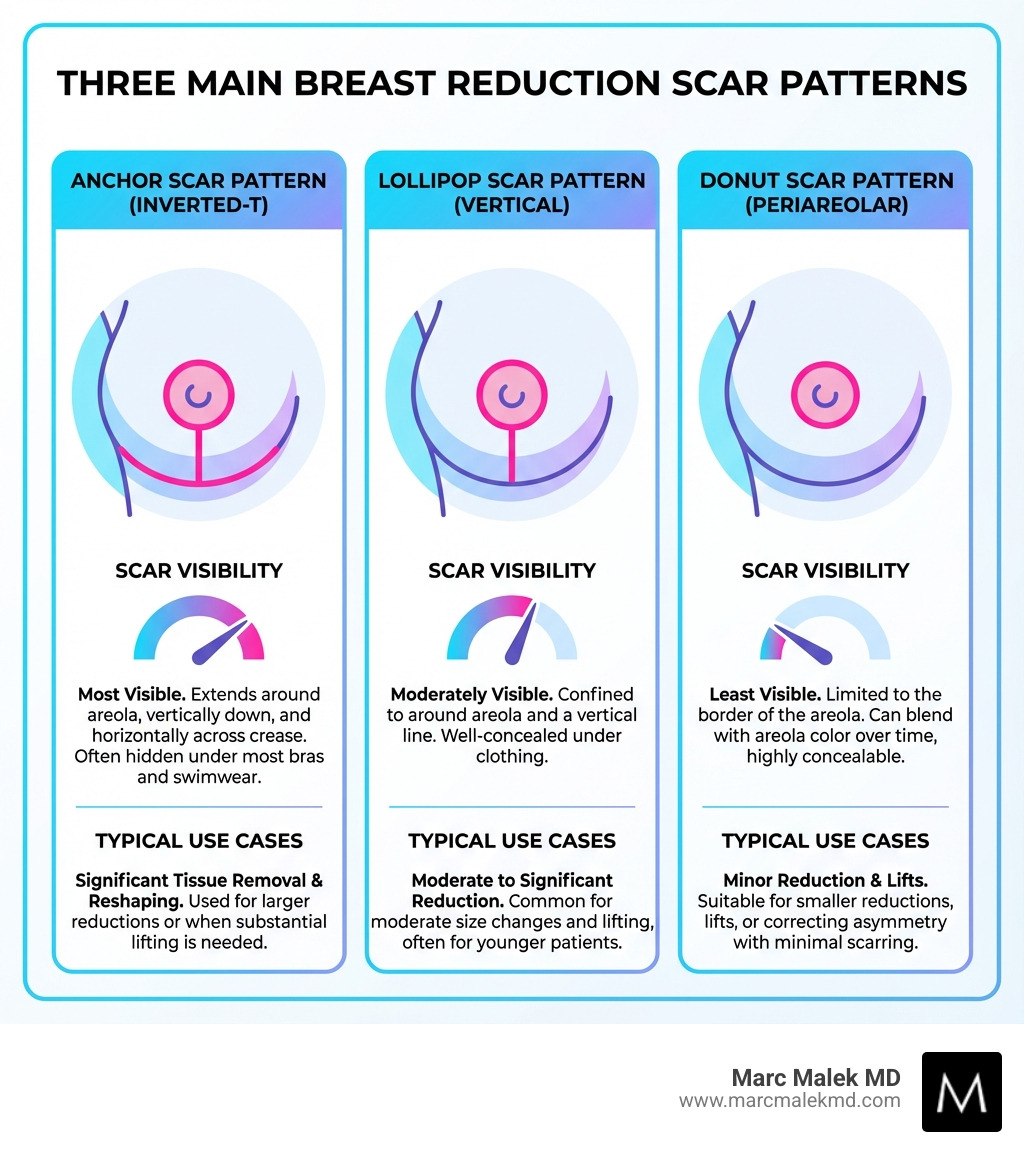
- Scar patterns depend on your surgical technique – The most common are anchor (inverted-T), lollipop (vertical), and donut (periareolar) patterns
- Scars are initially red and raised but fade significantly over 12-18 months
- Final scar appearance varies based on genetics, skin tone, surgical skill, and aftercare
- Scars are permanent but become much less noticeable with proper care
- Most scars can be hidden under bras, bikinis, and clothing
Breast reduction surgery addresses physical discomfort like back pain, neck pain, and skin irritation while creating a more proportionate silhouette. For many patients, the relief and renewed confidence far outweigh concerns about scarring. As one patient shared, “What a wonderful staff & surgeon… had an excellent outcome, better than I could have ever imagined!”
The reality is simple: Any surgical procedure that involves incisions will result in scars. However, modern surgical techniques, strategic incision placement, and evidence-based scar management can minimize their appearance dramatically. Scars typically fade from bright red or purple to thin, pale lines that blend with your natural skin tone.
The key is working with a skilled, board-certified plastic surgeon who understands scar placement and healing, and following a comprehensive aftercare plan. With the right approach, your breast reduction scars can become barely noticeable reminders of a life-changing procedure.
Understanding Breast Reduction Scars: Types and Techniques
When we perform breast reduction surgery, the goal is not only to achieve a more comfortable and proportionate breast size but also to minimize the visibility of any resulting breast reduction scar. Scars are simply visible marks of your body’s natural healing process after an incision is made in your skin. The surgeon carefully closes the incision, and your body then works to create new tissue to mend the wound, forming a scar.
The appearance and location of your breast reduction scars are primarily determined by the specific surgical technique employed, which our skilled surgeons choose based on several factors. These include your current breast size and shape, the amount of tissue we need to remove, your unique anatomy, and your desired aesthetic outcome. Our artistic approach focuses on placing incisions strategically to achieve fantastic, long-lasting results while prioritizing your comfort and promoting a healthy lifestyle.
For more information about how breast reduction can also impact a breast lift, please visit our page on Breast Lift Surgery.
How Incision Techniques Determine Scar Patterns
The pattern of the incisions is crucial for the final appearance of your breast reduction scar. Different techniques are designed to address varying degrees of breast size, sagging, and asymmetry. Each technique leaves a distinct scar pattern, which we discuss in detail with our patients in Scottsdale, Phoenix, and across Arizona.
The ‘Anchor’ Scar
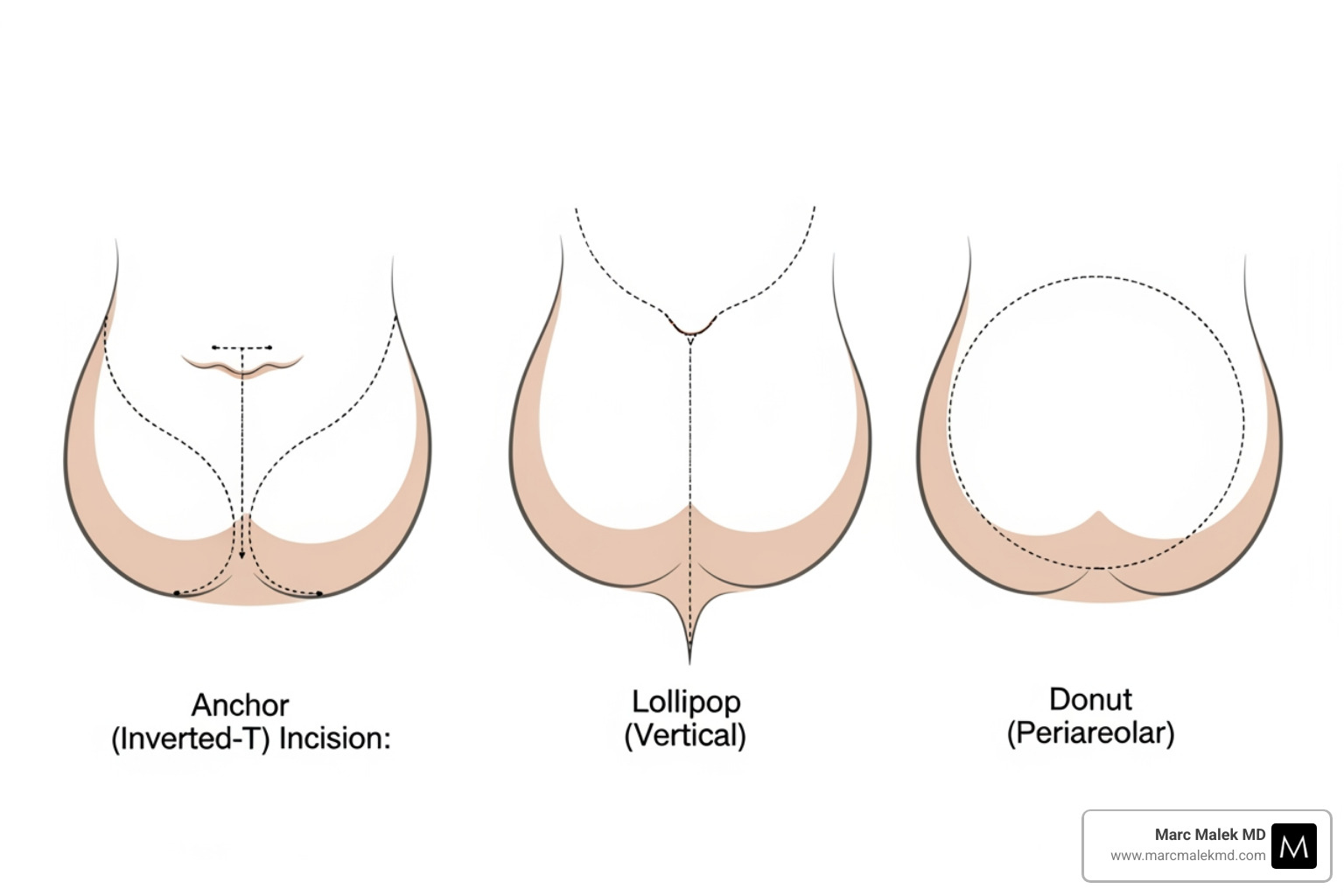
The anchor incision pattern, also known as the inverted-T or Wise pattern, is the most common and versatile technique we use, especially for patients requiring a significant breast reduction, addressing considerable drooping, or correcting breast asymmetry. This technique allows us to remove a substantial amount of tissue and skin, providing maximum lift and reshaping.
The resulting breast reduction scar from an anchor incision typically follows three lines:
- Around the areola: A circular incision made around the pigmented area surrounding the nipple.
- Vertical line: An incision extending from the bottom of the areola down to the breast crease.
- Inframammary fold: A horizontal incision hidden in the natural crease underneath the breast.
While this pattern is more extensive, it’s often necessary to achieve the desired reduction and shape, and with proper care, these scars can fade significantly over time.
The ‘Lollipop’ Scar
The lollipop incision, or vertical technique, is an excellent option for patients requiring a moderate breast reduction or a breast lift. This method allows for a good amount of tissue removal and reshaping without the horizontal incision along the inframammary fold.
The breast reduction scar from a lollipop incision forms a shape resembling a lollipop:
- Around the areola: A circular incision around the areola.
- Vertical line: An incision extending vertically down from the areola to the breast crease.
This technique is favored for its less extensive scarring compared to the anchor pattern, making it suitable for those who desire a smaller reduction with a more discreet scar.
The ‘Donut’ Scar
The donut incision, also known as the periareolar technique, results in the least noticeable scarring among the traditional breast reduction methods. This pattern is best suited for minimal breast reductions or very minor adjustments, often when only a small amount of tissue needs to be removed or the areola needs reshaping.
The breast reduction scar from a donut incision is limited to:
- Around the areola only: A circular incision made just around the perimeter of the areola.
This technique is less commonly used for significant breast reductions but is ideal for patients seeking very minor adjustments or those with good skin elasticity where extensive lifting isn’t required. In some cases, liposuction alone can achieve a “scarless” breast reduction, leaving only tiny, subtle incisions, often under the arm, for those with minimal sagging and no need for a lift.
The Scar Healing Journey: A Timeline
Understanding the healing journey of your breast reduction scar is essential for managing expectations and ensuring the best possible outcome. Scars undergo a natural maturation process, evolving in appearance, color, and texture over time. While scars are permanent, they will significantly fade and soften over many months.
To learn more about how to proactively manage and lessen the appearance of your scars, we encourage you to read our guide on How to Lessen the Appearance of Breast Reduction Scars After Surgery.
Immediately After Surgery to 6 Weeks (Inflammatory Phase)
This initial phase begins right after your breast reduction surgery. Your body immediately starts the complex process of healing.
What you can expect:
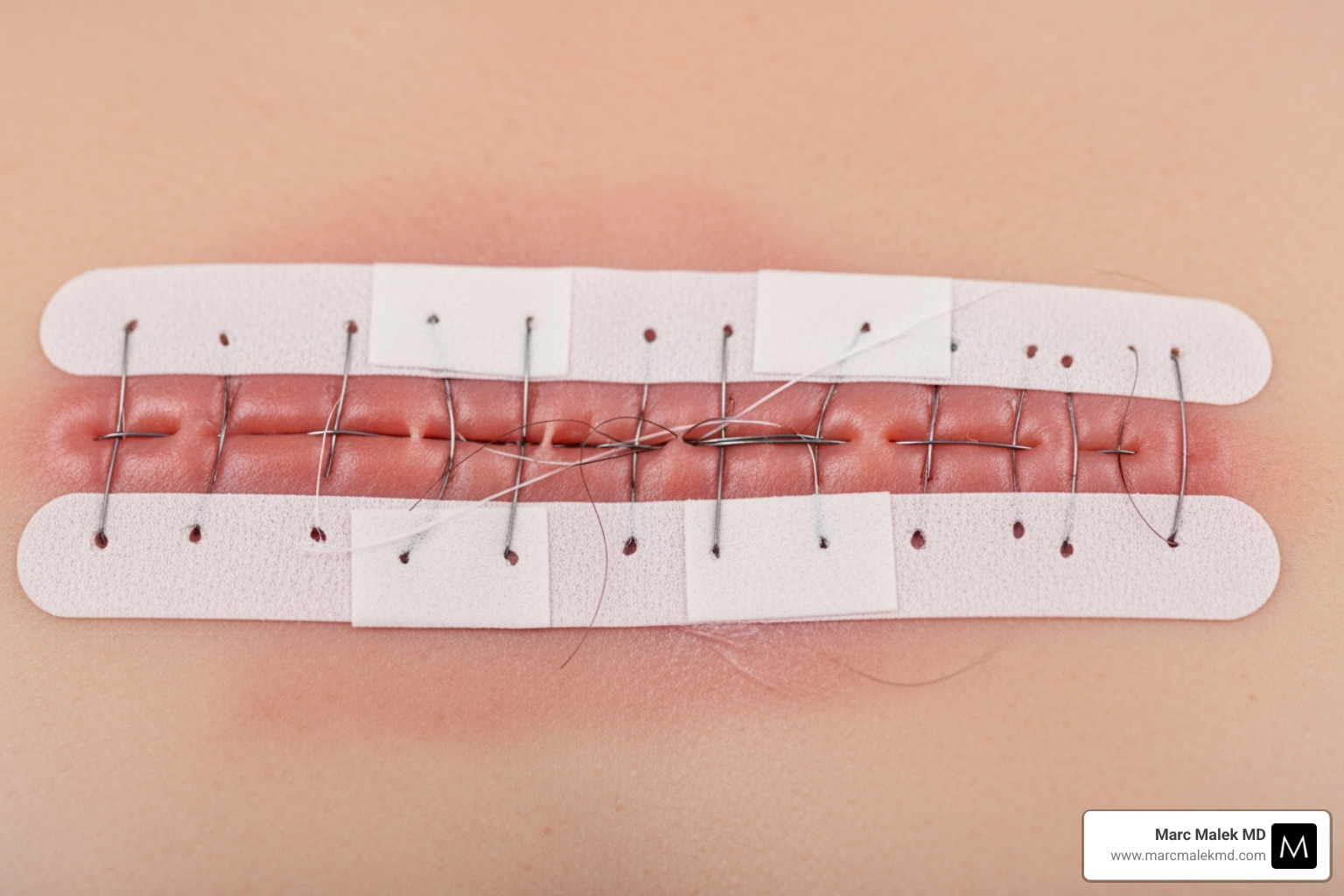
- Initial Appearance: Your breast reduction scar will look like a thin, raised line. It will likely be red or pink, and possibly slightly liftd. Stitches, skin adhesives, or surgical tape will be used to close the skin, and these will be visible.
- Feel: The area around the incisions might feel tender, swollen, and possibly itchy as your body works to close the wound. This is a normal part of the inflammatory response, where collagen fibers are produced to help mend the tissue.
During this time, it’s crucial to follow our post-operative wound care instructions carefully to prevent infection and support proper healing.
6 Weeks to 6 Months (Proliferative Phase)
As the initial inflammation subsides, your scars enter the proliferative phase, where your body continues to build new tissue.
What you can expect:
- Appearance: Your breast reduction scar may become darker in color, appearing red, pink, purple, or even dark brown, depending on your skin tone. It might also become more raised and feel firmer as collagen production increases. This is a normal part of the healing process, as your body is actively strengthening the new tissue.
- Feel: You might experience continued itching or tenderness. While the scar is becoming stronger, it’s still quite active in its healing.
During this period, we often recommend starting gentle scar management techniques, such as massage and topical treatments, once your incisions are fully closed and approved by us.
6 Months to 1 Year and Beyond (Maturation Phase)
This is the remodeling stage, where your breast reduction scar begins its long-term change. This phase can continue for a year or even longer, with gradual but significant improvements.
What you can expect:
- Appearance: Your scars should gradually soften, flatten, and fade in color, becoming less noticeable. They will typically change from vibrant red or purple to a lighter shade, often blending closer to your natural skin tone. Some scars may become lighter or darker than the surrounding skin.
- Feel: The firmness of the scar tissue will decrease, and it should become softer and more pliable. Any itching or tenderness should significantly reduce or disappear.
By the one-year mark, your scars should be considerably less conspicuous, though they will continue to mature and improve for several more months. Most patients find that their mature breast reduction scars are thin, flat lines that are easily concealed beneath a bra or bikini top.
Minimizing Your Breast Reduction Scar: Best Practices and Treatments
While a breast reduction scar is an inevitable part of the surgery, there are many proactive steps we can take together to minimize its appearance. Our approach combines meticulous surgical skill with comprehensive post-operative care and advanced treatments.
For those interested in how laser treatments can benefit scarred areas, including after hair removal, check out our blog post on The Benefits of Laser Hair Removal on Scarred Areas.
Essential Post-Operative Care
The foundation of excellent scar healing lies in diligent post-operative care. We provide detailed instructions custom to your specific needs to ensure the best possible outcome for your breast reduction scars.
- Wound Care Instructions: Keeping your incisions clean and dry is paramount to prevent infection and promote optimal healing. We will guide you on how to clean the area and change dressings as needed.
- Wearing Compression Garments: You’ll be advised to wear a special compression or surgical bra for several weeks after surgery. This helps reduce swelling, provides support, and minimizes tension on your incisions, which can contribute to less noticeable scarring.
- Sun Protection (SPF): Protecting your healing scars from the sun is crucial. UV rays can cause hyperpigmentation, making scars darker and more noticeable. We recommend avoiding direct sun exposure on your scars and consistently applying a high-factor sunscreen for at least a year after surgery.
- Avoiding Tension on Incisions: Excessive movement or stretching that puts tension on your incisions can widen scars. We’ll provide guidance on activity restrictions and how to move gently during your recovery period.
- Healthy Lifestyle: Your overall health plays a significant role in healing. Maintaining a healthy diet, staying hydrated, and avoiding smoking are critical. Smoking, in particular, impairs blood flow and can severely compromise wound healing, leading to less favorable scar outcomes.
At-Home Scar Management
Once your incisions are fully closed and approved by us, typically around two weeks post-surgery, you can begin at-home scar management techniques.
- Silicone Gel Sheets and Creams: Silicone products are widely recognized as effective for scar management. According to the National Institutes of Health, they work by hydrating the scar tissue, which helps to soften and flatten the scar, and can reduce redness. Silicone gel sheets should be worn for at least 12 hours a day for a couple of months. Silicone gels or creams can be applied directly to the scar.
- Gentle Scar Massage: Once your incisions are completely healed, gentle massage can be beneficial. Massaging the scars with your fingertips in vertical, horizontal, and circular motions helps to break down collagen fibers, prevent excessive scar tissue buildup, and keep the tissue flexible and soft.
- Moisturizing: Keeping your scars moisturized with a hypoallergenic lotion or a product like cocoa butter or Vitamin E oil can also aid in softening the skin and improving scar texture. Always ensure the wound is fully closed before applying any products.
Advanced Treatments to Minimize a Breast Reduction Scar
For scars that remain more prominent than desired, or to further improve their appearance, we offer several advanced cosmetic interventions. These treatments are typically considered once your scars have fully matured, which can take up to a year or more.
For more details on how laser technology can refresh your skin and improve scar appearance, explore our page on Laser Skin Resurfacing.
- Laser Therapy: Laser treatments use targeted light energy to improve the color, texture, and overall appearance of scars. Pulsed dye lasers can reduce redness, while fractional lasers can smooth texture and reduce thickness by stimulating new, healthy skin cell growth. Laser therapy can be particularly effective for patients with darker skin tones to help restore natural skin tone around the scar area.
- Steroid Injections: For raised scars, such as hypertrophic scars or keloids, corticosteroid injections can be highly effective. These chemicals help to break up collagen fibers and reduce scar tissue deposits under the skin, making the scars flatter and less prominent.
- Microneedling: This procedure involves using a device with fine needles to create tiny punctures in the skin. This stimulates the body’s natural healing process and collagen production, which can improve the texture and color of the scar tissue.
- Chemical Peels: Chemical peels involve applying a chemical solution to the scarred area, causing the top layer of skin to peel off. This reveals new, smoother skin underneath, which can improve the scar’s appearance. We carefully assess your skin type to determine if this treatment is suitable, as it can sometimes result in lightening or darkening of the skin.
Potential Complications and Special Considerations
While we strive for the best possible outcomes, it’s important to be aware of factors that can influence your breast reduction scar healing and potential complications.
What Factors Influence the Appearance of a Breast Reduction Scar?
Several individual and surgical factors contribute to how your breast reduction scars will look and heal:
- Genetics: Your genetic predisposition plays a significant role in how your skin heals and forms scars. Some individuals are naturally prone to more prominent scarring.
- Skin Tone: People with darker skin tones are generally at a higher risk of developing hyperpigmentation (darkening of the scar) and abnormal scars like keloids or hypertrophic scars.
- Age: Younger skin tends to heal more robustly, sometimes leading to more noticeable scars, while older skin may heal with less tension.
- Surgical Technique and Skill: The precision and meticulousness of the surgeon during incision placement and closure significantly impact scar quality. Our experienced surgeons in Scottsdale and Phoenix use advanced techniques to minimize trauma to the skin and breast tissue.
- Post-Operative Care: Adhering to all post-operative instructions, including wound care, sun protection, and scar management, is crucial for optimal healing.
- Sun Exposure: As mentioned, direct sun exposure can darken scars and make them more visible.
- Weight Fluctuations: Significant changes in body weight can stretch or widen scars over time, impacting their appearance.
Abnormal Scarring: Keloids vs. Hypertrophic Scars
While most breast reduction scars mature into thin, flat lines, some individuals may develop abnormal scarring. It’s important to understand the difference between the two main types:
| Characteristic | Keloid Scars | Hypertrophic Scars |
|---|---|---|
| Growth | Extend beyond the original wound area | Raised but remain within the original wound boundaries |
| Appearance | Often raised, thick, lumpy, and can be red or purple | Raised, red, and often itchy |
| Symptoms | Can be itchy, painful, or cause a burning sensation | Can be itchy and tender |
| Progression | Do not typically fade or flatten on their own | Tend to flatten and fade over time, though slowly |
| Risk Factors | More common in individuals with darker skin tones | Can affect anyone, more common in areas of high tension |
| Treatment | Steroid injections, laser therapy, surgical revision | Silicone products, steroid injections, laser therapy |
If you notice your scars becoming excessively raised, painful, or extending beyond the original incision lines, it’s important to contact us for an evaluation.
Breast Reduction Scars on Darker Skin Tones
We understand that breast reduction scars can appear differently on darker skin tones. Individuals with darker skin are generally more prone to hyperpigmentation, where the scar becomes darker than the surrounding skin. They also have a greater predisposition to developing hypertrophic scars and keloids, although these complications are not common.
Because of these factors, a rigorous post-operative scar care program is particularly important for patients with darker skin tones. We often recommend specialized treatments, such as certain types of laser therapy, to help restore natural skin tone around the scar area and manage texture effectively. Our personalized approach ensures that all our patients in Scottsdale, Phoenix, and across Arizona receive care custom to their unique skin healing characteristics.
Frequently Asked Questions about Breast Reduction Scars
We know you’ll have many questions about your breast reduction scar, and we’re here to provide clear, comprehensive answers.
Are breast reduction scars permanent?
Yes, all surgical scars are permanent. However, this doesn’t mean they will remain highly visible. While a breast reduction scar will never completely disappear, its appearance should significantly improve over time. With proper care and patience, scars typically fade from a prominent red or purple to thin, flat lines that are much lighter in color, often blending well with your natural skin tone. The goal is to make them as inconspicuous as possible, and for most patients, they become easily concealed by clothing or swimwear.
When can I start using scar creams and massage?
The timing for starting scar creams and massage is crucial and depends entirely on the healing of your incisions. We advise patients to wait until their incisions are fully closed and any scabs have fallen off, which is typically around two to four weeks after surgery. It is absolutely essential to get our approval before you begin any scar treatments. Applying products or massaging an open wound can lead to infection or delay healing. Once approved, you can begin with silicone products and gentle massage as part of your scar management routine.
How do I know if my scar is healing abnormally?
It’s normal for a healing breast reduction scar to be red, slightly raised, and sometimes itchy in the initial months. However, there are signs that indicate abnormal healing:
- Excessive Redness, Pain, or Swelling: If the redness around your scar intensifies, if you experience increasing pain, or if the area becomes significantly swollen and warm, these could be signs of infection.
- Pus or Discharge: Any yellow or green discharge from the incision site is a clear sign of infection and requires immediate medical attention.
- Excessive Raising or Growth: If your scar becomes very thick, hard, significantly raised, or starts to grow beyond the original incision lines (especially if it’s itchy or painful), it could indicate a hypertrophic scar or a keloid.
- Wound Separation: If any part of your incision opens up after it has already closed.
If you observe any of these symptoms or have any concerns about your healing breast reduction scar, please contact our office in Scottsdale, Phoenix, or Arizona right away. Early intervention can make a significant difference in managing complications.
Achieving Your Ideal Contour with Confidence
Undergoing breast reduction surgery is a transformative journey that offers immense physical relief and a significant boost in self-confidence. While the prospect of a breast reduction scar can be a concern, for most of our patients, the benefits of achieving a lighter, more proportionate breast size far outweigh the presence of these permanent, yet often subtle, marks. The scars become a small testament to a life-changing decision.
Our patients consistently share how the procedure alleviates chronic back and neck pain, improves posture, and allows them to participate more comfortably in physical activities. These improvements lead to improved self-esteem and a renewed sense of well-being. You can read more about these positive changes on our page detailing the Benefits of Breast Reduction and Lift Surgery.
At our practice, Dr. Malek uses a personal and artistic approach, focusing on meticulous surgical techniques and strategic incision placement to minimize the appearance of your scars. Our commitment extends beyond the operating room, providing comprehensive post-operative care and guidance on scar management to ensure the best possible long-term results. We believe in empowering our patients with knowledge and support throughout their healing journey.
If you’re considering breast reduction surgery and want to discuss your options, including scar expectations and management, we invite you to connect with us. Let us help you achieve your ideal contour with confidence.