

Your Path to Smoother Skin Starts Here
Scar removal clinic near me searches reflect a common desire: to improve the appearance of scars and regain confidence in your skin. Here’s what you should look for:
Key factors when choosing a scar removal clinic:
- Board-certified dermatologist or plastic surgeon with specialized laser training
- Multiple treatment options including laser therapy, surgical revision, and non-surgical alternatives
- Clear consultation process with personalized assessment and realistic expectations
- Modern technology like fractional lasers, CO2 lasers, or non-ablative systems
- Before-and-after photos of similar scar types
- Transparent pricing and treatment timelines (typically 3-6 sessions)
Scars from acne, surgery, or injury are a natural part of healing, but you don’t have to live with one that bothers you. Modern treatments, from laser therapy to surgical revision, can significantly improve a scar’s appearance, making it less noticeable. While no treatment can completely erase a scar, the right approach helps it blend with your surrounding skin.
The key is finding a provider with the right expertise and technology. Choosing someone who understands both the science of scar healing and the art of aesthetic improvement makes all the difference.
This guide will walk you through modern scar treatments, how to choose a qualified provider, and what to expect on your journey to smoother skin.
Understanding Your Scar: The First Step to Treatment
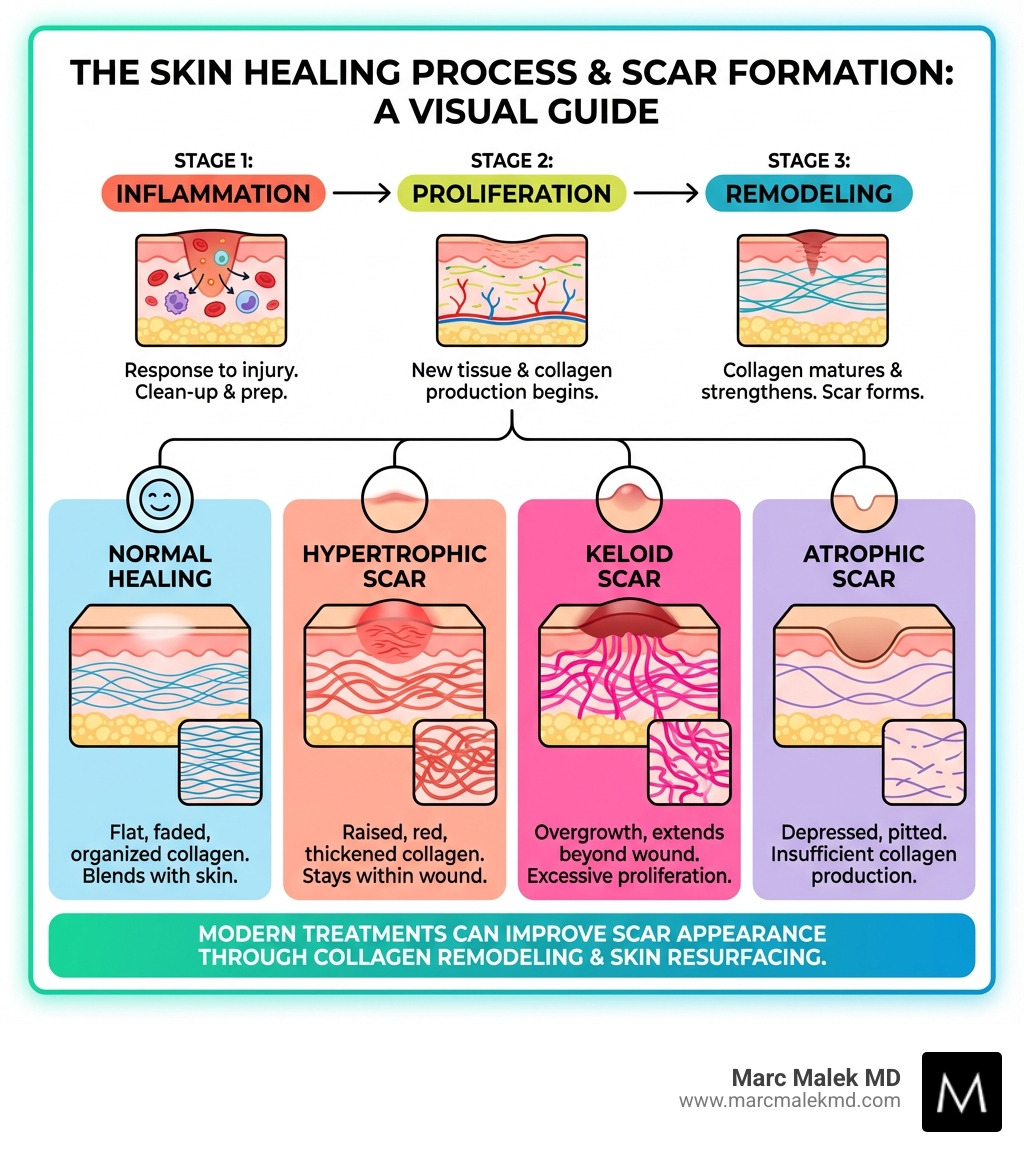
Understanding how scars form is the first step. Scars are a natural part of your body’s healing process. When skin is injured, it produces collagen to repair the damage. If this collagen production is disorganized, a scar forms. A scar’s appearance depends on the injury’s depth, your genetics, and other factors. A professional evaluation is crucial to determine the most effective treatment for your unique scar.
Different Types of Scars
Scars aren’t one-size-fits-all. Identifying the type of scar you have is crucial for selecting the right treatment.
- Atrophic Scars: These are depressed, sunken scars that form when the skin doesn’t produce enough collagen during healing. They often appear as small indentations.
- Acne Scars: A common type of atrophic scar, these can be further categorized:
- Ice Pick Scars: Small, narrow, deep holes that resemble a puncture from an ice pick.
- Boxcar Scars: Broader, box-like depressions with sharp, defined edges.
- Rolling Scars: Wide, shallow depressions that give the skin a wavy or “rolling” appearance.
- Acne Scars: A common type of atrophic scar, these can be further categorized:
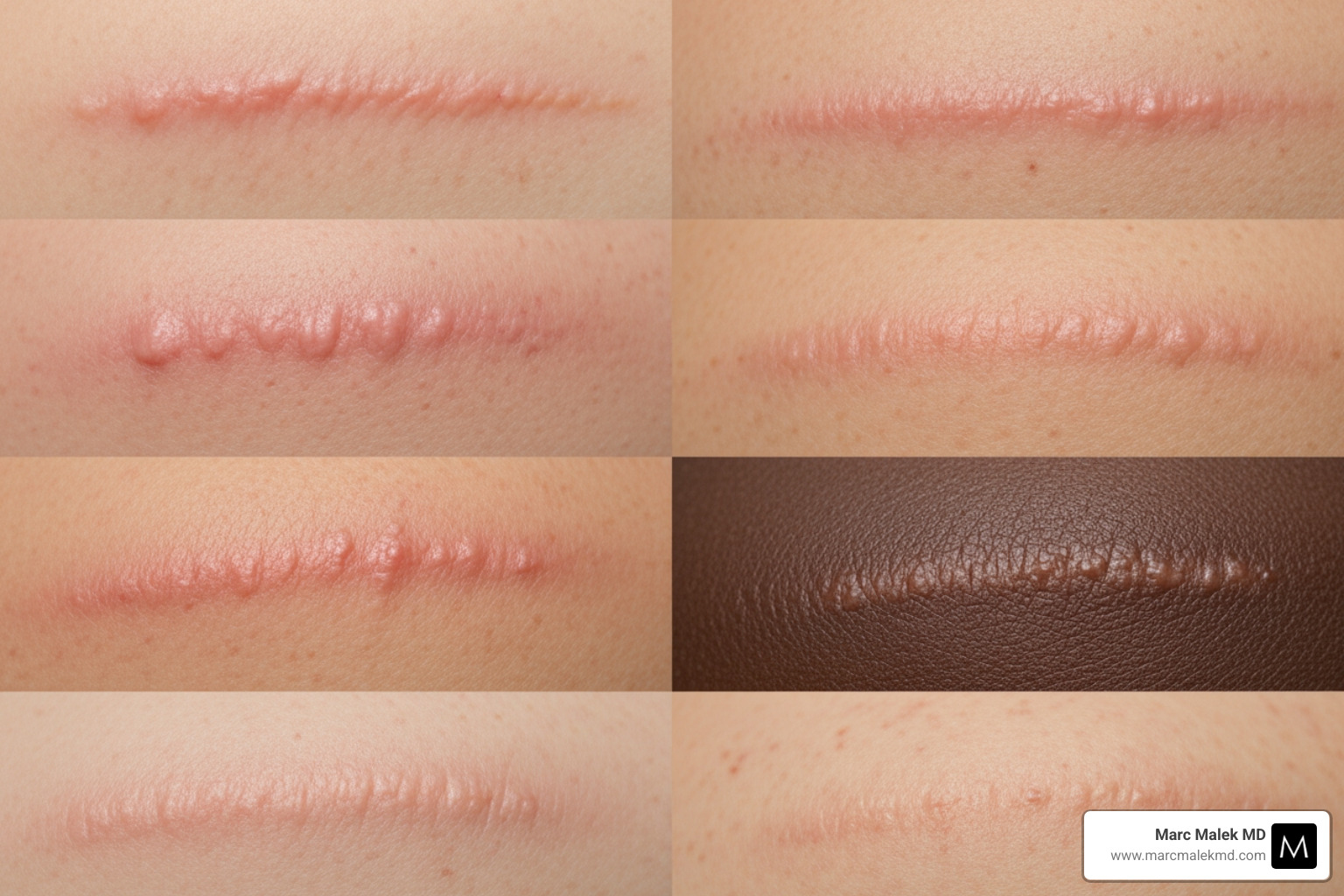
- Hypertrophic Scars: These are raised, red, and often itchy scars that stay within the boundaries of the original wound. They result from an overproduction of collagen during healing.
- Keloid Scars: Keloids are raised, firm scars that grow beyond the original wound. They can continue to grow, are challenging to treat, and are more common in darker skin tones.
- Contracture Scars: These scars occur when a large area of skin is lost, often due to burns. As the scar tissue contracts, it can tighten the skin, restricting movement and sometimes causing pain.
- Stretch Marks (Striae): Stretch marks (striae) are a form of scarring from rapid skin stretching or shrinking (e.g., pregnancy, weight changes). They begin as red or purple lines and fade to silvery-white.
Factors That Influence Scar Appearance
Several factors influence a scar’s appearance, helping us tailor your treatment plan:
- Age of Scar: Newer scars (within the first year or two) often respond better to certain treatments, as they are still actively remodeling. However, older scars can still see significant improvement. Some treatments, like silicone sheets, are most effective when applied early.
- Location on the Body: Scars on areas with more skin tension (like joints) or on highly visible areas (like the face) may appear more prominent or require different treatment approaches.
- Cause of Injury: Scars from surgery, burns, trauma, or acne all have unique characteristics that influence treatment choices. For instance, burn scars often lead to contractures, requiring specific interventions.
- Skin Type and Tone: Your skin type can influence how your scar heals and responds to certain treatments. For example, individuals with darker skin tones are more prone to keloids and post-inflammatory hyperpigmentation.
- Genetics: Our genetic makeup plays a significant role in how our bodies heal and form scars. Some people are simply more prone to developing hypertrophic or keloid scars than others.
By carefully evaluating these factors, we can develop a personalized strategy to achieve the best possible improvement for your scar.
A Guide to Modern Scar Removal Treatments

Let’s explore the modern treatments available. At our Arizona practice, we take a personal, artistic approach, creating unique treatment plans to improve your natural beauty. We often use combination therapies to achieve optimal results. Our goal is significant improvement and setting realistic expectations about what’s possible, helping you regain confidence.
Laser Scar Removal: The Gold Standard
Laser technology has revolutionized scar treatment and is often considered the gold standard. The science behind it is selective photothermolysis. Lasers use concentrated light to target scar tissue, breaking down disorganized collagen and stimulating new, healthier growth. This process can also reduce redness by targeting blood vessels, resulting in a smoother, more even-toned appearance. Learn more in our blog post: Erase Scars with the Help of Laser Technology.
Beyond aesthetics, laser treatment can also reduce scar pain and itch and increase your range of motion for contracture scars, improving quality of life.
Ablative vs. Non-Ablative Lasers
Laser scar removal falls into two main categories: ablative and non-ablative. They work differently and have varying recovery times and results. The American Academy of Dermatology explains this well: Ablative vs. Non-ablative lasers explained by the AAD.
| Feature | Ablative Lasers (e.g., CO2, Er:YAG) | Non-Ablative Lasers (e.g., Pulsed-Dye, Fractional non-ablative) |
|---|---|---|
| How it Works | Removes the top layer of skin, vaporizing damaged tissue. | Heats the underlying skin tissue without removing the top layer. |
| Downtime | More significant (4-7 days, can be longer for deeper treatments). | Less significant (1-2 days, often mild redness like a sunburn). |
| Cost (per session) | Average around $2,071 (according to plastic surgery statistics). | Average around $1,144 (according to plastic surgery statistics). |
| Sessions Needed | Fewer sessions typically needed (sometimes 1-2 for significant resurfacing). | More sessions typically needed (3-6 for optimal results). |
| Best Use Cases | Deep scars, severe texture irregularities, significant resurfacing needs. | Mild to moderate scars, improving color and texture, fine lines, general skin rejuvenation. |
| Risks | Higher risk of infection, pigmentation changes, longer healing. | Lower risk, but multiple sessions increase cumulative exposure. |
Ablative lasers (e.g., CO2, Er:YAG) remove the outer skin layers, vaporizing damaged tissue to allow for new, healthier skin regeneration. They are highly effective for deep scars but require more downtime and intensive recovery.
Non-ablative lasers heat deeper skin layers without removing the surface, stimulating collagen to gradually improve texture and color. Pulsed-dye lasers reduce redness and flatten scars, while fractional non-ablative lasers smooth skin with less downtime.
Surgical and Other Non-Surgical Options
While lasers are versatile, they are just one part of our comprehensive approach. We offer a range of options, often combining them for the best outcome.
- Scar Revision Surgery: Highly effective for large or deep scars, this involves excising the old scar and carefully closing the wound to create a finer one. For complex cases, skin grafts or tissue expanders may be used.
- Dermal Fillers: Ideal for atrophic (depressed) scars, fillers temporarily plump sunken areas for a smoother surface. Effects are immediate and last for months.
- Chemical Peels: A chemical solution exfoliates the top skin layers, improving superficial scars, uneven tone, and texture, especially for mild acne scars.
- Microneedling: This procedure uses fine needles to create micro-injuries, stimulating collagen and elastin production to improve scar texture and discoloration. We offer advanced treatments like SkinPen and Genius RF Microneedling.
- Corticosteroid Injections: For raised scars like hypertrophic scars and keloids, these injections can help flatten, soften, and reduce inflammation and itching.
- Silicone Sheets/Gels: Often recommended for new or hypertrophic scars, these topicals hydrate the tissue to promote a flatter, softer scar. They are a good at-home aftercare option.
Choosing the right treatment depends on your scar type, its characteristics, and your goals. That’s where our expert consultation comes in!
How to Choose the Best Scar Removal Clinic Near Me
When searching for a “scar removal clinic near me” in Arizona, you’re seeking a partner for your journey to renewed confidence. The right provider makes all the difference. Our Scottsdale and Phoenix clinic prioritizes patient comfort, using modern technology to ensure safe, effective care.
Finding a Qualified Provider for a scar removal clinic near me
This is the most critical step. Scar revision requires significant expertise, an understanding of skin biology, and an artistic eye.
- Board-Certified Dermatologist or Plastic Surgeon: Always prioritize a board-certified dermatologist or board-certified plastic surgeon. They have undergone rigorous training and are at the forefront of researching and treating scars. Their medical expertise is crucial for safe and effective treatment. You can find a qualified dermatologist through resources like the American Academy of Dermatology’s tool: Find a Dermatologist.
- Verifying Credentials and Experience: Ask about their specific experience with your scar type. How many years have they been performing laser procedures? Do they have specialized training?
- Specialization in Laser Procedures: Look for a provider with specific expertise in laser treatments. Dr. Marc Malek, for instance, brings extensive experience and a personal, artistic approach to plastic surgery in Scottsdale, focusing on delivering fantastic, long-lasting results.
What to Expect from a Consultation for a scar removal clinic near me
A thorough consultation is your opportunity to gather information and build a rapport with your provider. At our Arizona clinic, you can expect a comprehensive process:
- Medical History Review: We’ll discuss your overall health, medications, and history of scarring to identify factors that might influence treatment.
- Scar Evaluation: We’ll carefully examine your scar’s type, age, location, and texture, and assess your skin type to ensure we recommend safe and effective treatments.
- Discussing Goals: We want to understand what bothers you about your scar and what you hope to achieve. We’ll discuss realistic outcomes, emphasizing that significant improvement is possible, but complete erasure is not.
- Personalized Treatment Plan: We’ll outline a customized plan, explaining the recommended procedures and why they’re suitable for your scar.
- Reviewing Before-and-After Photos: We’ll show you examples of similar cases we’ve treated so you can visualize potential results.
- Cost Breakdown: We believe in transparency and will provide a clear, personalized cost estimate for your treatment plan.
- Answering Questions: This is your time to ask anything. We want you to feel fully informed and comfortable with your proposed treatment.
We focus on promoting a healthy lifestyle for proportionally balanced bodies, and this extends to how we approach scar revision—it’s about holistic well-being and confidence.
The Patient Journey: From Preparation to Lasting Results
Starting scar removal is an exciting step. The goal is significant improvement and reduced visibility, not total erasure. We aim to replace your scar with a much less noticeable one that blends with the surrounding skin.
Preparing for Your Treatment
Preparation is key to a safe and effective outcome, especially with lasers. We’ll provide detailed, custom instructions, but here are some general guidelines:
- Avoiding Sun Exposure: This is crucial. Avoid direct sun and tanning beds for at least 2-4 weeks before treatment. Tanned skin increases the risk of complications. Always use a broad-spectrum SPF 30+ sunscreen.
- Adjusting Medications and Supplements: You may need to temporarily stop certain medications like blood thinners (e.g., aspirin, ibuprofen), which can increase bruising. Discuss all medications with us during your consultation.
- Quitting Smoking: We strongly recommend quitting smoking at least two weeks before your procedure, as it impairs healing and can affect your results.
- Skincare Routine Adjustments: We might ask you to pause using products like retinoids or glycolic acid a week or two before treatment.
- Staying Hydrated: Good hydration promotes healthy skin and aids in recovery.
Recovery and Aftercare
Recovery varies by treatment. Non-ablative lasers usually have minimal downtime (1-2 days of mild redness), while more intensive ablative treatments may have 4-7 days of downtime with some crusting or peeling.
- Typical Downtime: Expect some redness, swelling, and tenderness. We’ll give you a clear idea of what to expect.
- Sunscreen is Critical: After treatment, your skin is vulnerable to sun damage. Diligent use of a broad-spectrum SPF 30+ is non-negotiable to protect healing skin and preserve results.
- Gentle Cleansing and Moisturizing: Follow our instructions for gentle skincare to support the healing process.
- Avoiding Picking or Scrubbing: Resist the urge to pick at any peeling skin. Let it heal naturally to prevent scarring or infection.
- Following Provider Instructions: Adhering strictly to our aftercare guidelines is paramount for optimal healing. For more details, visit our Laser Skin Resurfacing page.
Cost, Sessions, and Longevity of Results
Cost and duration are common questions, and while a precise figure requires a consultation, we can provide general insights.
- Average Cost Statistics: Cost varies by treatment, scar complexity, and provider expertise. According to the American Society of Plastic Surgeons, the average cost for ablative laser treatments is around $2,071 per session, while non-ablative treatments average about $1,144 per session. More details are available here: Plastic surgery cost statistics. Insurance rarely covers cosmetic procedures.
- Number of Sessions Needed: Most patients need 3-6 sessions, especially with lasers, typically spaced 4-6 weeks apart to allow for healing.
- Results Improve Over Time: Improvement is gradual. Your results will continue to improve for 3-6 months after your final session as new collagen forms.
- Permanence of Results on Treated Scar: Once the scar is improved, the results are permanent. However, you must protect your skin from future sun damage to maintain the new appearance.
Frequently Asked Questions about Scar Removal
Here are some of the most common inquiries we receive to help you feel more informed and confident.
Can laser scar removal completely eliminate a scar?
No, laser scar removal cannot completely eliminate a scar, but it can achieve dramatic improvements. The goal is to make the scar significantly less noticeable by improving its color, texture, and size, helping it blend with the surrounding skin. We are essentially replacing a prominent scar with a finer, less visible one. This can also reduce associated pain and itch and improve range of motion, leading to a substantial boost in confidence.
What are the potential risks and side effects?
Like any medical procedure, scar removal has potential risks, but they are minimized when performed by a qualified professional.
Common side effects are usually mild and temporary:
- Redness: The treated area will likely appear red, similar to a sunburn.
- Swelling: Mild swelling is common.
- Tenderness or Itching: The skin may feel sensitive or itchy as it heals.
- Crusting or Peeling: More intensive treatments may lead to temporary crusting or peeling.
Rarer risks are less common but can occur:
- Infection: Following aftercare instructions is key to prevention.
- Changes in Skin Color: This can include hyperpigmentation (darkening) or hypopigmentation (lightening), a risk that is higher with sun exposure after treatment.
- Scarring (new or worsened): There is a very small risk of new scarring, especially if aftercare instructions are not followed.
Choosing a board-certified dermatologist or plastic surgeon is your best defense against complications. We will discuss all potential risks with you during your consultation.
How many treatment sessions are typically needed?
The number of sessions needed varies and depends on:
- Type and Severity of the Scar: Complex scars typically require more sessions.
- Chosen Treatment Modality:
- Laser Treatments: Most patients need 3-6 sessions, spaced 4-6 weeks apart.
- Injections: May require multiple sessions until the scar flattens.
- Chemical Peels/Microneedling: A series of treatments is often recommended.
- Surgical Revision: This is often a single procedure, though follow-up treatments may be recommended.
- Individual Response: Everyone’s skin heals and responds differently.
We will provide a personalized session estimate during your consultation. Results are gradual, with improvement continuing for 3-6 months after your final treatment as new collagen forms.
Conclusion: Find Your Artistic Match for Scar Revision
Navigating scar removal can feel daunting, but modern treatments offer incredible possibilities. Understanding scar types, lasers, and other surgical and non-surgical options gives you the power to make an informed choice.
The journey to smoother skin is deeply personal—it’s about regaining confidence and comfort. That’s why personalized care, custom to your unique scar and goals, is so important.
When seeking a scar removal clinic near me in Scottsdale, Phoenix, or across Arizona, we encourage you to look for a provider who embodies both scientific expertise and an artistic vision. Dr. Marc Malek and our team understand that plastic surgery is an art form, utilizing a personal and artistic approach to deliver fantastic, long-lasting results. We prioritize your comfort and well-being, helping you achieve renewed self-assurance.
Don’t let a scar define you. Take the next step towards confidence and explore the advanced options available. We invite you to learn more about how we can help you achieve your aesthetic goals.